
Sourcing Bacteriostatic Water For Peptides Sharjah: The Essential Checks
For researchers and laboratory technicians operating in the UAE, managing the integrity of sensitive chemical compounds is a daily operational challenge. The extreme local climate dictates that standard procurement processes must be heavily adapted for temperature-sensitive reagents. When securing bacteriostatic water for peptides sharjah, buyers must evaluate more than just price—they must scrutinise supplier documentation, packaging protocols, and local delivery methods to ensure their lyophilized compounds remain stable during reconstitution.
Quick answer: Bacteriostatic water is a sterile solvent containing 0.9% benzyl alcohol, enabling safe, multi-dose vial withdrawals for up to 30 days. When sourcing bacteriostatic water for peptides in Sharjah, buyers must verify USP-grade sterility, demand lot-tracked Certificates of Analysis, and ensure the supplier uses insulated cold-chain shipping to mitigate extreme UAE temperatures.
Bacteriostatic vs. Sterile Water: Understanding the Chemistry
One of the most common operational errors in laboratory peptide handling is conflating bacteriostatic water with standard sterile water. While both serve as solvents, their chemical profiles and stability windows differ drastically.
Standard sterile water is purely H2O that has been purified and sterilized for injection or irrigation. It contains no preservatives. Once the rubber septum of a sterile water vial is punctured by a needle, the internal environment is compromised. Any subsequent withdrawals carry a high risk of bacterial contamination, meaning single-use sterile water must be discarded immediately after its first use.
Bacteriostatic water, on the other hand, contains 0.9% benzyl alcohol. This precise concentration of alcohol acts as a highly effective bacteriostat, inhibiting the reproduction of bacteria within the vial. Because of this formulation, researchers can puncture a bacteriostatic water vial multiple times over a period of 28 to 30 days (under proper aseptic conditions) without compromising the sterility of the solvent. For researchers working with multi-dose peptide protocols, this 30-day stability window is an absolute requirement.
Overcoming UAE Heat: Storage and Handling Realities
The most significant variable when ordering research reagents in the UAE is the ambient temperature. Lyophilized (freeze-dried) compounds are highly susceptible to thermal degradation.
Lyophilized vs. Reconstituted Storage
Before reconstitution, lyophilized peptides should ideally be stored in a freezer at -20°C for long-term stability (up to 24 months). However, once you introduce bacteriostatic water, the molecular structure changes. Reconstituted solutions are incredibly sensitive to temperature fluctuations and must be immediately transferred to a refrigerator, maintained strictly between 2°C and 8°C. Reconstituted peptides must never be refrozen, as the freeze-thaw cycle will shatter the delicate molecular bonds, rendering the research useless.
Cold-Chain Logistics in Sharjah
When evaluating a bacteriostatic water for peptides guide sharjah, a critical factor is the vendor’s shipping methodology. Standard courier vans in the UAE can easily reach internal temperatures exceeding 45°C during summer months. If a supplier dispatches delicate research chemicals in uninsulated cardboard, the compounds will likely degrade before arriving at your laboratory or facility.
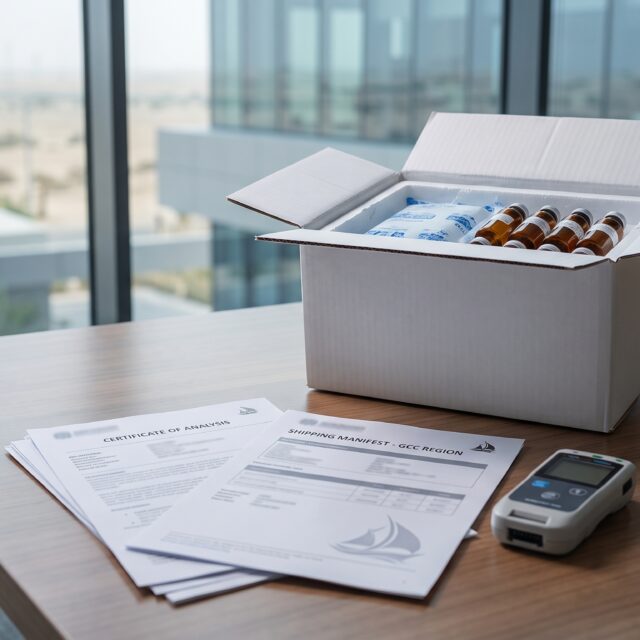
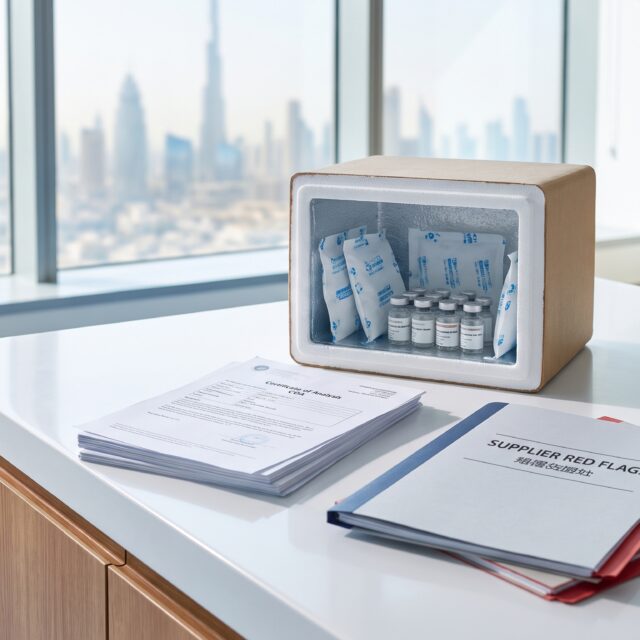
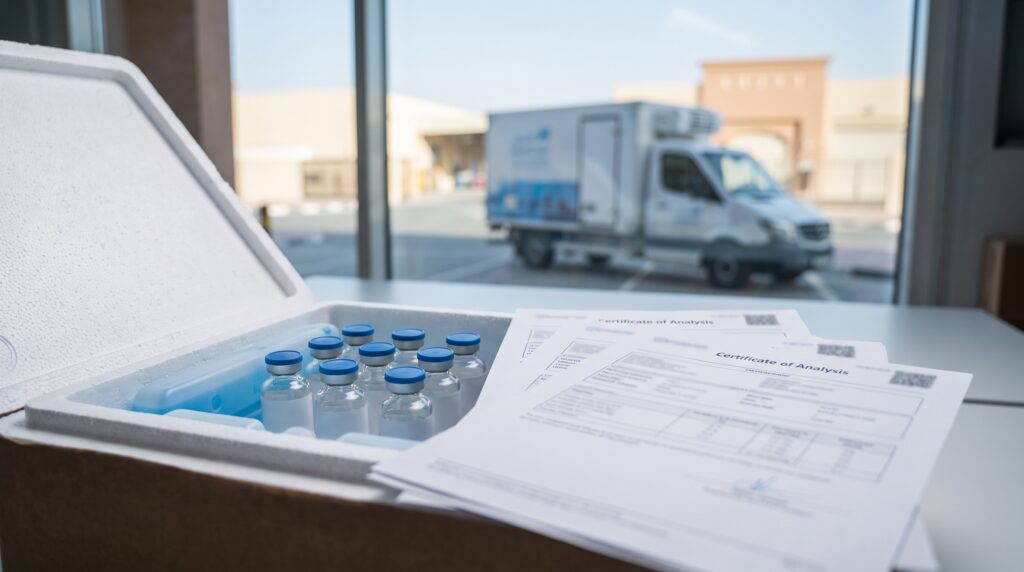
Premium suppliers rely on strict cold-chain logistics. This includes the use of insulated EPS (expanded polystyrene) containers, commercial-grade gel packs, and occasionally temperature-indicator tags to guarantee stability from dispatch to delivery. To ensure compounds arrive in pristine condition, researchers frequently rely on local specialists who offer rapid dispatch. By utilizing fast UAE next-day delivery, buyers minimize transit exposure and preserve the integrity of their materials.
Reconstitution Protocol: How to Protect Peptide Integrity
Even with top-tier reagents and perfect cold-chain delivery, mishandling during the mixing process can destroy a compound. Peptides are composed of fragile chains of amino acids; aggressive handling will quickly shear these bonds.
When preparing to mix your reagents, adhere to the following aseptic protocol:
- Temperature Equalisation: Remove both the lyophilized vial and the bacteriostatic water from cold storage and allow them to rest in a dark environment until they reach room temperature. Mixing cold solvent into cold powder can cause vacuum shock and condensation.
- Sanitise Septums: Thoroughly wipe the rubber stoppers of both vials with 70% isopropyl alcohol swabs and allow them to dry completely.
- Pressure Equalisation: Draw a volume of air into your syringe equivalent to the volume of bacteriostatic water you intend to extract. Inject this air into the water vial to equalize pressure, making extraction smoother.
- Controlled Trickle: After drawing the bacteriostatic water, insert the needle into the lyophilized vial. Do not spray the water directly onto the powder. Instead, angle the needle so the water trickles slowly down the inner glass wall of the vial.
- Gentle Swirl: Once the solvent is transferred, remove the needle. Never shake the vial. Shaking introduces air bubbles and mechanical stress that breaks peptide bonds. Instead, hold the vial lightly and swirl it with a very gentle, rolling motion until the powder is fully dissolved and the solution is crystal clear.
Evaluating Local Suppliers and Documentation
Navigating the supplier landscape in the UAE requires diligence. Many buyers initially attempt to source bacteriostatic water from standard retail pharmacies in Sharjah. However, under local regulations, physical pharmacies typically only stock single-use sterile water (often requiring a prescription), as clinical sterile compounding is restricted to licensed facilities.
For in vitro laboratory and analytical research use (RUO), dedicated specialized suppliers are required. When browsing for components, you must verify the supplier’s commitment to transparency through rigorous testing documentation.
Qualified vendors should provide batch-specific, publicly accessible Certificates of Analysis (COAs). A valid COA for research reagents is typically generated by a third-party laboratory using High-Performance Liquid Chromatography (HPLC) and Mass Spectrometry (MS). When reviewing a COA, buyers should look for:
- Confirmation of the 0.9% benzyl alcohol concentration.
- Verification of USP-grade sterility protocols.
- Endotoxin limit testing results.
- A clear batch or lot number that perfectly matches the physical vial you receive.
At NOVA Labs, we prioritize scientific transparency. Our inventory is backed by rigorous third-party testing, ensuring that researchers are working with verified, high-purity compounds. Whether you are restocking solvents or looking to source specific experimental compounds, you can evaluate our full range of fully tested reagents directly at our research shop.
Bottom Line: Securing Reliable Reagents in the GCC
Successfully managing research protocols in the UAE requires a proactive approach to procurement. Sourcing bacteriostatic water for peptides in Sharjah isn’t just about finding the lowest cost; it is about verifying purity through HPLC-backed COAs, understanding the critical difference between sterile and bacteriostatic solvents, and partnering with suppliers capable of managing intense local temperatures through insulated, rapid delivery networks.
Always ensure that your handling protocols respect the fragility of the compounds. By securing USP-grade bacteriostatic water and maintaining strict 2°C–8°C storage post-mixing, you can confidently extend the usable lifespan of your multi-dose vials up to 30 days without compromising your data.
Disclaimer: The products mentioned in this article are for research purposes only and are not intended for human consumption. Peptides and bacteriostatic water are distributed solely for in vitro laboratory and analytical research use.
References
- VaultLabs (2023). Bacteriostatic Water UAE | 3ml & 10ml.
- NuGenia Logics (2022). BAC Water vs Sterile Water vs Saline: Technical Guidelines.
- CureCell Pharmacy Dubai (2024). Sterile Compounding and Regulatory Guidelines in the UAE.
- NovaLabs (2024). Peptide Storage & Handling Guide.
- Peptide Storage & Handling Guide | NovaLabs
- Bacteriostatic Water UAE | 3ml & 10ml – VaultLabs
- BAC Water vs Sterile Water vs Saline – NuGenia Logics
- Custom Hair Compounds Provided by CureCell Pharmacy Dubai
- Shipping Policy – Fast Delivery Across UAE – nanopep
Frequently asked questions
How long does bacteriostatic water last after opening?
Once punctured with a sterile needle, bacteriostatic water remains stable for up to 28 to 30 days, provided it is handled with strict aseptic techniques and stored correctly.
Can I use standard sterile water for peptide reconstitution in Sharjah?
Standard sterile water lacks the 0.9% benzyl alcohol preservative found in bacteriostatic water. Therefore, sterile water can only be used for a single withdrawal and must be discarded immediately to prevent bacterial contamination.
How should I store reconstituted peptides in the UAE?
Once reconstituted with bacteriostatic water, the solution is highly sensitive to heat and must be kept in a refrigerator between 2°C and 8°C. It should never be refrozen, as freeze-thaw cycles will damage the compound.
Can I buy bacteriostatic water at a local pharmacy in Sharjah?
Physical retail pharmacies in Sharjah generally only stock single-use sterile water, which often requires a prescription. Specialized bacteriostatic water for research is typically sourced through dedicated laboratory reagent suppliers.
Should I shake the vial to mix the peptide powder and water?
No. Shaking the vial introduces mechanical stress that can shear delicate molecular bonds. You should allow the water to trickle down the glass wall and then swirl the vial gently until the solution is clear.
Nova Labs buyer tools
Ready to verify stock, testing and delivery?
Use the product page and lab report section to check availability, documentation, delivery timing and support before placing an order.
- COA / test-report checks
- Sharjah delivery context
- Cold-chain handling
- COD and card payment options
- WhatsApp support