
How to Buy DSIP in Kuwait
Quick Answer: Sourcing DSIP in Kuwait
To securely buy DSIP in Kuwait, source exclusively from GCC-based suppliers that provide lyophilized powder, verifiable third-party HPLC/MS Certificates of Analysis (COAs), and rapid cold-chain delivery. Ensure commercial invoices explicitly label the compound as “Research Use Only” to clear Kuwaiti customs without bureaucratic delays.
For academic researchers, independent laboratories, and informed procurement professionals, sourcing peptides in the GCC is rarely as simple as clicking checkout on an overseas website. Buyers must account for intense summer heat, complicated KUCAS (Kuwait Conformity Assurance Scheme) clearances, and the persistent risk of receiving degraded materials from unverified foreign vendors.
When evaluating a DSIP supplier, Kuwait buyers should look beyond basic pricing. The focus must remain on end-to-end quality assurance: verifiable high-purity batches, heat-stable formulations, compliant documentation, and rapid regional delivery that minimizes transit exposure. Procurement in the Middle East requires specialized logistics that international vendors simply cannot guarantee.
Navigating GCC Customs: The Importance of RUO Documentation
Importing research supplies into Kuwait involves strict oversight. The Kuwait General Administration of Customs heavily scrutinizes inbound scientific materials to ensure compliance with local regulations. A common failure point for international peptide shipments is improper labeling or missing documentation, which frequently leads to extended port delays, requests for pharmaceutical import licenses, or outright confiscation.
To confidently procure these compounds, researchers must utilize suppliers who understand the critical distinction between therapeutic goods and analytical reagents. Peptides intended for laboratory study must be explicitly and correctly documented as “Research Use Only” (RUO). This classification signals to customs agents that the compound is an analytical reagent intended for in-vitro laboratory analysis, bypassing the complex medical and pharmaceutical import requirements.
Suppliers operating from regional GCC hubs are highly familiar with these border protocols. By ensuring that all commercial invoices, packing lists, and vial labels explicitly state the RUO designation, the risk of therapeutic-use import complications is heavily mitigated. This level of documentation precision allows for frictionless border clearance into Kuwait, ensuring your research timeline is not interrupted by bureaucratic delays.
Formulation and Stability: Why Lyophilized DSIP is Mandatory
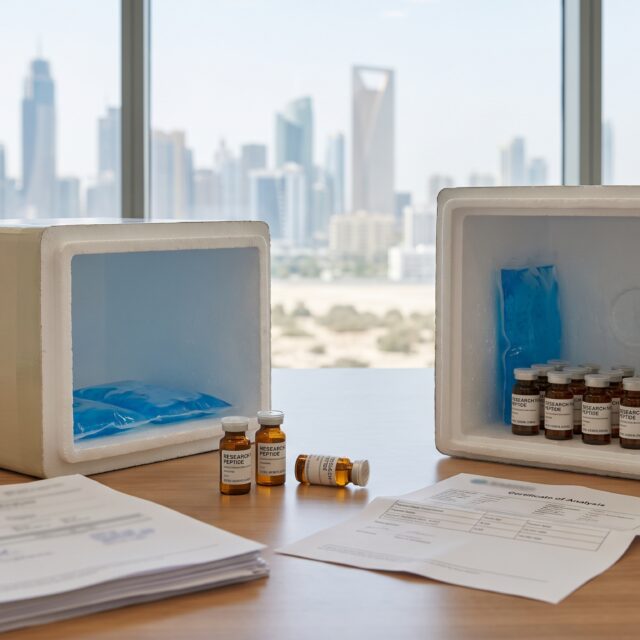
One of the most critical decisions when sourcing any peptide is choosing the correct physical format. Peptides are naturally fragile molecular structures, and ambient heat is their primary adversary. During the peak GCC summer, where temperatures routinely exceed 45°C, transit environments can reach levels that rapidly degrade sensitive biological materials.
Buying pre-mixed liquid peptides from overseas poses an enormous risk. In a liquid state, the compound is highly susceptible to hydrolysis, deamidation, and thermal breakdown. A package sitting on an international tarmac at Kuwait International Airport for even a few hours can render a liquid peptide structurally useless, compromising any analytical data derived from it.
Top-tier suppliers provide DSIP exclusively as a sterile, lyophilized (freeze-dried) powder. Lyophilization removes water from the peptide under low temperatures and high vacuum, resulting in a stable, solid structure. In this dormant state, DSIP withstands significantly higher temperatures during shipping. Once it arrives safely at your facility in Kuwait, researchers can reconstitute the powder using bacteriostatic water immediately prior to their specific laboratory application, ensuring maximum integrity of the compound.
The Sourcing Audit: Verifying Batch-ID and HPLC COAs
Transparency is the cornerstone of trust in the research peptide industry. The label on a vial is merely a claim; the true quality and purity of the compound must be proven through independent, third-party testing. Any reputable supplier operating in the GCC must provide a Certificate of Analysis (COA) for the exact batch being sold.
When auditing a supplier’s COA, researchers should verify two specific testing methodologies:
- High-Performance Liquid Chromatography (HPLC): This analytical technique separates the components of the freeze-dried powder to determine the exact purity percentage. Premium suppliers adhere to a strict minimum purity standard of 98% or higher, ensuring minimal byproducts, synthesis errors, or truncated amino acid sequences.
- Mass Spectrometry (MS): This test measures the mass-to-charge ratio of ions to accurately determine the molecular weight of the compound. This definitively confirms its identity, proving the substance matches the label precisely.
Crucially, these tests must be batch-specific. A generic, undated COA from three years ago provides zero assurance about current inventory. Every batch must undergo this rigorous third-party auditing, with results documented in a publicly searchable ledger so buyers can match the batch ID on their physical vial to the online laboratory report. If a vendor cannot supply a matching, up-to-date COA, they should be immediately disqualified from your procurement list.
Seamless Regional Logistics: Shipping and Delivery in Kuwait
Transcontinental shipping from North America or Asia introduces unacceptable variables into the peptide supply chain. Extended transit times, unpredictable customs holds, and multiple carrier handoffs drastically increase the likelihood of thermal exposure and package mishandling.
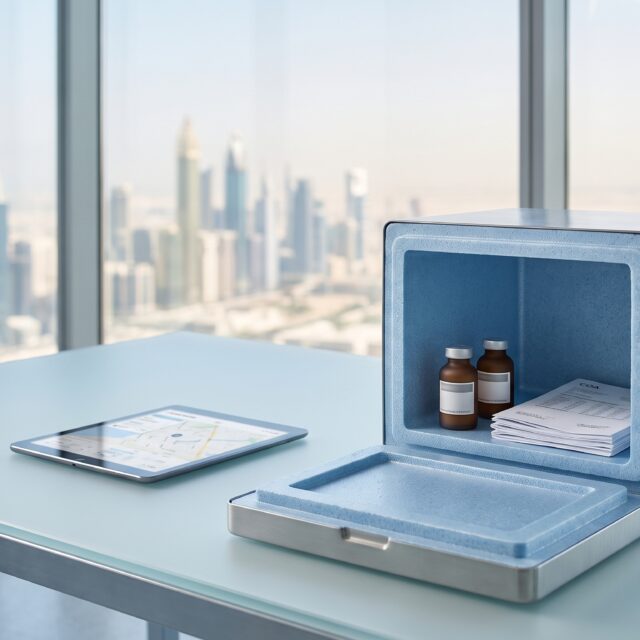
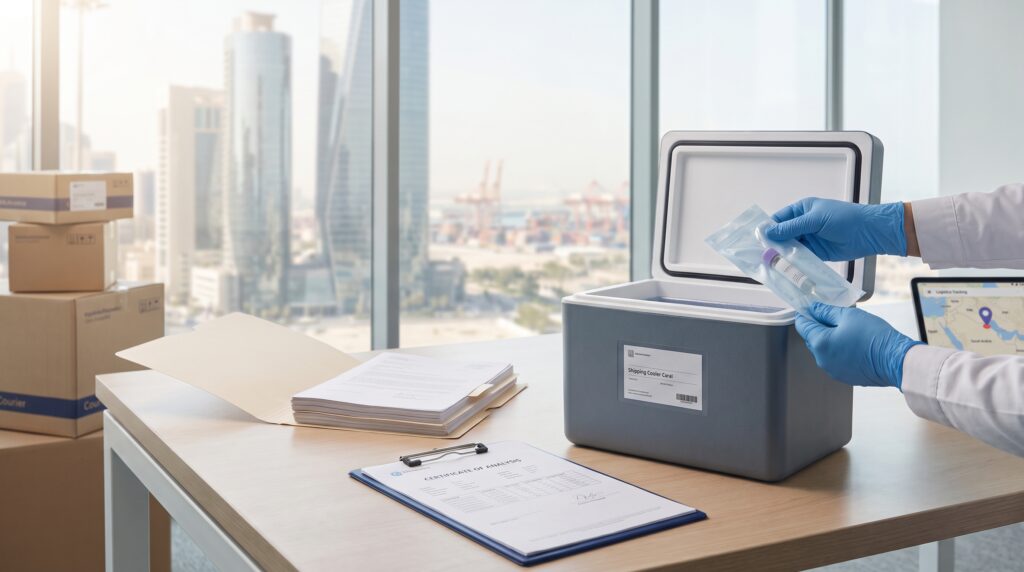
To mitigate these risks, localized distribution is essential. Dispatching from a regional hub in Dubai dramatically reduces the physical distance and transit time to Kuwait. Utilizing specialized thermal packaging, orders are processed quickly. While local researchers benefit from peptides UAE next-day delivery, buyers in Kuwait can expect an expedited 48 to 72-hour delivery window relying on the same advanced regional infrastructure.
This geographic proximity entirely bypasses the weeks-long delays typical of international freight. Faster delivery directly translates to higher compound integrity upon arrival, ensuring your analytical data is not compromised by degraded reagents. Regional couriers also possess a deeper understanding of localized address formats and last-mile delivery protocols in Kuwait, reducing the rate of failed delivery attempts.
Localized Payment and Dedicated GCC Support
Procurement friction extends beyond shipping; it often includes payment processing and supplier communication. Many international websites flag GCC credit cards as high-risk or limit payment options to obscure international wire transfers that complicate the purchasing process and slow down procurement cycles.
Understanding the local market means providing local solutions. For buyers in Kuwait, leading GCC suppliers integrate regional payment gateways, accommodating standard KNET debit cards, split-payment systems, cryptocurrency for privacy-conscious researchers, and Cash on Delivery (COD) options to maximize buyer confidence.
Equally important is post-purchase support. Dealing with an overseas supplier often means waiting 24 hours just to get a simple logistics question answered due to time zone differences. Localized account management and real-time support operating during standard GCC working hours ensure that any inquiries regarding batch data, shipping updates, or reconstitution protocols are resolved instantly.
Upgrading Your Procurement Strategy
Procuring high-quality research compounds in Kuwait does not have to involve gambling on international shipping routes or hoping that a generic COA is accurate. By prioritizing regional suppliers that understand the exact requirements of the GCC environment, researchers can secure high-purity reagents with absolute confidence.
The benchmark for quality procurement involves four key pillars: demanding third-party HPLC/MS verification, insisting on lyophilized powder for thermal stability, utilizing regional rapid delivery networks, and ensuring proper “Research Use Only” documentation for frictionless customs clearance.
For researchers seeking verified, high-purity compounds backed by transparent documentation, explore our range of research materials and order DSIP peptide vials directly through NOVA Labs.
Disclaimer: The products mentioned in this article are strictly for in-vitro research and laboratory use only. They are not intended for human consumption, diagnostic, or therapeutic purposes.
References
- Kuwait General Administration of Customs. (2023). Guidelines for the Importation of Laboratory and Scientific Reagents.
- Journal of Peptide Science. (2022). Thermal Stability and Degradation Pathways of Lyophilized Peptides During Transit.
- NOVA Labs Quality Control. (2024). Third-Party HPLC and MS Testing Protocols for GCC Research Peptides.
Disclaimer: The products mentioned in this article are for research purposes only and are not intended for human consumption.
- Wholesale Peptides Kuwait: Bulk Buying, COA & GCC Delivery – NOVA Labs
- Nova Labs Review 2026: UAE Peptide Supplier COA and Cold-Chain Audit
- Nova Biolabs vs Remy Peptides Kuwait: 2026 Sourcing
- Kuwait Tightens Import Regulations to Enhance Product Safety and Compliance (October 2024)
- Research Peptide FAQ – Testing, COAs & Shipping | NovaLabs
Frequently asked questions
Is it legal to buy DSIP in Kuwait for research?
Yes, importing DSIP into Kuwait is permitted when it is strictly documented and utilized for 'Research Use Only' (RUO) within laboratory or academic settings. It must not be imported or used as a therapeutic or medical product.
Why is lyophilized DSIP better than liquid for Kuwait delivery?
Lyophilized (freeze-dried) DSIP powder is significantly more stable in high temperatures than pre-mixed liquids. This prevents the compound from degrading during transit in the hot GCC climate before it reaches your facility.
How long does shipping take from Dubai to Kuwait?
Using a regional supplier with a GCC distribution hub, shipments dispatched from Dubai typically arrive in Kuwait within 48 to 72 hours, utilizing thermal packaging to protect compound integrity.
How can I verify the purity of my DSIP order?
You should check the supplier's Certificate of Analysis (COA) for your specific batch. Look for third-party High-Performance Liquid Chromatography (HPLC) and Mass Spectrometry (MS) tests showing at least 98% purity.
What payment methods are available for peptide suppliers in Kuwait?
Reputable regional suppliers accommodate Kuwaiti buyers by offering local solutions like KNET, split-payments, standard credit/debit cards, cryptocurrency, and Cash on Delivery (COD) options.
Nova Labs buyer tools
Ready to verify stock, testing and delivery?
Use the product page and lab report section to check availability, documentation, delivery timing and support before placing an order.
- COA / test-report checks
- Kuwait delivery context
- Cold-chain handling
- COD and card payment options
- WhatsApp support