
Where to Buy Eloralintide Saudi Arabia: Sourcing Securely
Quick Answer: To buy Eloralintide in Saudi Arabia safely, researchers must source from regional GCC suppliers that provide batch-specific HPLC and MS Certificates of Analysis (≥98% purity). Ensure the vendor uses cold-chain insulated packaging, ships via express couriers like Aramex, and strictly declares items as in-vitro laboratory reagents for smooth ZATCA customs clearance.
Saudi Arabia’s biotechnology, university research, and life sciences sectors are expanding rapidly in alignment with Vision 2030 objectives. This growth is driving a sharp increase in localized demand for highly specific, high-purity laboratory reagents. For procurement teams and independent principal investigators looking to source experimental compounds, the process is inherently more complex than a standard international e-commerce transaction. Evaluating an Eloralintide supplier in Saudi Arabia requires a rigorous and specific checklist: verifying batch purity through third-party data, ensuring cold-chain integrity during high-heat transit, navigating stringent regional customs compliance, and confirming responsive regional support.
Because this is an advanced, sensitive research peptide, international shipments from generic overseas suppliers frequently face catastrophic degradation from heat exposure or get seized at the border due to incorrect import documentation. This comprehensive guide breaks down exactly how to evaluate your sourcing options, verify critical purity documentation, and ensure that your metabolic research materials arrive intact, compliant, and ready for immediate laboratory study.
Understanding Eloralintide in the Current Research Landscape
Before detailing the logistical nuances of procurement, it is crucial to understand the scientific profile of this specific compound and why its handling requires precision. Eloralintide, also known widely by its research and developmental designation LY-3841136, is an investigational, once-weekly selective amylin 1 receptor (AMY1R) agonist.
Initially developed by Eli Lilly, this peptide is currently generating significant interest in in-vitro and animal model metabolic research environments. Unlike other prominent metabolic peptides that target GLP-1 or GIP biological pathways, Eloralintide specifically activates the amylin-1 receptor. This mechanism is being closely studied for its unique role in satiety signaling, gastric emptying regulation, and glucagon suppression in clinical models. It is currently under active Phase III evaluation (notably the ENLIGHTEN-1 trial, which is scheduled to run through the end of the decade).
Because clinical trials are ongoing, Eloralintide is not approved by the Saudi Food and Drug Authority (SFDA) for clinical, therapeutic, human, or veterinary medical use. Therefore, any legitimate Eloralintide peptide Saudi Arabia procurement must be executed strictly under the classification of “Research Chemicals” or “Laboratory Reagents” intended solely for in-vitro study and controlled laboratory experimentation. Navigating this strict regulatory distinction is the first major hurdle for buyers and dictates how the product must be shipped and documented.
Purity and Documentation: Demystifying the COA
When you order Eloralintide Saudi Arabia bound shipments, the most critical factor in your purchasing decision must be verifiable, batch-specific documentation. In the research peptide market, visual inspection of a lyophilized puck offers zero information about the compound’s actual molecular integrity, sequence accuracy, or the presence of synthetic byproducts left over from manufacturing.
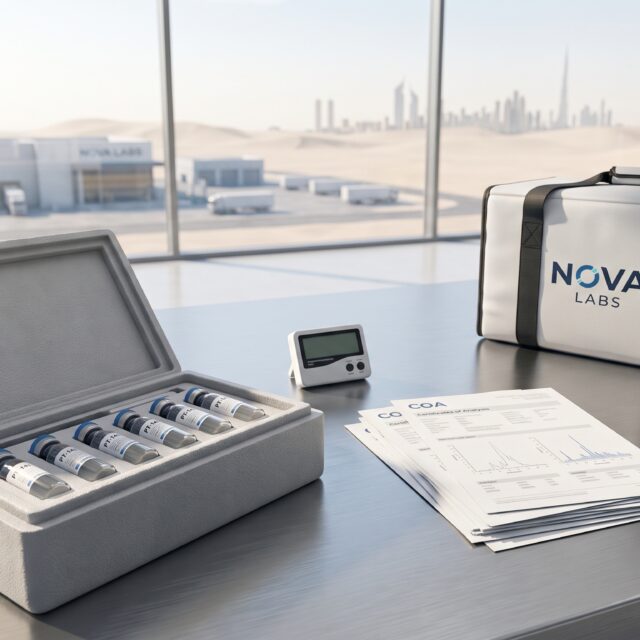
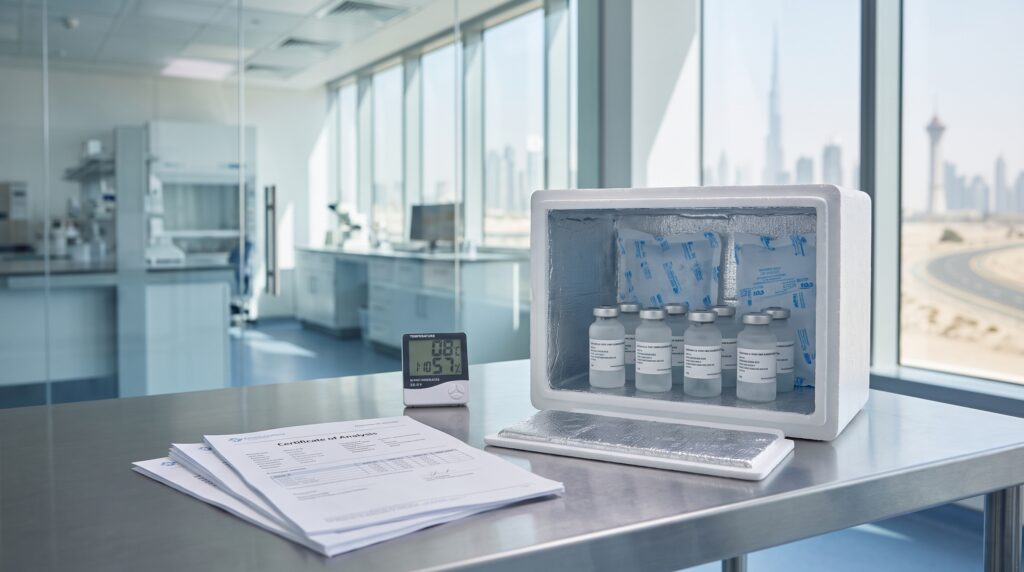
To de-risk your procurement and protect your assay data, demand a batch-specific Certificate of Analysis (COA) from your supplier before releasing any purchase orders. A legitimate, rigorous COA must include two specific analytical tests:
- High-Performance Liquid Chromatography (HPLC): This test measures the purity of the peptide by separating the components in the vial. For metabolic research models, baseline purity should strictly exceed 98%. When reviewing the HPLC graph, look for a single, sharp, distinct peak. Broad shoulders or multiple smaller peaks indicate a poorly refined synthesis process that has left behind truncated peptide sequences or residual solvents (like TFA), which will introduce unwanted variables and toxicity into your cell cultures.
- Mass Spectrometry (MS): This verifies the exact molecular weight of the peptide, confirming that the compound inside the vial is genuinely Eloralintide (LY-3841136) and not a cheaper, mislabeled alternative. The observed mass must match the theoretical mass of the specific sequence.
Unfortunately, many generic international websites post sample COAs that are years out of date, heavily redacted, or outright stolen from other laboratories. A trustworthy supplier operating in the GCC will offer up-to-date, batch-specific testing results and will readily answer technical questions regarding their synthesis, lyophilization, and quality control procedures.
Overcoming the GCC Climate: Cold-Chain Logistics and Packaging
Saudi Arabia’s climate presents a significant operational challenge for peptide stability. The ambient temperatures in cities like Riyadh, Jeddah, and Dammam, particularly during the grueling summer months, can rapidly degrade fragile molecular structures if they are not handled with the utmost care.
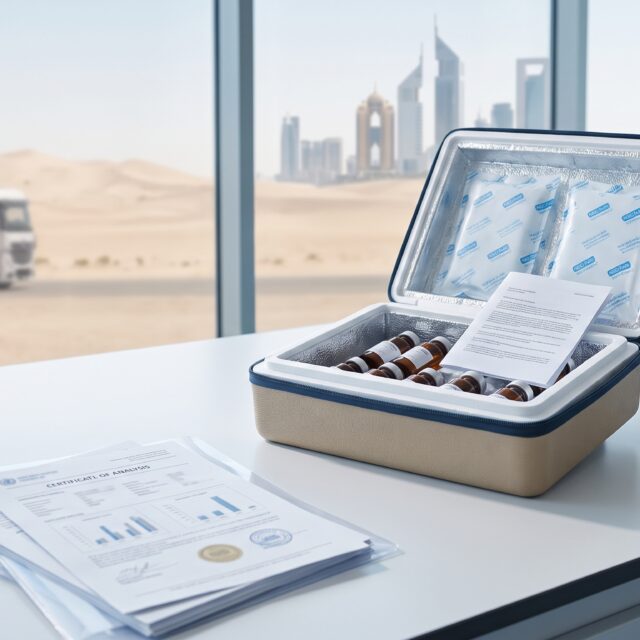
Eloralintide is typically supplied as a lyophilized (freeze-dried) powder. In this state, the removal of moisture makes it inherently more stable than a reconstituted liquid, allowing it to survive room temperatures for brief periods during transit. However, being left in an un-air-conditioned delivery warehouse or sitting in the back of a delivery van in 45°C heat can cause hydrolysis and compromise the compound’s efficacy before it ever reaches your laboratory bench.
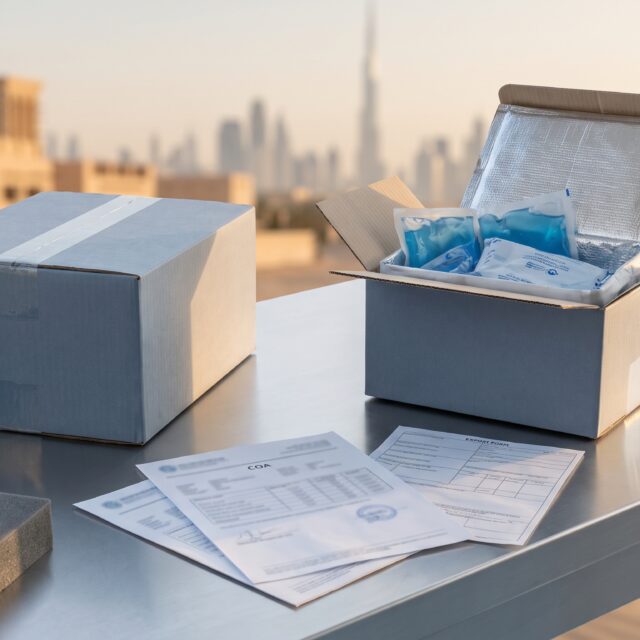
To counter this, leading regional suppliers employ active cold-chain logistics. This means shipments are packed in specialized insulated containers with gel packs to buffer against extreme temperature fluctuations. Once you receive the delivery in KSA, proper storage protocols dictate that the lyophilized peptide should immediately be transferred to a freezer maintained at -20 degrees Celsius for long-term preservation. Protecting the compound from UV light, moisture, and ambient heat is absolutely essential for maintaining its 98%+ purity profile over extended study periods.
Navigating Saudi Customs and Regional Delivery Timelines
One of the most frequent points of failure for researchers attempting to import peptides from the USA or Asia is the customs clearance process at Saudi entry ports. The Zakat, Tax and Customs Authority (ZATCA) operates with strict mandates enforced in cooperation with the SFDA.
If a package arrives with labeling that implies therapeutic benefits, medical applications, dietary use, or human consumption, it will almost certainly be seized, destroyed, or returned to the sender. To ensure frictionless clearance, shipments must be unambiguously labeled as “Laboratory Reagents” with appropriate HS codes. Documentation is typically processed digitally via the Saudi Fasah platform, requiring precise commercial invoices.
This is where regional GCC distribution hubs offer a massive, structural advantage over direct international imports. Suppliers that already maintain a robust UAE next-day peptide delivery network are uniquely positioned to serve the broader GCC, including Saudi Arabia. Because the inventory is already cleared into the Middle East, these suppliers understand the exact compliance phrasing required for Saudi entry. They utilize tracked, premium express couriers—such as Aramex, DHL, or NAQEL—ensuring packages move rapidly through land borders or regional flights. Saudi buyers sourcing from these established regional hubs can reliably expect their insulated shipments to arrive in major cities within a rapid 3 to 5 business days, bypassing the weeks-long delays often associated with overseas customs holds.
Secure Checkout and Localized Support
Procurement friction extends beyond physical logistics; localized payment infrastructure and accessible support are strong indicators of supplier reliability and operational maturity. When evaluating an Eloralintide supplier, look for platforms that integrate seamlessly with regional purchasing habits.
Top-tier research suppliers offer secure checkouts equipped with options like Apple Pay, Google Pay, standard credit card processing, and localized Buy Now Pay Later (BNPL) platforms such as Tamara or Tabby where applicable. For institutional buyers, the ability to process traditional Purchase Orders (POs) and receive compliant tax invoices is critical.
Furthermore, responsive, real-time customer support is a necessity. If a shipment is held up for documentation at a ZATCA checkpoint, or if you require an updated digital COA for your lab’s compliance records, generic email forms often lead to frustrating delays. Suppliers that offer direct, region-specific WhatsApp support demonstrate operational competence and a genuine commitment to their GCC client base.
Buyer Checklist for Sourcing Eloralintide
Before executing your procurement, run through this final checklist to ensure you are sourcing from a reputable, scientifically sound provider:
- Analytical Proof: Does the supplier provide a verifiable, batch-specific HPLC and MS COA showing strictly >98% purity?
- Compliance: Is the compound correctly labeled as a research chemical, completely devoid of unsafe medical or dosage claims?
- Logistics: Does the shipping network utilize insulated cold-chain packaging suitable for Saudi Arabia’s extreme summer temperatures?
- Speed: Are they utilizing tracked regional couriers (Aramex/NAQEL) with realistic 3-5 day cross-border timelines?
- Service: Do they offer localized payment gateways (Mada, Tamara, Apple Pay) and responsive, Middle East-based support channels?
By prioritizing these operational and documentation checks, laboratory managers and researchers can effectively de-risk their procurement process, prevent capital loss from seized shipments, and focus on their analytical work with absolute confidence.
Conclusion and Next Steps
Securing high-purity research materials in the Middle East requires a careful, informed assessment of supplier transparency, customs compliance, and cold-chain integrity. The unique climatic and regulatory environment of Saudi Arabia means that choosing a regional supplier with a deep, practical understanding of GCC logistics is critical to receiving viable, uncompromised peptides for your metabolic models.
Whether you are conducting early-stage receptor binding studies or standardizing your laboratory’s long-term reagent supply chain, ensuring strict batch purity and reliable delivery is paramount. To explore rigorously tested materials backed by transparent analytical documentation, you can evaluate our high-purity Eloralintide and access full, batch-specific HPLC/MS reports directly from our product pages.
*
Disclaimer: The products mentioned in this article are exclusively for in-vitro research and laboratory experimentation purposes. They are strictly not intended for human consumption, therapeutic use, veterinary application, or clinical treatment. Always adhere to your institution’s safety and handling protocols.
References
- ClinicalTrials.gov. (2024). A Study of Eloralintide (LY3841136) in Participants with Obesity or Overweight (ENLIGHTEN-1). U.S. National Library of Medicine.
- Saudi Food and Drug Authority (SFDA). (2024). Clearance Requirements and Regulations for Laboratory Reagents and Research Chemicals.
- Zakat, Tax and Customs Authority (ZATCA). (2024). Importing Guidelines for Restricted Scientific Goods via Fasah.
- Eli Lilly and Company. (2023). Pipeline and Investigational Compounds: AMY1R Agonist Development.
Disclaimer: The products mentioned in this article are for research purposes only and are not intended for human consumption.
- A Study of Eloralintide (LY3841136) in Participants With Obesity, or Overweight Without Type 2 Diabetes (ENLIGHTEN-1)
- Eloralintide (Amylin Receptor Agonist) – Disguised Alpha
- Research Peptides Delivered to Jeddah | Wellness Labs – UAEPeptide.ai
- MOTS-c Saudi Arabia: Buying, Purity, COA and Delivery Guide – NOVA Labs
- Saudi Restricted Imports 2026: SFDA, GACA & CST Approvals – Kisun Shipping
Frequently asked questions
Is Eloralintide approved by the SFDA in Saudi Arabia?
No. Eloralintide is currently an investigational compound in active Phase III clinical trials and is strictly not approved by the SFDA for medical, therapeutic, or human use. It is permitted to be imported solely as an in-vitro research chemical or laboratory reagent.
How long does Eloralintide delivery take to Saudi Arabia?
When shipping from a regional GCC hub, delivery to major Saudi cities like Riyadh, Jeddah, and Dammam typically takes 3 to 5 business days using tracked express couriers like Aramex or NAQEL, provided all customs documentation is accurate.
Does Eloralintide require cold storage during transit to the GCC?
While lyophilized Eloralintide is stable at room temperature for short transit periods, it should be shipped in insulated packaging with gel packs to withstand extreme GCC heat. Upon arrival, long-term storage requires an immediate transfer to a freezer set to -20 degrees Celsius.
How can I verify the purity of Eloralintide before buying?
A reputable supplier will provide a batch-specific Certificate of Analysis (COA) featuring High-Performance Liquid Chromatography (HPLC) and Mass Spectrometry (MS) test results. For reliable metabolic research, verify that the HPLC shows a baseline purity level strictly above 98%.
Nova Labs buyer tools
Ready to verify stock, testing and delivery?
Use the product page and lab report section to check availability, documentation, delivery timing and support before placing an order.
- COA / test-report checks
- Saudi Arabia delivery context
- Cold-chain handling
- COD and card payment options
- WhatsApp support