

Key Takeaways
- Purity Verification: Always demand batch-specific Certificates of Analysis (COAs) demonstrating >99% purity via HPLC and MS to prevent compromised assay data.
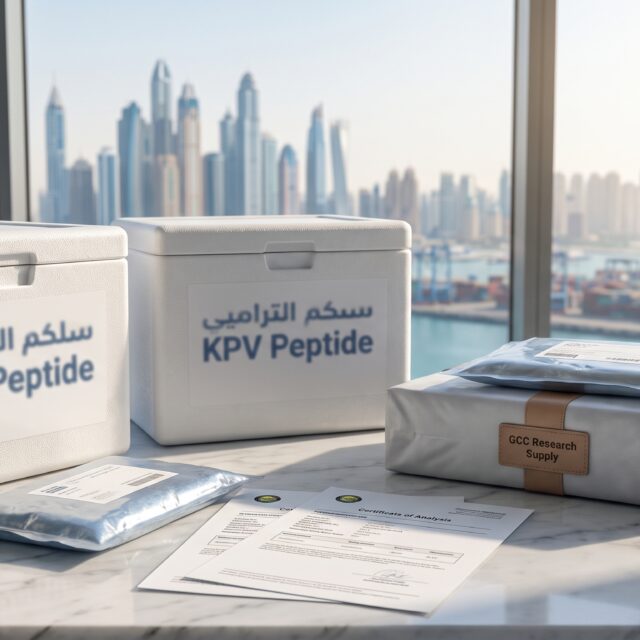
- Climate Control: Extreme Gulf temperatures require regional suppliers to utilise specialised cold-chain logistics to maintain the stability of lyophilised peptides.
- Customs Compliance: Sourcing regionally bypasses stringent Ministry of Public Health (MoPH) delays when products are strictly categorised and documented as in-vitro research chemicals.
- Reliable Support: Opt for vendors offering clear communication, secure GCC payment gateways, and transparent documentation for laboratory procurement teams.
Acquiring high-purity research materials in the Middle East requires navigating a unique set of logistical and regulatory challenges. For laboratory professionals and institutional procurement teams looking to acquire specialised synthetic compounds, standard commercial channels rarely suffice. Retail pharmacies and standard medical distributors in Doha predominantly cater to the consumer market, stocking cosmetic collagen blends, hydration formulas, and dietary supplements rather than true, research-grade synthetic peptides.
This gap in the local market leaves serious researchers searching for specialised regional suppliers capable of delivering verifiable molecular purity while surviving the extremes of the Arabian Gulf climate. Whether you are designing an in-vitro assay to study cytokine modulation or evaluating gut-barrier integrity in controlled tissue models, the stability and purity of your chemical reagents are non-negotiable. This guide outlines exactly what informed buyers must verify before placing an order, covering analytical testing protocols, local customs considerations, and temperature-controlled logistics.
Where to Buy KPV in Qatar for Laboratory Research
To securely buy KPV in Qatar for laboratory research, buyers must procure from specialised regional distributors offering temperature-controlled shipping and batch-specific Certificates of Analysis. Reliable suppliers ensure greater than 99 percent purity via HPLC testing, preventing chemical degradation during transit and navigating local customs effectively.
For researchers based in Doha or surrounding GCC territories, the procurement process requires a highly critical eye. Simply finding a supplier with listed stock is inadequate. You must ensure that the vendor operates with complete transparency regarding their analytical testing and understands the nuances of cross-border chemical logistics within the Middle East. Institutional buyers should expect their suppliers to act as partners in research compliance, providing all necessary documentation upfront.
The Scientific Context: Why KPV Purity Matters
KPV is a naturally occurring tripeptide composed of the amino acids Lysine, Proline, and Valine. It is derived from the much larger alpha-melanocyte-stimulating hormone (alpha-MSH). In contemporary scientific literature, KPV is heavily researched for its potential anti-inflammatory properties and its role in modulating specific immune responses at the cellular level.
Crucially, unlike its parent hormone, the KPV peptide does not possess melanotropic activity, meaning it does not stimulate pigmentation or melanocyte pathways. This isolation of specific properties makes it a highly attractive compound for targeted, isolated research.
Recent laboratory studies focusing on the KPV peptide that researchers in the GCC may be replicating or expanding upon include:
- Cytokine Modulation: Observing how KPV down-regulates pro-inflammatory cytokines (such as IL-6 and TNF-alpha) within controlled cellular environments.
- Gut Barrier Research: Investigating the tripeptide’s interaction with epithelial cells and its potential to support mucosal barriers in in-vitro intestinal models.
- Dermatological Tissue Models: Analysing its molecular stability and cellular interaction when applied to synthetic or harvested tissue structures.
It is critical to note that these studies are entirely experimental. KPV is handled strictly as an investigative chemical. Researchers must evaluate their supplier based on the precise molecular integrity required for these highly controlled assays, as introducing degraded or impure compounds will invalidate months of experimental data.
The Qatar Buyer’s Checklist: Evaluating a KPV Supplier
Finding a trustworthy supplier requires prioritising documentation and transparency. The global peptide market is increasingly crowded, and variations in synthesis quality can easily compromise an entire research programme. Before selecting a vendor, procurement officers and lead researchers should insist on the following verification steps:
1. Batch-Specific Certificates of Analysis (COA)
A generic, undated, or mismatched COA is a massive red flag in laboratory procurement. The supplier must present a COA that corresponds exactly to the specific batch or lot number currently in stock. This document serves as the molecular footprint of the peptide, confirming its identity, structural accuracy, and current viability.
2. High-Performance Liquid Chromatography (HPLC)
HPLC is the gold standard for testing synthetic peptide purity. This analytical technique separates the components in a mixture under high pressure, ensuring that the KPV vial contains the target tripeptide and minimal manufacturing impurities, such as truncated sequences or synthesis by-products. For rigorous scientific application, buyers should demand a strict purity threshold of at least 99 percent.
3. Mass Spectrometry (MS)
While HPLC confirms the purity of the sample, Mass Spectrometry (MS) confirms the exact molecular weight of the peptide. It verifies that the precise sequence of Lysine, Proline, and Valine was synthesised without missing amino acids or accidental additions. Together, HPLC and MS provide the complete quantitative assurance required for publishable laboratory work.
4. Endotoxin Testing
For in-vitro assays involving live cell cultures, the presence of endotoxins (lipopolysaccharides) can trigger unintended immune responses, skewing data. Top-tier suppliers often provide endotoxin reports for their research materials, guaranteeing they are safe for sensitive cellular applications.
Overcoming the GCC Climate: Cold-Chain Logistics and Storage
The most significant logistical challenge when importing synthetic compounds into the GCC is the local climate. Peptides are fragile molecular structures that are highly susceptible to rapid degradation when exposed to UV light, excessive moisture, and extreme heat. With summer temperatures in the Gulf regularly exceeding 40 degrees Celsius, standard international postal transit poses a severe risk to product viability.
To mitigate this thermal threat, high-quality KPV is supplied in a lyophilised (freeze-dried) state. In this stable powder form, the peptide can survive short-term transit without breaking down, provided it is kept away from direct sunlight and insulated against excessive thermal shock.
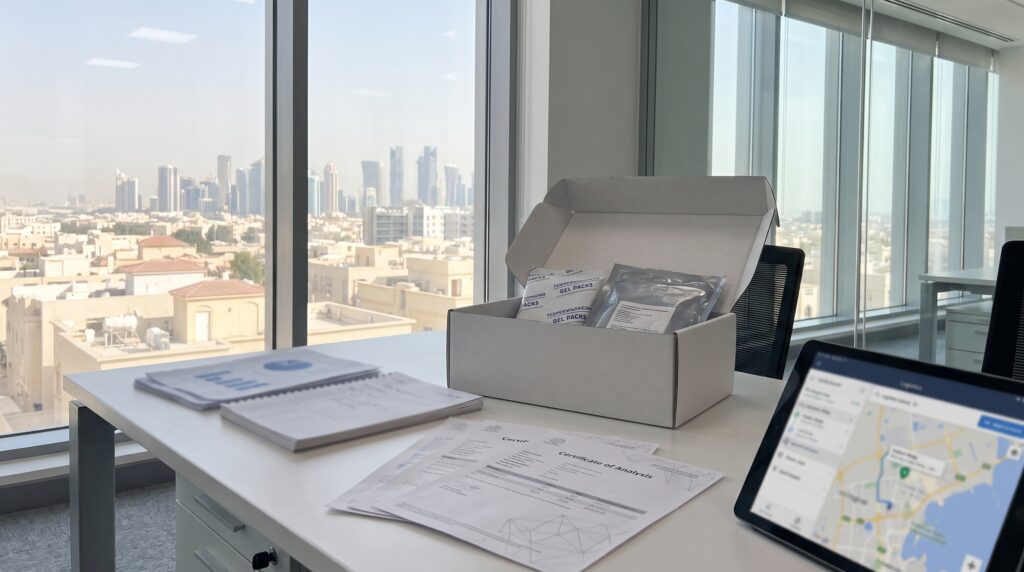
Premium regional suppliers bypass vulnerable standard postal networks. Instead, they rely on temperature-managed transit designed to limit elemental exposure. For laboratories across the Gulf, partnering with vendors who utilise regional delivery solutions that bypass standard postal delays is crucial for maintaining the integrity of the compound from the warehouse to the laboratory bench.
Laboratory Storage Protocols
Once the shipment arrives at your facility, strict storage protocols must be followed:
- Lyophilised State (Powder): Unreconstituted vials should be placed immediately in a freezer (typically -20 degrees Celsius) for long-term storage, where they can remain stable for up to 24 months.
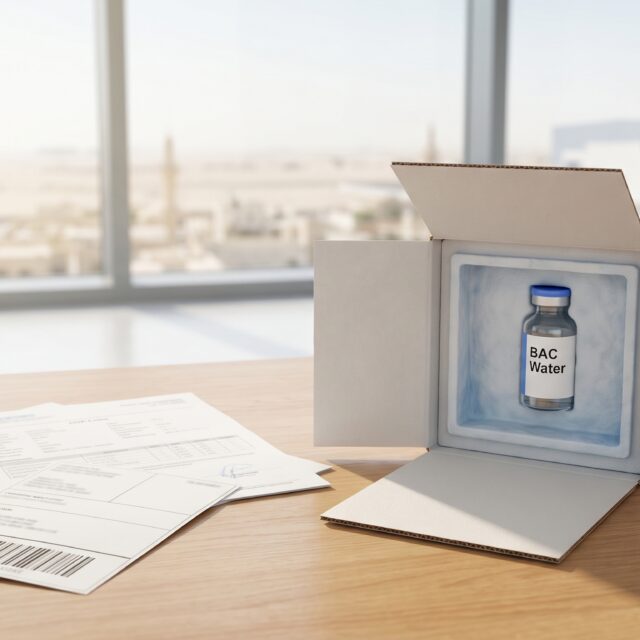
- Reconstituted State (Liquid): After the KPV is reconstituted with bacteriostatic water or sterile saline for active experiments, the delicate bonds are susceptible to bacterial growth and thermal degradation. The solution must be kept in a laboratory refrigerator at 2 to 8 degrees Celsius and utilised within 3 to 4 weeks.
Navigating Customs, MoPH Regulations, and Payment
Importing chemical and biological research compounds into Qatar involves strict regulatory oversight. Commercial chemical imports are governed by the General Authority of Customs (GAC), and any materials that could be misconstrued as unapproved medical treatments fall under the strict purview of the Ministry of Public Health (MoPH).
Historically, the MoPH enforces stringent clearance protocols for medical shipments. Unapproved therapeutic products intended for human or animal use face a high probability of extended delays or outright confiscation at customs checkpoints.
This is why regional sourcing and accurate product positioning are critical. Discerning buyers partner with regional suppliers who correctly categorise and document their products strictly as laboratory research chemicals. By maintaining clear, non-therapeutic documentation (including accurate Material Safety Data Sheets), researchers can drastically reduce customs friction.
Furthermore, seamless procurement relies on accessible payment and support infrastructure. Look for suppliers offering secure, encrypted checkout gateways that accept standard laboratory procurement cards or modern alternatives like cryptocurrency. Access to direct customer support—such as local WhatsApp lines—ensures that any logistical queries can be handled in real-time within the Gulf Standard Time (GST) zone.
Ordering High-Purity KPV at NOVA Labs
For procurement teams and independent researchers across the GCC, finding a supplier that marries rigorous analytical testing with regional logistical expertise is essential. NOVA Labs is structured specifically to support the strict quality demands and logistical timelines of researchers in Dubai, Qatar, and the broader Middle East.
When you source through NOVA Labs, you bypass the ambiguity of overseas shipping, lengthy customs holds, and the limitations of local retail channels. Every batch of synthetic peptide is backed by transparent, third-party HPLC and MS testing, ensuring you receive the exact molecular profile your research demands. Furthermore, our deep understanding of GCC logistics means your materials are packaged and transported with the intense local climate in mind.
If you are ready to secure high-purity tripeptides for your upcoming in-vitro assays, you can confidently buy KPV online directly through our secure platform, ensuring your research is powered by verified, consistent, and premium-grade materials.
Disclaimer: All products supplied by NOVA Labs are intended strictly for laboratory and in-vitro research purposes only. They are not intended for human or animal consumption, diagnosis, or any form of therapeutic use. Researchers must handle all compounds in compliance with their local institutional and governmental regulations.
*
References
- Luger, T. A., et al. (2007). “Role of the alpha-melanocyte-stimulating hormone in inflammation.” Annals of the New York Academy of Sciences.
- Land, W. G. (2012). “The Role of Peptides in Immune Modulation and Gut Barrier Function.” Journal of Cellular Physiology.
- Qatar General Authority of Customs (GAC) – Import Regulations for Chemicals and Laboratory Reagents.
- Ministry of Public Health (MoPH), State of Qatar – Guidelines for the Importation of Medical and Research Products.
- World Health Organisation (WHO). (2015). Good Trade and Distribution Practices for Pharmaceutical Starting Materials.
- Buy KPV UAE — Anti-Inflammatory Research Tripeptide in Dubai | Emirates Peptides
- Qatar – Import Requirements and Documentation – International Trade Administration
- Buy Premium KPV Peptide Anti-Inflammatory | Over 99% Purity – Onyx Biolabs
- Import unapproved medicine into Qatar – Everyone.org
- Need MoPH Approval Before Importing to Qatar?
- How To Successfully Import Chemicals to Qatar – Camachem
- KPV Peptide Therapy in Dubai – IV Wellness Lounge
Frequently asked questions
Where can I buy KPV in Qatar for research?
Specialised regional distributors are the most reliable source to buy KPV in Qatar. Local retail pharmacies in Doha typically only stock cosmetic formulations, requiring researchers to partner with vendors offering verifiable, research-grade synthetic peptides.
Does KPV require cold-chain shipping to Qatar?
Yes. To survive extreme Gulf temperatures during transit, lyophilised KPV must be shipped using temperature-controlled logistics. Upon reconstitution in the laboratory, the active solution must be stored in a refrigerator between 2 and 8 degrees Celsius.
What testing documents should a KPV supplier provide?
A reputable laboratory supplier must provide a batch-specific Certificate of Analysis (COA) displaying recent High-Performance Liquid Chromatography (HPLC) and Mass Spectrometry (MS) results to verify sequence accuracy and a purity rating above 99 percent.
Can I import KPV for personal use in Qatar?
No. KPV is sold strictly as a laboratory chemical for in-vitro research and analytical testing. It is not approved for human consumption, and therapeutic imports face strict confiscation under Ministry of Public Health (MoPH) customs regulations.
How long does KPV remain stable in a lyophilised state?
When kept in its original lyophilised (freeze-dried) powder form and stored in a laboratory freezer at -20 degrees Celsius, KPV can remain highly stable and viable for in-vitro research for up to 24 months.
Nova Labs buyer tools
Ready to verify stock, testing and delivery?
Use the product page and lab report section to check availability, documentation, delivery timing and support before placing an order.
- COA / test-report checks
- Qatar delivery context
- Cold-chain handling
- COD and card payment options
- WhatsApp support