
Sourcing Strategy: Buy KPV Saudi Arabia
Quick Answer: Sourcing KPV in Saudi Arabia requires using a UAE-based regional hub to bypass prolonged international customs delays. Discerning buyers must insist on lyophilized powder to survive local transit heat, demand verifiable Janoshik Analytical testing showing >98% purity, and utilize localized KSA payment methods for seamless 4-to-5-day delivery to Riyadh or Jeddah.
For chemical analysis and life sciences facilities in the Kingdom of Saudi Arabia, securing high-purity tripeptides involves far more than simply locating an international vendor. The extreme ambient temperatures of the Arabian Peninsula and the strict regulatory frameworks governed by the Saudi Food and Drug Authority (SFDA) dictate every aspect of successful procurement.
International research compound imports frequently encounter severe bottlenecks. To minimize structural degradation risks during transit, institutional buyers are prioritizing GCC-based hubs that offer localized logistics, robust batch verification, and heat-stable formats.
SFDA Compliance and GCC Logistics
The regulatory environment in Saudi Arabia mandates strict compliance. The SFDA rigorously enforces guidelines prohibiting the importation of unregistered pharmaceutical compounds intended for human use. Consequently, all legitimate synthetic peptides must be explicitly designated, handled, and sold strictly under “Research Use Only” parameters.
When you attempt to buy KPV in Saudi Arabia from suppliers based in North America or Europe, shipments face intense intercontinental customs scrutiny. Even with immaculate paperwork declaring the contents for in-vitro analysis, these packages often sit in holding facilities for weeks, risking seizure or terminal degradation.
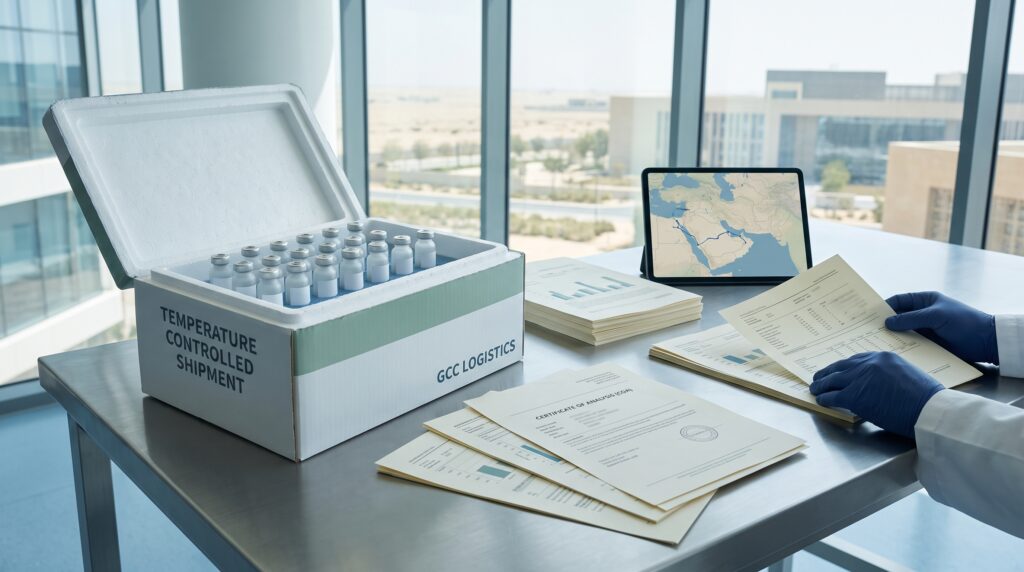
Procuring from a legally compliant, UAE-based regional supplier streamlines this supply chain. Operating within the established GCC logistics corridor drastically reduces friction. Premium UAE suppliers typically route orders into major Saudi markets like Riyadh, Dammam, and Jeddah within 4 to 5 business days, drastically narrowing the exposure window.
Thermal Stability: Lyophilized KPV in KSA Heat
The most pressing environmental hazard for peptide procurement in Saudi Arabia is the climate. Ambient summer temperatures easily exceed 45°C, creating a highly destructive environment for delicate amino acid chains.
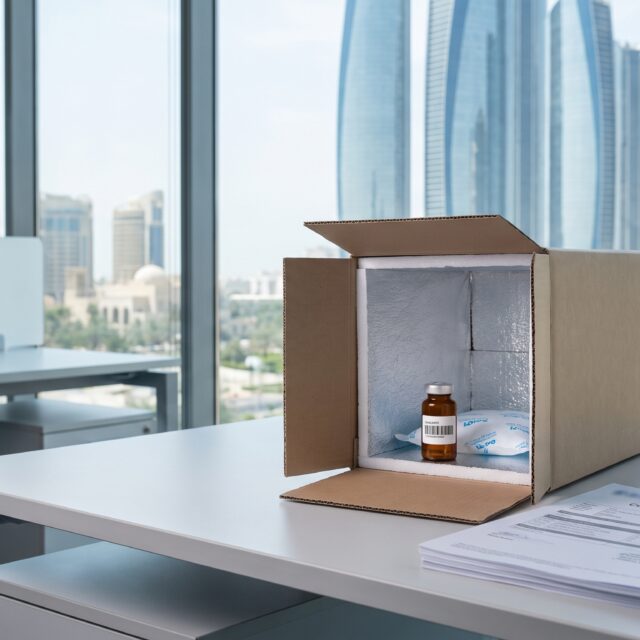
Peptides degrade quickly via hydrolysis when subjected to heat and moisture. Pre-mixed liquid peptide solutions offer virtually no shelf-life stability outside of a strict cold-chain infrastructure. If a liquid solution stalls in a transit warehouse, its molecular integrity will be severely compromised prior to arrival.
Reputable suppliers circumvent this through lyophilization (freeze-drying). This process extracts moisture, yielding a highly stable, solid powder block within the vial. Lyophilized KPV powder endures high-temperature transit routes remarkably well, requiring reconstitution with bacteriostatic water only at the exact moment of laboratory application. For Saudi-based facilities, purchasing lyophilized formats is absolutely mandatory.
Validating Janoshik COAs for KPV Purity
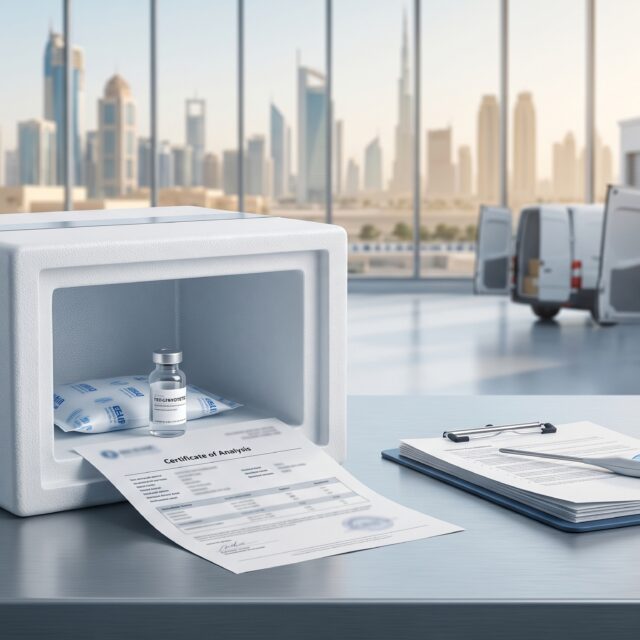
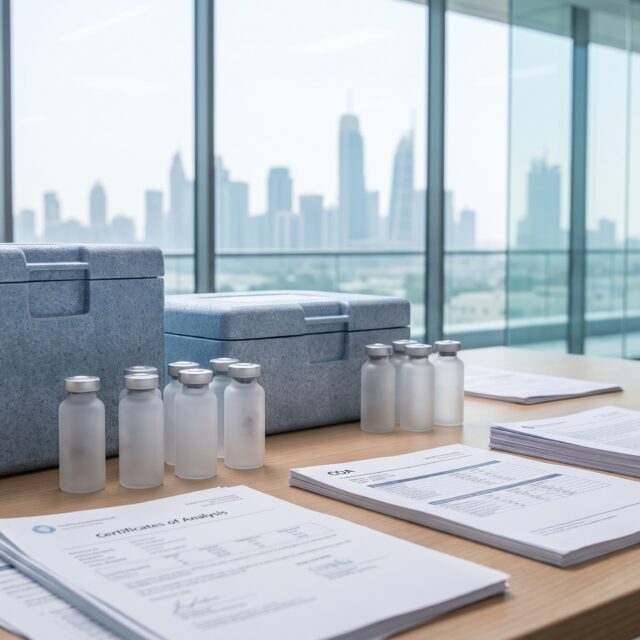
Vendor purity claims are meaningless without third-party validation. When auditing a KPV supplier, a transparent, batch-specific Certificate of Analysis (COA) is the definitive metric for quality control.
Regional laboratories demand High-Performance Liquid Chromatography (HPLC) and Mass Spectrometry (MS) documentation. Janoshik Analytical currently represents the industry standard for independent peptide testing in the GCC.
When reviewing a COA, verify these three critical elements:
- Chromatographic Purity (HPLC): The HPLC graph must display one singular, dominant peak, indicating a purity concentration exceeding 98%.
- Molecular Weight (MS): Mass Spectrometry confirms compound identity. KPV has an exact molecular mass (383.48 g/mol); the MS output must match this precisely.
- Cryptographic Authentication: Legitimate Janoshik reports include a unique verification key. Buyers must enter this key at the testing facility’s official verification portal to ensure the report was independently issued and matches currently available batch numbers.
Structural Mechanisms: KPV and the PepT1 Transporter
KPV (Lysine-Proline-Valine) is a naturally occurring tripeptide derived from the terminal region of alpha-melanocyte-stimulating hormone (α-MSH). In contemporary scientific literature, KPV is heavily researched for its unique interaction with gastrointestinal cellular models.
Studies indicate KPV exhibits a uniquely high affinity for the PepT1 transporter, an intestinal protein responsible for the cellular uptake of small peptides (Dalmasso et al., 2008). Because of this highly targeted transport mechanism, researchers frequently utilize KPV in in-vitro cellular assays evaluating mucosal resilience, gut-barrier integrity, and localized anti-inflammatory pathways. Its truncated structure—comprising only three amino acids—also makes it an ideal candidate for stability profiling and advanced delivery mechanism studies.
Procurement Operations: Tamara and B2B Flexibility
Beyond chemical purity, modern procurement relies on frictionless financial transactions. Leading regional suppliers tailor their infrastructure to support specific Saudi market preferences.
- Localized Payment Gateways (Tamara): Traditional credit card processors frequently flag international research chemical purchases. Integrating local Buy Now, Pay Later (BNPL) platforms like Tamara allows Saudi facilities to execute bulk procurement orders using the local currency ecosystem without triggering cross-border transaction blocks.
- Cryptocurrency Processing: For entities requiring decentralized financing or elevated privacy, direct stablecoin settlements (USDT/USDC) offer immediate, borderless clearance.
- Accessible Retail Frameworks: Historically, securing reagent-grade peptides required complex institutional B2B licensing. Today, specialized GCC hubs operate open-retail structures, democratizing access to verified materials for independent laboratories without enforcing prohibitive Minimum Order Quantities (MOQs).
Final Sourcing Strategy for the Kingdom
Securing reliable research compounds requires strict adherence to three principles: demanding lyophilized stability, verifying independent Janoshik analytical data, and utilizing regional GCC logistics to bypass international customs friction.
NOVA Labs provides infrastructure specifically engineered for the Gulf region. We supply verified, highly purified KPV peptide vials backed by independent, third-party Janoshik analytics. Leveraging our dedicated GCC shipping network, researchers in Riyadh, Jeddah, and across Saudi Arabia can procure crucial materials with Tamara integration, absolute chemical transparency, and rapid 4-to-5-day delivery times.
Disclaimer: All products mentioned in this article are strictly for in-vitro laboratory research purposes only and are not intended for human consumption, diagnostic, or therapeutic use.
References
- Dalmasso, G., Nguyen, H. T., Faulkner, F. A., et al. (2008). “PepT1-mediated epithelial transport of the antimicrobial peptide KPV.” Gastroenterology, 134(1), 166-178.
- Luger, T. A., Scholzen, T. E., Brzoska, T., et al. (2003). “The role of alpha-MSH as a modulator of cutaneous inflammation.” Annals of the New York Academy of Sciences, 994(1), 133-140.
- Wholesale Peptides Saudi Arabia: B2B Supplier & Procurement – NOVA Labs
- Nova Biolabs vs Peptides Lab UAE: 2026 KSA Sourcing Guide
- How to Verify a Janoshik Test Report | UAE Peptide COA Guide – NOVA Labs
- MoH Warns Against Using Unregistered Drugs and Seizes Violators
- What Janoshik Testing Actually Tells You (And What It Doesn’t) – NorthPeptide
- Buy KPV UAE — Anti-Inflammatory Research Tripeptide in Dubai | Emirates Peptides
- Where to Buy KPV in 2026: Trusted Suppliers & Prices – Klow Peptide
Frequently asked questions
Is it legal to buy KPV in Saudi Arabia?
Yes, it is legal to purchase KPV in Saudi Arabia provided it is strictly for in-vitro laboratory research and chemical analysis. The SFDA heavily restricts the importation of unregistered peptides, prohibiting any products intended for human consumption or medical use.
How long does peptide delivery take to Saudi Arabia?
When ordering from a specialized GCC regional hub based in the UAE, delivery to major Saudi cities such as Riyadh or Jeddah typically takes between 4 and 5 business days, allowing buyers to completely bypass extended international customs delays.
Why is lyophilized KPV better than liquid for Saudi buyers?
Lyophilized (freeze-dried) KPV powder is thermally stable, allowing the compound to survive the extreme ambient heat of Saudi Arabian transit routes. Pre-mixed liquid peptides degrade rapidly at high temperatures via hydrolysis and require strict cold-chain handling.
How can I verify the purity of my KPV supplier?
Demand a batch-specific Certificate of Analysis (COA) from an independent, third-party laboratory like Janoshik Analytical. Ensure the report shows over 98% purity via HPLC testing and verify its authenticity using the cryptographic key on the testing facility's official website.
Can I use Tamara to buy KPV in Saudi Arabia?
Yes, many premium regional suppliers tailored to the GCC market now offer integrated local payment gateways, including Tamara installments. This facilitates secure, convenient procurement using local currency without triggering international banking flags.
Nova Labs buyer tools
Ready to verify stock, testing and delivery?
Use the product page and lab report section to check availability, documentation, delivery timing and support before placing an order.
- COA / test-report checks
- Saudi Arabia delivery context
- Cold-chain handling
- COD and card payment options
- WhatsApp support