
Procuring laboratory-grade materials in the GCC requires a firm understanding of both regional logistics and local regulatory frameworks. For institutional buyers and independent researchers looking to buy PT-141 in Qatar, the sourcing landscape requires meticulous attention to detail. Rapid regulatory shifts, intense summer heat, and stringent customs protocols mean that successfully securing authentic PT-141 demands more than simply clicking “checkout” on an international website.
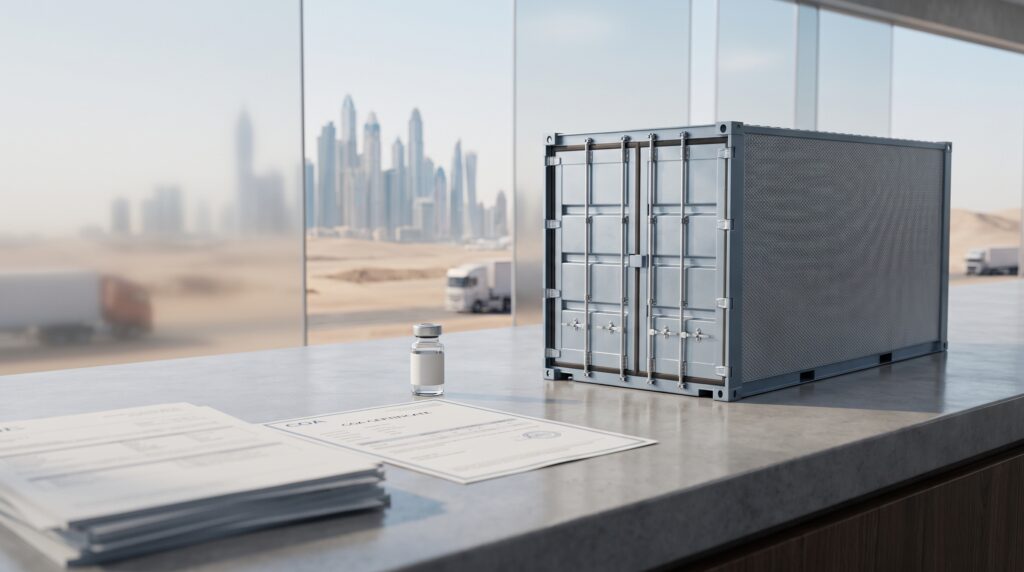
Whether you are operating a commercial laboratory or conducting independent molecular research, evaluating a supplier involves scrutinizing their chemical analysis reports, their ability to navigate Qatar’s Al-Nadeeb electronic customs clearance system, and their capacity to maintain strict thermal controls during transit.
Quick Buyer Checklist: How to Buy PT-141 in Qatar
To successfully buy PT-141 in Qatar, researchers must source from regional suppliers providing verifiable third-party HPLC and MS Certificates of Analysis proving over 98% purity. Legitimate laboratory shipments require proper Harmonized System (HS) codes for Al-Nadeeb customs clearance, secure digital payments, and insulated cold-chain logistics to prevent degradation.
Navigating Qatar’s MoPH Regulations and Customs
The regulatory environment surrounding peptide procurement in Doha experienced a notable update recently. In August 2024, the Pharmacy and Drug Control Department of Qatar’s Ministry of Public Health (MoPH) issued Circular No (PDC/2024/31). This directive strictly regulates the import, distribution, and trade of unlicensed peptide products, placing a heavy focus on keeping unauthorized therapeutic compounds out of the local market.
The “Research Use Only” Designation and Al-Nadeeb
A critical aspect of the MoPH directive is its stance on labeling. The circular explicitly clarifies that simply labeling a peptide “for research use” or “not for human use” does not grant blanket exemption from legal enforcement if the product is subsequently promoted, packaged, or utilized for human or aesthetic applications. This has led to heavy scrutiny of unregulated grey-market imports at the border.
For legitimate researchers, this means importing scientific and laboratory reagents into Doha must be done strictly by the book. It requires formal processing through the Al-Nadeeb electronic customs clearance platform. A professional supplier will ensure that shipments include precise documentation:
- Commercial Invoices: Detailing the exact chemical nature and laboratory purpose of the shipment.
- Harmonized System (HS) Codes: Ensuring the compound is correctly classified as a laboratory reagent rather than a finished pharmaceutical.
- Origin Documentation: To facilitate smooth customs processing and prevent costly border delays or confiscation.
Evaluating a PT-141 Supplier in Qatar: COAs and Purity
The quality of your research relies entirely on the integrity of your reference materials. When evaluating where to order PT-141 in Qatar, the absolute first requirement is chemical authenticity. The regional market features a wide spectrum of suppliers, from unauthorized grey-market entities to premium, licensed regional providers.
For example, unregulated portals might list grey-market imports at suspiciously low prices. These heavily scrutinized imports almost always lack verifiable batch data and carry high risks of confiscation under the MoPH regulations. Conversely, premium regional providers operating with strict compliance and batch-tracking price their highly purified reagents according to the cost of strict quality control and specialized regional transport.
To bridge the gap between risk and reliability, informed buyers must demand independent verification. Look for a supplier that publicly provides:
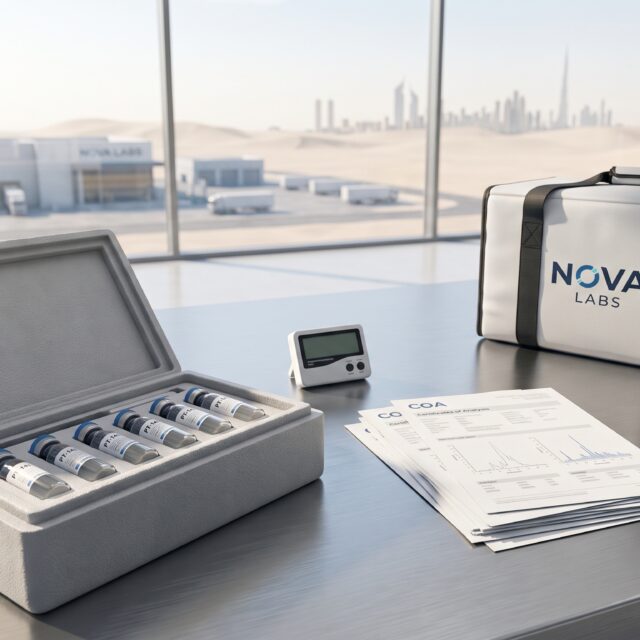
- High-Performance Liquid Chromatography (HPLC) Reports: This analytical technique determines the exact purity percentage of the PT-141 peptide. A standard benchmark for high-level in-vitro research is a minimum of 98% purity. Researchers should look at the chromatogram for a single, sharp peak with minimal baseline noise or secondary peaks indicating residual solvents.
- Mass Spectrometry (MS) Data: This confirms the molecular weight of the peptide. For PT-141 (Bremelanotide), researchers expect a molecular weight of approximately 1025.2 g/mol. MS ensures the compound in the vial is indeed PT-141 and not a degraded byproduct or cheap amino acid filler.
- Batch-Specific Transparency: The COA should correspond to the specific batch number printed on the vial you are purchasing, rather than a generic, multi-year-old document.
Beating the GCC Heat: Cold-Chain Logistics
The physical stability of a peptide is just as important as its initial purity. PT-141, like many complex peptide chains, is composed of fragile amino acid bonds that undergo rapid thermal degradation when exposed to extreme temperatures. In the intense heat of the Middle East, standard courier shipping is a critical failure point.
If a vial sits in an unconditioned sorting facility in Doha during the height of summer, the peptide’s structural integrity will break down, rendering it useless for precise laboratory applications.
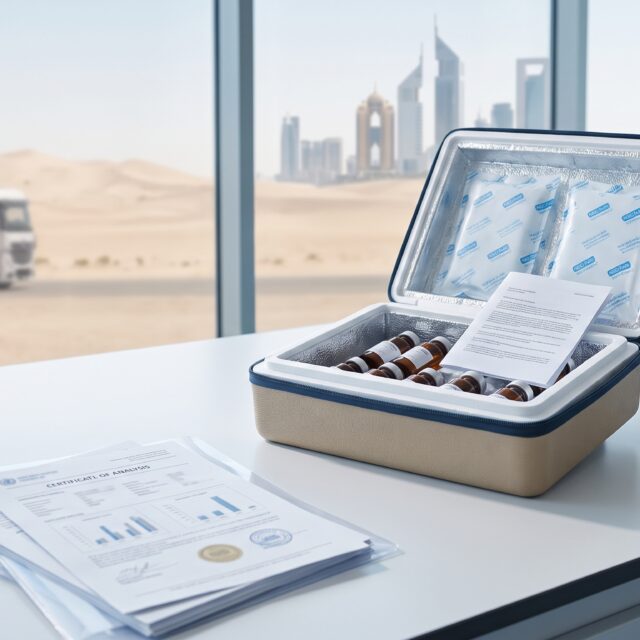
Secure transit requires advanced insulated cold-chain packaging. For researchers in Doha, relying on regional hubs that offer peptides UAE next-day delivery is often the safest logistical route. A UAE-based staging point drastically cuts down the time fragile compounds spend in uncontrolled thermal environments before making the short transit to Qatar.
Ensure your supplier utilizes thermal barriers, specialized cooling packs, and expedited transit times. Partnering with suppliers that excel in next-day or 48-hour express shipping across the GCC drastically reduces the window for temperature fluctuations, preserving the molecular integrity of your research materials.
Post-Delivery Handling and Storage Protocols
Successfully importing PT-141 is only the first step; maintaining its stability upon arrival is equally crucial for institutional researchers. Once your insulated package clears customs and arrives at your facility, immediate transfer to a climate-controlled environment is required.
- Lyophilized Storage: Unreconstituted (freeze-dried) PT-141 should be stored in a laboratory freezer at -20°C for long-term stability, away from direct UV light.
- Reconstitution Practices: When preparing the peptide for in-vitro assays, researchers must use sterile bacteriostatic water or laboratory-grade sterile saline, employing strict aseptic techniques to prevent bacterial contamination.
- Avoid Freeze-Thaw Cycles: Once reconstituted, the solution should be kept refrigerated at 2°C to 8°C and used within its documented stability window. Repeatedly freezing and thawing the liquid solution will shear the delicate peptide bonds, destroying the compound.
Cross-Border Payments and Support Logistics
Another critical logistical hurdle for researchers looking to buy PT-141 in Qatar is managing payment and supplier communication. Due to strict regional customs protocols, border logistics, and international courier regulations, cross-border Cash on Delivery (COD) is generally unavailable for peptide shipments entering Qatar from regional hubs.
Buyers must be prepared to use secure digital B2B gateways. Reliable suppliers facilitate transactions through encrypted credit card portals, Apple Pay, or regional payment platforms. Furthermore, given the complexities of Al-Nadeeb customs clearance, responsive customer support is a necessity. Look for suppliers that offer instant, direct communication channels (such as dedicated WhatsApp support lines) to address shipping timelines, documentation requests, and COA clarifications in real-time.
Conclusion: Sourcing with Confidence
Successfully procuring PT-141 in Qatar requires navigating a complex intersection of MoPH regulations, detailed customs documentation, and extreme climate logistics. By prioritizing suppliers that offer transparent HPLC/MS testing, verifiable commercial documentation for Al-Nadeeb clearance, and robust cold-chain shipping protocols anchored in regional hubs, researchers can ensure the complete integrity of their materials.
At NOVA Labs, we understand the specific challenges faced by institutional and independent buyers in the GCC. We provide comprehensive, batch-specific COA documentation and utilize premium temperature-controlled logistics to ensure your compounds arrive intact and on time.
Disclaimer: The products mentioned in this article are strictly for in-vitro laboratory research purposes only and are not intended for human consumption, therapeutic use, or cosmetic application.
Ready to upgrade your laboratory sourcing? Browse our verified PT-141 catalog and experience seamless, professional procurement tailored specifically to the demands of the Middle Eastern research community.
*
References
- State of Qatar Ministry of Public Health (MoPH) – Circular No (PDC/2024/31) regarding unlicensed peptide products.
- General Authority of Customs (Qatar) – Al Nadeeb Electronic Clearance System Regulations.
- National Center for Biotechnology Information (NCBI) – PubChem Compound Summary for Bremelanotide (PT-141).
- International Air Transport Association (IATA) – Temperature Control Regulations (TCR) for pharmaceutical and life science logistics.
- MoPH bans sale and use of unlicensed peptide products – Qatar Living
- PT-141 10mg UAE | Product & Safety Guide – Lavernehealth
- PT-141 – 10 mg | DEUS MEDICAL – Doha Performance
- PT-141 Peptide Therapy | Enhance Performance & Wellness | Valeo Health
- Peptide Laws in Qatar — Can You Buy, Travel & Import? (2026)
- Al Nadeeb Clearance system – General Authority of Customs
Frequently asked questions
Is Cash on Delivery (COD) available for ordering PT-141 in Qatar?
No, cross-border Cash on Delivery (COD) is generally unavailable for peptide shipments entering Qatar due to strict international courier and customs regulations. Researchers must use secure digital payment methods like commercial credit cards or Apple Pay.
How do research peptides clear customs in Qatar?
Legitimate laboratory shipments clear Qatar borders through the Al-Nadeeb electronic customs system. This requires precise Harmonized System (HS) codes, a detailed commercial invoice, and proper origin documentation provided by the supplier.
Why is cold-chain shipping necessary for PT-141 in Qatar?
Peptides like PT-141 are highly sensitive to thermal degradation. Given the extreme heat in the GCC, insulated cold-chain packaging and rapid 24-48 hour regional shipping are essential to maintain the molecular integrity of the compound during transit.
How can I verify the purity of a PT-141 supplier in the GCC?
Researchers should request batch-specific, independent third-party Certificates of Analysis (COAs). Look for High-Performance Liquid Chromatography (HPLC) and Mass Spectrometry (MS) data proving a purity level of at least 98%.
Nova Labs buyer tools
Ready to verify stock, testing and delivery?
Use the product page and lab report section to check availability, documentation, delivery timing and support before placing an order.
- COA / test-report checks
- Qatar delivery context
- Cold-chain handling
- COD and card payment options
- WhatsApp support