



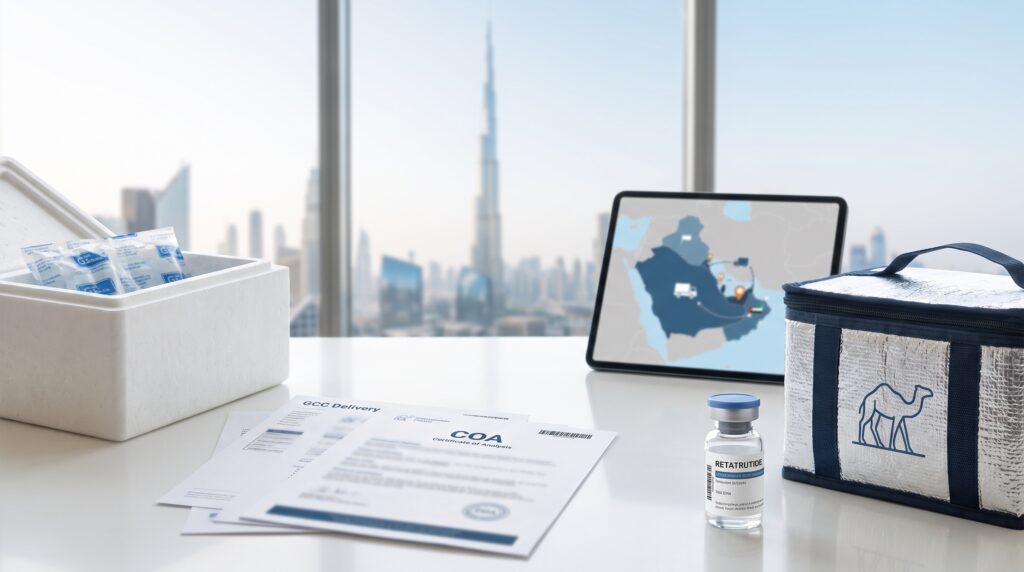
Researchers and procurement specialists looking to buy Retatrutide in the GCC are navigating a rapidly evolving market. With recent federal updates reshaping the availability of metabolic research compounds across the United Arab Emirates, Saudi Arabia, and Qatar, securing verified, analytical-grade peptides requires a structured approach. Retatrutide, a novel triple-receptor agonist (targeting GLP-1, GIP, and glucagon receptors) currently under extensive global investigation, demands stringent quality control, verifiable third-party testing, and highly specialized thermal logistics.
This guide outlines exactly how informed buyers can evaluate regional suppliers, navigate local compliance frameworks, and protect sensitive compounds from the region’s extreme climate.
Sourcing Retatrutide: The Core Buyer Checklist
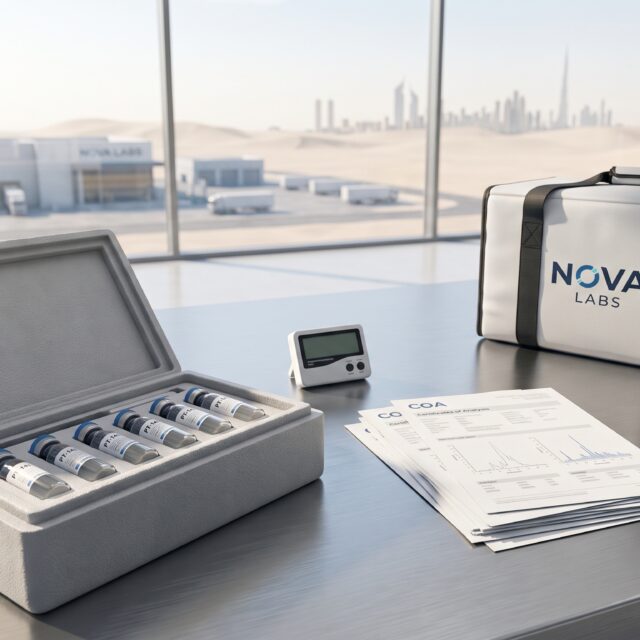
To safely order Retatrutide in the GCC, buyers must select suppliers operating strictly within Research-Use-Only (RUO) frameworks. Always verify batch-specific third-party HPLC certificates of analysis (COAs) from reputable independent laboratories, and ensure the supplier utilizes domestic dispatch to prevent border customs seizures and heat-induced degradation.
Failing to verify these three pillars—compliance, purity, and logistics—frequently results in compromised research integrity, lost capital, or regulatory friction at the border.
The GCC Regulatory Shift: Navigating EDE and MoPH Frameworks
The landscape for peptide procurement in the Gulf Cooperation Council has matured significantly. Regulatory authorities across the region have taken decisive steps to formalize the distinction between medical pharmaceuticals and analytical-grade research compounds.
In the UAE, the Emirates Drug Establishment (EDE), functioning under Federal Decree-Law No. 68 of 2023, now serves as the sole federal authority regulating pharmaceutical and medical products. In major 2024 enforcement actions, authorities halted operations for dozens of unlicensed sources and penalized social media figures for improperly promoting unapproved metabolic compounds. Similarly, Qatar’s Ministry of Public Health (MoPH) has reinforced bans on the trading and promotion of unlicensed peptide products outside of approved clinical or analytical channels.
What does this mean for the independent researcher or institutional buyer? It means that transparency and intent are paramount. When evaluating a Retatrutide supplier in the GCC, you must ensure they operate clearly within the bounds of Research-Use-Only (RUO) supply. Suppliers making medical claims, suggesting dosing protocols, or marketing these compounds for human consumption are operating outside of legal frameworks, exposing buyers to significant confiscation risks.
Compounded vs. Analytical-Grade: Legal Sourcing Pathways
Understanding legal procurement pathways is essential before placing an order. Currently, buyers in the UAE and broader GCC typically encounter two distinct categories of peptide suppliers:
1. Compounding Pharmacies
Local compounding pharmacies in Dubai and Abu Dhabi can legally prepare and dispense specific peptide formulations. However, this pathway is strictly for clinical use and requires a valid physician prescription alongside a pharmacist consultation. This route is not applicable for institutional research, in-vitro studies, or independent laboratory analysis.
2. Analytical-Grade RUO Suppliers
For laboratory use and chemical analysis, buyers must turn to specialized scientific suppliers. Analytical-grade Retatrutide peptide in the GCC is supplied in a lyophilized (freeze-dried) powder format. These products are explicitly not formulated for in-vivo human use. By maintaining this strict RUO classification, scientific suppliers can legally import, store, and distribute these compounds to researchers without violating EDE or MoPH medical pharmaceutical regulations.
The Analytical Audit: Verifying Batch Purity and COAs
When evaluating a Retatrutide supplier in the GCC, marketing claims are irrelevant; only raw analytical data matters. Because Retatrutide is a complex, synthetic peptide with a long amino acid sequence, it is highly susceptible to synthesis errors, truncations, and impurities.
Independent third-party laboratory verification is the absolute gold standard. Currently, facilities like Czechia-based Janoshik Analytical are widely recognized as the most reliable independent testing hubs for RUO peptides. When you order Retatrutide in the GCC, your supplier should be able to provide a COA that proves:
- Purity Percentage: High-grade Retatrutide should demonstrate a purity of 99% or higher via High-Performance Liquid Chromatography (HPLC). This ensures the absence of synthesis byproducts that could skew research data.
- Net Mass Concentration: The COA must confirm that a “10mg vial” actually contains 10mg of the active compound, verified by Mass Spectrometry (MS). Under-dosed vials are a common issue with unverified overseas vendors.
- Batch Specificity: A COA is useless if it is two years old. The documentation must match the exact batch currently held in the supplier’s inventory.
Pro Tip for Buyers: Never trust a static PDF or image of a COA. Reputable suppliers will provide a verification key that allows you to input the batch number directly into the testing laboratory’s online portal to confirm the document’s authenticity.
Climate Risk and Cold-Chain Logistics in the Region
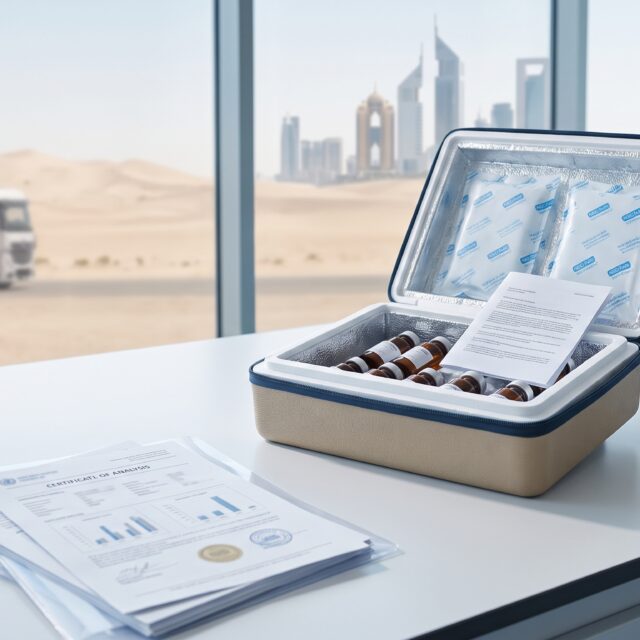
Even a 99.9% pure compound is useless if it degrades during transit. Unreconstituted, lyophilized Retatrutide is highly sensitive to thermal fluctuations. To maintain molecular stability over the long term, it must be stored at -20°C, desiccated, and shielded entirely from UV light.
This presents a massive logistical challenge in the GCC, where ambient summer temperatures routinely exceed 45°C. Sourcing peptides directly from international suppliers in Asia or North America carries extreme risks. Packages are frequently held at regional customs clearance centers for days or even weeks. During this time, they sit in non-climate-controlled warehouses, resulting in rapid peptide degradation and rendering the compound analytically void.
To mitigate this, sophisticated buyers insist on domestic, regional hub dispatch. By ordering from a supplier that already holds tested inventory inside the UAE, you eliminate the risk of international customs delays. Suppliers that utilize thermal-protected packaging and prioritize UAE next day delivery ensure that the peptide spends the absolute minimum time outside of a temperature-controlled environment.
Supplier Evaluation: Documentation, Support, and Payment
Before finalizing procurement, evaluate the operational infrastructure of the vendor. A professional supplier catering to the GCC market should offer local conveniences that international drop-shippers simply cannot match.
- Payment Security: Look for platforms that offer secure, local payment gateways or Cash on Delivery (COD) within the UAE. This protects your capital and ensures you only pay when the physical product is in your hands.
- Direct Support: Navigating procurement can require technical clarification. Suppliers that offer direct, responsive WhatsApp support demonstrate a commitment to customer service and local market presence.
- Inventory Transparency: Ensure the supplier actually holds the stock locally. You can securely shop for research compounds through professional portals like NOVA Labs that clearly indicate real-time stock levels, rather than dealing with unexpected pre-order delays.
Conclusion
Successfully sourcing Retatrutide in the GCC requires a diligent approach to compliance, chemical verification, and regional logistics. By understanding the EDE’s regulatory stance, demanding real-time third-party COAs, and insisting on local cold-chain dispatch, researchers can secure high-purity compounds without risking financial loss or degraded materials.
Always prioritize transparency and operational excellence over unusually low pricing, as the integrity of your research depends entirely on the quality of your source materials. Explore NOVA Labs’ verified inventory to ensure your next procurement meets the highest analytical standards.
Disclaimer: The products mentioned in this article are for in-vitro research purposes only and are strictly not intended for human consumption or therapeutic use.
*
References
- UAE Federal Decree-Law No. 68 of 2023 – Emirates Drug Establishment (EDE) Mandate and Pharmaceutical Regulation.
- “UAE Cracks Down on Unapproved Peptide Weight-Loss Drugs: Sources and Influencers Face Action.” Gulf News, 2024.
- Ministry of Public Health (MoPH) Qatar – Directives on Unlicensed Peptide Trading.
- Janoshik Analytical – Independent HPLC and Mass Spectrometry Verification Protocols for Synthetic Peptides.
- Are Research Peptides Legal in the UAE? Complete Compliance – NOVA Labs
- UAE Cracks Down on Unapproved Peptide Weight-Loss Drugs: 71 Sources and 14 Influencers Face Action – Gulf News
- Peptides Compounding Pharmacy Dubai – CureCell
- Qatar’s Health Ministry bans trading, use or promotion of unlicensed peptide products
- Peptide Purity Guide Saudi Arabia: HPLC, COAs & Compliance – NOVA Labs
Frequently asked questions
Is it legal to buy Retatrutide in the GCC?
Yes, provided the Retatrutide is purchased specifically for in-vitro laboratory research and analytical purposes. It must not be sourced, marketed, or used for human consumption, adhering to local regulatory frameworks like the UAE's EDE guidelines.
How should Retatrutide be stored in the UAE climate?
Lyophilized Retatrutide should be stored in a laboratory freezer at -20°C, kept away from direct light and moisture. During transit, it requires specialized thermal packaging and expedited local delivery to prevent rapid degradation from extreme ambient heat.
How can I verify the purity of Retatrutide from a GCC supplier?
You should request a batch-specific Certificate of Analysis (COA) from an independent third-party laboratory like Janoshik Analytical. Always use the unique verification key provided on the COA to confirm its authenticity directly on the testing lab's secure website.
Why is local UAE dispatch better than ordering internationally?
Local dispatch prevents packages from being delayed at international customs borders, where they often sit in non-climate-controlled warehouses for days. Buying locally ensures the peptide avoids thermal degradation and arrives quickly in optimal, analytical-grade condition.
Nova Labs buyer tools
Ready to verify stock, testing and delivery?
Use the product page and lab report section to check availability, documentation, delivery timing and support before placing an order.
- COA / test-report checks
- GCC delivery context
- Cold-chain handling
- COD and card payment options
- WhatsApp support