



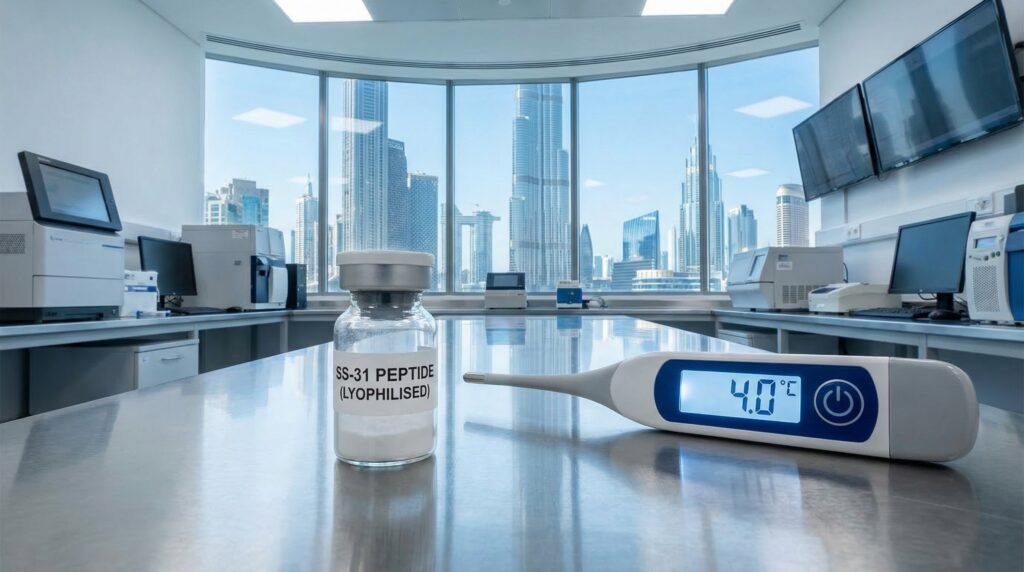
How to Buy SS-31 in the UAE: Sourcing Elamipretide for Research
For researchers looking to buy SS-31 in the UAE, sourcing high-quality peptides means navigating both strict quality requirements and extreme climate conditions. SS-31, frequently referenced in scientific literature as Elamipretide, is actively utilized in mitochondrial research for its unique ability to target the inner mitochondrial membrane and selectively stabilize cardiolipin. In laboratory settings, studies focus on its potential to optimize ATP production, restore cellular bioenergetics, and minimize oxidative stress in dysfunctional cells.
However, sourcing this specialized peptide in the Gulf Cooperation Council (GCC) region presents distinct challenges. Procurement teams, academic laboratories, and independent researchers must account for local temperatures, varying product formats, and the firm regulatory distinction between clinical therapeutics and research-grade chemicals. Evaluating a supplier requires looking beyond glossy marketing claims to verify independent testing documentation, robust cold-chain logistics, and reliable customer support channels.
Quick Answer: The SS-31 Buyer’s Checklist
To safely buy SS-31 in the UAE, you must select a supplier that provides transparent, batch-specific Certificates of Analysis (COAs) demonstrating a minimum of 98% purity via third-party HPLC testing. Furthermore, prioritize vendors offering localized cold-chain logistics to protect the peptide from extreme GCC heat, ensuring structural integrity upon arrival without customs delays.
Understanding SS-31 Formats: Vials, Pens, and Sprays
When evaluating an SS-31 purchase for your laboratory, you will encounter the peptide in several physical formats. Selecting the correct preparation is absolutely critical for maintaining protocol integrity and ensuring long-term compound stability.
Lyophilized Powder Vials (10mg)
This is the undisputed industry-standard format for research peptides. SS-31 in lyophilized (freeze-dried) form provides maximum stability, particularly when stored in a laboratory freezer (-20°C) prior to reconstitution. Researchers prefer vials because they offer precise control over the reconstitution process using bacteriostatic water, ensuring exact, repeatable concentrations for in-vitro protocols. Because the moisture has been removed, the peptide bonds are far less susceptible to degradation during transit.
Pre-Mixed Peptide Pens
Several regional suppliers have introduced pre-mixed liquid peptide pens aimed at convenience. While designed to eliminate manual reconstitution, pre-mixed liquids degrade exponentially faster than freeze-dried powders. Buyers must be highly vigilant about cold-chain shipping when purchasing liquid pens, as the suspended peptide is extremely susceptible to degradation if exposed to Dubai’s ambient heat during transit or left out on a benchtop. For serious research, these are generally avoided.
Intranasal Sprays
Intranasal preparations occasionally appear on the retail market. While they bypass traditional laboratory handling, absorption rates, mucosal barriers, and compound stability in liquid spray formats vary widely. For strictly controlled studies requiring precise molarity, lyophilized vials remain the gold standard, rendering sprays largely unreliable for empirical data collection.
The Informed Buyer’s Protocol: Verifying Purity
The most critical step when evaluating a peptide supplier in the UAE is verifying the compound’s authenticity. With both premium regional providers and transient international importers operating in the market, verifiable documentation is your primary defense against substandard, under-dosed, or contaminated materials.
Batch-Linked Certificates of Analysis (COAs)
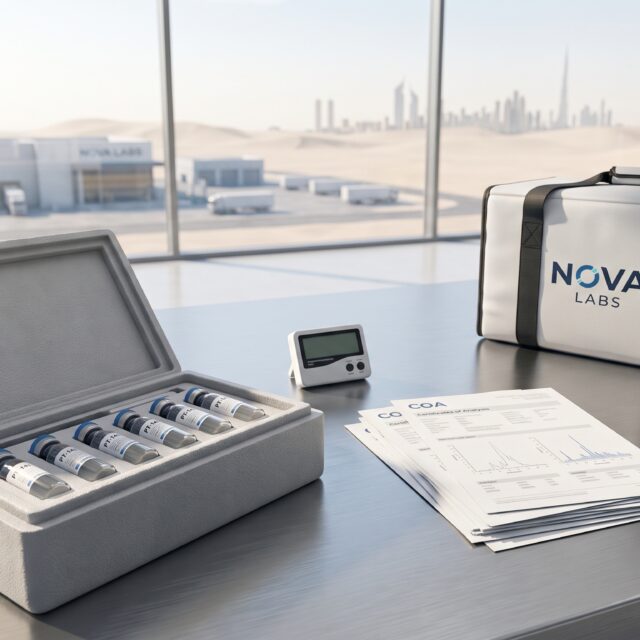
A reputable supplier must provide a Certificate of Analysis (COA). Crucially, this COA must be linked directly to the specific batch of SS-31 you are purchasing. Look for public testing portals, batch numbers printed clearly on vials, or QR codes that link directly to the corresponding lab report. A COA from three years ago provides zero assurance about the vial you are buying today.
Decoding Third-Party HPLC and Mass Spectrometry
Trust should be backed by independent, ISO-accredited laboratories. The global scientific standard for verifying peptide purity is High-Performance Liquid Chromatography (HPLC) coupled with Mass Spectrometry (LC-MS).
When reviewing the lab report, look for two things:
- The Chromatogram Peak: The HPLC results should show one distinct, sharp peak, indicating that the vast majority of the vial contains the target compound rather than synthesis byproducts. Look for a purity standard of 98% or higher.
- The Mass-to-Charge Ratio: The Mass Spectrometry result must match the known molecular weight of SS-31.
If a vendor cannot produce a recent, third-party HPLC report, do not proceed with the purchase.
Defeating the Desert Heat: Cold-Chain Logistics in the GCC
The climate in the UAE and the broader GCC poses a severe risk to peptide stability. Standard shipping methods used for electronics or clothing are entirely inadequate for sensitive research compounds during the summer months, where temperatures regularly exceed 40°C.
The Risks of Ambient Exposure
When peptides like SS-31 are exposed to high heat, the peptide bonds can begin to denature, leading to a loss of efficacy and skewed research results. Even a few hours sitting in the back of an un-air-conditioned delivery van can compromise a carefully planned study.
Specialized Insulated Packaging
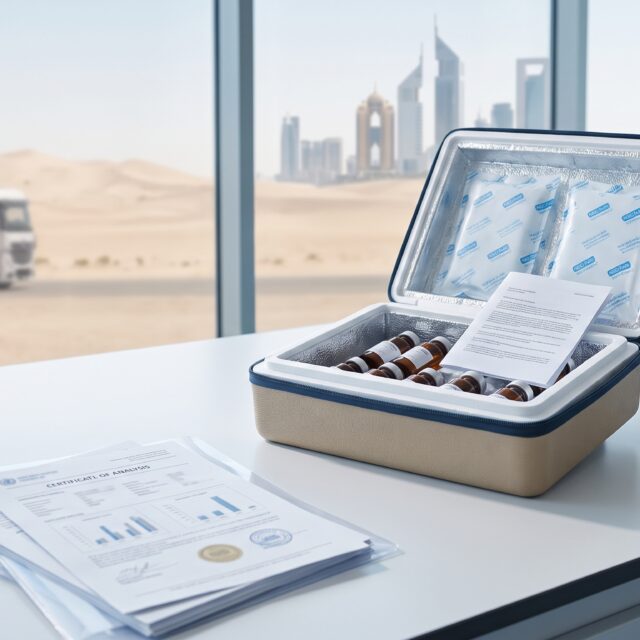
A supplier’s logistics infrastructure is just as important as the purity of the product itself. Premium sellers utilize strict cold-chain packaging protocols. This includes highly insulated boxes or thermal bubble mailers paired with pharmaceutical-grade gel packs to maintain a stable, cool environment throughout transit.
Local Sourcing vs. International Imports
Importing peptides from international sites (like the US or China) often introduces severe customs friction. Delays at the border can leave packages sitting in hot clearance warehouses for days, degrading the peptide before it ever reaches you.
Choosing a specialized local supplier completely bypasses these import delays and international shipping fees. By utilizing local stock, researchers can take advantage of next-day delivery across the Emirates. This ensures the cold chain remains intact from the climate-controlled warehouse directly to your laboratory bench.
Regulatory Compliance and Research Context
It is essential to understand the regulatory framework surrounding SS-31. In the UAE, clinical peptide therapy requires strict licensing and oversight from regulatory bodies such as the Ministry of Health and Prevention (MOHAP) and the Dubai Health Authority (DHA).
Retail peptide suppliers operate strictly under a Research Use Only (RUO) framework. This distinction is highly critical given the ongoing clinical trials for Elamipretide globally, including FDA tracking for conditions like Barth Syndrome. Because the active compound is recognized as a therapeutic in certain jurisdictions, compliance guidelines require absolute separation between medical-use claims and research-grade chemicals. Ethical, legitimate suppliers will never provide medical advice, dosing instructions, or treatment protocols for human use.
Payment Methods and Local Support
Modern buyers expect secure, flexible, and localized procurement infrastructures. When evaluating an SS-31 supplier, look for localized payment options that build trust and accommodate institutional budgets. In addition to standard 3D-secure credit card processing, many top-tier UAE suppliers offer Cash on Delivery (COD), allowing buyers to inspect the physical packaging and cold-chain integrity before finalizing payment. Buy-Now-Pay-Later (BNPL) integrations like Tabby and Tamara are also widely available, which is highly beneficial for managing larger laboratory restocking orders over multiple months.
Given the precise nature of handling peptides, having access to rapid local support—often via WhatsApp or a dedicated local phone line—is vital. A supplier that is easy to reach generally stands behind the quality of their logistics and is equipped to quickly resolve any delivery discrepancies.
Conclusion: Sourcing Reliable SS-31 for Your Lab
Procuring high-quality SS-31 in a region with extreme temperatures requires due diligence. The cheapest option on the internet is rarely the most reliable when factoring in the absolute necessity of cold-chain logistics, updated third-party HPLC testing, and rapid local delivery. By prioritizing local providers who publish transparent, batch-linked COAs and utilize insulated shipping, you ensure your research materials arrive structurally sound, stable, and ready for accurate evaluation.
Ready to equip your lab with verifiable research compounds? Discover our rigorously tested catalogue and shop our premium SS-31 and research peptides to experience fully transparent documentation and robust UAE cold-chain delivery.
Disclaimer: The products and information mentioned in this article are strictly intended for research and laboratory purposes only. They are not intended for human or animal consumption, diagnostics, or therapeutic use. NOVA Labs does not provide medical advice or dosage guidelines.
References
- Profound Aminos. (n.d.). SS-31 (Elamipretide) Mitochondria Research Protocols.
- Valeo Health. (n.d.). Navigating Peptides Therapy in the UAE.
- UAEPeptide.ai. (n.d.). Quality & Testing — HPLC Purity, COA & Legitimacy in the GCC.
- ClinicalTrials.gov. (n.d.). Elamipretide (SS-31) in Barth Syndrome and Mitochondrial Dysfunction.
Disclaimer: The products mentioned in this article are for research purposes only and are not intended for human consumption.
- SS-31 (Elamipretide) Mitochondria Research | Profound Aminos
- Quality & Testing — HPLC Purity, COA & Legitimacy | UAEPeptide.ai
- Peptides Therapy in UAE | Boost Health & Vitality – Valeo Health
- Peptide Pens Dubai UAE — Buy Online | Limitless Wellness
- LAB REPORTS – https://peptidetechuae.com
- About – https://peptidetechuae.com
Frequently asked questions
What is the best way to store SS-31 upon delivery in the UAE?
Upon receiving SS-31 in lyophilized powder form, it should be stored immediately in a freezer (-20°C) away from light and moisture to maintain long-term stability. Once reconstituted with bacteriostatic water, the vial should be kept strictly refrigerated and used within the timeframe recommended by standard laboratory protocols.
How can I verify the purity of my SS-31 order before buying?
You should check the batch-specific Certificate of Analysis (COA) provided by the supplier. Ensure the testing was conducted by an independent third-party laboratory using High-Performance Liquid Chromatography (HPLC) to confirm a purity level of 98% or higher, alongside Mass Spectrometry (MS) to verify molecular weight.
Why is cold-chain shipping necessary for peptides in Dubai?
The extreme ambient heat in the GCC region can rapidly denature and degrade sensitive peptide structures, rendering them useless for research. Cold-chain shipping using insulated boxes and pharmaceutical-grade gel packs ensures the compound remains stable and viable during transit.
Can I buy SS-31 using Cash on Delivery (COD) in the UAE?
Yes, many reputable local research suppliers offer Cash on Delivery (COD) options alongside secure card payments. Additionally, Buy-Now-Pay-Later options like Tabby or Tamara are often integrated to accommodate laboratory procurement budgets.
Are pre-mixed SS-31 peptide pens better than lyophilized vials?
For accurate scientific research, lyophilized vials are superior. Pre-mixed liquid pens degrade much faster than freeze-dried powders and are highly susceptible to heat damage, whereas vials offer maximum stability and allow researchers precise control over reconstitution concentrations.
Nova Labs buyer tools
Ready to verify stock, testing and delivery?
Use the product page and lab report section to check availability, documentation, delivery timing and support before placing an order.
- COA / test-report checks
- UAE delivery context
- Cold-chain handling
- COD and card payment options
- WhatsApp support