
Where to Buy Thymosin Alpha-1 in Qatar
To buy Thymosin Alpha-1 in Qatar, researchers must source from specialized laboratory suppliers that provide third-party HPLC and Mass Spectrometry testing proving >99% purity. Ensure the vendor utilizes phase-change cold-chain logistics for Middle Eastern transit, supplies correct HS codes for Hamad International Airport customs, and adheres to MoPH research-use regulations.
Buyer Checklist: Key Takeaways for GCC Researchers
- Regulatory Compliance: Shipments must be strictly classified, labeled, and invoiced for in-vitro research to legally clear Hamad International Airport and comply with the Ministry of Public Health (MoPH).
- Purity Verification: Only accept >99% purity validated by lot-specific, independent third-party High-Performance Liquid Chromatography (HPLC) and Mass Spectrometry (MS).
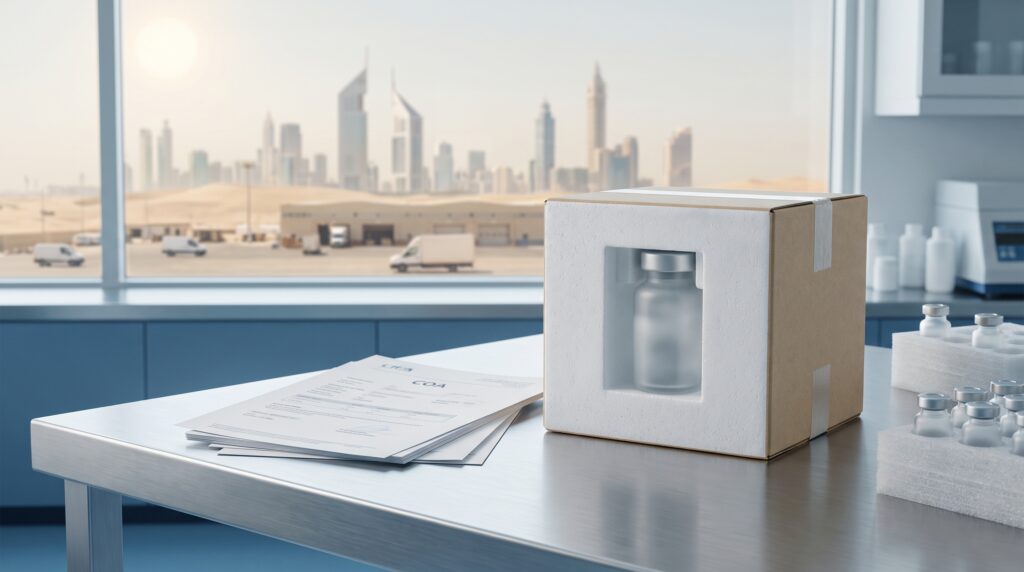
- Cold-Chain Logistics: Safe transit to Doha during extreme GCC temperatures requires specialized thermal packaging and phase-change gel packs.
- Support and Payments: Work with suppliers offering localized support (like WhatsApp) and secure institutional payment gateways capable of bypassing standard processor friction.
For academic institutions and independent scientific investigators in the Gulf, procuring high-quality synthetic peptides presents a complex logistical challenge. Thymosin Alpha-1, a 28-amino-acid synthetic peptide mimicking a naturally occurring thymic hormone, is heavily studied for its cellular and immunomodulatory properties in in-vitro settings. However, acquiring it reliably in Doha requires navigating stringent health regulations, international supply chain realities, and rigorous quality control standards.
Navigating Qatar’s MoPH Regulatory Guidelines
Understanding local regulations is the absolute first step in successful procurement. The Qatari Ministry of Public Health (MoPH) maintains strict regulations governing the import, trading, and use of unlicensed biological and chemical products. Crucially, regional customs agencies actively monitor and target compounds marketed or intended for human consumption, even if superficially labeled for research.
For scientific buyers, this reinforces the necessity of working with a professional, compliant supplier. Legitimate vendors restrict all product positioning exclusively to laboratory and research applications. They do not offer dosage guidelines, therapeutic claims, or medical advice of any kind.
When evaluating a supplier delivering to Qatar, meticulously review their documentation and web presence. If a vendor promises medical outcomes, sells bundled “kits” for physical optimization, or guarantees in-vivo results, they are likely operating outside of MoPH compliance. Purchasing from such entities drastically increases the risk of shipment seizure, institutional flagging, or outright destruction at the border.
Verifying Purity: The Importance of Analytical Testing
Because Thymosin Alpha-1 is a relatively large synthetic peptide (28 amino acids), the biochemical synthesis process is highly susceptible to truncation (missing amino acids), deletion errors, or unwanted solvent retention. In highly sensitive cellular assays or immunomodulatory in-vitro studies, even a 2-3% impurity profile can introduce background noise, skew data, or trigger unintended reactions in cell cultures.
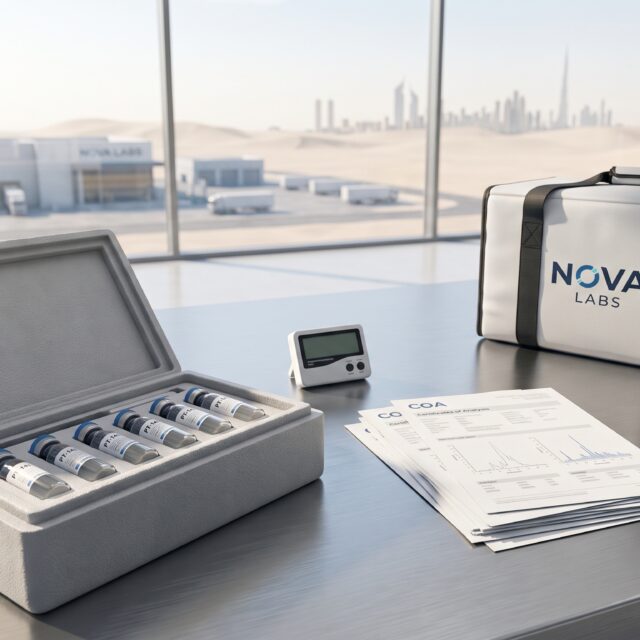
A supplier’s word is never sufficient; objective analytical testing is required. Before authorizing procurement, teams must demand a lot-specific Certificate of Analysis (COA) from an unbiased third-party laboratory. Key elements to verify include:
- High-Performance Liquid Chromatography (HPLC): This test separates the components of a mixture. Researchers should look for a single, sharp, distinct peak on the chromatogram, confirming that Thymosin Alpha-1 constitutes >99% of the vial’s contents, without a “jagged” baseline indicating fragmentation.
- Mass Spectrometry (MS): This verifies the exact molecular weight of the peptide. The theoretical mass of Thymosin Alpha-1 is approximately 3108 g/mol. The MS results must match this observed mass, ensuring the correct sequence was successfully synthesized without structural errors.
- Lot Number Matching: Ensure the lot number on the digital COA directly matches the physical vial you receive in the laboratory. Generic, undated, or unnumbered COAs are a major industry red flag indicating potential batch-swapping.
Defeating the GCC Summer: Cold-Chain Logistics
Procuring high-purity compounds is only half the battle; transporting them intact to Doha is equally critical. The extreme heat of the Gulf Cooperation Council (GCC) region poses a severe degradation risk to synthetic peptides. Prolonged exposure to high temperatures can denature the compound, rendering it useless for precise research applications.
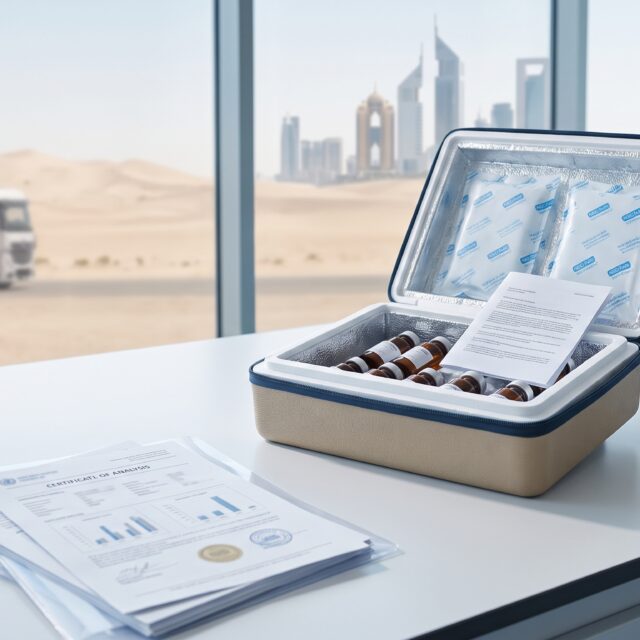
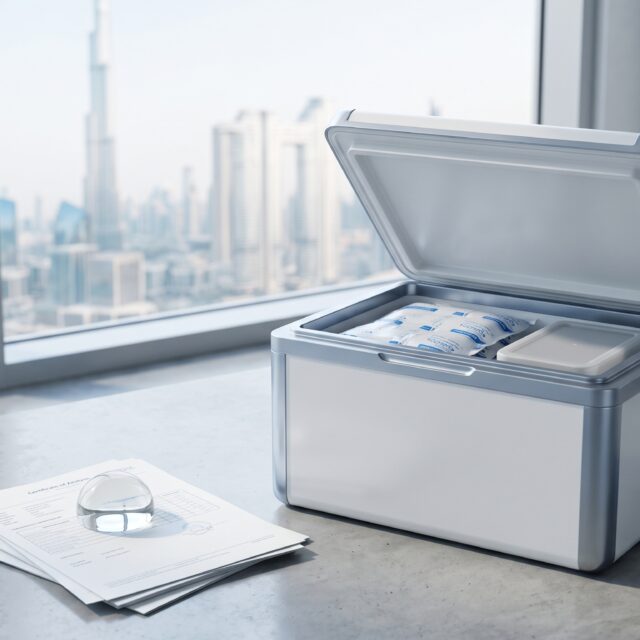
Standard postal shipping methods (such as USPS) are entirely inadequate for the region and often do not serve Qatar directly for these types of shipments. A reputable supplier must utilize dedicated thermal-insulated packaging and phase-change gel packs designed to maintain stable, cool temperatures during international transit.
Because speed is paramount to preserving molecular integrity, premium couriers like DHL Express are the required choice. Regional buyers should ensure their supplier has established regional logistics capable of swift GCC transit to minimize the time the package spends on airport tarmacs. Utilizing a supplier with optimized Middle Eastern routing significantly cuts down on transit degradation risks.
Navigating Payment Gateways and Time Zones
Procurement from international peptide suppliers often introduces unexpected payment and communication hurdles. Many western payment processors arbitrarily flag transaction types involving laboratory chemicals or research compounds. High-tier suppliers mitigate this by offering reliable, secure B2B payment options, including direct bank wires, secure credit card gateways, or cryptocurrency, alongside the transparent commercial invoicing required by Qatari institutional procurement departments.
Furthermore, the time-zone difference between North American or European suppliers and Qatar can delay critical customs clearance responses. Look for suppliers offering localized, immediate support channels—such as WhatsApp or direct regional lines—to handle commercial invoice adjustments on the fly if suddenly requested by Hamad Airport customs agents.
Post-Delivery: Laboratory Handling in Doha
Once the peptide successfully clears customs and arrives at your facility in Qatar, immediate and proper handling is required to preserve the product’s viability for your studies.
The lyophilized (freeze-dried) powder is relatively stable when kept in darkness and properly sealed within its amber or clear glass vial, but researchers must immediately transfer the vials to a -20°C freezer for long-term storage. When ready for in-vitro application, careful reconstitution using sterile laboratory-grade bacteriostatic water is required. Once reconstituted into a liquid solution, the peptide must be stored continuously at 2°C to 8°C and utilized within the timeframe dictated by your specific experimental protocol to avoid degradation.
Securing Your Thymosin Alpha-1 Order with NOVA Labs
For researchers and procurement specialists in the GCC, mitigating risk across purity, regulatory compliance, and logistics is essential for uninterrupted study. NOVA Labs operates with a clear, data-driven understanding of the unique demands of the Middle Eastern market.
When you source Thymosin Alpha-1 through NOVA Labs, you gain access to transparent, lot-specific COAs verifying >99% purity via independent HPLC and MS testing. Recognizing the extreme logistical hurdles of the region, NOVA Labs employs robust cold-chain packaging to protect the molecular integrity of the peptide from dispatch all the way to your laboratory in Doha.
Our dedicated customer support team is available via localized channels to provide real-time updates and assist with any strict commercial documentation needs, ensuring a seamless, compliant procurement process from order placement to final delivery. Start streamlining your laboratory procurement today by exploring our catalog.
*
Disclaimer: All products mentioned in this article are strictly for in-vitro research and laboratory purposes only. They are not intended for human or animal consumption, diagnostic, or therapeutic use. NOVA Labs does not provide medical advice or dosage guidelines. Local regulatory compliance is the responsibility of the purchaser.
References
- Qatar Ministry of Public Health (MoPH). Importation Guidelines for Chemical and Biological Substances.
- International Air Transport Association (IATA). Temperature Control Regulations (TCR) for Pharmaceuticals and Research Compounds.
- Journal of Peptide Science (2021). Best Practices for the Handling, Storage, and Stability of Synthetic Peptides in Laboratory Settings.
- World Customs Organization (WCO). Harmonized System (HS) Nomenclature for Biochemicals and Laboratory Reagents.
Disclaimer: The products mentioned in this article are for research purposes only and are not intended for human consumption.
- Qatar’s Health Ministry bans trading, use or promotion of unlicensed peptide products
- Buy Thymosin Alpha-1 Qatar: Supplier, Purity & Delivery – NOVA Labs
- Thymosin Alpha-1: Approved in 30+ Countries (2026) – The Peptide Catalog
- International Shipping — Countries, Customs, and What to Expect – Everychem
Frequently asked questions
Is it legal to buy Thymosin Alpha-1 in Qatar?
Yes, provided it is sourced strictly for in-vitro research and laboratory use. Under MoPH regulations, importing peptides that are marketed, labeled, or intended for human consumption is strictly prohibited.
How is Thymosin Alpha-1 shipped to Doha during extreme summer heat?
Reliable laboratory suppliers use thermal-insulated packaging combined with phase-change gel packs to protect the lyophilized peptide from extreme GCC heat during transit, typically utilizing premium expedited couriers like DHL Express.
What documentation should a Thymosin Alpha-1 supplier provide to researchers?
A reputable supplier must provide a lot-specific Certificate of Analysis (COA) from an independent third-party laboratory. This document must confirm >99% purity through High-Performance Liquid Chromatography (HPLC) and verify molecular weight via Mass Spectrometry (MS).
How can I ensure my peptide order clears Hamad International Airport customs?
Work with a specialized supplier that correctly classifies the shipment using accurate Harmonized System (HS) codes and provides precise commercial invoices clearly designated for "laboratory research use only."
Does standard post like USPS deliver research peptides to Qatar?
No, standard postal services like USPS generally do not serve Qatar for these types of sensitive shipments, and their transit times risk peptide degradation. Buyers must rely on specialized international couriers with established GCC logistics networks to ensure timely, temperature-controlled delivery.
Nova Labs buyer tools
Ready to verify stock, testing and delivery?
Use the product page and lab report section to check availability, documentation, delivery timing and support before placing an order.
- COA / test-report checks
- Qatar delivery context
- Cold-chain handling
- COD and card payment options
- WhatsApp support