



Eloralintide vs cagrilintide: the quick answer
Eloralintide vs cagrilintide is best assessed through published receptor experiments, separate study protocols and the identity records for any research lot. Laboratory findings describe different receptor profiles, but the cited human studies do not compare the compounds directly. UAE researchers should also confirm the import and permit requirements that apply to their material. [1–4]
Quick answer for a UAE lab
- Scientific question: Compare receptor findings only within the assays that produced them; do not turn results from separate human studies into a ranking.
- Material question: Match the offered lot to its certificate of analysis (COA), identity test and stated storage requirements.
- Regulatory question: Confirm the permit and import requirements that apply to your material and activity. A COA documents a lot; it does not establish regulatory permission. [4]
What can published receptor studies tell you?
Eloralintide and cagrilintide are distinct investigational amylin analogues. An eloralintide discovery publication reports preferential activity at amylin-receptor complexes relative to the calcitonin receptor in its laboratory models. Published work on cagrilintide discusses activity involving amylin and calcitonin receptors. These descriptions are useful starting points for a literature search, but they are not a standardised, side-by-side test of supplier materials. [1, 3]
Receptor findings depend on the receptor preparation, assay system, measured response and experimental conditions. Before citing a numerical comparison, check whether the papers measured the same thing in comparable systems. A result from a cell-based assay cannot, by itself, establish what a separate lot contains or how it will perform in another protocol.
The distinction also matters when specifying a purchase enquiry. “Amylin analogue” describes a research category, not a unique chemical identity. Ask for the compound’s stated structural specification and verify that the analytical documents correspond to the particular lot being offered. A paper about a named compound is not evidence that an unverified vial contains it.
Do the Phase 2 papers provide a head-to-head comparison?
No. The cited eloralintide and cagrilintide Phase 2 publications concern separate programmes, not a trial that randomly assigned participants between the two compounds. Differences in enrolment, comparators, duration and analysis prevent a straightforward ranking from selected results. This article does not use those studies to make treatment, safety or effectiveness recommendations. [2, 3]
For a research review, make a small evidence table before comparing papers. Record the compound studied, population, comparator, study duration, endpoint and assessment timepoint. Keep receptor assays, preclinical experiments and human studies in separate rows. If a study examines a compound alongside another investigational agent, label that design clearly rather than attributing every observation to one component.
Method and timing: This comparison uses the cited publications. It does not compare current supplier prices, stock or shipping offers. Regulatory requirements and market listings may change, so confirm the current position with the applicable authority before acting on an older page or article.
Which COA and testing details should a UAE buyer check?
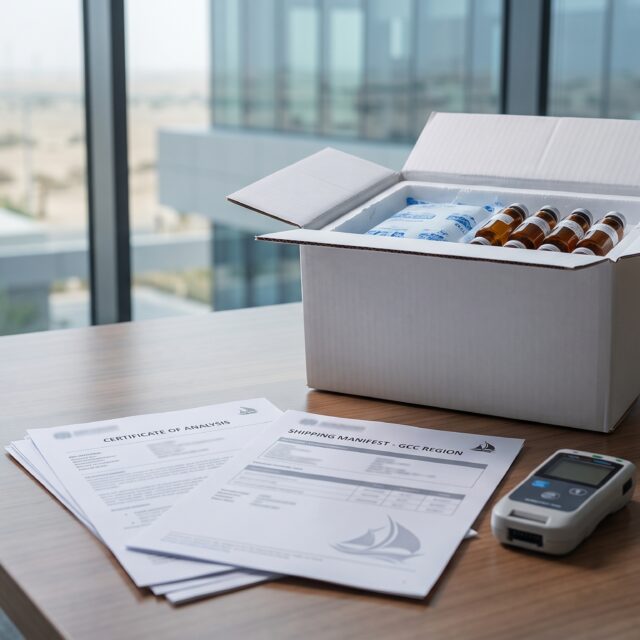
Start with the lot number. It should match across the vial label, COA and any supporting laboratory report. A document for a previous batch, or a general product specification without a lot identifier, does not establish what was tested in the lot currently offered. Ask who performed the work, when the report was issued and which methods were used.
Read purity and identity as separate claims. HPLC can provide a chromatographic purity result under a specified method. Mass spectrometry can support an identity assessment when the report supplies enough information to evaluate the result. Neither a high HPLC percentage nor a marketing statement such as “lab tested” establishes every property a protocol might require. Check whether the report actually includes the attributes your laboratory needs; do not assume sterility, vial content or stability was tested unless the documentation says so.
If a supplier describes testing as independent, request the underlying report or a reference you can verify with the testing laboratory. Confirm whether the reported sample came from the offered lot. If the method, result or lot identifier is unclear, ask for clarification before treating the COA as procurement evidence.
NOVA Labs provides lab-results information. Use it to identify available documentation, then check that the report matches the lot under discussion. A posted report for another lot is not a substitute for the matching record.
How should Dubai and GCC labs assess delivery and support?
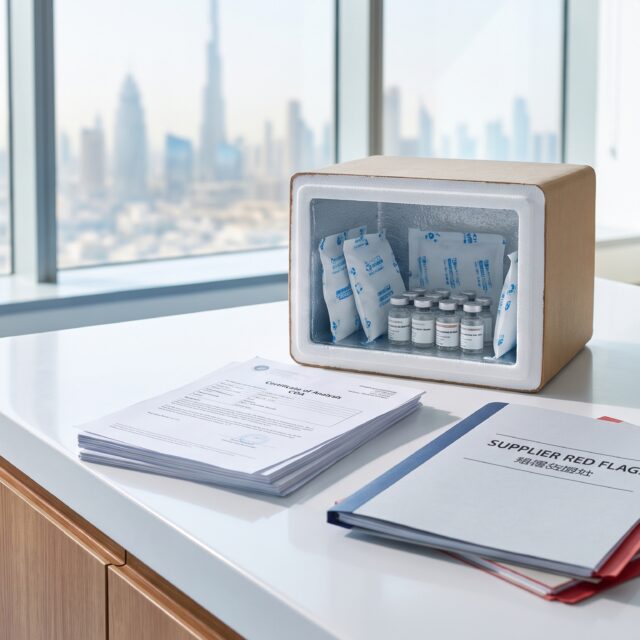
For a Dubai delivery, ask for the stated storage conditions for the specific material and how the parcel will be packed and handed over. Local heat makes the final leg worth discussing: clarify whether a temperature-control claim covers the full journey or only one shipping stage, and ask what evidence supports the claim. Do not infer a universal storage temperature or stability period from the compound name.
Confirm stock against the documented lot, not just the product page. If the offered lot changes before dispatch, the paperwork may need to change too. Ask what happens if a shipment is delayed or arrives with a damaged outer package, and which support channel handles documentation requests after an order. Where a supplier offers WhatsApp or another messaging channel, use it to obtain written confirmation of lot, dispatch and support details; a chat assurance should not replace the analytical record.
Payment and delivery terms are also worth settling before an institutional purchase request. Confirm the accepted payment method, the invoice details your organisation requires, the delivery address the supplier can serve and any applicable charges. For a GCC destination outside the UAE, check that country’s import and customs requirements independently rather than assuming that UAE domestic delivery terms apply. The Emirates Drug Establishment describes permit requirements for regulated medical materials and products; a “research purposes only” label is not, on its own, evidence that a shipment is permitted. [4]
What should you check on a cagrilintide listing?
Apply the same documentation checks to a cagrilintide enquiry as to eloralintide: the lot identifier, a matching COA, the identity method, stated storage requirements and written confirmation of stock and delivery terms. Researchers and procurement teams should also confirm the permit and import requirements that apply to their material and activity with the relevant authority or qualified regulatory support. A supplier COA, catalogue entry or research-use designation does not settle that question on its own. [4]
The cagrilintide listing is a starting point for checking what is offered and which lot documentation is available, not proof that a particular lot meets your requirements.
What is a sensible next step for an eloralintide enquiry?
Eloralintide may be relevant to a laboratory question focused on the published amylin-receptor research, provided the proposed material and activity are permissible for the buyer. Start with the primary paper and your protocol’s material specification. Then request the current lot identifier, matching identity and purity records, stated storage instructions, and written confirmation of stock, payment and delivery terms. The eloralintide listing is a starting point for checking what is offered, not proof that a particular lot meets your requirements.
To make a documented research enquiry, review the available lab results and contact NOVA Labs to confirm the eloralintide lot, supporting reports and delivery terms before placing an order. Resolve applicable procurement and regulatory requirements independently.
Research-use notice: Materials discussed here are for research purposes only, not for human consumption. This article provides no treatment, dosing or self-use guidance.
References
- Eloralintide discovery publication, including laboratory receptor pharmacology and preclinical research: PubMed Central.
- Billings et al., eloralintide Phase 2 study: PubMed record.
- Lau et al., cagrilintide Phase 2 study: UCL Discovery record.
- Emirates Drug Establishment: Permit to Import Medical Items and Products.
- Eloralintide (LY3841136), selective amylin agonist, Diabetes 2025;74(Supplement_1):849-P: Diabetes journal abstract.
Frequently asked questions
What is the research difference between eloralintide and cagrilintide?
They are distinct investigational amylin analogues. Published laboratory descriptions report preferential amylin-receptor activity for eloralintide and discuss amylin- and calcitonin-receptor activity for cagrilintide. Assay conditions matter, and these findings do not establish a head-to-head result.
Has a human trial compared eloralintide directly with cagrilintide?
The cited Phase 2 publications describe separate study programmes, not a randomised head-to-head trial of the two compounds. Comparing selected results across those papers cannot establish a ranking.
Does an HPLC purity result prove a peptide vial contains the stated compound?
No. HPLC purity and molecular identity are separate analytical questions. Request a COA matching the offered lot and check its stated identity method, such as mass spectrometry, alongside the purity report.
Does a supplier COA settle whether a UAE lab can order cagrilintide?
A COA documents a specific lot; it does not establish regulatory permission. Confirm the current permit and import requirements with the applicable authority, and check that the COA matches the offered lot before any enquiry.
What should a Dubai lab confirm before an eloralintide research enquiry?
Confirm the current lot and matching analytical records, stated storage requirements, stock, delivery handling, accepted payment method and institutional invoice details. Check applicable procurement requirements before ordering; research materials are for research purposes only, not human consumption.
Nova Labs buyer tools
Ready to verify stock, testing and delivery?
Use the product page and lab report section to check availability, documentation, delivery timing and support before placing an order.
- COA / test-report checks
- UAE delivery context
- Cold-chain handling
- COD and card payment options
- WhatsApp support