


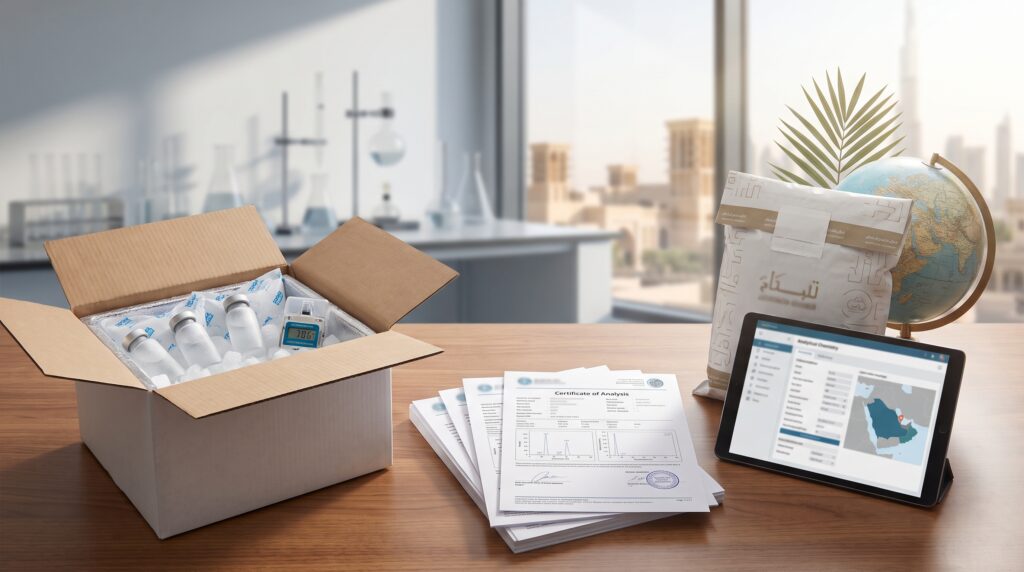
Procuring high-quality research materials in the Gulf Cooperation Council (GCC) requires more than just trusting a vendor’s website claims. For researchers and informed procurement teams in Oman looking for verifiable laboratory supplies, the primary challenge lies in separating legitimate scientific documentation from recycled, static certificates. With regional complexities ranging from extreme summer temperatures to customs delays in Muscat, understanding how to authenticate purity and stability is critical to ensuring your laboratory setup receives exactly what was ordered.
Whether you are affiliated with academic institutions adapting to stricter Omani GMP guidelines or operating an independent research facility requiring high-fidelity materials, your supplier’s testing protocols define the integrity of your work. Relying on unverified materials compromises experimental baselines and wastes valuable research funding.
Sourcing HPLC Tested Peptides Oman: Why HPLC and MS Data Matter
Quick answer for buyers: For researchers seeking HPLC tested peptides in Oman, High-Performance Liquid Chromatography (HPLC) serves as the gold standard for verifying product purity. Buyers should always demand batch-specific Certificates of Analysis (COAs) combined with Mass Spectrometry (MS) data to ensure structural identity and prevent procuring degraded materials.
When evaluating any hplc tested peptides supplier oman, it is crucial to understand that a purity percentage alone does not tell the whole story. A robust quality verification protocol relies on two complementary analytical techniques: High-Performance Liquid Chromatography (HPLC) and Mass Spectrometry (MS). Relying on one without the other leaves critical gaps in your quality control process.
High-Performance Liquid Chromatography (HPLC)
HPLC is globally recognised as the leading analytical method for determining the purity of a synthesised peptide. The process involves forcing the peptide mixture through a highly pressurised column filled with a solid adsorbent material. Because different molecules interact with the column at different rates (a metric known as retention time), impurities—such as truncated peptide sequences, residual solvents, or cleavage scavengers—are separated from the primary compound.
The resulting chromatogram visually maps these separations. A high-quality HPLC report will show a single, sharp, dominant peak representing the target peptide, with minimal baseline noise or secondary peaks. This allows analysts to calculate the exact percentage of the pure target peptide by measuring the area under the curve. Top-tier research suppliers will typically demonstrate a purity level of 99% or higher. Anything below 98% for standard research peptides may introduce unwanted variables into sensitive in vitro assays.
Mass Spectrometry (MS)
While HPLC confirms how pure the sample is, Mass Spectrometry confirms what the sample is. MS measures the mass-to-charge ratio of ions to verify the structural and molecular weight identity of the peptide against its theoretical value.
If an hplc tested peptides shop oman provides a report showing 99% purity but fails to provide MS data, you cannot be entirely certain that the 99% pure substance is the exact amino acid sequence you ordered. It could be a highly pure batch of the wrong peptide altogether. Both tests are required for absolute scientific confirmation.
Reading a COA: A Buyer’s Checklist for Authenticity
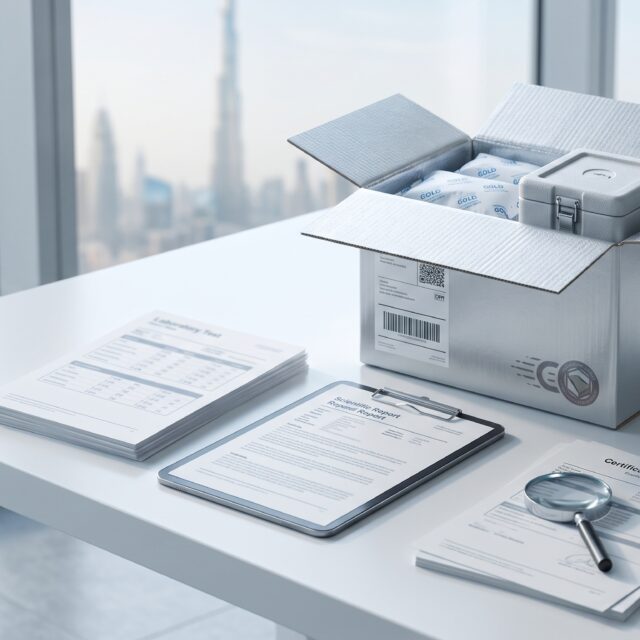
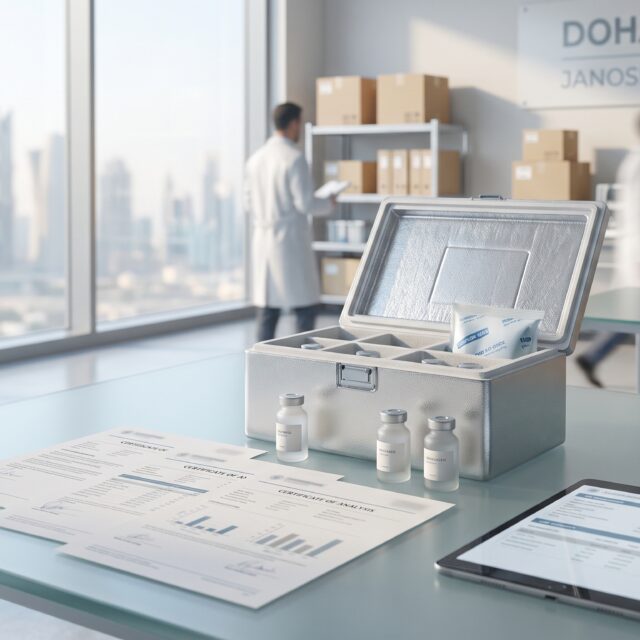
A Certificate of Analysis (COA) is the definitive document proving a peptide’s quality. However, the grey-market peptide industry is notorious for recycling old COAs or using static, catalog-level documents for entirely new production runs. When ordering research materials in Oman, use this checklist to audit their documentation:
- Batch-Specific Identification: The COA must clearly state a unique batch or lot number that matches the physical label on your received vial. If the COA is generic and lacks a batch number, it does not represent the product in your hands.
- Date of Analysis: Peptide stability degrades over time, particularly if poorly stored. Ensure the testing date is recent and aligns with the supplier’s stated manufacturing and restocking timelines.
- Third-Party Verification: Internal lab reports are a good starting point, but independent, third-party analytical testing provides the highest tier of trust. Look for the name and contact details of the testing laboratory on the document to ensure impartiality.
- Clear Chromatograms: The document should not just list a typed number (e.g., “Purity: 99.4%”); it must include the actual visual HPLC graph showing the prominent peak of the primary compound, alongside the precise testing conditions (such as the solvent gradient and column type used).
At NOVA Labs, we believe transparency is non-negotiable for serious researchers. We provide open access to comprehensive, verified lab results so procurement teams can review the empirical data backing every batch before making a purchasing decision.
The GCC Heat Factor: Cold-Chain Logistics to Muscat and Beyond
One of the most overlooked aspects of procuring hplc tested peptides in oman is the regional climate. Summer temperatures in Oman frequently exceed 45 degrees Celsius, creating a uniquely hostile environment for sensitive biological materials.
Peptides in their lyophilised (freeze-dried) state are generally stable at room temperature for short periods. However, prolonged exposure to extreme heat—such as sitting in an uncooled customs warehouse at Muscat International Airport, or during local courier transit to regional hubs like Salalah or Sohar—can cause severe oxidative damage and structural degradation. Even if a peptide leaves the manufacturer at 99.9% purity, heat degradation can render it completely compromised by the time it reaches your laboratory bench.
Top-tier regional suppliers mitigate this environmental risk by implementing stringent logistics protocols:
- Optimising Dispatch Windows: Avoiding weekend shipping that might leave packages sitting idly in hot sorting facilities over the Gulf weekend.
- Protective Packaging: Utilising specialized insulated materials to buffer the vials against ambient temperature spikes during rapid transit.
- Localised Supply Chains: Sourcing from regional GCC suppliers drastically reduces cross-border transit times. A shipment travelling from a neighboring GCC hub clears customs significantly faster than one arriving from overseas, minimizing the time shipments spend in high-heat environments.
Best Practices for Storage and Handling Upon Arrival
Verifying purity and ensuring safe transport is only half the battle; how your laboratory handles the HPLC tested peptides upon arrival determines their longevity. To maintain the 99% purity guaranteed by the COA, researchers must adhere to strict handling protocols.
Upon receiving your shipment in Oman, immediately transfer the lyophilised vials to a dedicated laboratory freezer (ideally at -20°C) for long-term storage, protected from light and moisture. When you are ready to prepare the materials for your assays, ensure you are reconstituting with high-quality bacteriostatic water or sterile saline, depending on the specific research protocol. Once reconstituted, the peptide structure becomes highly fragile. It must be kept refrigerated at 2°C to 8°C and should be utilized within the stability window documented for that specific compound (typically 14 to 30 days).
Evaluating Supplier Trust and Operational Support
Beyond scientific testing and climate-aware logistics, the commercial reliability of your supplier dictates your entire procurement experience. International suppliers shipping to Oman often require cumbersome wire transfers and quote delivery times of 10 to 14 working days, severely delaying urgent research timelines. Furthermore, post-purchase support is frequently limited to slow email ticketing systems operating in different time zones.
When conducting a supplier audit, consider the following operational signals:
- Payment Accessibility: Does the supplier offer seamless, locally accessible payment methods, or are you forced into complex cross-border transfers that attract high banking fees?
- Communication Channels: Is there direct, real-time support (such as WhatsApp) to address urgent queries regarding batch numbers, COA clarifications, or delivery tracking?
- Stock Reliability: Do they maintain consistent inventory levels to support long-term, multi-phase research projects without forcing you to switch suppliers mid-study?
Making an Informed Procurement Decision
Verifying the integrity of your research materials does not have to be a guessing game fraught with logistical anxiety. By demanding transparent HPLC and MS data, understanding the critical importance of cold-chain logistics in the Omani climate, and partnering with suppliers who offer clear communication and verifiable batch tracking, you actively protect the validity of your analytical work.
When you are ready to source high-fidelity laboratory materials, ensure your supplier meets every criterion on the purity checklist. You can explore our strictly vetted, premium research peptide collections to see how NOVA Labs aligns with the rigorous standards required by modern research facilities in Oman and the broader Middle East.
Disclaimer: The products and compounds mentioned in this article are strictly for laboratory research and analytical purposes only. They are not intended for human consumption, self-administration, or therapeutic use.
—
References
- Oman Ministry of Health (2023). Pharmaceutical Products Good Manufacturing Practices Regulation. Muscat, Sultanate of Oman.
- Vanguard Laboratory Analytical Methods. The Ultimate Guide to HPLC Testing for Peptides.
- Ken Research Market Analytics (2020). Oman Peptide Synthesis Market 2019-2030.
Disclaimer: The products mentioned in this article are for research purposes only and are not intended for human consumption.
- Buy Peptides Oman — Research Peptides Online | Perfect Peps Laboratory
- Oman Peptide Synthesis Market | 2019 – 2030 – Ken Research
- The Ultimate Guide to HPLC Testing for Peptides – Vanguard Laboratory
- Research Peptide Supplier USA | COA Verified | Austin, TX
Frequently asked questions
What does HPLC tested mean for research peptides?
HPLC (High-Performance Liquid Chromatography) testing is a sophisticated laboratory method used to separate, identify, and quantify the components in a peptide mixture. It provides an exact percentage of purity, ensuring the product is free from significant synthesis impurities and suitable for precise laboratory research.
How can I verify if a peptide COA in Oman is legitimate?
To verify a Certificate of Analysis (COA), check that the batch number on the certificate matches the physical vial label exactly. Ensure the document includes an actual chromatogram graph, a recent testing date, and the contact information for a third-party analytical testing laboratory for independent verification.
Do high summer temperatures in Oman degrade shipped peptides?
Yes. While lyophilised (freeze-dried) peptides are stable for short durations at room temperature, prolonged exposure to extreme heat—such as during extended customs delays in GCC summers—can cause rapid degradation. Efficient regional logistics and insulated packaging are critical to preserving structural integrity.
What is the difference between HPLC and MS testing?
HPLC measures the precise purity percentage of the compound, while MS (Mass Spectrometry) confirms the molecular weight and structural identity. Both tests are strictly required to prove that a peptide is highly pure and exactly the amino acid sequence intended for your research.
How should I store HPLC tested peptides once they arrive in my lab?
Upon arrival, lyophilised peptides should be immediately stored in a freezer at -20°C away from light and moisture. Once reconstituted with bacteriostatic water for research use, the solution must be kept refrigerated at 2°C to 8°C and used within its documented stability window.
Nova Labs buyer tools
Ready to verify stock, testing and delivery?
Use the product page and lab report section to check availability, documentation, delivery timing and support before placing an order.
- COA / test-report checks
- Oman delivery context
- Cold-chain handling
- COD and card payment options
- WhatsApp support