
Sourcing research compounds in the UAE requires navigating a complex global supply chain. For laboratories in the Emirates, relying on supplier promises is insufficient. Evaluating analytical data is the primary safeguard against degraded compounds, counterfeit batches, and invalid research outcomes. Understanding how to read peptide coa sharjah documents ensures you can independently verify purity and structural identity before introducing materials into your lab.
A Certificate of Analysis (CoA) details the chemical composition of a synthesized compound. However, the market frequently circulates generic templates, outdated reports, and unverified claims. In a region where extreme ambient temperatures introduce massive logistical risks, verifiable documentation must be paired with secure local logistics.
This comprehensive guide will walk you through the essential analytical metrics, how to spot fraudulent documents, and why pristine laboratory data is completely invalidated without proper local cold-chain handling.
The Sharjah Lab Audit: How To Read Peptide CoA Sharjah
To understand how to read peptide coa sharjah, researchers must evaluate two primary metrics: High-Performance Liquid Chromatography (HPLC) for concentration purity above 98%, and Mass Spectrometry (MS) for exact structural identity. Additionally, buyers should cross-reference lot-specific access codes with the independent testing laboratory to ensure document authenticity.
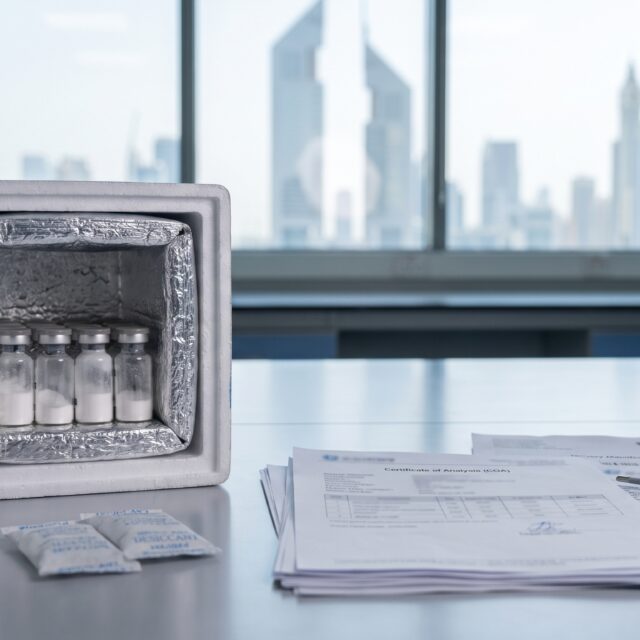
A genuine CoA provides a granular look at your lyophilized powder. Independent analytical facilities provide these documents after subjecting a sample from a specific manufacturing batch to rigorous testing. If a supplier cannot produce a batch-matching CoA from a verified third party, the material should be considered unverified.
Quick Buyer Checklist for Peptide CoAs
Before initiating any procurement, use this rapid checklist to evaluate the validity of the provided documentation. A missing element is a major red flag for researchers.
- Independent Laboratory Letterhead: The document should originate from a recognized, independent analytical laboratory (e.g., Janoshik), not an in-house company template.
- Unique Verification Code: Authentic reports feature an accession number, QR code, or unique search key that can be entered directly into the testing facility’s online database.
- Batch/Lot Number Matching: The lot number printed on the CoA must perfectly match the lot number printed on the vial you receive.
- High-Performance Liquid Chromatography (HPLC): A chromatogram graph demonstrating the purity percentage, ideally showing a single, sharp peak with minimal baseline noise.
- Mass Spectrometry (MS): A graph detailing the mass-to-charge ratio to confirm the molecular weight matches the target compound.
- Testing Date: The document should correspond to the current manufacturing run, not a historical batch from years prior.
HPLC vs. Mass Spectrometry: What Sharjah Researchers Must Demand
One of the most common mistakes made during procurement is focusing entirely on the purity percentage while ignoring structural identity. To fully implement an effective verification framework, you must understand the distinction between HPLC and MS.
High-Performance Liquid Chromatography (HPLC)
HPLC measures the concentration purity of the sample. The resulting graph (chromatogram) displays a timeline on the X-axis and intensity on the Y-axis. In a high-quality batch (typically 98% to 99% pure), you will see one massive, sharply defined peak representing the target compound, with very minor, negligible peaks indicating trace impurities or residual solvents.
However, HPLC only identifies the concentration of whatever is in the vial. If a synthesis error occurred and an amino acid was omitted from the peptide chain, HPLC might still register a 99% purity reading—it is just 99% pure of an incorrect sequence.
Mass Spectrometry (MS)
This is why Mass Spectrometry is non-negotiable. MS identifies the molecular weight of the substance by measuring its mass-to-charge ratio. Every peptide has a specific theoretical molecular weight based on its amino acid sequence. The MS graph will show a primary peak matching this exact molecular weight. If the HPLC shows 99% purity, and the MS confirms the exact molecular weight of your target compound, you can proceed with confidence knowing both the identity and purity are verified.
Spotting Forged Documentation in the UAE Market
As the demand for research compounds grows across the Emirates, so does the sophistication of counterfeiters. Relying on a screenshot of a CoA is no longer sufficient.
Modern verifiable CoAs incorporate cryptographic trust. Laboratories provide a unique verification key on every report. A researcher can visit the independent lab’s official website, input the key, and instantly download the original PDF. If the supplier’s provided document has altered dates, inflated purity percentages, or a mismatched lot number, the discrepancy will be immediately obvious when compared to the source file.
Additionally, be wary of suppliers offering a single “master” CoA for a product line. Peptide synthesis is a batch-by-batch process. A CoA from 2023 does not validate a batch manufactured in 2024. Institutional compliance in Sharjah requires lot-specific traceability for scientific reproducibility.
Beat the Heat: Why a 99% Pure CoA Means Nothing Without GCC Cold-Chain Delivery
Even if your documentation audit is perfect, the data on the paper is meaningless if the physical product degrades in transit.
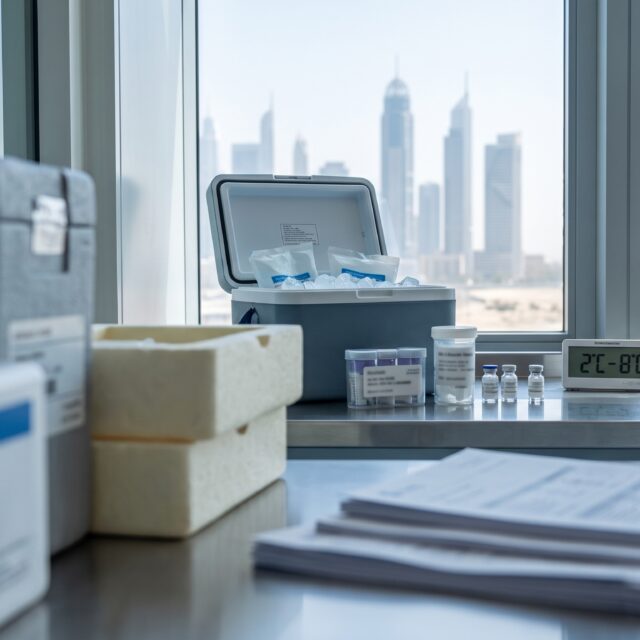
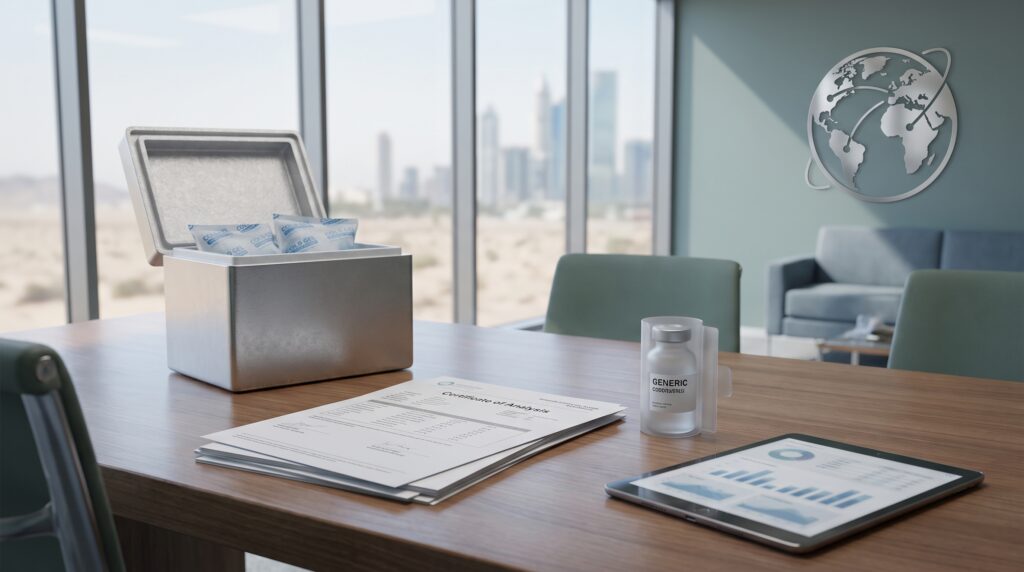
The UAE experiences extreme ambient temperatures, frequently exceeding 45 degrees Celsius during the summer months. Peptides are delicate chains of amino acids held together by fragile peptide bonds. Exposure to extreme heat acts as a catalyst for degradation, primarily through hydrolysis, oxidation, and aggregation. If an imported parcel sits in an un-airconditioned customs warehouse for days, the 99% pure compound verified on the CoA may arrive significantly degraded, yielding compromised research data.
Importing peptides directly from international hubs introduces severe customs friction. Medical and chemical product import regulations often lead to extended clearance delays.
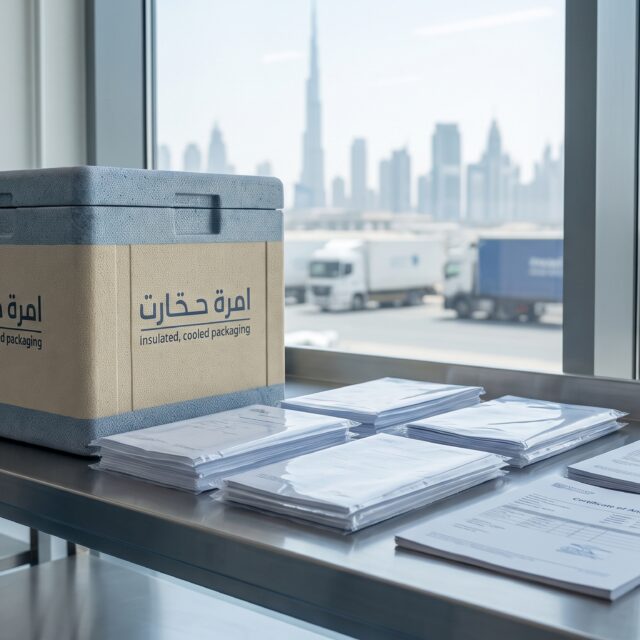
To circumvent this, researchers must prioritize local suppliers who maintain domestic inventory. By utilizing local dispatch, you completely bypass international customs delays. NOVA Labs prioritizes stability through temperature-controlled logistics, ensuring your materials arrive intact. For secure procurement, you can review our comprehensive delivery protocols here.
Protecting Peptide Integrity Post-Delivery
Once you have verified the CoA and safely received your local delivery, proper handling is required to maintain the compound’s integrity.
Lyophilized (freeze-dried) peptide powder is relatively stable during rapid transit, but its stability drastically changes once reconstituted. Reconstituted solutions must be stored in a refrigerator at 2 to 8 degrees Celsius and should typically be utilized within a few weeks to prevent degradation.
A critical, often overlooked threat is condensation. When retrieving a vial from cold storage, you must allow it to equilibrate to room temperature before breaking the seal. Opening a cold vial in a warm Sharjah laboratory invites environmental humidity to condense inside the vial. This moisture can rapidly degrade any remaining lyophilized powder.
Conclusion and Procurement Next Steps
Understanding how to effectively analyze documentation empowers researchers to make safe, data-driven procurement decisions. By demanding independent HPLC and Mass Spectrometry testing, cross-referencing unique lab verification codes, and insisting on lot-specific documents, you protect the integrity of your research.
Equally important is acknowledging the logistical realities of the GCC. Exceptional laboratory data is only valuable if the compound survives the journey to your desk. Prioritizing domestic suppliers who understand cold-chain logistics and local delivery challenges is the final step in securing your supply chain.
Ready to source verified compounds with transparent documentation and secure local UAE shipping? Explore our complete catalogue to discover verifiable research compounds and connect with our support team for lot-specific CoA access.
Disclaimer: The products mentioned in this article are for research purposes only and are not intended for human consumption or therapeutic use.
References
- Janoshik Analytical. “Understanding Analytical Testing: HPLC and MS Methodologies.”
- D’Hondt, M., et al. (2014). “Related impurities in peptide medicines.” Journal of Pharmaceutical and Biomedical Analysis.
- Avanti Polar Lipids / Croda. “Stability of Lyophilized Peptides in Extreme Ambient Temperatures.”
- NOVA Labs Quality Control Standard Operating Procedures (2024).
- How to read a peptide Certificate of Analysis (COA) and tell if it’s real – Reddit
- Cold-Chain Peptide Delivery and Stability in the UAE
- How to Read a Peptide Certificate of Analysis (COA): UK Researcher’s Guide (2026)
- Peptide Storage Guide | Stability, Shelf Life & Handling
- Peptides Lab UAE
- SequenceLabs
Frequently asked questions
What is the difference between HPLC and Mass Spectrometry on a CoA?
HPLC measures the percentage purity of the compound within the vial, showing how much of the sample is the target substance versus impurities. Mass Spectrometry (MS) verifies the structural identity by confirming the molecular weight, ensuring the substance is actually the correct peptide sequence.
How can I verify if a peptide CoA is authentic in Sharjah?
Authentic Certificates of Analysis feature a unique verification key, QR code, or accession number. You can enter this code directly into the issuing independent laboratory's website (such as Janoshik) to download the original file and ensure the document has not been altered.
Why is local UAE delivery important for peptide viability?
The extreme summer heat in the UAE can exceed 45 degrees Celsius, which rapidly degrades delicate peptide bonds through hydrolysis and oxidation. Local delivery bypasses lengthy international customs delays and un-airconditioned storage, ensuring the compound remains stable.
Does a CoA cover every batch of a specific product?
No. A genuine CoA is lot-specific. The batch number printed on the laboratory test report must match the exact batch number printed on the vial you receive, as chemical purity can vary significantly between different manufacturing runs.
How should I store peptides after receiving them in Sharjah?
Lyophilized powder should be stored away from heat and direct light, ideally in a freezer for long-term storage. Once reconstituted, the vial must be kept refrigerated at 2 to 8 degrees Celsius and handled carefully to avoid moisture condensation.
Nova Labs buyer tools
Ready to verify stock, testing and delivery?
Use the product page and lab report section to check availability, documentation, delivery timing and support before placing an order.
- COA / test-report checks
- Sharjah delivery context
- Cold-chain handling
- COD and card payment options
- WhatsApp support