



Sourcing HPLC Tested Peptides Abu Dhabi: The Local Landscape
Sourcing HPLC tested peptides Abu Dhabi requires strict verification of batch-specific Certificates of Analysis (COAs) alongside secure domestic supply chains. Researchers must confirm 99% or higher purity via High-Performance Liquid Chromatography and verify molecular identity through Mass Spectrometry while using local suppliers to avoid customs seizures and thermal degradation.
Buyer Checklist: When navigating the UAE’s heavily regulated research procurement environment, securing stable, high-purity materials demands rigorous independent verification. The market requires navigating strict oversight by the Emirates Drug Establishment (EDE) and the Abu Dhabi Department of Health (DoH). Choosing a reliable local supplier prevents customs friction and ensures stable cold-chain delivery.
Below, we explore the exact criteria buyers must use to read third-party lab data, avoid compromised generic testing, and safely secure research compounds within the GCC.
Decoding the COA: What Do HPLC and MS Actually Prove?
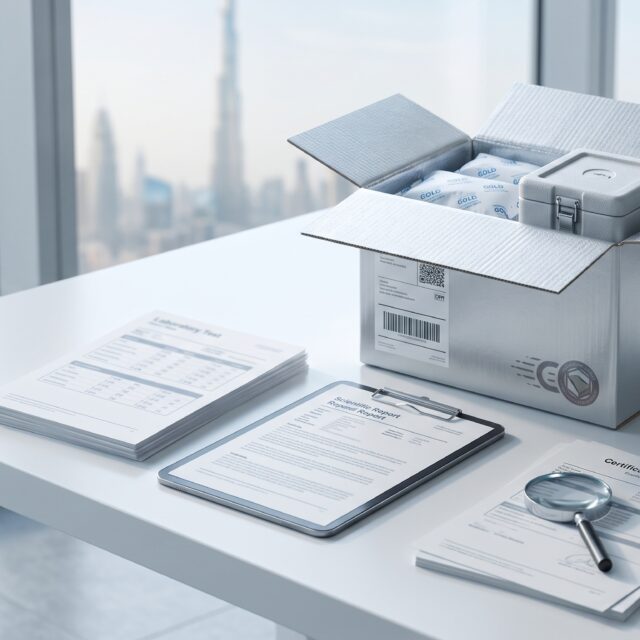
A legitimate Certificate of Analysis (COA) is the foundational document of peptide procurement. However, not all COAs hold equal weight. High-trust research procurement relies on two interconnected tests conducted by ISO 17025-accredited third-party laboratories.
Understanding the HPLC Trace
High-Performance Liquid Chromatography (HPLC) is an analytical technique used to separate, identify, and quantify each component in a mixture. When evaluating a supplier of HPLC tested peptides in Abu Dhabi, the HPLC trace (or chromatogram) is what definitively proves purity.
- The Main Peak: On a valid chromatogram, you should see one towering, distinct peak representing the target peptide.
- Area Under the Curve: The purity percentage is calculated by measuring the area under this primary peak relative to any smaller background peaks (impurities).
- The 99% Standard: For rigorous scientific study, a purity threshold of ≥99% is the benchmark. Anything less introduces unwanted variables or potentially toxic synthesis byproducts into a research environment.
The Critical Role of Mass Spectrometry (MS)
HPLC proves that a vial contains a highly pure substance, but it does not definitively prove what that substance is. That is the job of Mass Spectrometry (MS).
MS bombards the molecule, measuring its mass-to-charge ratio. Every unique sequence of amino acids has a specific, immutable molecular weight. By cross-referencing the MS reading with the expected molecular weight of the target compound, researchers can absolutely confirm the peptide’s identity. If a vendor supplies an HPLC chart without an accompanying MS chart, the molecular identity remains unverified.
The Problem with Generic COAs and “Golden Samples”
One of the most persistent issues in the global peptide market is the reliance on generic, product-level “golden sample” COAs.
A low-trust supplier might send a single exceptionally pure sample to an independent laboratory, receive a glowing COA, and use that same PDF to sell thousands of vials across multiple subsequent manufacturing runs over the next two years. Because raw peptide materials are overwhelmingly synthesized in bulk chemical laboratories, inter-batch variability is a major risk.
When evaluating any HPLC tested peptides shop Abu Dhabi, researchers must insist on batch-specific testing.
- Locate the batch or lot number printed directly on the physical vial.
- Cross-reference that number with the batch ID printed on the third-party COA.
- Verify the date of the test to ensure it aligns with recent manufacturing timelines.
Reviewing comprehensive, batch-matched lab results is the single most critical step in evaluating a supplier’s transparency and operational integrity. Reputable vendors openly host these documents, frequently utilizing recognized analytical entities like Janoshik Analytical or Freedom Diagnostics.
UAE Customs, Regulatory Action, and Local Procurement
Procurement strategies in the GCC have shifted dramatically. Recently, the Emirates Drug Establishment (EDE) launched significant enforcement actions to curb the illegal online marketing of unapproved therapeutic compounds, strictly regulating the flow of biomedical imports to preserve safety and restrict usage to documented research.
For Abu Dhabi researchers, attempting to import peptides directly from overseas laboratories carries high logistical and financial risks. International packages are subjected to intense scrutiny by UAE Customs. Without the correct localized commercial HS codes (e.g., HS 3504.00.10 for lyophilized protein powders) and specialized import licenses, inbound shipments are routinely seized, delayed, or destroyed.
Partnering with an established HPLC tested peptides supplier Abu Dhabi bypasses these bottlenecks. Localized suppliers maintain inventory within the UAE, utilizing pre-cleared logistics pathways. This not only eliminates the risk of international customs friction but drastically reduces transit times—a critical factor for compound stability.
Logistics of Stability: Protecting Lyophilized Peptides in the GCC
Even a compound with a pristine 99.5% HPLC trace is useless if it degrades during transit. Peptides are highly sensitive to thermal stress, UV light, and mechanical agitation.
While peptides are typically shipped in a lyophilized (freeze-dried) state to maximize shelf life, prolonged exposure to extreme UAE temperatures can still cause structural degradation, cleaving the delicate amino acid bonds before the vial even reaches the laboratory desk.
- Storage Constraints: Long-term storage of lyophilized peptides requires deep-freeze conditions (typically -20°C). Once reconstituted with bacteriostatic water, they must be refrigerated strictly between 2°C and 8°C.
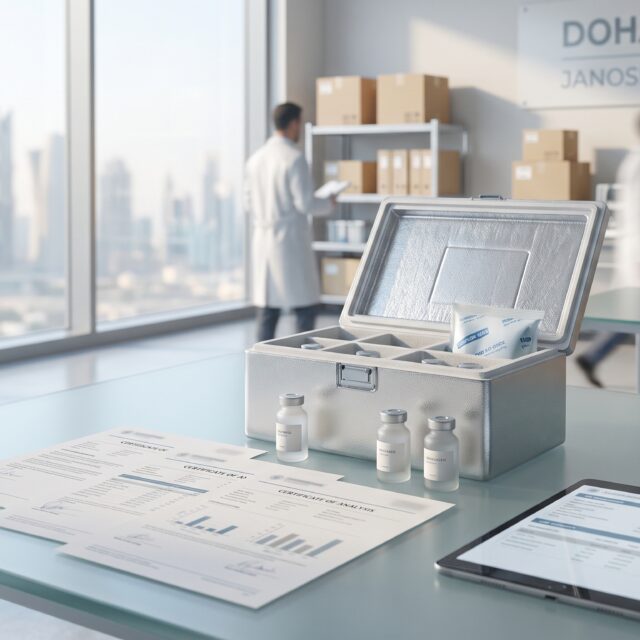
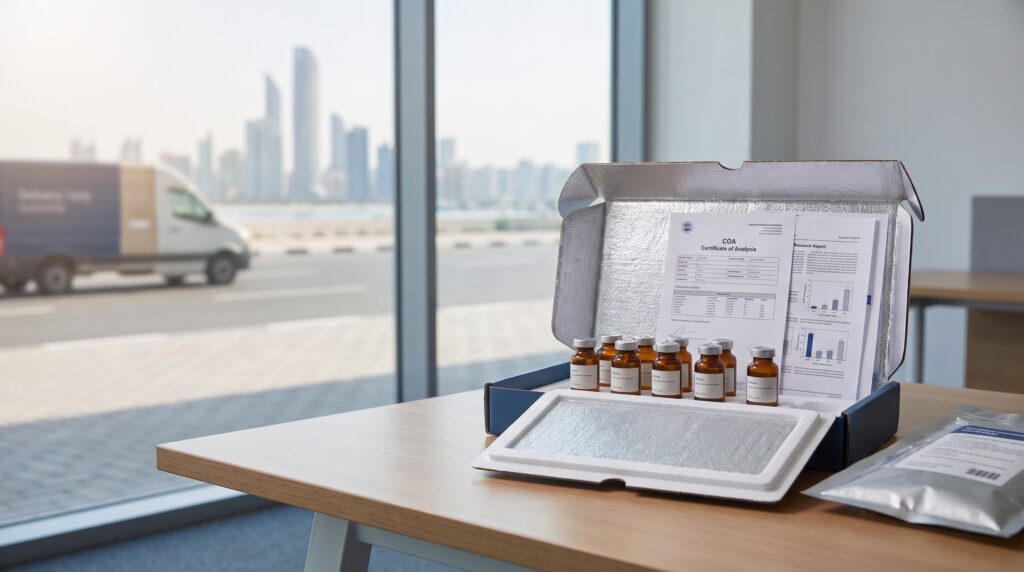
- Cold-Chain Transit: If you order internationally, a package might sit on a sweltering airport tarmac in Dubai or Abu Dhabi for 48 hours during a customs hold. Local suppliers mitigate this by dispatching from domestic, temperature-controlled warehouses and utilizing insulated packaging for rapid next-day delivery.
By sourcing from an entity that manages local stock, researchers guarantee their compounds spend the absolute minimum amount of time outside of climate-controlled environments.
Evaluating Supplier Infrastructure: Payment and Support
Beyond lab data and logistics, the commercial infrastructure of a supplier provides massive insight into their legitimacy.
Due to stringent Mastercard and Visa BRAM (Business Risk Assessment and Mitigation) rules surrounding research chemicals, traditional credit card gateways are frequently heavily restricted for legitimate peptide vendors. If a supplier operates a standard, frictionless credit card checkout without specialized verification, they may be masking high-risk transactions—a red flag for longevity and operational security.
High-trust suppliers in the UAE adapt by offering transparent, localized payment options. Cash on Delivery (COD), direct local bank transfers, or secure cryptocurrency options show that the supplier is embedded in the regional financial ecosystem. Furthermore, localized customer support, such as direct WhatsApp communication, allows researchers to quickly verify stock availability, request specific batch COAs, and coordinate time-sensitive deliveries.
Conclusion
Procuring HPLC tested peptides in Abu Dhabi is an exercise in meticulous verification. By prioritizing suppliers who provide batch-specific, independent HPLC and Mass Spectrometry testing, researchers can guarantee the purity and molecular identity of their materials. Coupled with the strategic advantages of local stock—which eliminates customs seizures and protects thermal stability during transit—choosing a specialized UAE-based supplier is the only reliable path for uninterrupted laboratory work.
If you are evaluating suppliers for your next research protocol, take the time to scrutinize the chromatograms, confirm the batch numbers, and assess the logistical pathways protecting your compounds from the GCC heat.
Ready to secure verified research materials? Browse our fully documented shop to access batch-tested, cold-chain protected compounds maintained locally in the UAE.
Disclaimer: The products mentioned in this article are for research purposes only and are not intended for human consumption.
*
References:
- Gulf News (2024). UAE Cracks Down on Unapproved Peptide Weight-Loss Drugs: 71 Sources and 14 Influencers Face Action.
- Wellness Labs UAE (2024). Buying Research Peptides UAE — Buyer-Evaluation Guide.
- Janoshik Analytical. Standard testing protocols for synthetic peptides (HPLC/MS).
- UAE Customs Authority. Harmonized System (HS) Code Guidelines for Biologicals and Protein Powders.
References
- UAE Cracks Down on Unapproved Peptide Weight-Loss Drugs: 71 Sources and 14 Influencers Face Action – Gulf News
- Buying Research Peptides UAE — the 2026 buyer-evaluation guide – Wellness Labs
- Research Peptides for Sale — UAE | PepcoLab
- LAB REPORTS – PeptideTech UAE
Frequently asked questions
What does an HPLC test prove for research peptides?
High-Performance Liquid Chromatography (HPLC) separates the components of a sample to calculate its purity percentage. In high-quality research peptides, the HPLC trace should demonstrate a purity of 99% or greater to ensure reliable laboratory results.
Why is Mass Spectrometry (MS) required alongside HPLC testing?
While HPLC confirms the purity of a substance, Mass Spectrometry (MS) measures its exact molecular weight. This cross-references the compound's actual mass with its expected mass, definitively verifying its chemical identity.
Why should I buy HPLC tested peptides locally in Abu Dhabi instead of importing?
Importing peptides into the UAE carries high risks of customs seizures, shipping delays, and thermal degradation. Local suppliers maintain domestic inventory, allowing for rapid, insulated delivery that bypasses international customs friction.
What is a 'golden sample' COA and why is it a red flag?
A golden sample COA occurs when a supplier uses one high-purity test result to represent all future batches of a product. Researchers should always look for batch-specific testing where the physical vial's lot number matches the printed independent lab report.
How should lyophilized peptides be stored once delivered in the UAE?
Lyophilized (freeze-dried) peptides should be stored in a freezer at -20°C for long-term stability. Once reconstituted for research use, they must be kept refrigerated strictly between 2°C and 8°C.
Nova Labs buyer tools
Ready to verify stock, testing and delivery?
Use the product page and lab report section to check availability, documentation, delivery timing and support before placing an order.
- COA / test-report checks
- Abu Dhabi delivery context
- Cold-chain handling
- COD and card payment options
- WhatsApp support