



The landscape for acquiring high-purity laboratory reagents in the Middle East has evolved significantly over the past year. For clinical investigators, procurement officers, and independent laboratories looking to buy Ipamorelin GCC, the regional market presents a unique set of challenges. Between extreme summer temperatures that threaten molecular stability and increasingly stringent local regulations governing the importation of biochemicals, identifying a reliable supplier requires careful vetting.
Procuring quality research materials in the United Arab Emirates, Saudi Arabia, Qatar, and the wider Gulf is no longer just about finding a vendor with available stock. It requires a rigorous assessment of cold-chain logistics, third-party analytical testing, and strict adherence to regional compliance standards. This guide details exactly what procurement specialists and researchers must evaluate before making a purchasing decision.
The Best Approach to Buy Ipamorelin GCC
To safely buy Ipamorelin GCC, researchers must verify third-party HPLC purity above 99%, demand batch-specific Certificates of Analysis (COAs), and ensure the supplier uses active cold-chain logistics to prevent thermal degradation during transit across the UAE, KSA, and wider Gulf region.
Finding a reputable vendor goes beyond basic web searches. The GCC market is highly competitive but strictly scrutinised under regional regulatory frameworks. While many overseas suppliers advertise global shipping, importing lyophilised peptides directly often results in extended customs delays. These delays, combined with the extreme ambient heat of the Middle East, can rapidly degrade sensitive peptide chains before they even reach the laboratory bench. Therefore, sourcing from established, locally-operating distributors who hold domestic stock is generally the most reliable procurement strategy.
Chemical Profile: Understanding the Ipamorelin Peptide Research Context
Before evaluating an Ipamorelin supplier GCC, it is important to understand the compound’s chemical nature and why stringent quality control is necessary.
Ipamorelin is chemically classified as a selective ghrelin/growth hormone secretagogue receptor (GHS) agonist. In scientific literature and laboratory studies, it is investigated for its ability to trigger growth hormone release. Crucially, research indicates that it does so without simultaneously elevating cortisol, adrenocorticotropic hormone (ACTH), or prolactin levels. This high degree of selectivity makes it a compound of significant interest in metabolic and endocrinological in-vitro and animal model studies.
Because of its specific molecular structure (a pentapeptide sequence of Aib-His-D-2-Nal-D-Phe-Lys-NH2), any impurities, synthetic byproducts, or degradation caused by improper storage can completely alter its binding affinity in an experimental setting. This is why researchers cannot compromise on purity when securing materials for their studies.
How to Verify an Ipamorelin Supplier GCC
When evaluating where to order Ipamorelin GCC, the presence of verifiable analytical documentation is the single most critical factor. The standard benchmark for research-grade peptides is a purity level of 99% or higher.
The Role of High-Performance Liquid Chromatography (HPLC)
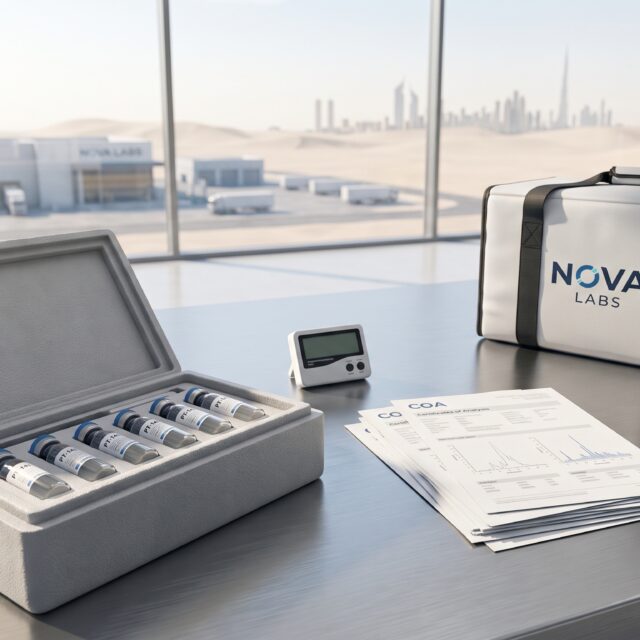
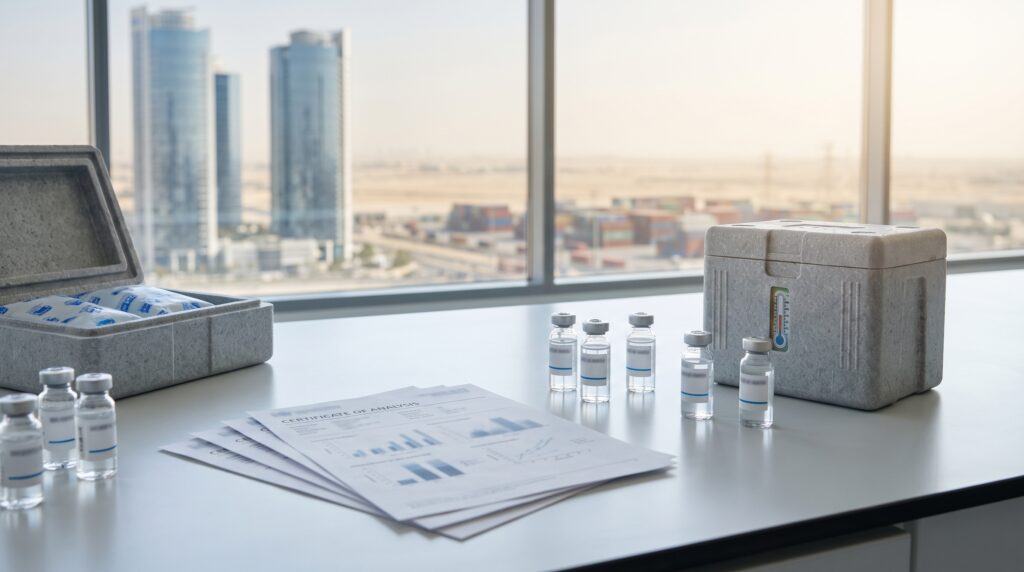
Authentic suppliers provide lot-tracked, batch-specific Certificates of Analysis (COA) for their inventory. These documents are generated through High-Performance Liquid Chromatography (HPLC) and Liquid Chromatography-Mass Spectrometry (LC-MS).
When reviewing a COA, buyers should look for:
- Batch Match: The batch or lot number on the physical vial must match the documentation precisely.
- Purity Percentage: The chromatogram should show a distinct, sharp primary peak indicating the target compound, with total purity exceeding 99%.
- Mass Verification: The mass spectrometry data should confirm the exact molecular weight of Ipamorelin (711.85 g/mol), ensuring the correct sequence was synthesised.
- Traceability: Modern vendors often include QR codes on the vial that link directly to the independent laboratory’s testing results, preventing the circulation of falsified, outdated documents.
Regulatory Landscape: Enforcement and Compliance
Navigating the procurement of the Ipamorelin peptide GCC requires a firm understanding of the local regulatory environment, which has become increasingly strict.
In recent regulatory updates, UAE health authorities and the Emirates Drug Establishment (EDE) enforced major crackdowns, penalising unapproved online sources and social media influencers for illegally promoting peptide products outside of licensed medical frameworks. This enforcement action highlights a critical distinction in the GCC market: the difference between research reference materials and compounded medical treatments.
For human use, peptides in the UAE must be prescribed by a licensed physician and prepared by Ministry of Health and Prevention (MOHAP)-accredited compounding pharmacies. These facilities operate strictly within the medical sector.
Conversely, professional online peptide suppliers cater exclusively to the scientific and research community. To maintain legal and research-compliant status under GCC customs and local regulations, these suppliers strictly label their products for laboratory research only. Reputable vendors will maintain a strict policy against providing medical dosage instructions, reconstitution advice for human application, or self-use protocols. If a vendor makes medical claims or guarantees specific biological outcomes, it is a strong indicator that they are operating outside of compliance guidelines.
Defeating the Heat: Cold-Chain Delivery in the UAE and Gulf
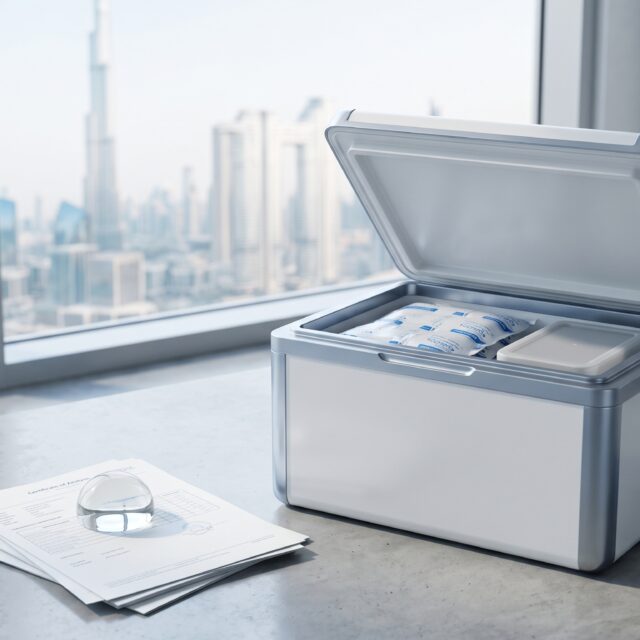
Due to extreme ambient temperatures in the GCC—where summer days frequently exceed 40°C (104°F)—standard postal shipping is inadequate for sensitive biochemicals. Professional peptide suppliers must rely on active cold-chain logistics to preserve peptide integrity during transit.
Lyophilised (freeze-dried) peptides are generally stable at room temperature for short durations, but prolonged exposure to intense heat can cause peptide bonds to break down, rendering the material useless for precise research. When you order Ipamorelin GCC, ensure the distributor utilises:
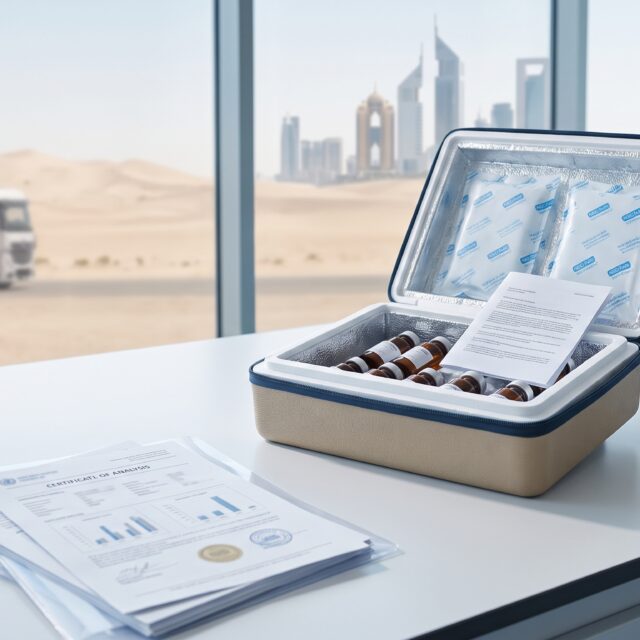
- Insulated thermal mailers or expanded polystyrene (EPS) boxes.
- Gel ice packs to maintain a stable microclimate during transit.
- Temperature indicators or rapid dispatch protocols that minimise time in transit.
Leading regional research suppliers understand these environmental constraints. By dispatching from domestic hubs, they can bypass lengthy international customs delays. If you are operating within the Emirates, you can rely on highly efficient local logistics. Learn more about how strict temperature controls are maintained through our Next-Day UAE Delivery protocols.
Payment, Support, and Procurement Expectations
Modern laboratories and informed buyers expect a seamless, secure procurement process. When comparing vendors, evaluate their operational infrastructure alongside their product quality.
Responsive Local Support
The most reliable vendors in the GCC region provide direct, immediate customer service channels. Given the fast-paced nature of laboratory procurement, the availability of WhatsApp checkout assistance or direct client support to verify stock availability before ordering is a major advantage.
Delivery Windows and Payment Security
Within Dubai and the broader UAE, top-tier suppliers offer same-day or next-day dispatch. For researchers across other GCC states—including the Kingdom of Saudi Arabia (KSA), Oman, Qatar, Bahrain, and Kuwait—delivery typically takes 2 to 5 business days using expedited regional couriers. Furthermore, reliable local suppliers frequently offer secure payment gateways and, in some local jurisdictions, Cash on Delivery (COD) options to build trust with new research clients.
For researchers ready to secure verified, cold-chain protected materials, you can browse available inventory and access batch-specific documentation directly through our Research Peptide Shop.
Final Checklist Before You Order Ipamorelin GCC
Securing high-quality research materials in the Middle East does not have to be a guessing game. By focusing on factual verification and operational reliability, buyers can protect their research investments.
Before finalising your procurement, run through this key buyer checklist:
- Check the Purity: Does the vendor provide a visible, batch-tracked COA proving HPLC purity >99%?
- Verify the Logistics: Does the supplier use insulated packaging and gel packs to combat GCC heat?
- Assess the Shipping Time: Is the stock held locally for fast 1-5 day regional delivery, avoiding customs traps?
- Confirm Compliance: Does the vendor explicitly state the product is for research purposes, avoiding illegal medical claims?
- Evaluate Support: Can you easily contact the supplier via WhatsApp or email to verify current stock and batch data?
By demanding transparency, proper thermal handling, and verifiable analytical testing, researchers can confidently navigate the market and source research compounds that meet the rigorous demands of modern laboratory study.
*
Disclaimer: The products mentioned in this article are for research purposes only and are not intended for human consumption.
References
- UAE Cracks Down on Unapproved Peptide Weight-Loss Drugs: 71 Sources and 14 Influencers Face Action (Gulf News, 2024 EDE Regulatory Update).
- Peptides Compounding Pharmacy Dubai – CureCell.
- With peptide supplements, marketing outpaces the medicine – UCLA Health.
- UAE Cracks Down on Unapproved Peptide Weight-Loss Drugs: 71 Sources and 14 Influencers Face Action – Gulf News
- Peptides Compounding Pharmacy Dubai – CureCell
- About Us – magenta rx
- Shipping & Returns – Peptides DXB
- CJC-1295 + Ipamorelin UAE – VaultLabs
- Terms and Conditions | UAE Core Peptides
- With peptide supplements, marketing outpaces the medicine – UCLA Health
Frequently asked questions
Is Ipamorelin legal to buy in the GCC?
Yes, purchasing Ipamorelin is permissible in the GCC when strictly procured as a reference material for laboratory research, provided the supplier adheres to regional customs and regulatory compliance.
What purity level should I look for in an Ipamorelin supplier GCC?
Researchers should demand a minimum purity of 99%, verified by a batch-specific Certificate of Analysis (COA) using HPLC and LC-MS testing methods.
How are research peptides shipped during the Gulf summer?
Reputable distributors use active cold-chain logistics, including insulated mailers and gel ice packs, to ensure lyophilised peptides remain chemically stable during transit in high ambient temperatures.
How long does peptide delivery take in the UAE and GCC?
Leading local suppliers typically offer same-day or next-day delivery within the UAE, and expedited 2 to 5 business day shipping to other GCC nations such as KSA, Oman, Qatar, Bahrain, and Kuwait.
Nova Labs buyer tools
Ready to verify stock, testing and delivery?
Use the product page and lab report section to check availability, documentation, delivery timing and support before placing an order.
- COA / test-report checks
- GCC delivery context
- Cold-chain handling
- COD and card payment options
- WhatsApp support