



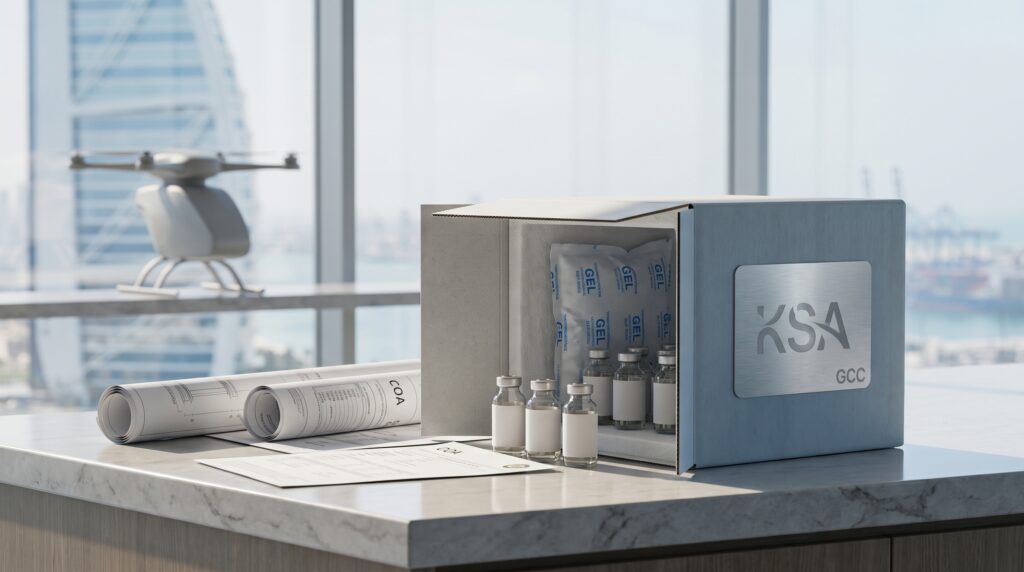
Procuring high-quality research materials in the Gulf Cooperation Council (GCC) presents unique environmental and regulatory challenges. For procurement officers, laboratory managers, and informed buyers looking to source reliable biochemicals, the decision goes far beyond simply finding an available supplier. Success in sourcing requires strict attention to third-party analytical testing, temperature-controlled logistics, and regional compliance.
International peptide suppliers often fail to account for the extreme logistical realities of the Saudi market. With summer temperatures regularly soaring, standard international shipping methods frequently result in delayed packages sitting in sweltering customs warehouses, putting sensitive biological materials at risk of thermal degradation.
This guide outlines exactly what researchers in the Kingdom must verify before placing an order, from understanding Certificates of Analysis (COAs) to evaluating cold-chain delivery protocols and local payment infrastructure.
Where to Buy Ipamorelin in Saudi Arabia: Quick Answer & Guide
Quick Answer: Looking to buy Ipamorelin in Saudi Arabia? For reliable research outcomes, source from regional GCC suppliers offering independent, verifiable Janoshik COAs and cold-chain logistics. Utilizing regional hubs prevents thermal degradation caused by extreme summer tarmac temperatures and bypasses lengthy international customs delays.
The search for a reliable supplier frequently reveals a fractured market. While overseas vendors may advertise lower initial prices, these savings evaporate when shipments are held up at borders or arrive degraded due to improper handling. Informed buyers understand that securing research-grade materials requires evaluating a supplier’s operational infrastructure just as rigorously as their product catalog.
Procuring Ipamorelin in Saudi Arabia requires more than just securing the compound; it demands assurance that the peptide sequence remains intact from the synthesis laboratory to your research facility. This assurance is built on two pillars: transparent analytical testing and climate-resilient logistics.
The Logistics Challenge: Tarmac Temperatures and Peptide Stability
The most significant threat to the structural integrity of any peptide in Saudi Arabia is heat. During the summer months, tarmac temperatures at major logistical hubs in Riyadh, Jeddah, or Dammam can easily exceed 50°C to 60°C.
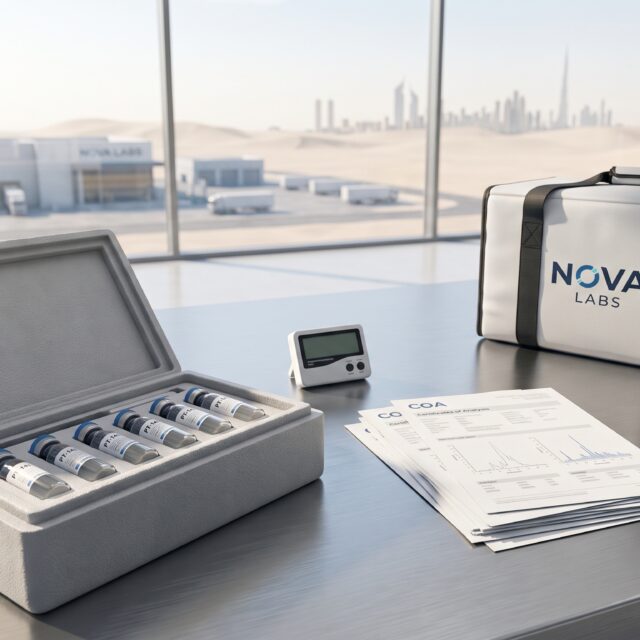
Peptides are typically supplied in a lyophilised (freeze-dried) powder form. While lyophilisation significantly enhances stability compared to liquid solutions—often keeping compounds stable at room temperature for short periods—prolonged exposure to extreme Gulf heat can still induce denaturation. During denaturation, the delicate peptide bonds break down, rendering the sample useless for precise laboratory applications and corrupting any subsequent experimental data.
When ordering from international vendors based in the US, Europe, or Asia, shipments often face a multi-day journey involving numerous handoffs. More critically, international parcels are frequently subjected to rigorous, time-consuming inspections by the Zakat, Tax and Customs Authority (ZATCA). A package delayed in a non-climate-controlled holding area during a Saudi summer weekend is highly susceptible to thermal degradation.
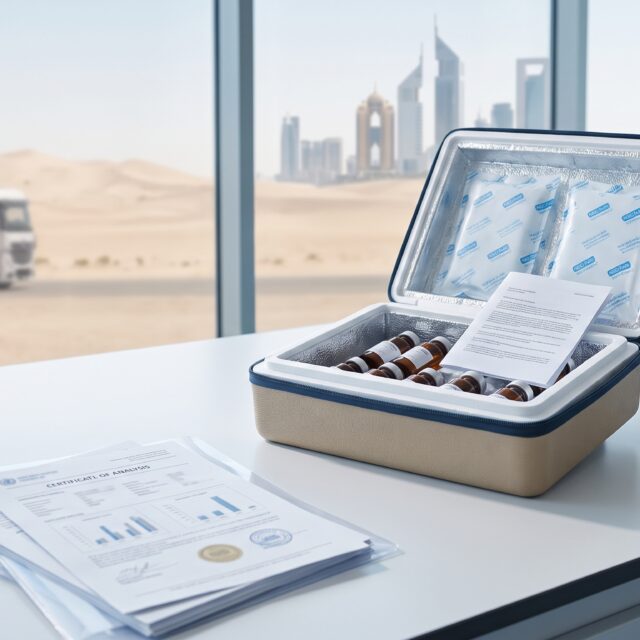
This is why regional sourcing has become the gold standard for GCC researchers. By leveraging established regional distribution lanes, such as those used for expedited GCC and UAE peptide delivery, buyers can dramatically reduce transit times and ensure materials are handled in climate-controlled environments suited to the Middle East. Eliminating international customs bottlenecks is the single most effective way to protect the integrity of your research materials.
Verifying Analytical Purity: COA and HPLC Standards
Analytical transparency separates legitimate research suppliers from questionable vendors. If you intend to use Ipamorelin in any controlled laboratory setting, you must demand comprehensive documentation proving its identity and purity. Without this data, researchers risk introducing unknown variables into their studies.
High-Performance Liquid Chromatography (HPLC)
HPLC is the standard analytical technique used to separate, identify, and quantify each component in a mixture. A valid HPLC report will display a chromatogram with a distinct, sharp peak representing the primary molecule, alongside a calculated purity percentage. Reputable suppliers ensure their Ipamorelin tests at 99% purity or higher, meaning the presence of synthesis byproducts (such as truncated sequences or unwanted salts) is strictly minimised.
Mass Spectrometry (MS)
While HPLC confirms purity, Mass Spectrometry confirms identity. The MS report measures the mass-to-charge ratio of the molecules in the sample. By comparing the molecular weight of the tested sample against the known molecular weight of the Ipamorelin peptide, researchers can definitively verify that the vial contains the correct compound.
Third-Party Independent Testing
In-house testing reports hold little weight in the modern research procurement landscape. Trustworthy suppliers utilise independent analytical laboratories, such as Janoshik, to verify their batches. A credible supplier in Saudi Arabia will provide a COA that includes a verifiable tracking number, allowing the buyer to confirm the results directly on the independent laboratory’s secure database. Never accept a COA that appears heavily redacted, outdated, or lacks a verifiable blind-test identifier.
Payment, Support, and Operational Security
Beyond product quality, the operational security of a supplier is a critical factor for researchers in Saudi Arabia. International bank transfers can be slow, fraught with high correspondence fees, and subject to holds by local financial institutions scrutinizing cross-border biochemical purchases.
Leading regional suppliers offer secure, encrypted payment gateways that cater specifically to GCC buyers, often including localized options or secure channels for institutional privacy. Furthermore, responsive customer support is essential. Due to the complexities of regional logistics, having access to a dedicated support team—such as a responsive WhatsApp business channel—allows laboratory managers to track shipments in real-time and resolve any last-mile delivery issues swiftly.
Navigating Compliance: SFDA Guidelines and RUO
Procurement of peptides in the GCC is subject to strict regulatory oversight. In recent years, joint operations by the Saudi Ministry of Health (MoH) and the Saudi Food and Drug Authority (SFDA) have executed rigorous enforcement campaigns targeting the illegal distribution of unregistered hormonal and biological substances.
These crackdowns heavily targeted commercial gyms, unregulated fitness centers, and unlicensed individuals distributing these materials for human consumption. This regulatory environment underscores the absolute necessity of maintaining a strict Research Use Only (RUO) protocol.
When you buy Ipamorelin in Saudi Arabia, it must be procured exclusively for in-vitro research, laboratory analytics, or controlled scientific studies. Legitimate suppliers will clearly position their products as RUO and will not provide dosage instructions, therapeutic claims, reconstitution guides for in-vivo use, or medical advice. Maintaining this clear boundary protects both the supplier and the research institution from regulatory friction and ensures full compliance with Saudi laws.
Buyer Checklist for Saudi Arabian Researchers
For laboratory procurement teams evaluating their options, navigating the current market requires a methodical, step-by-step approach. Use the following checklist to vet potential suppliers before committing research funds:
- Verify the Analytical Data: Ensure the supplier provides up-to-date, third-party HPLC and MS reports. Look for verification keys that can be checked on independent platforms.
- Assess the Shipping Infrastructure: Does the supplier understand GCC climate challenges? Confirm that they utilise cold-chain protocols and regional dispatch hubs (like Dubai or Abu Dhabi) to bypass international customs bottlenecks.
- Check Stock Confidence and Transparency: The best suppliers maintain live inventory tracking. If an item is listed as in stock, it should be ready for immediate regional dispatch, not backordered from an overseas synthesis lab.
- Evaluate Payment Flexibility: Look for suppliers offering secure, encrypted payment gateways suitable for GCC buyers, minimizing international wire delays.
- Confirm RUO Compliance: The vendor’s website should reflect a professional, scientific focus. Avoid suppliers that market peptides with bodybuilding imagery, medical claims, or guaranteed biological outcomes.
Sourcing with Confidence in the Kingdom
The landscape for securing analytical-grade research peptides in the GCC is evolving rapidly. As regulatory bodies tighten their oversight and environmental challenges persist, laboratory managers must adapt their procurement strategies. Successfully sourcing biochemicals in Saudi Arabia requires shifting away from distant international vendors and prioritizing regional suppliers who offer verifiable third-party testing, climate-resilient logistics, and strict adherence to RUO compliance.
By insisting on independent, verifiable COAs and leveraging established UAE-to-Saudi distribution networks, researchers can eliminate the risks of thermal degradation and customs friction. This targeted approach ensures that delicate laboratory materials arrive intact, pure, and ready for advanced analysis. Researchers looking to secure rigorously tested compounds from a compliant, regionally focused supplier can explore the full range of analytical-grade materials at our research peptide shop.
Disclaimer: The products and information mentioned in this article are exclusively for in-vitro laboratory research purposes only. They are not intended for human consumption, therapeutic use, or any form of medical treatment. Always ensure compliance with local SFDA and Ministry of Health regulations when procuring research materials.
References
- Saudi Food and Drug Authority (SFDA): Regulations on the Importation of Biological Research Materials
- Ministry of Health (Saudi Arabia): Regulatory Updates and Enforcement Reports on Unlicensed Biologicals
- Janoshik Analytical: Standards in HPLC and Mass Spectrometry for Peptide Verification
- Zakat, Tax and Customs Authority (ZATCA): Guidelines for Regional GCC Transit, Cold-Chain Logistics, and Importation
- Peptide Supplier Checklist Saudi Arabia: Practical Buyer Guide – NOVA Labs
- MOTS-c Saudi Arabia: Buying, Purity, COA and Delivery Guide – NOVA Labs
- Health Ministry Cracks Down on Gym Trainers Selling Unlicensed Weight Loss and Hormonal Drugs
- Saudi Health Ministry Detains Gym Trainers Over Illegal Drug Sales | Shotlee
- Buy Ipamorelin Saudi Arabia Peptides For Sale – Direct Sarms
Frequently asked questions
Is it legal to buy Ipamorelin in Saudi Arabia?
Ipamorelin can be purchased in Saudi Arabia exclusively for Research Use Only (RUO) in controlled laboratory environments. It is strictly not approved or permitted for human consumption, and regulatory bodies prohibit its sale for medical or dietary use.
How do extreme summer temperatures affect shipped peptides?
Tarmac temperatures in Saudi Arabia can exceed 60°C, which rapidly causes lyophilised peptides to denature and lose structural integrity if left in uncontrolled environments. This makes cold-chain logistics and rapid regional shipping essential.
What is a Janoshik COA and why is it important?
Janoshik is an independent analytical laboratory that performs blind HPLC and Mass Spectrometry testing. A Janoshik COA provides verifiable proof of a peptide's purity and identity, ensuring researchers receive exact, unadulterated compounds rather than relying on in-house supplier claims.
Why is regional UAE shipping preferred for Saudi buyers?
Shipping from a regional hub like the UAE bypasses lengthy international transit times and complex overseas customs clearances. This significantly reduces the risk of temperature-induced degradation during transit and ensures research materials arrive intact.
Nova Labs buyer tools
Ready to verify stock, testing and delivery?
Use the product page and lab report section to check availability, documentation, delivery timing and support before placing an order.
- COA / test-report checks
- Saudi Arabia delivery context
- Cold-chain handling
- COD and card payment options
- WhatsApp support