
Procuring research compounds in Dubai, Abu Dhabi, and the wider GCC requires strict quality control. While many international suppliers market their products with “99%+ purity” labels, verifying these metrics requires a firm grasp of analytical chemistry and batch documentation. To source reliable materials, laboratories need a definitive peptide purity guide UAE procurement teams can trust to separate rigorous quality assurance from mere marketing claims.
From understanding the mathematical difference between chromatographic purity and Net Peptide Content (NPC) to addressing the severe logistical challenges of GCC summer temperatures, successful procurement requires diligence. This guide breaks down exactly how to read a Certificate of Analysis (COA), how to evaluate domestic versus international suppliers, and how to ensure temperature-sensitive compounds survive local transit without degradation.
Peptide Purity Guide UAE: What Exactly is Peptide Purity?
Quick answer: Peptide purity measures the fraction of the target amino acid sequence relative to synthesis by-products like truncated chains. For precise UAE laboratory use, researchers require a minimum of 98% purity, verified through independent HPLC and Mass Spectrometry testing to ensure accuracy and prevent off-target variables during in-vitro assays.
In standard solid-phase peptide synthesis (SPPS), amino acids are linked together sequentially. As the chain grows, occasional chemical errors occur—such as missed attachments (deletions), early terminations (truncations), or incomplete deprotection steps. The final synthesized product is therefore a mixture of the target sequence and these structurally similar impurities.
When a supplier states a compound is “99% pure,” they are asserting that 99% of the peptide molecules in the vial match the exact, correct sequence, while the remaining 1% consists of synthesis by-products. High purity is critical for in-vitro research because impurities can introduce confounding variables, cause off-target binding in cellular assays, or trigger unintended biological responses in tissue cultures, rendering expensive experimental data unreliable.
How to Verify Quality: Reading a Certificate of Analysis (COA)
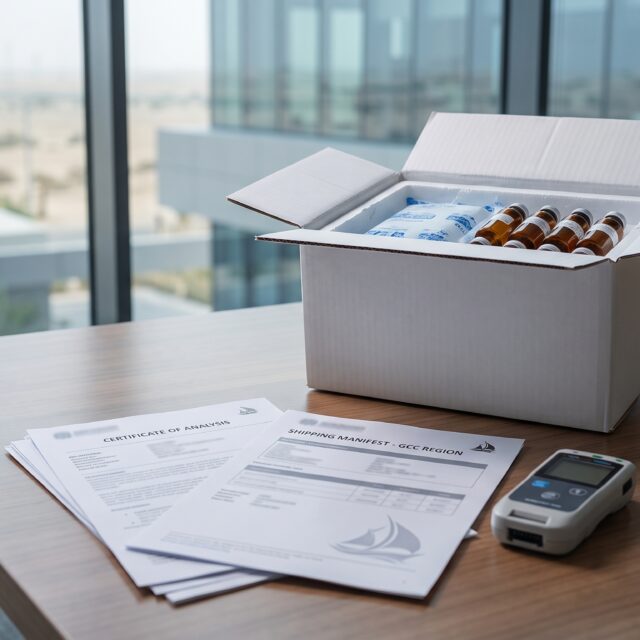
A reputable supplier will always provide a batch-specific Certificate of Analysis (COA) for their compounds. This is the single most important document in any laboratory procurement process. Relying on outdated or generic COAs is a major risk factor for research laboratories. A valid, actionable COA relies on two primary testing methodologies that must be presented together.
1. HPLC (High-Performance Liquid Chromatography)
HPLC is the standard analytical method for determining chromatographic purity. It works by passing the dissolved peptide through a packed column (the stationary phase) using a liquid solvent (the mobile phase). Because different molecules travel through the column at different speeds based on their chemical properties (like hydrophobicity), they separate.
The resulting graph—a chromatogram—displays a series of peaks. The main, largest peak represents the target peptide. The area under that specific peak compared to the total area of all peaks on the graph provides the purity percentage. A reliable COA will clearly show a sharp, distinct main peak with minimal baseline noise or secondary peaks.
2. Mass Spectrometry (MS)
While HPLC confirms how pure a substance is, it cannot definitively confirm what the substance actually is. Mass Spectrometry (MS) is required to verify the chemical identity of the compound. MS measures the mass-to-charge ratio of the ions, determining the exact molecular weight of the peptide.
This measured weight must precisely match the theoretical weight of the targeted amino acid sequence. If the mass is incorrect, the compound is either the wrong sequence entirely or has been heavily degraded, regardless of what the HPLC purity score indicates. Both HPLC and MS must be present and aligned on a COA for it to be considered valid.
Chromatographic Purity vs. Net Peptide Content (NPC)
A common point of confusion among laboratory procurement staff is the difference between chromatographic purity and Net Peptide Content (NPC). Understanding this distinction is vital for accurate molar calculations and dosage scaling in laboratory protocols.
Lyophilized (freeze-dried) peptide powder in a vial is never 100% pure peptide by weight. During the synthesis and cleavage processes, counter-ions (most commonly trifluoroacetic acid, or TFA salts, and sometimes acetate salts) and trace amounts of moisture remain tightly bound to the peptide molecules.
- Chromatographic Purity: The percentage of the peptide fraction itself that is the correct, unbroken sequence (e.g., 99%).
- Net Peptide Content (NPC): The percentage of the total powder weight in the vial that is actual peptide versus retained salts and moisture. NPC typically ranges from 70% to 85% depending on the specific sequence’s hydrophilicity.
For example, consider a 10mg vial with an NPC of 80%. The vial contains 8mg of active peptide and 2mg of salt/moisture. Of that 8mg of peptide, 99% is the pure target sequence. High-quality suppliers account for NPC during the lyophilization and filling process, intentionally overfilling vials by gross weight to ensure the researcher actually receives the full advertised milligram amount of the active peptide.
Managing Extreme GCC Climates: Storage and Logistics
Verifying a COA is only the first step in the procurement process. The extreme climate of the UAE presents a severe logistical hurdle for peptide stability. During the long summer months, ambient temperatures in Dubai and Abu Dhabi routinely exceed 45°C (113°F). Inside standard, uninsulated courier delivery vehicles or direct-sun warehouse drop boxes, temperatures can rapidly spike to over 60°C.
Research peptides are highly susceptible to chemical degradation through hydrolysis (the cleavage of peptide bonds by water) and oxidation (especially sequences containing reactive amino acids like methionine, tryptophan, or cysteine) when exposed to heat and UV light. A compound that tested at 99% purity in an overseas laboratory can degrade significantly by the time it reaches a UAE workbench if transported improperly.
The Failure of Standard Gel Packs
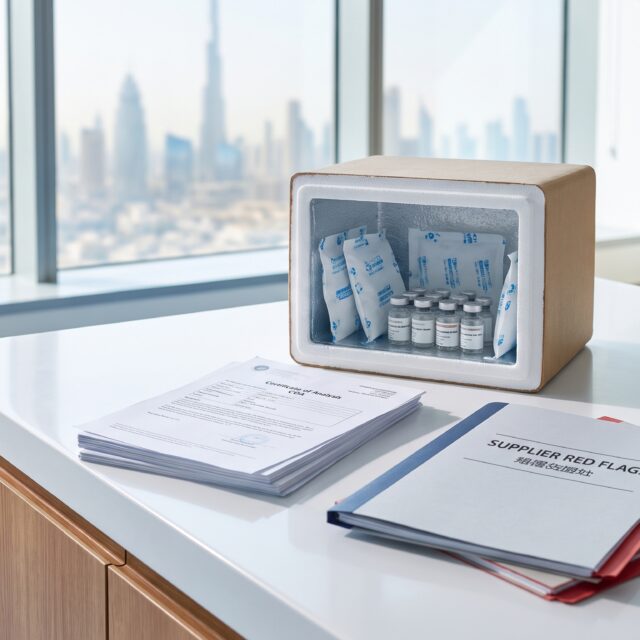
Many international suppliers ship to the GCC using standard EPS foam boxes and commercial ice packs. In the intense UAE heat, these gel packs often completely melt within 24 to 48 hours. If the package gets caught in local customs clearance—a common occurrence for international chemical shipments—the fragile compounds are left baking in a warm customs warehouse for days, severely compromising their structural integrity.
Active Cold-Chain Logistics and Local Delivery
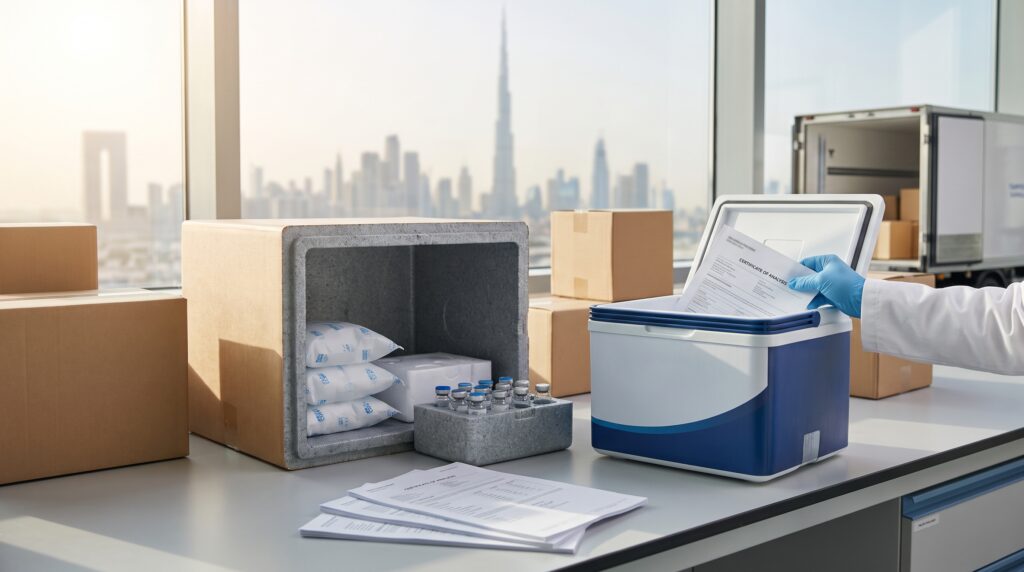
To protect the structural integrity of these research materials, active cold-chain handling and localized shipping are mandatory. This involves temperature-monitored packaging that maintains a stable, chilled environment from the supplier’s warehouse directly to the laboratory bench.
To bypass international shipping delays and customs friction entirely, forward-thinking researchers increasingly rely on domestic suppliers who maintain local stock. By choosing suppliers that offer specialized cold-chain peptide delivery across the UAE, researchers ensure their temperature-sensitive compounds arrive swiftly, bypassing the heat exposure and degradation risks associated with cross-border transit.
Mandatory Laboratory Storage Protocols
Once the compounds are received at the facility, strict storage parameters must be implemented immediately:
- Unopened Lyophilized Vials: Store in a standard laboratory freezer at -20°C. Under these conditions, lyophilized peptides maintain long-term stability for up to 24 to 36 months. Avoid frost-free freezers that constantly cycle temperatures, as the repeated freeze-thaw stress can damage the compounds.
- Reconstituted Peptides: Once mixed with bacteriostatic water or a designated laboratory solvent, the solution becomes highly vulnerable to degradation. Reconstituted peptides must be kept constantly refrigerated between 2°C and 8°C and should be utilized in assays within 20 to 30 days to avoid significant loss of efficacy.
Sourcing Premium Peptides: The UAE Buyer’s Checklist
When evaluating regional suppliers, UAE laboratories should implement a strict, non-negotiable procurement checklist to ensure safety, reliability, and scientific precision.
- Batch-Specific Testing Verification: Does the supplier provide visible, independent HPLC and MS reports for the exact current batch being sold, or just generic, outdated files from years ago?
- Local Stock Availability: Does the supplier hold physical inventory in Dubai or Abu Dhabi? Dropshipping from overseas heavily risks customs delays and severe heat exposure.
- Low-Friction Technical Support: Are there direct, local communication channels like WhatsApp or direct phone support? Reliable vendors provide responsive support for fast stock checks, rapid order processing, and technical troubleshooting.
- Secure, Localized Procurement: Can you process transactions securely through local payment gateways or utilize Cash on Delivery (COD) to mitigate procurement risk and simplify accounting?
By leveraging local suppliers who prioritize analytical transparency, researchers can completely bypass the uncertainties of international shipping. You can review a comprehensively tested catalog at the NOVA Labs research collection to see how proper documentation, stringent quality control, and localized availability streamline the procurement process for GCC laboratories.
Conclusion
Procuring high-quality research compounds in the Middle East requires vigilance, strict supplier vetting, and a deep understanding of analytical reporting. By prioritizing independent HPLC and Mass Spectrometry verification, distinguishing between chromatographic purity and Net Peptide Content (NPC), and mandating strict cold-chain logistics, laboratories can actively protect the integrity of their data. When applying this peptide purity guide UAE laboratories can safeguard their research protocols by demanding absolute transparency, localized support, and rigorous batch documentation.
For laboratories seeking reliable compounds with verifiable documentation and next-day local delivery, explore the NOVA Labs catalog to secure the premium materials your research demands.
Disclaimer: The products and compounds mentioned in this article are strictly for in-vitro research and laboratory purposes only. They are not intended for diagnostics, treatments, therapeutic applications, or any form of human consumption.
References
- Andersson, L., et al. (2000). “Analytical Profiling of Synthetic Peptides.” Journal of Chromatography A.
- D’Hondt, M., et al. (2014). “Related impurities in peptide medicines.” Journal of Pharmaceutical and Biomedical Analysis.
- BIOCARD Logistics (2022). “Temperature-Controlled Logistics in Extreme Environments.”
- NOVA Labs (2024). Internal Quality Control Documentation & HPLC Verification Standards.
Disclaimer: The products mentioned in this article are for research purposes only and are not intended for human consumption.
- Peptide Purity Calculation: Technical Guide
- HPLC Tested Peptides Kuwait: COA, Purity & Verification – NOVA Labs
- How to Read Peptide Purity on a COA: What 95%, 98%, and 99% Really Mean – Cellugenix
- LAB REPORTS – peptidetechuae.com
- Peptides Compounding Pharmacy Dubai – CureCell
- How to Store Research Peptides: Complete UK Guide to Stability and Shelf Life (2026)
- Insights & News | Temperature-Controlled Logistics – BIOCARD
- Peptide Purity Levels — What Research Labs Must Know
Frequently asked questions
What is the difference between peptide purity and Net Peptide Content (NPC)?
Peptide purity measures the percentage of the target amino acid sequence compared to synthesis by-products. Net Peptide Content (NPC) measures the percentage of the actual active peptide by total weight compared to the retained counter-ions (salts) and moisture in the lyophilized powder.
How should research peptides be stored in the UAE?
Unopened, lyophilized peptides should be stored in a non-cycling standard freezer at -20°C for long-term stability. Once reconstituted with bacteriostatic water, they must be continuously refrigerated between 2°C and 8°C and used within 30 days to prevent rapid degradation.
Why do I need both HPLC and Mass Spectrometry reports for research compounds?
HPLC confirms the chromatographic purity of the sample, showing the percentage of the target sequence versus impurities. Mass Spectrometry (MS) confirms the exact molecular weight, definitively proving the chemical identity of the compound matches the exact sequence requested.
Why is cold-chain delivery important for peptides in the GCC?
Ambient summer temperatures in the UAE and GCC easily exceed 45°C, and standard courier boxes can reach over 60°C. Peptides exposed to this extreme heat degrade rapidly via hydrolysis and oxidation, making active cold-chain logistics essential for preserving research integrity.
Are TFA salts normal in research peptide vials?
Yes, Trifluoroacetic acid (TFA) salts are a normal byproduct of the standard solid-phase peptide synthesis (SPPS) and cleavage processes. These counter-ions bind to the peptide and make up a portion of the vial's total gross weight, which is accounted for in the Net Peptide Content (NPC).
Nova Labs buyer tools
Ready to verify stock, testing and delivery?
Use the product page and lab report section to check availability, documentation, delivery timing and support before placing an order.
- COA / test-report checks
- UAE delivery context
- Cold-chain handling
- COD and card payment options
- WhatsApp support