



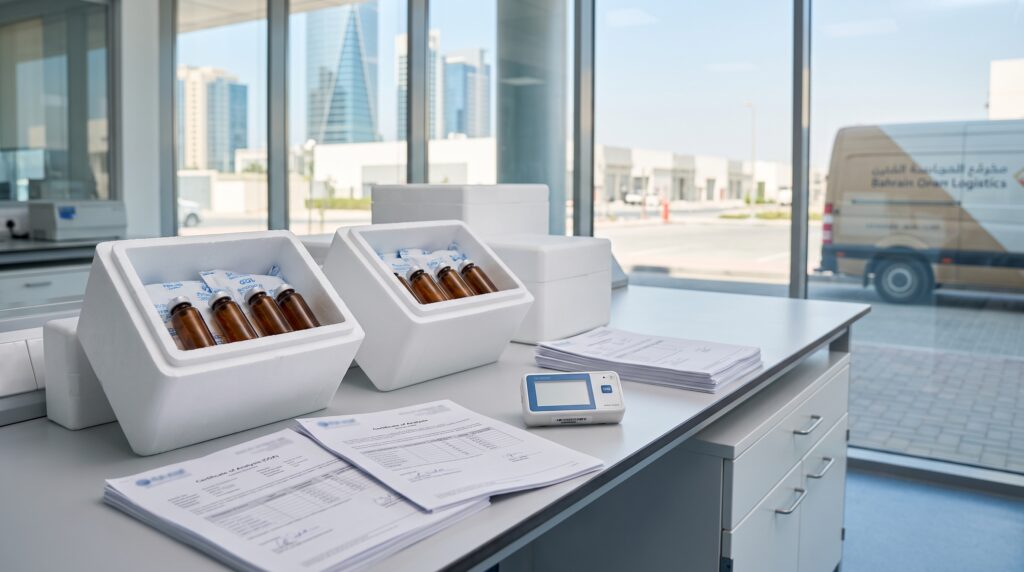
Conducting biochemical research in the Gulf Cooperation Council (GCC) presents a unique set of logistical and environmental hurdles. For procurement managers and independent researchers operating in Bahrain, managing extreme ambient heat and high coastal humidity is essential for preserving the structural integrity of delicate amino acid chains. Without rigid temperature controls, highly purified compounds can degrade rapidly, compromising months of valuable laboratory work.
The Critical Importance of Peptide Storage Temperature in Bahrain
The ideal peptide storage temperature in Bahrain relies on the compound’s state. Unopened lyophilised peptides require deep-freezing at -20°C to -80°C for long-term stability. Once reconstituted, liquid solutions must be immediately refrigerated at 2°C to 8°C and should never be frozen to avoid fracturing fragile amino acid bonds.
Key Takeaways: GCC Laboratory Storage Checklist
- Lyophilised (Dry) Storage: Store sealed vials in a manual-defrost freezer at -20°C to -80°C.
- Reconstituted (Liquid) Storage: Keep liquid solutions in a standard refrigerator at 2°C to 8°C. Use within 14 to 30 days.
- Condensation Control: Always allow cold vials to equilibrate to room temperature inside an airtight desiccator before opening to prevent moisture degradation.
- Cold-Chain Logistics: Mandate active cooling solutions (like phase-change materials) for all regional shipments to prevent tarmac heat exposure.
- Customs Documentation: Ensure commercial invoices classify shipments under the correct HS Code (38229000) for rapid OFOQ clearance.
Lyophilised vs. Reconstituted: Adapting to GCC Climates
Laboratory technicians must maintain distinct thermal environments depending on whether the peptide is in its original freeze-dried state or has been reconstituted with a solvent. The environmental stressors that affect these two states differ dramatically.
Storing Lyophilised Peptides for Long-Term Viability
Unopened, lyophilised vials contain peptides that have undergone a complex freeze-drying process to remove water, leaving behind a highly stable powder. To maintain structural integrity over an extended period (typically 12 to 24 months), these vials must be stored in an ultra-low temperature environment ranging from -20°C to -80°C.
It is crucial that researchers utilize manual-defrost, laboratory-grade freezers rather than standard domestic units. Domestic freezers feature automatic “frost-free” cycles that regularly fluctuate the internal temperature to melt away ice. These repeated, subtle freeze-thaw cycles can slowly degrade lyophilised peptides over time, increasing the risk of structural deamidation.
Storing Reconstituted Peptides and Preventing Mechanical Shear
Once a diluent—such as bacteriostatic water—is introduced, the peptide becomes significantly more fragile. Reconstituted peptides must be transferred immediately to a standard laboratory refrigerator and maintained at a strict 2°C to 8°C.
A critical handling rule is that you must never refreeze a reconstituted peptide. Freezing the liquid introduces ice crystal formation. As these micro-crystals expand, they exert physical mechanical shear on the delicate peptide bonds, irreversibly fracturing the molecular structure and rendering the batch entirely useless for experimental protocols. Under proper refrigeration, most reconstituted solutions maintain their efficacy for approximately 14 to 30 days.
Managing Condensation and High Coastal Humidity
While high ambient temperatures are the most obvious threat during a Bahraini summer, the region’s high coastal relative humidity presents an equally dangerous, often invisible threat: condensation.
When a vial is retrieved from a -20°C deep freeze and instantly exposed to a warm, humid laboratory environment, microscopic moisture droplets rapidly condense on the exterior of the cold glass. If a technician opens the vial while it is still cold, the ambient moisture is instantly drawn into the hygroscopic lyophilised powder. This unplanned introduction of water catalyses hydrolysis—a process where water molecules cleave the peptide bonds, degrading the compound long before it is officially reconstituted.
To prevent hydrolysis, laboratories must strict enforce the “desiccator rule”:
- Remove the required vials from the freezer.
- Place them immediately into an airtight desiccator, or leave them sealed in a dry micro-environment.
- Allow the vials to acclimate to room temperature for 15 to 30 minutes before breaking the vacuum seal.
This simple equilibration step protects high-purity materials and prevents costly batch failures caused by invisible moisture damage.
Handling Errors: Avoiding Light Degradation and Agitation
Temperature is not the only factor that destabilizes peptides; mechanical handling and light exposure also play significant roles in maintaining sample purity.
Photosensitivity and Amber Vials
Many amino acid sequences are inherently photosensitive, meaning prolonged exposure to ambient ultraviolet (UV) light or harsh fluorescent laboratory lighting can trigger oxidative degradation. To mitigate this risk, premium research compounds are often supplied in amber glass vials, which filter out damaging UV wavelengths. Even with amber vials, it is best practice to store peptides in dark environments, keeping refrigerator doors closed when not in use.
Mechanical Agitation
During the reconstitution process, technicians must handle the vials with extreme care. When injecting a solvent like bacteriostatic water into a vial, the liquid should be aimed at the glass wall of the vial, allowing it to trickle down gently into the lyophilised powder. Researchers must never aggressively shake the vial to force dissolution. Violent agitation creates excessive kinetic energy that can sheer peptide bonds. Instead, gently swirl the vial or allow it to dissolve naturally over a few minutes.
Cold-Chain Logistics: Transporting Peptides to Bahrain
Perfect laboratory storage protocols are entirely meaningless if a peptide arrives at your facility already degraded. Standard international shipping models routinely fail in the Middle East because packages are often left sitting on uncooled airport tarmacs or held in ambient customs warehouses. If a shipment takes two or three weeks to arrive from overseas, the thermal exposure during transit will degrade the product beyond acceptable research standards.
Mandating Active Cold-Chain Transport
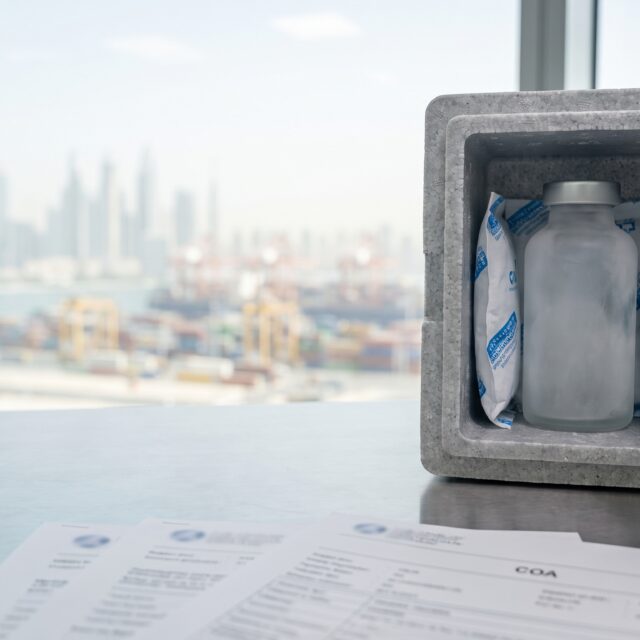
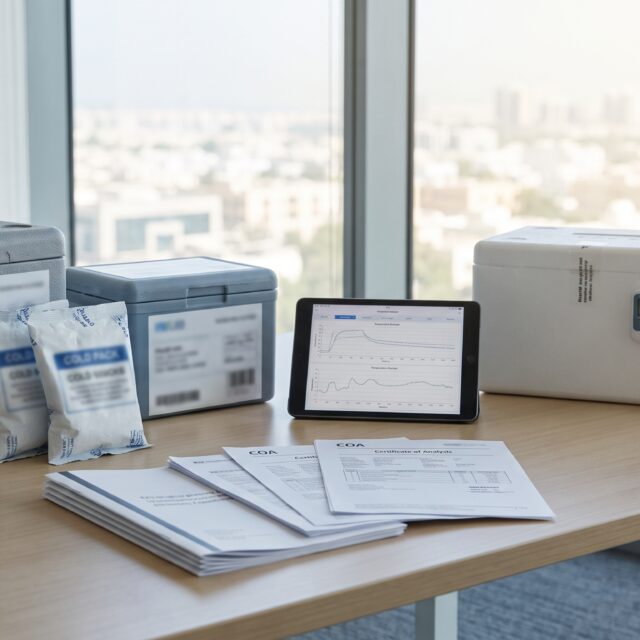
For safe procurement in Bahrain, suppliers must utilize active cold-chain logistics. This requires specialized insulated packaging utilizing phase-change materials (PCM) capable of sustaining a micro-environment of 2°C to 8°C for up to 120 hours. When vetting a new supplier, always request detailed documentation on their GCC shipping protocols. Simple bubble wrap and passive cooling are insufficient for survival in the Gulf.
Navigating the Single-Window OFOQ System
Importing research materials into Bahrain also requires adept navigation of the National Health Regulatory Authority (NHRA) guidelines and the OFOQ single-window customs portal. Serialization and inspection delays can leave sensitive shipments stranded.
Experienced regional hubs bypass these delays by accurately processing imports as laboratory diagnostic reagents (HS Code 38229000). By clearly labelling all commercial invoices and air waybills as ‘For Research Use Only’, shipments clear customs rapidly, preventing prolonged storage in non-refrigerated holding bays.
Compressing Supply Chains: The UAE Sourcing Advantage
The most effective strategy to protect peptide stability is to aggressively minimize transit time. Sourcing compounds from distant suppliers in North America or Asia introduces massive risk, as transit times stretch into weeks and expose the shipment to multiple climate zones.
Procurement specialists in Bahrain are increasingly turning to regional UAE-based hubs. By utilizing a Dubai-based supply route, Bahraini researchers benefit from a hyper-compressed supply chain. Transit times drop from several weeks to merely 24 to 72 hours. This drastically reduces the window for environmental exposure.
If you require rapid, climate-controlled logistics that bypass extended tarmac exposure, you can explore the regional advantages of expedited UAE and GCC peptide delivery. Consolidating the supply route ensures your laboratory receives highly stable, pristine research materials on demand.
Quality Assurance: Validating Purity Before Reconstitution
Temperature control is only half the equation; verifying the purity of the compound before use is equally vital. The harsh logistics environment of the Middle East means buyers must be hyper-vigilant about chemical documentation.
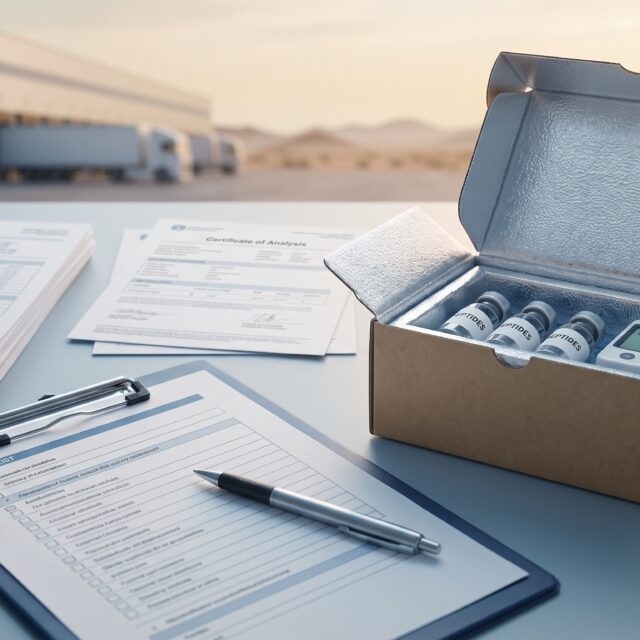
Before initiating any research protocol, demand a valid, batch-specific Certificate of Analysis (COA) from your supplier. This documentation must include both High-Performance Liquid Chromatography (HPLC) and Mass Spectrometry (MS) testing data. A verified COA confirms that the lyophilised powder contains the stated purity (typically >99%) and is completely free from toxic synthesis by-products, heavy metals, or degradation impurities caused by poor handling.
Do not rely on verbal supplier promises. Legitimate vendors will make their third-party testing documentation readily visible prior to purchase and will provide robust institutional support, including secure payment gateways and responsive WhatsApp communication for logistical troubleshooting. If you are comparing vendors and need to view transparent, batch-tested documentation alongside dedicated regional support, review the rigorously tested compounds available in the NOVA Labs research shop.
Conclusion
Mastering the proper peptide storage temperature in Bahrain requires a proactive approach to the GCC’s unique environmental challenges. Success relies on strictly separating storage protocols: housing lyophilised vials in deep freeze conditions (-20°C to -80°C), storing reconstituted liquid solutions strictly in refrigeration (2°C to 8°C), and implementing the desiccator rule to prevent condensation-induced hydrolysis.
Equally crucial is securing a robust, regional supply chain that utilizes phase-change materials and rapid transit to prevent tarmac degradation. By moving away from slow global shipping lanes and sourcing locally through reliable UAE hubs, Bahraini researchers can eliminate the risks associated with thermal exposure and complex customs holds, ensuring continuous access to premium laboratory materials.
Disclaimer: The compounds and protocols mentioned in this article are strictly for in-vitro laboratory and analytical research purposes only. They are not intended for human consumption, therapeutic use, or medical treatment.
*
References
- International Journal of Pharmaceutics. (2021). “Thermal stability of lyophilized therapeutic peptides and forced degradation studies.”
- Bahrain National Health Regulatory Authority (NHRA). (2023). “Guidelines for Importation of Laboratory Reagents and Diagnostic Compounds.”
- Journal of Peptide Science. (2019). “Impact of humidity and condensation on freeze-dried biochemical reagents.”
- Bahrain Customs Affairs. (2024). “OFOQ System User Guidelines for Commercial Imports and HS Code Classifications.”
- Cold Chain Peptide Delivery Bahrain: Heat, Timing and Packaging – NOVA Labs
- Wholesale Peptides Bahrain: Bulk Buying, COA & Delivery – NOVA Labs
- Thermal Stability of Lyophilized Peptides in the Gulf Climate | VaultLabs Technical Whitepaper
- Peptide Storage Temperature Qatar: Complete Handling & – NOVA Labs
- Cold-Chain Shipping and Import Documentation for Research Peptides in – Peak Labs
Frequently asked questions
What is the correct peptide storage temperature in Bahrain?
The ideal storage temperature depends on the compound's state. Unopened lyophilised (freeze-dried) peptides should be stored in a laboratory freezer at -20°C to -80°C. Reconstituted (liquid) peptides must be kept in a refrigerator between 2°C and 8°C.
Do I need to freeze reconstituted peptides to preserve them?
No. You must never freeze a reconstituted peptide. Freezing introduces expanding ice crystals that physically shear and break the fragile molecular bonds, permanently destroying the compound's viability for laboratory research.
How does Bahrain's coastal humidity affect lyophilised peptides?
High coastal humidity causes rapid condensation on cold glass vials. If a cold vial is opened immediately upon removal from the freezer, ambient moisture is drawn into the powder, catalysing degradation. Vials should always acclimate to room temperature inside a desiccator before opening.
How long can research peptides survive uncooled during GCC transit?
During a Bahraini summer, uncooled tarmac exposure can degrade fragile peptide bonds within a matter of hours due to extreme heat. Active cold-chain transport utilizing phase-change materials (PCM) is required for safe delivery in the Middle East.
How do research materials clear OFOQ customs efficiently in Bahrain?
To prevent inspection delays and thermal exposure, legitimate regional suppliers process research shipments under HS Code 38229000 for laboratory diagnostic reagents. Commercial invoices must also be clearly labelled 'For Research Use Only' to ensure rapid, single-window clearance.
Nova Labs buyer tools
Ready to verify stock, testing and delivery?
Use the product page and lab report section to check availability, documentation, delivery timing and support before placing an order.
- COA / test-report checks
- Bahrain delivery context
- Cold-chain handling
- COD and card payment options
- WhatsApp support