



When summer temperatures consistently surge past 45°C in the UAE, maintaining the strict peptide storage temperature Sharjah researchers rely on becomes a critical logistical challenge. For procurement staff and laboratory technicians, securing high-purity compounds is only half the battle; ensuring those compounds remain stable during transit and long-term storage dictates the accuracy of any research programme.
Peptides are highly sensitive organic molecules. Without strict temperature control, they are vulnerable to rapid chemical degradation through pathways such as hydrolysis, oxidation, deamidation, and aggregation. This guide breaks down exactly how to manage ambient heat, navigate local delivery friction, and implement clinical-grade storage practices in Sharjah.
Quick Answer: Peptide Storage Temperature Sharjah Guidelines
The ideal peptide storage temperature in Sharjah depends on the compound’s state. Unopened lyophilised (freeze-dried) peptides must be stored at 2–8°C for medium-term use (up to 36 months) or -20°C for long-term reserves. Once reconstituted, liquid compounds require strict refrigeration at 2–8°C and should be utilized within 28 days.
Lyophilised vs. Reconstituted: Managing the Two Phases
The physical state of a research compound dictates its environmental vulnerabilities. Handling protocols must shift dramatically the moment a peptide transitions from powder to liquid.
Protecting Lyophilised Compounds
In their unmixed, lyophilised state, peptides are highly stable but intensely hygroscopic. This means they act like a sponge, eagerly absorbing any moisture from the surrounding air. If a sealed vial is compromised, even a minor ingress of humidity can trigger premature breakdown.
For researchers maintaining inventory in Sharjah, standard operating procedures dictate:
- Short to Medium-Term (0-36 months): Store securely in a standard laboratory refrigerator at 2–8°C.
- Long-Term (36-60 months): Transfer to a dedicated freezer at -20°C or colder. Ensure vials are protected from frost and power fluctuations.
Managing Reconstituted Stability
Once a compound is reconstituted with bacteriostatic water, its fragility increases exponentially. The introduction of liquid activates the peptide but simultaneously starts a degradation countdown.
- Strict Refrigeration: Liquid peptides must never be left at room temperature. They require constant storage at 2–8°C.
- Do Not Freeze: Freezing reconstituted peptides is heavily discouraged. The formation of ice crystals can physically shear and destroy the delicate molecular structure of the peptide chain. If absolute necessity requires freezing a liquid compound, it must be divided into single-use aliquots to prevent catastrophic freeze-thaw cycles.
- Shelf Life: For optimal bioactivity, reconstituted compounds should be utilised within 28 days.
The Reconstitution Condensation Trap in Sharjah
One of the most frequent errors made by local researchers is overlooking the impact of the GCC’s air-conditioned environments on cold vials. This is known as the ‘reconstitution condensation trap.’
When you remove a vial of lyophilised powder from a -20°C freezer and bring it directly into an air-conditioned Sharjah laboratory (which often has varying internal humidity), a rapid temperature differential is created. If you unseal the stopper immediately, the warmer, moist air of the room rushes into the cold vial. This moisture instantly condenses on the interior glass and the powder itself, introducing water before you have even added your diluent.
The Solution: Always practice thermal equilibration. When removing a vial from cold storage, allow it to sit unopened in a dark place at room temperature for 15 to 30 minutes. Once the glass has reached ambient temperature, it is safe to unseal and reconstitute without risking hidden condensation.
Environmental Threats: Oxidation and Hydrolysis
Understanding why this specific peptide storage temperature guide Sharjah researchers follow is so critical requires a brief look at molecular chemistry.
Peptides containing specific sensitive amino acid residues—such as methionine, cysteine, tryptophan, and asparagine—are exceptionally prone to environmental damage.
- Oxidation: Exposure to ambient heat and light accelerates oxidation, particularly in methionine and cysteine residues, altering the peptide’s binding affinity.
- Hydrolysis and Deamidation: Moisture and elevated temperatures catalyze the breaking of peptide bonds (hydrolysis) or the removal of amide groups from asparagine (deamidation).
In a climate where ambient temperatures easily reach 45°C, a compound left in a courier van without insulation will begin to degrade within hours, arriving with a fraction of its original purity.
Surviving the GCC Climate: Why Transit Logistics Matter
Procuring high-purity compounds is meaningless if the supplier fails to protect the payload during the final mile of delivery. Standard shipping methods that lack temperature control are a significant risk factor in the UAE.
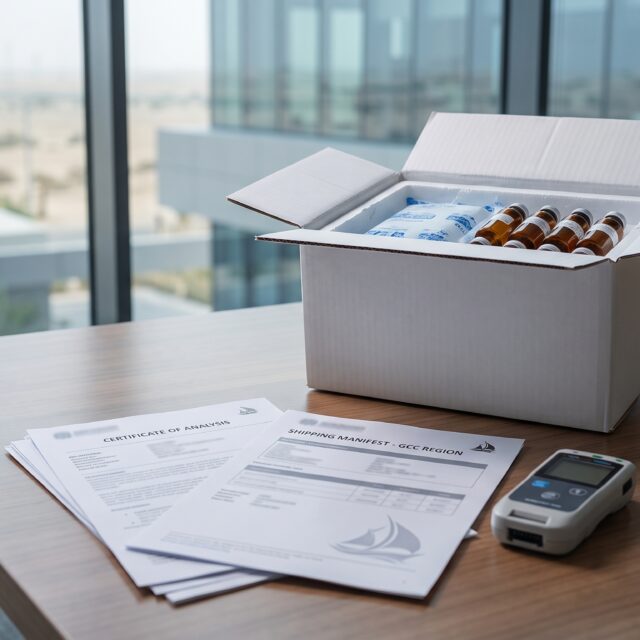
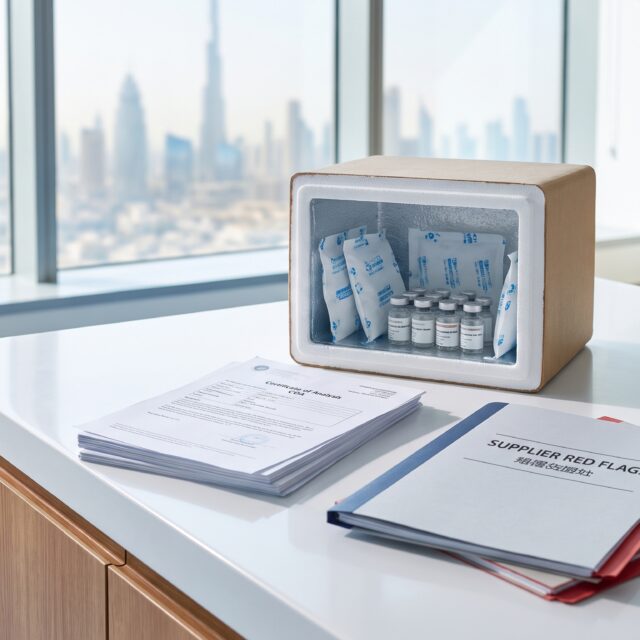
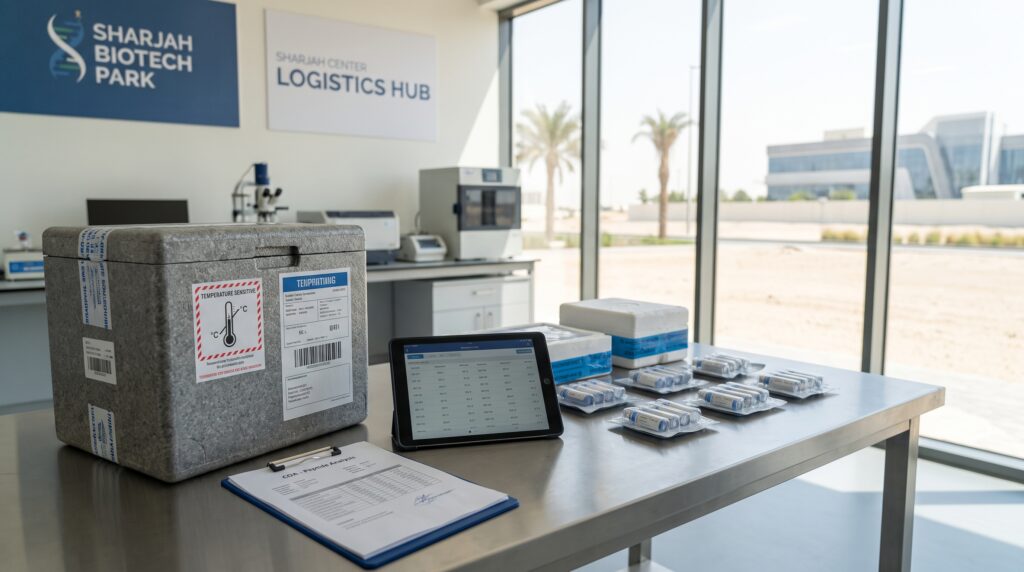
To counter this, leading suppliers deploy robust cold-chain logistics. At NOVA Labs, we understand that preserving molecular integrity requires clinical-grade packaging. Orders dispatched locally utilise multi-layered EPS insulated packaging combined with clinical gel packs to ensure the internal environment remains stable, regardless of the outside temperature.
By leveraging next day delivery to Sharjah, researchers bypass the prolonged exposure times associated with international customs holds. Local transit ensures compounds spend minimal time outside optimal storage conditions, arriving ready for immediate refrigeration.
Local Procurement Checks: Verifying Your Supplier
Before finalising any procurement decision in the UAE, buyers should run through a strict verification checklist to ensure both product quality and operational reliability.
- Certificate of Analysis (COA): Purity claims are only as good as the data backing them. Reputable suppliers provide batch-specific, third-party HPLC (High-Performance Liquid Chromatography) and MS (Mass Spectrometry) reports. This documentation proves the compound is free from synthesis byproducts and heavy metals.
- Bacteriostatic Water Provision: Reconstituting in hot climates demands bacteriostatic water (containing 0.9% benzyl alcohol) rather than standard sterile water. The benzyl alcohol acts as a preservative, preventing bacterial proliferation in the vial over the 28-day usage window.
- Frictionless Payment and Support: Regional buyers often face hurdles with international payment gateways or unresponsive customer service. Evaluating suppliers who offer local conveniences, such as Cash on Delivery (COD) and direct WhatsApp support, ensures you can verify batch data rapidly and pay securely upon receipt.
For a comprehensive look at locally stocked, third-party verified compounds that meet these strict criteria, you can explore the research peptide shop to review available COAs and inventory.
Conclusion & Best Practices
Safeguarding your research investments in the UAE requires a proactive approach to temperature management. The correct peptide storage temperature in Sharjah is strictly 2–8°C for medium-term lyophilised and reconstituted compounds, and -20°C for long-term powder reserves.
By avoiding the condensation trap, insisting on insulated cold-chain delivery, and verifying third-party purity documentation before ordering, researchers can eliminate environmental degradation variables from their work. If you require rapid, temperature-controlled access to verified compounds in the UAE, connect with the NOVA Labs team via WhatsApp to confirm stock and arrange secure local dispatch.
References:
- International Council for Harmonisation (ICH) Q1A (R2) – Stability Testing of New Drug Substances and Products.
- USP <1079> Good Storage and Distribution Practices for Drug Products.
- D’Hondt, M., et al. (2014). “Related impurities in peptide medicines.” Journal of Pharmaceutical and Biomedical Analysis.
Disclaimer: The products mentioned in this article are for research purposes only and are not intended for human consumption.
References
- Cold-Chain Peptide Delivery and Stability in the UAE
- Peptide Storage Guide | UAE Core Peptides
- Sharjah Cold Chain Peptide Delivery | Next-Day Local – NOVA Labs
- Cash On Delivery Peptides Sharjah: Order via WhatsApp & COD – NOVA Labs
- Peptide Storage, Handling & Stability Guide 2026 – Luxara Research Company
- How to Store Research Peptides: Complete UK Guide to Stability and Shelf Life (2026)
Frequently asked questions
What is the best peptide storage temperature in Sharjah?
Unopened lyophilised peptides should be stored at 2–8°C for up to 36 months, or at -20°C for long-term storage up to 60 months. Reconstituted (liquid) peptides must always be refrigerated strictly at 2–8°C.
Can I freeze peptides after they are mixed with water?
Freezing reconstituted peptides is heavily discouraged. The freezing process creates ice crystals that can physically damage the delicate molecular structure of the peptide, leading to a loss of efficacy and structural integrity.
How long do peptides last once reconstituted?
When mixed with bacteriostatic water and stored consistently at 2–8°C in a refrigerator, reconstituted peptides typically maintain optimal stability and sterility for up to 28 days.
How does summer heat in the UAE affect peptide delivery?
Temperatures exceeding 45°C can rapidly degrade peptides through hydrolysis and oxidation in a matter of hours. It is vital to use suppliers that utilise insulated EPS packaging and clinical gel packs for next-day cold-chain delivery.
How do I prevent condensation when opening a cold peptide vial?
Before unsealing a vial taken from the freezer or fridge, allow it to sit at room temperature in a dark place for 15 to 30 minutes. This thermal equilibration prevents ambient humidity from condensing inside the cold glass and introducing unwanted moisture.
Nova Labs buyer tools
Ready to verify stock, testing and delivery?
Use the product page and lab report section to check availability, documentation, delivery timing and support before placing an order.
- COA / test-report checks
- Sharjah delivery context
- Cold-chain handling
- COD and card payment options
- WhatsApp support