


Identifying the best peptide shop Oman has to offer is a uniquely challenging procurement task. The local market is highly fragmented; search results are frequently dominated by dropshippers, cosmetic e-commerce sites selling peptide-infused skincare, or aesthetic clinics offering clinical treatments rather than supplying high-purity research compounds.
For laboratory professionals and bio-researchers in Muscat, Salalah, or Sohar, the primary obstacle is rarely a lack of global options. Instead, it is the severe thermal vulnerability of biological compounds combined with complex regional customs clearance. When summer temperatures routinely exceed 40°C, a long-haul international shipment from the US or UK is highly likely to suffer thermal degradation. To secure structural integrity and verifiable purity, Omani buyers must shift their focus toward regional suppliers that understand the exact logistical requirements of the Sultanate.
Finding the Best Peptide Shop Oman
The best peptide shop Oman researchers rely on operates regionally from the UAE, ensuring secure 48-to-72-hour cold-chain shipping. Buyers must prioritize suppliers offering batch-specific HPLC and Mass Spectrometry Certificates of Analysis (COAs), accurate Bayan customs documentation, and essential laboratory reconstitution supplies.
Quick Buyer Checklist
Before placing an order for research peptides in Oman, ensure your supplier meets these baseline criteria:
- Regional Dispatch: Ships from within the GCC to avoid 14-day international transit times.
- Third-Party Testing: Provides verifiable HPLC and MS testing for the exact batch you are purchasing.
- Customs Expertise: Includes accurate HS codes and Commercial Invoices optimized for the Omani Bayan system.
- Complete Lab Solutions: Offers essential accessories like bacteriostatic water alongside research vials.
- Accessible Support: Provides real-time tracking and customer support (e.g., via WhatsApp) to handle any border delays.
The Thermal Integrity Audit: Surviving Omani Summers
The fundamental challenge of ordering sensitive biological materials in the GCC is temperature control. Lyophilized (freeze-dried) amino acid sequences are fragile. While they are significantly more stable in this powdered form than when reconstituted, they are still highly vulnerable to extreme heat.
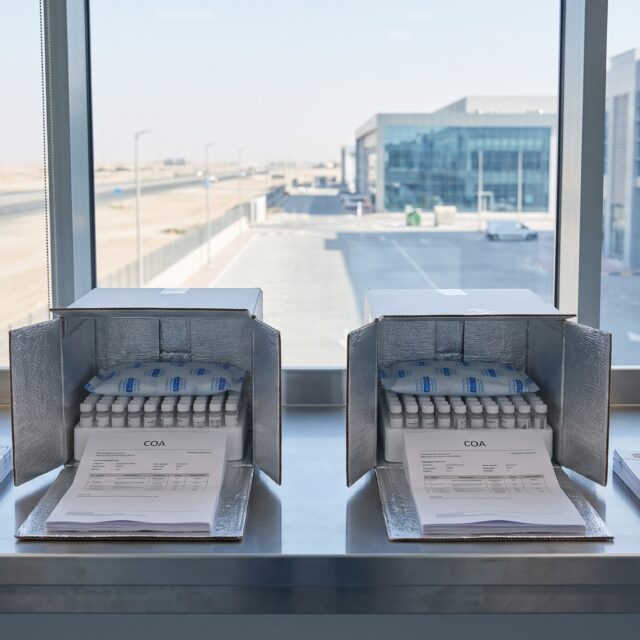
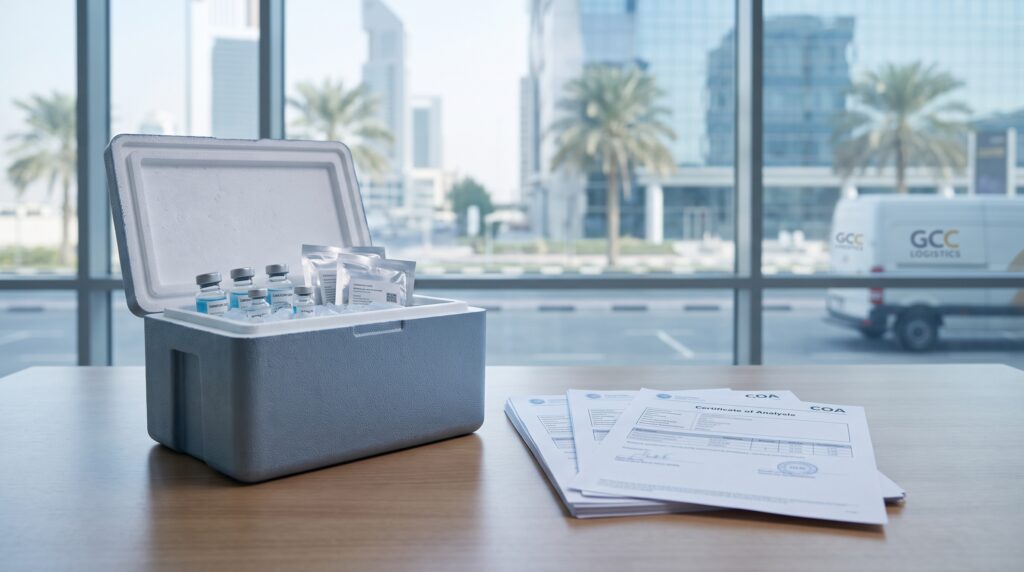
Standard commercial cold packs used by international shippers typically lose their cooling capacity within 24 to 48 hours. If you are importing from North America or Europe, average transit times span 7 to 14 days. By the time a parcel reaches a delivery depot in Seeb or Muttrah, the uncooled molecular structures have been subjected to temperatures capable of denaturing the compounds. Once peptide bonds break down due to thermal stress, the material is rendered useless for precise analytical research, leading to compromised experimental data.
The Regional Cold-Chain Solution
This is why searching for the “best peptide shop near me oman” should immediately point you toward UAE-based regional distributors rather than distant overseas vendors. A supplier operating out of the UAE can dispatch materials via accelerated regional networks, cutting transit times down to a 48-to-72-hour window. This drastically minimizes the period the materials spend outside of a temperature-controlled environment.
By utilizing advanced thermal packaging, regional suppliers bypass the primary failure points of global shipping. For researchers looking to understand the mechanics of this regional efficiency, our peptides UAE next day delivery protocol outlines exactly how GCC-based routing ensures molecular integrity upon arrival, acting as the perfect staging ground for rapid entry into Oman.
Navigating the Bayan System: Oman Customs Procedures
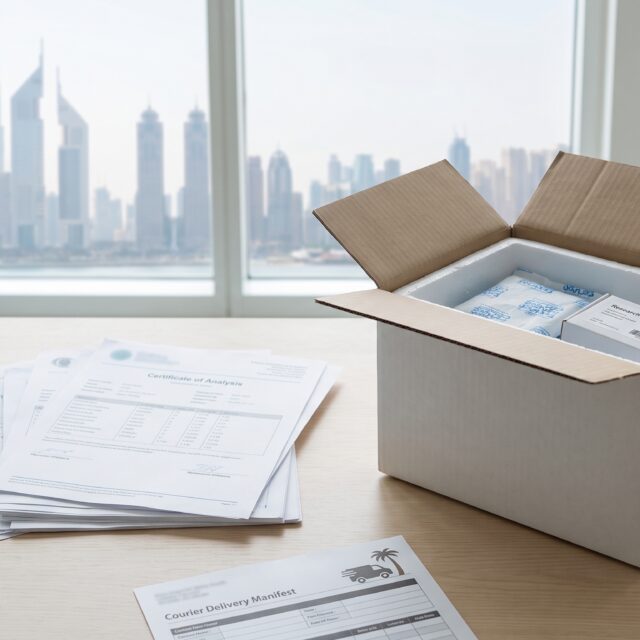
Beyond ambient temperature, the second major hurdle for researchers in Oman is customs clearance. The Royal Oman Police (ROP) Directorate General of Customs manages the flow of imported goods through the online Bayan System. Importing laboratory materials, chemical samples, and biological compounds requires meticulous documentation to prevent unnecessary airport holds.
Many international dropshipping sites fail to provide the correct paperwork, leading to seized or endlessly delayed shipments. The most reliable peptide suppliers preemptively address these regulatory friction points.
Key documentation required for smooth clearance includes:
- Accurate Commercial Invoices: Declaring the precise nature, volume, and value of the goods to satisfy ROP requirements.
- Correct HS Codes: Harmonized System (HS) codes must accurately classify the items as laboratory or research materials (often falling under specific organic chemical categories). Incorrectly coding these as consumer pharmaceuticals or cosmetics will trigger immediate regulatory holds.
- Safety Data Sheets (SDS): Essential for verifying that the chemical or biological goods are safe for transport, handling, and do not contain restricted or hazardous biological agents.
When a supplier understands the Bayan system and routinely clears goods through the Al Wajajah land border or Muscat International Airport, the risk of your research materials languishing in a non-climate-controlled customs warehouse is drastically reduced.
Purity Verification: Analyzing HPLC and MS Reports
When assessing the best peptide shop in oman, the conversation must begin and end with sequence purity. Because there are no dedicated physical retailers for high-purity research-grade compounds in Oman, all verification must be done via supplier-provided documentation.
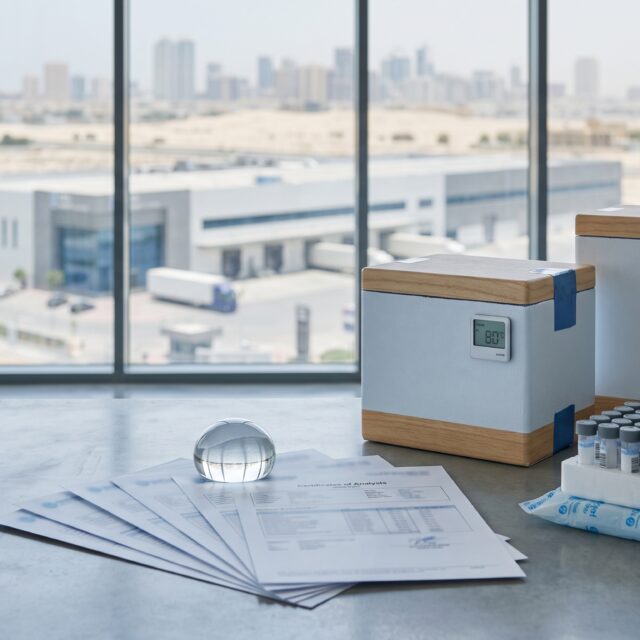
Marketing claims of “99% purity” are entirely meaningless without verifiable, third-party laboratory evidence. Reputable suppliers provide a Certificate of Analysis (COA) for every single product batch.
When reviewing a supplier’s COA, researchers must check for two specific analytical methods:
- High-Performance Liquid Chromatography (HPLC): This test measures the purity of the sample by separating its components. It ensures that the vial contains the specified compound without significant manufacturing byproducts, solvents, or degraded fragments. On a valid HPLC chart, researchers should see one single dominant peak that accounts for >99% of the area under the curve.
- Mass Spectrometry (MS): This verifies the molecular weight of the compound, ensuring the sequence of amino acids exactly matches the intended structure. If a peptide is supposed to have a molecular weight of exactly 1295.5 Da, the mass spec report must reflect this precisely.
If a supplier does not publicly display their HPLC and MS testing reports—or if the reports appear outdated, lack a matching batch number, or feature redacted laboratory names—they should be immediately disqualified from your procurement list.
Payment, Support, and Laboratory Reconstitution
Procuring high-quality lyophilized compounds is only half the equation for a functional laboratory setup. Two additional factors separate mediocre suppliers from true regional leaders: customer support infrastructures and reconstitution logistics.
Firstly, international peptide sites often struggle with GCC payment processing. They may flag Omani credit cards as fraudulent or force researchers to use convoluted cryptocurrency transfers. A premium regional supplier integrates secure, locally recognized payment gateways while offering real-time client support via WhatsApp or direct email. If a customs query arises at the Muscat border, having a supplier who answers immediately in your time zone is invaluable.
Secondly, acquiring high-grade reconstitution reagents, particularly bacteriostatic water, is exceptionally difficult in the local Omani retail market. Pharmacies do not typically stock laboratory-grade sterile solvents, leaving many researchers holding high-purity compounds they cannot safely prepare for experimental application. A premium regional supplier recognizes this operational gap and functions as a one-stop laboratory solution, bundling high-quality bacteriostatic water alongside their analytical samples.
Conclusion: Secure Your Research Procurement
For researchers operating in Oman, evaluating the market requires looking past global marketing claims and focusing strictly on logistics, documentation, and regional expertise. The reality of 40°C+ summers and stringent Bayan customs regulations means that long-haul international shipping is fundamentally unsuited for fragile, uncooled biological compounds.
The best peptide shop Oman buyers can utilize is one that operates locally within the GCC, offers total transparency through third-party HPLC/MS testing, and proactively manages the friction of cross-border customs. By insisting on these operational standards, you ensure that your research materials arrive structurally sound, fully validated, and ready for immediate laboratory application.
To view a catalog that prioritizes both compound purity and complete laboratory readiness, explore our comprehensive shop for research materials tailored explicitly to the logistical realities of the GCC market.
Disclaimer: The products mentioned in this article are for research purposes only and are strictly not intended for human consumption, therapeutic use, or medical treatment.
References
- Royal Oman Police, Directorate General of Customs. “Bayan System Overview & Import Procedures.”
- Journal of Pharmaceutical Sciences. “Thermal Degradation and Stability of Lyophilized Peptides.”
- World Health Organization (WHO). “Good Distribution Practices for Pharmaceutical and Biological Products.”
- NOVA Labs Quality Assurance. “GCC Cold-Chain Logistics and Analytical Purity Guidelines.”
- Best Peptide Shop Oman: Verifying Purity, Customs & – NOVA Labs
- Where To Buy Peptides Oman: What to Check Before Ordering – NOVA Labs
- Peptides Lab GCC – High-Purity Research Peptides | GCC Supply for Laboratories
- STAT Lab Peptides Blend BPC 157/ TB500-5MG in Oman | Whizz
Frequently asked questions
Where is the best peptide shop in Oman located?
There are no dedicated physical retail stores for high-purity research peptides in Oman. The most reliable options are regional GCC suppliers based in the UAE that offer rapid 48-to-72-hour delivery into Oman.
How do extreme summer temperatures in Oman affect peptide shipments?
Oman's summer heat, often exceeding 40°C, can rapidly denature lyophilized compounds if they are delayed in transit. Relying on regional suppliers with fast cold-chain shipping is critical compared to standard 14-day international shipping.
What documentation is needed to clear peptides through Oman customs?
Clearing laboratory materials through the Royal Oman Police Bayan system requires an accurate Commercial Invoice, proper HS codes designating them as research samples, and a comprehensive Safety Data Sheet (SDS).
How can I verify the purity of research peptides before buying?
Always demand batch-specific Certificates of Analysis (COA) from a third-party laboratory. These reports must show High-Performance Liquid Chromatography (HPLC) and Mass Spectrometry (MS) testing to confirm sequence purity and molecular weight.
Where can I buy bacteriostatic water in Oman?
Bacteriostatic water is exceptionally difficult to find in local Omani retail pharmacies. It is highly recommended to purchase from a regional peptide supplier that bundles reconstitution supplies directly with their research compounds.
Nova Labs buyer tools
Ready to verify stock, testing and delivery?
Use the product page and lab report section to check availability, documentation, delivery timing and support before placing an order.
- COA / test-report checks
- Oman delivery context
- Cold-chain handling
- COD and card payment options
- WhatsApp support