
Procuring Semax Nasal Spray: Evaluating Liquid Formulations in the UAE
Quick Answer: Procuring Semax nasal spray in the UAE requires strict attention to cold-chain logistics to prevent rapid hydrolytic degradation. Researchers must verify that local suppliers use thermal packaging and offer expedited transit, alongside providing batch-specific HPLC and MS documentation to confirm structural integrity before laboratory application.
When researchers buy semax nasal spray, they are procuring a pre-reconstituted, aqueous synthetic heptapeptide. Unlike lyophilized vials—which remain stable at room temperature for extended periods—liquid sprays are formulated for immediate experimental application in preclinical olfactory transport studies. However, this convenience introduces significant vulnerabilities. Aqueous peptides require strict cold-chain logistics, continuous refrigerated storage between 2°C and 8°C, and rigorous batch-specific analytical testing to verify that the compound has not degraded prior to use.
For laboratories operating in Dubai, Abu Dhabi, or the wider GCC, the primary procurement challenge is not simply locating a vendor. The challenge is ensuring that the supplier possesses a specialized local logistics network capable of protecting fragile liquid compounds from the severe thermal stress inherent to regional transit.
The Biophysics of Semax: Structure and Transport Pathways
To understand why the intranasal format is heavily utilized in contemporary neuroscience research, investigators must examine the biophysical structure of the peptide. Semax is a synthetic heptapeptide with the exact amino acid sequence Met-Glu-His-Phe-Pro-Gly-Pro. It was originally derived from a fragment of the adrenocorticotropic hormone, specifically ACTH(4-10).
What sets Semax apart in laboratory studies is its modified C-terminus. The strategic addition of a Pro-Gly-Pro sequence is engineered to prevent rapid enzymatic cleavage by exopeptidases. In standard preclinical models, unmodified ACTH fragments are broken down almost immediately upon entering systemic circulation. The synthetic tail allows the semax nasal spray research compound to remain structurally intact long enough to be evaluated for its neurotrophic properties without triggering unwanted corticotropic or hormonal activity.
In preclinical in-vivo models, the liquid spray format is highly valued for facilitating studies on direct central nervous system (CNS) access. Rather than relying on systemic intravenous circulation, which is subject to first-pass metabolism and the strict filtering of the blood-brain barrier (BBB), intranasal administration allows researchers to observe direct molecular transport via the olfactory and trigeminal nerve pathways. This route offers a unique variable in neuro-peptidergic research, providing rapid onset and targeted delivery to brain tissues in animal subjects.
Comparative Degradation: Liquid Sprays vs. Lyophilized Vials
The most critical factor procurement teams must weigh when sourcing liquid formats is the inherently shorter stability window of aqueous peptides compared to their solid-state counterparts.
The Mechanisms of Aqueous Peptide Degradation
Lyophilized (freeze-dried) vials have all moisture removed under a strict vacuum. Without water, the molecular bonds of the peptide are essentially stabilized, allowing the compound to resist degradation at ambient temperatures for weeks or even months.
Conversely, once a peptide is reconstituted into a bacteriostatic water or saline buffer to create a semax nasal spray, the presence of water acts as a catalyst for two primary forms of degradation:
- Hydrolysis and Deamidation: The chemical breakdown of peptide bonds due to the nucleophilic attack by water molecules. This process accelerates rapidly at higher temperatures, causing the peptide to cleave into inactive fragments.
- Oxidation: The alteration of specific reactive amino acid residues. In the case of Semax, the Methionine (Met) residue at the N-terminus is highly susceptible to oxidation when exposed to oxygen, light, or thermal stress over time, altering the molecule’s binding affinity and research viability.
Cold-Chain Integrity: Mitigating Heat Risks in UAE Logistics
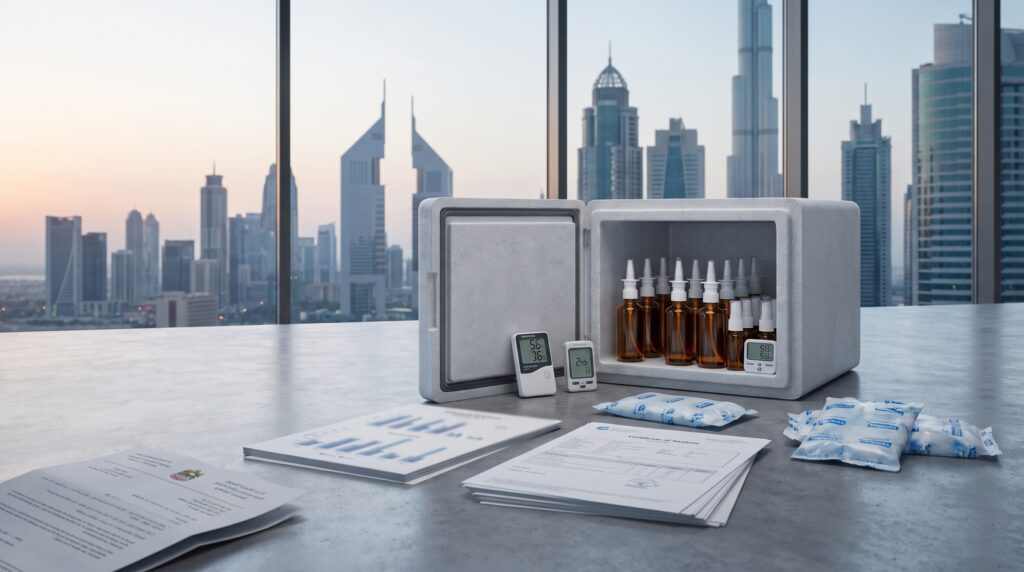
The structural vulnerability of liquid peptides makes regional logistics the single most important differentiating factor among suppliers. In the GCC region, summer ambient temperatures routinely exceed 40°C (104°F). Inside standard courier vans or uninsulated customs warehouses, temperatures can easily surpass 60°C. If a liquid peptide is subjected to these conditions for even a few hours, the thermal stress causes rapid, irreversible denaturation and loss of biological activity.
When evaluating a supplier, procurement staff must rigorously verify operational logistics. Sourcing from international vendors poses a massive risk, as packages can spend 7 to 14 days in transit, often sitting in uncontrolled customs facilities. Reputable local suppliers mitigate these critical heat risks by employing:
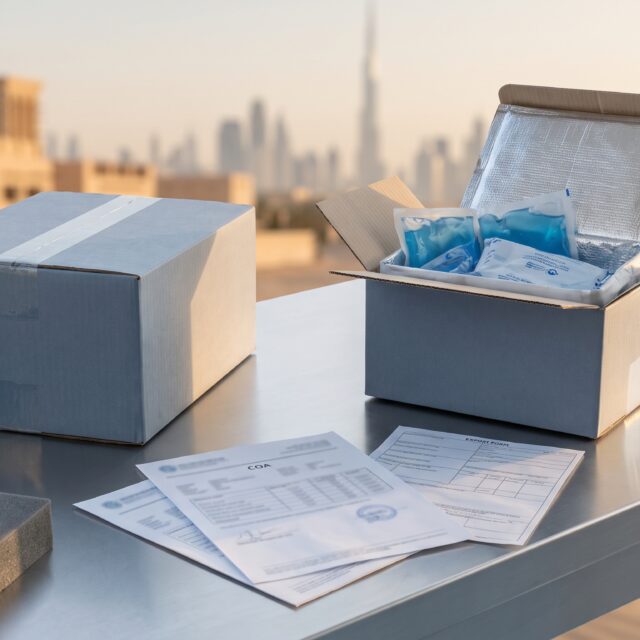
- Thermal Insulated Packaging: Specialized EPS foam or reflective foil containers designed to deflect ambient heat and trap internal cold air.
- Phase Change Materials (Gel Packs): Cold packs specifically calibrated to maintain the internal package temperature below the critical room threshold during the expected transit window.
- Expedited Domestic Courier Networks: By avoiding standard postal systems and international customs holds, premium suppliers utilize direct, climate-managed networks. Utilizing next-day delivery across the UAE ensures that sensitive liquid compounds spend the absolute minimum time outside of ideal refrigerated storage conditions.
Best Practices for Handling Aqueous Peptides Upon Delivery
Securing a reliable cold-chain supplier is only the first half of maintaining peptide integrity. Once the courier hands over the insulated package, laboratory technicians must follow strict intake protocols to preserve the compound:
- Immediate Unpacking: Do not leave insulated mailers on receiving docks or room-temperature desks. Open the package immediately upon receipt.
- Temperature Verification: Check the internal temperature of the package. The phase-change materials should still be cool to the touch.
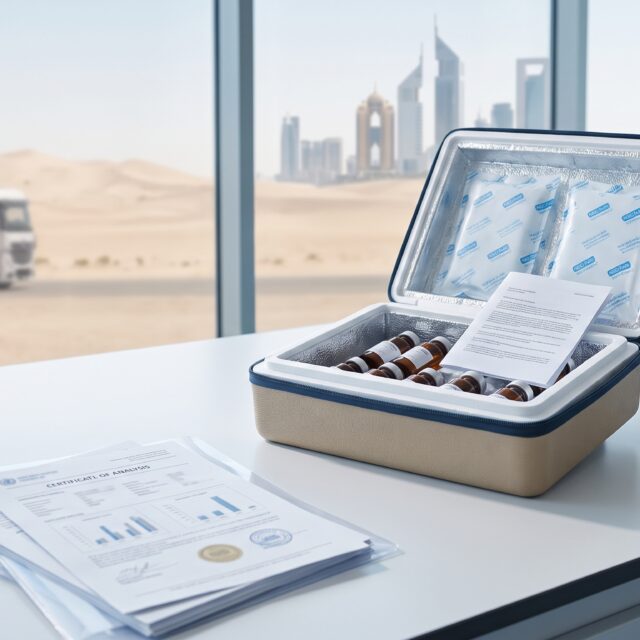
- Upright Storage: Transfer the amber glass nasal spray bottles directly to a designated laboratory refrigerator. Store them perfectly upright. This prevents the aqueous solution from interacting unnecessarily with the pump mechanism or the cap seal over long periods, minimizing potential contamination or physical degradation.
- Light Minimization: Ensure the storage refrigerator remains dark. While amber glass mitigates ultraviolet light penetration, continuous exposure to laboratory fluorescent lighting can still catalyze oxidation of sensitive amino acid residues.
Technical Verification: Reading COAs and HPLC Data
Visual inspection cannot determine whether an aqueous peptide has degraded into inactive fragments or oxidized. A degraded peptide solution will look identical to a pure one. Therefore, researchers must rely on independent, batch-specific analytical documentation. A trustworthy supplier will routinely provide a Certificate of Analysis (COA) from an ISO-accredited third-party laboratory.
High-Performance Liquid Chromatography (HPLC)
HPLC is the gold-standard analytical method used to separate, identify, and quantify the components in a peptide mixture. When reviewing an HPLC chromatogram for a liquid spray, buyers should analyze the graph for a single, dominant, sharp peak. This peak indicates that the vast majority of the solution consists of the target heptapeptide. High-purity research compounds typically showcase 98% to 99% purity. The presence of multiple smaller, distinct peaks indicates impurities, initial synthesis errors, or post-formulation hydrolytic degradation that has occurred during storage.
Mass Spectrometry (MS)
While HPLC confirms the purity percentage, Mass Spectrometry (often Electrospray Ionization MS, or ESI-MS) confirms the exact molecular identity. The MS report measures the mass-to-charge ratio (m/z) of the ions in the sample. Buyers must verify that the recorded molecular weight matches the precise theoretical weight of the Semax heptapeptide. If the weight is off, the sequence is incorrect, or degradation has sheared the molecule.
Sourcing Liquid Formulations with NOVA Labs
For UAE-based laboratories and research institutions prioritizing stability and verifiable quality, NOVA Labs has structured its supply chain specifically around the logistical realities of the Arabian Gulf.
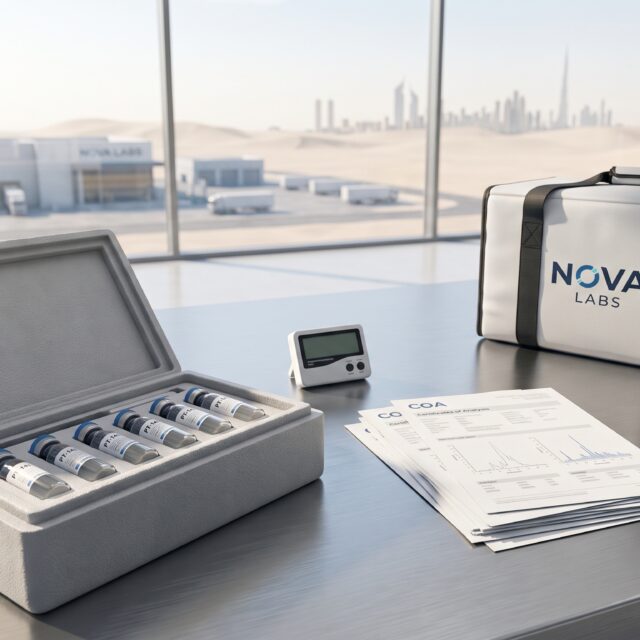
Recognizing the severe risk that the regional climate poses to liquid formulations, NOVA Labs maintains local, climate-controlled inventory in Dubai. This operational model entirely eliminates the prolonged international transit times and unpredictable customs holds that routinely compromise the integrity of imported liquid peptides.
For researchers requiring the specific biophysical properties of the intranasal format for CNS transport studies, the Semax Nasal Spray available through NOVA Labs is backed by rigorous operational standards. Every batch is supported by fully transparent, accessible COAs confirming stringent HPLC purity standards and MS identity verification.
To facilitate a seamless procurement process for regional laboratories, NOVA Labs supports Cash on Delivery (COD) across the emirates and provides direct WhatsApp support for immediate inventory checks, technical documentation requests, and logistics coordination.
Conclusion
Procuring an aqueous peptide in the UAE requires a far more rigorous assessment than purchasing lyophilized solids. Because the pre-mixed liquid format is highly susceptible to hydrolytic degradation and extreme thermal stress, researchers must prioritize local suppliers who can guarantee strict cold-chain integrity from warehouse to laboratory bench. By verifying third-party HPLC and MS data, and ensuring rapid, temperature-controlled delivery, laboratories can protect the validity of their preclinical data.
To secure verified, climate-protected compounds for your next analytical study, explore NOVA Labs’ local inventory and request the latest batch testing documentation today.
Disclaimer: The products and information mentioned in this article are restricted strictly to laboratory, analytical, and in-vitro research use only. They are not intended for human or animal diagnostics, treatments, dosages, or consumption.
References
- Dolotov, O. V., et al. (2006). “Semax, an analog of ACTH(4-10), promotes survival and nerve growth factor expression in basal forebrain cholinergic neurons.” Journal of Neurochemistry, 98(3), 859–869.
- Illum, L. (2003). “Nasal drug delivery—possibilities, problems and solutions.” Journal of Controlled Release, 87(1-3), 187-198.
- D’Hondt, M., et al. (2011). “Related impurities in peptide medicines.” Journal of Pharmaceutical and Biomedical Analysis, 54(5), 893-906.
- Vlieghe, P., et al. (2010). “Synthetic therapeutic peptides: science and market.” Drug Discovery Today, 15(1-2), 40-56.
Disclaimer: The products mentioned in this article are for research purposes only and are not intended for human consumption.
- Buy Semax Nasal Spray Dubai – Direct SARMS
- Semax Nasal Spray vs Vial: Concentration Math, Prices, and Buyer Checks | PeptidePub
- Shipping & Returns – Peptides DXB
- Contact | Pure Peptides
- Semax Stability and Storage: The Research – Nova Life Peptides
- Peptide Nasal Spray vs Injection: Full Comparison – Regimen app
- About – https://peptidetechuae.com
- Do Peptides Degrade During Shipping Without Refrigeration? Facts vs. Myths
Frequently asked questions
What is the primary difference between Semax nasal spray and a lyophilized vial?
Semax nasal spray is a pre-mixed, aqueous formulation designed for immediate intranasal application in preclinical models. A lyophilized vial contains stable freeze-dried powder requiring manual reconstitution. The liquid format offers direct olfactory pathway targeting but degrades much faster than powder.
How should researchers store liquid Semax formulations?
To slow hydrolytic degradation, liquid Semax must be stored upright in a designated laboratory refrigerator maintained between 2°C and 8°C. The compound must also be protected from direct ultraviolet and fluorescent light to prevent oxidation.
Why is cold-chain shipping essential for peptides in the UAE?
Aqueous peptides are highly vulnerable to thermal stress. In the extreme ambient heat of the UAE, uninsulated standard shipping can cause rapid denaturation and molecular cleavage, permanently compromising the structural integrity of the research compound before it arrives at the laboratory.
What does a COA tell a researcher about a liquid peptide spray?
A Certificate of Analysis (COA) provides independent third-party data to verify quality. High-Performance Liquid Chromatography (HPLC) confirms the purity percentage, ensuring no degradation has occurred, while Mass Spectrometry (MS) verifies the exact molecular identity of the compound.
Nova Labs buyer tools
Ready to verify stock, testing and delivery?
Use the product page and lab report section to check availability, documentation, delivery timing and support before placing an order.
- COA / test-report checks
- UAE delivery context
- Cold-chain handling
- COD and card payment options
- WhatsApp support