

Because they share the same naming prefix, investigators frequently search for comparative data on thymosin alpha-1 vs tb-500. However, despite their shared nomenclature referencing the thymus gland, these two compounds belong to entirely different peptide families with orthogonal biological mechanisms. For research procurement officers and laboratory investigators in the UAE and wider GCC, evaluating these compounds requires understanding not only their distinct structural properties but also the strict environmental controls necessary to preserve them in one of the world’s harshest climates.
This guide explores how published scientific literature compares these two compounds, examining their amino acid sequencing, primary research applications, and the specific documentation buyers must verify before acquiring them for laboratory use.
Thymosin Alpha-1 vs TB-500: Core Differences in Research Literature
Quick Answer: The primary difference between Thymosin Alpha-1 and TB-500 lies in their structural class and molecular function. Thymosin Alpha-1 is a 28-amino-acid peptide studied extensively for immunomodulation and TLR signaling. Conversely, TB-500 is a synthetic 7-amino-acid fragment of Thymosin Beta-4, evaluated in laboratory models exclusively for actin binding, cellular migration, and structural tissue repair.
While both compounds were originally isolated from thymic tissue fractions in early biochemical studies, modern research isolates them for vastly different laboratory investigations. Conflating the two based on their “thymosin” prefix is a common oversight. In contemporary biochemical models, researchers evaluate Thymosin Alpha-1 purely for its interactions with immune cell signalling pathways, while TB-500 is investigated in the context of cellular motility and angiogenesis.
Understanding Thymosin Alpha-1: Structure and TLR Signalling
Thymosin Alpha-1 (frequently abbreviated as T-Alpha-1 or TA1) is an endogenous peptide consisting of a specific 28-amino-acid chain. In research settings, it is primarily classified and studied as an immunomodulator.
Mechanism of Action in in-vitro Models
Published literature demonstrates that Thymosin Alpha-1 acts by signalling through Toll-like receptors, specifically TLR2 and TLR9. By interacting with these pathways, laboratory cell-culture models show that the peptide promotes the maturation of dendritic cells and influences T-cell differentiation. Much of the in-vitro research focuses on its ability to stimulate a Th1 immune response polarization—a mechanism that helps the immune system appropriately scale its response to pathogens without causing excessive systemic inflammation.
In laboratory environments, investigators utilize TA1 to observe cytokine production cascades, particularly evaluating the upregulation of IL-2 and IFN-gamma in controlled cellular environments.
Clinical and Regulatory Context for Researchers
Unlike many purely experimental peptides, Thymosin Alpha-1 has a robust history of clinical evaluation globally. While restricted in some regions (such as by the FDA in the United States for compounded human use), it has been heavily studied internationally as an adjuvant therapy in specific virology and oncology protocols. This extensive background provides modern researchers with a vast array of established pharmacokinetic data, making it a highly documented compound in immunological literature and requiring precise handling to replicate historic study conditions.
Understanding TB-500: Actin Binding and Cell Migration
While TB-500 is often spoken about in the same breath as Thymosin Beta-4, they are not chemically identical, and researchers must distinguish between the two when designing assays. Thymosin Beta-4 is a naturally occurring, 43-amino-acid protein. TB-500, however, is a synthetic, truncated analogue—specifically, a 7-amino-acid fragment (sequence Ac-LKKTETQ).
The Actin-Sequestering Mechanism
This specific 7-amino-acid sequence represents the active actin-binding domain (comprising residues 17-23) of the larger Thymosin Beta-4 molecule. In cellular biology, actin is a crucial protein that forms the microfilaments necessary for cell structure, division, and movement.
In laboratory research, TB-500 is studied for its ability to upregulate actin sequestration. By doing so, it theoretically facilitates cellular migration and angiogenesis (the formation of new blood vessels), which are the fundamental biochemical steps in tissue regeneration and wound healing models.
Research Constraints and Classifications
It is vital for investigators to note that most legacy clinical trials exploring wound healing historically utilised the full 43-amino-acid Thymosin Beta-4 protein rather than the shorter synthetic TB-500 fragment alone. Today, TB-500 is heavily utilised in experimental cell-culture models due to its lower molecular weight, which makes Solid Phase Peptide Synthesis (SPPS) significantly more efficient and cost-effective for laboratories.
Additionally, researchers should be aware that TB-500 (alongside Thymosin Beta-4) has been strictly banned by the World Anti-Doping Agency (WADA) under Section S2 since 2011, restricting it entirely to in-vitro, non-human, and veterinary research environments.
Evaluating Supplier Documentation and COAs
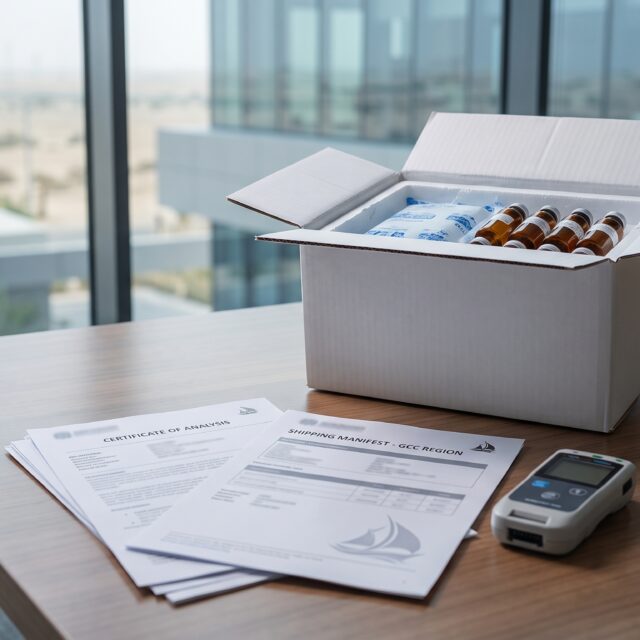
When securing supplies of either Thymosin Alpha-1 or TB-500 for regional laboratories, researchers must insist on verifiable, batch-specific documentation. A visual inspection of a lyophilized puck provides zero information regarding the actual molecular identity, net peptide content, or purity of the compound.
High-quality peptide sourcing requires third-party laboratory validation. Specifically, procurement officers must review the Certificate of Analysis (COA) for two primary forms of analytical testing:
- High-Performance Liquid Chromatography (HPLC): This evaluates the purity of the batch. The chromatogram should display a single, sharp peak indicating a purity threshold exceeding 98%. This demonstrates that the synthesis and subsequent cleavage processes effectively removed truncated sequences, TFA (trifluoroacetic acid) residues, and manufacturing impurities.
- Mass Spectrometry (MS): This confirms the exact molecular weight and sequence identity of the peptide, verifying that the vial indeed contains the 28-amino-acid chain of Thymosin Alpha-1 or the 7-amino-acid chain of TB-500, rather than an unknown substitute.
At NOVA Labs, we prioritize absolute transparency in scientific procurement. We mandate that researchers can review current, batch-specific laboratory testing reports directly on our platform before making any procurement decisions, ensuring absolute confidence in the reagents utilized for sensitive assays.
Preserving Peptide Integrity in the UAE Climate
Procuring high-purity peptides in the UAE and GCC presents unique logistical challenges that do not exist in temperate climates. Environmental factors are a critical consideration when evaluating supplier competence and cold-chain integrity.
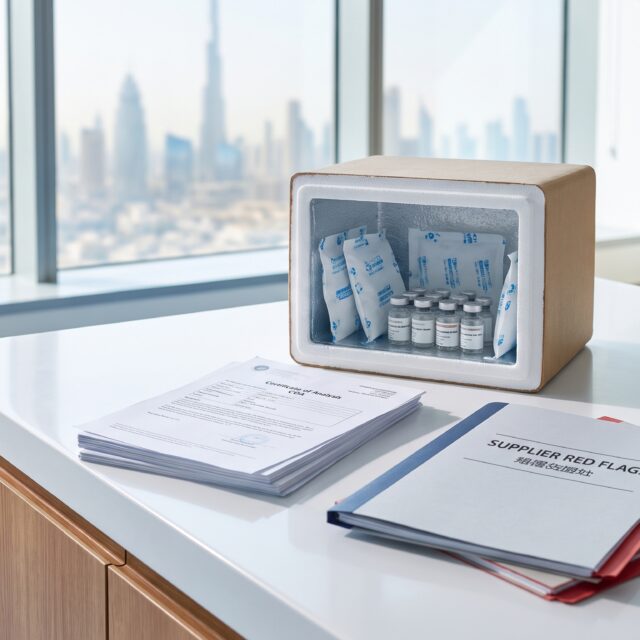
With UAE summer temperatures routinely exceeding 45°C (113°F) and coastal relative humidity reaching up to 70%, unmixed lyophilized peptides are highly vulnerable to degradation. Exposure to excessive heat accelerates peptide bond hydrolysis, deamidation, and irreversible thermal destruction. Direct international importation of research peptides carries immense risks; shipments frequently sit on sun-exposed airport tarmacs in Dubai or Abu Dhabi, or face prolonged customs delays, effectively neutralizing the compound’s structural integrity long before it reaches the laboratory.
Cold-Chain and Local Logistics
To mitigate these extreme thermal risks, localized fulfillment is strictly necessary. By utilizing a local Dubai-based distribution hub, the delivery window can be compressed to 24-48 hours via specialized couriers. This bypasses the severe customs friction and thermal exposure associated with direct international shipping. Reliable UAE suppliers ensure that stock is stored in climate-controlled facilities and dispatched using proper cold-chain handling protocols.
Laboratory Storage Protocols
Once these compounds arrive at the facility, researchers must adhere to strict handling guidelines to preserve stability:
- Long-term storage: Lyophilized (freeze-dried) peptide standards must be stored away from light in specialised laboratory freezers at -20°C to -80°C.
- Moisture prevention: To prevent moisture condensation—which acts as a catalyst for rapid chemical degradation—vials must be allowed to equilibrate to room temperature inside a sealed desiccator for at least 30-60 minutes before being opened or dispensed.
- Post-reconstitution: Once reconstituted with bacteriostatic water or a suitable laboratory solvent, the peptide solution becomes significantly more fragile. It must remain strictly refrigerated between 2°C and 8°C and used within its established stability window (typically 14 to 21 days depending on the specific peptide sequence).
Procurement, Support, and Payment in the GCC
For institutional buyers and independent researchers in the GCC, seamless procurement goes beyond just finding a supplier; it requires a partner who understands regional compliance and operational hurdles.
NOVA Labs provides localized support tailored to the UAE market. This includes direct WhatsApp consultations for inventory checks, seamless processing via secure local payment gateways, and transparent communication regarding batch availability. This localized infrastructure ensures that researchers spend less time navigating customs delays and unreliable international tracking, and more time focusing on their core scientific investigations.
Summary and UAE Procurement Conclusion
While the names may sound similar, the scientific literature comparing thymosin alpha-1 vs tb-500 highlights two fundamentally distinct compounds. Thymosin Alpha-1 serves as a complex, 28-amino-acid immunomodulator targeting TLR pathways, carrying a vast history of pharmacokinetic study. Conversely, TB-500 is a highly specific 7-amino-acid synthetic fragment utilized strictly in experimental models to investigate actin binding, cellular migration, and structural tissue repair.
For researchers in the UAE, successfully utilizing either of these compounds relies heavily on overcoming regional logistical hurdles. Ensuring that peptides bypass extreme summer tarmac heat through localized Dubai fulfilment, verifying strict HPLC and Mass Spectrometry documentation, and implementing rigorous laboratory storage protocols are all mandatory steps for sound, reproducible scientific inquiry.
For locally warehoused, cold-chain protected, and rigorously tested research compounds, browse our full research catalogue at NOVA Labs to ensure your next assay is powered by uncompromising purity.
Disclaimer: The products mentioned in this article are provided strictly for in-vitro research and laboratory experimentation purposes only. They are not intended for human consumption, therapeutic use, or medical treatment of any kind. Always adhere to institutional safety guidelines when handling biochemical compounds.
*
References
- Goldstein, A. L., & Birkhofer, A. (2009). “Thymosin alpha1: a peptide immune modulator with a broad range of clinical applications.” Expert Opinion on Biological Therapy, 9(4), 439-445.
- Sosne, G., Qiu, P., Goldstein, A. L., & Hannappel, E. (2010). “Biological activities of thymosin beta4 defined by active sites in short peptide sequences.” FASEB Journal, 24(7), 2144-2151.
- Philp, D., & Kleinman, H. K. (2010). “Animal models of wound healing.” Wound Repair and Regeneration, 18(5), 431-435.
- World Anti-Doping Agency (WADA). (2024). The Prohibited List: S2 Peptide Hormones, Growth Factors, Related Substances, and Mimetics.
- King, R., & Fields, G. (2014). Peptide Synthesis and Sourcing Protocols for High-Temperature Climates. Journal of Biochemical Logistics.
Disclaimer: The products mentioned in this article are for research purposes only and are not intended for human consumption.
- Thymosin Peptides: Alpha, Beta, and Prothymosin – Superpower
- Thymosin Alpha-1 vs TB-500: Peptid-Vergleich – BergdorfBio
- TB-500 Peptide: Benefits, Dosage & the BPC-157 Stack | Rite Aid
- Thermal Stability of Lyophilized Peptides in the Gulf Climate | VaultLabs Technical Whitepaper
- Peptide Storage Temperature Oman: Cold-Chain & Handling – NOVA Labs
- Thymosins in multiple sclerosis and its experimental models: moving from basic to clinical application – PMC
- Thymosin Alpha-1: The Immune Peptide Used in 30+ Countries but Restricted in the U.S.
Frequently asked questions
What is the difference between Thymosin Alpha-1 and TB-500 in research?
Thymosin Alpha-1 is a 28-amino-acid peptide studied for its role in immunomodulation via TLR signaling pathways. TB-500 is a synthetic 7-amino-acid fragment of Thymosin Beta-4 investigated primarily in models of actin binding, cell migration, and tissue repair.
Are TB-500 and Thymosin Beta-4 the exact same compound?
No. Thymosin Beta-4 is a naturally occurring, 43-amino-acid protein. TB-500 is a synthetic, truncated 7-amino-acid sequence that represents only the active actin-binding domain of the larger Thymosin Beta-4 molecule.
How should lyophilized research peptides be stored in the UAE?
Unmixed lyophilized peptides should be stored in specialized laboratory freezers at -20°C to -80°C. Before opening, vials must be allowed to equilibrate to room temperature inside a desiccator to prevent moisture condensation, which accelerates chemical degradation in high-humidity environments.
What documentation verifies the purity of Thymosin Alpha-1 or TB-500?
Researchers should always verify a third-party Certificate of Analysis (COA) containing High-Performance Liquid Chromatography (HPLC) for purity levels (>98%) and Mass Spectrometry (MS) to confirm the exact molecular weight and sequence identity of the specific batch.
Nova Labs buyer tools
Ready to verify stock, testing and delivery?
Use the product page and lab report section to check availability, documentation, delivery timing and support before placing an order.
- COA / test-report checks
- UAE delivery context
- Cold-chain handling
- COD and card payment options
- WhatsApp support