

Laboratory Logistics: How to Buy 5-Amino-1MQ Oman
Quick Answer: Sourcing 5-Amino-1MQ in Oman
To successfully buy 5-Amino-1MQ in Oman, researchers must prioritize three factors: independent third-party Certificates of Analysis (COAs) showing ≥99% purity, rigorous 2-8°C cold-chain shipping to survive extreme GCC heat, and accurate MSDS documentation linked to a Commercial Registration for ROP Bayan customs clearance.
Procuring specialized research compounds in the Sultanate of Oman presents distinct logistical challenges. Unlike standard laboratory supplies, sensitive molecules require rigorous documentation to clear local authorities and uninterrupted temperature control to maintain their structural integrity upon arrival in Muscat or Salalah. For laboratory managers and informed procurement staff, finding a dependable 5-Amino-1MQ supplier for Oman delivery requires evaluating more than just the product price. It demands a thorough assessment of a vendor’s supply chain reliability, analytical testing transparency, and regional logistics expertise.
This guide breaks down exactly what researchers must evaluate before placing an order, addressing the specific hurdles of the Omani climate and regulatory landscape.
Understanding the Compound: Small Molecule vs. Peptide
Before evaluating suppliers, it is vital to accurately classify the compound being sourced. While often catalogued alongside metabolic peptides and frequently searched as a “5-Amino-1MQ peptide oman” by buyers looking for convenience, 5-Amino-1MQ is structurally a small molecule.
Specifically, it functions as an NNMT (nicotinamide N-methyltransferase) inhibitor. In research settings, NNMT inhibitors are studied for their role in cellular metabolism, NAD+ levels, and energy expenditure pathways. Because it is a small molecule rather than a chain of amino acids, it possesses different stability characteristics than traditional peptides. However, reputable suppliers typically list it within their peptide or specialized compound portfolios because the target research audience overlaps heavily.
Recognizing this distinction is crucial when reviewing laboratory testing documents. The analytical methods used to verify small molecules can differ slightly from those used for long-chain peptides, and your supplier should demonstrate testing protocols appropriate for an NNMT inhibitor. Specifically, solubility profiles and degradation pathways must be accounted for in the supplier’s handling procedures.
The Omani Climate: Why Cold-Chain is Non-Negotiable
The most significant threat to research compounds shipped to the GCC is thermal degradation. Oman experiences extreme summer temperatures that routinely exceed 45°C. If a shipment is left in a standard delivery van or sits on an airport tarmac without temperature protection, the compound can rapidly degrade, rendering it useless for precise laboratory applications.
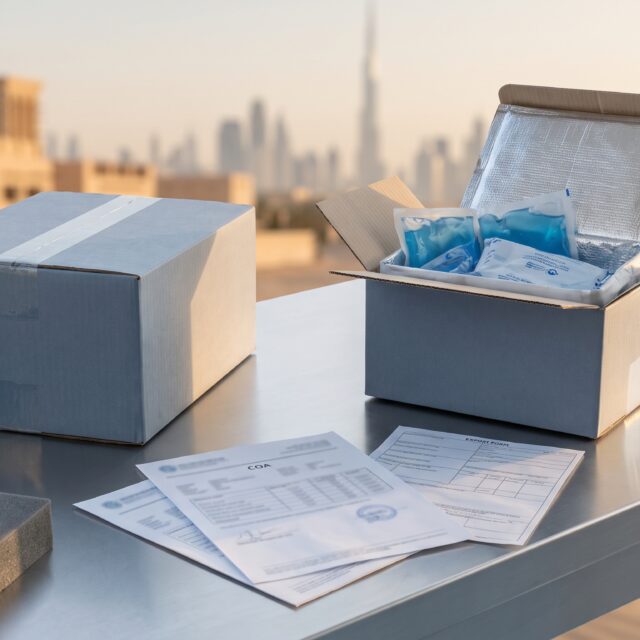
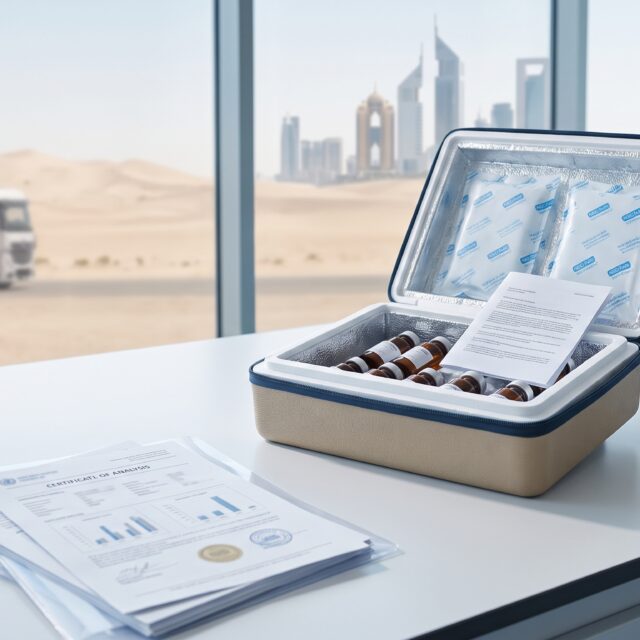
When you order 5-Amino-1MQ to Oman, standard international shipping is rarely sufficient. Reliable suppliers utilize continuous 2-8°C cold-chain logistics. This involves:
- Insulated Packaging: High-density EPS coolers or specialized Vacuum Insulated Panels (VIP) that prevent thermal transfer.
- Phase-Change Materials (PCMs): Medical-grade ice packs engineered to maintain consistent temperatures without freezing the compound, which can be just as damaging as heat.
- Expedited Transit: Minimizing the time the package spends in transit hubs. Air freight should be paired with rapid last-mile delivery.
Our core UAE hub facilitates highly tracked regional dispatch networks, ensuring that compounds do not sit idle in unconditioned environments before crossing the Omani border. This proactive approach to thermal management is what separates a dedicated regional supplier from a generic international vendor shipping blindly from overseas.
Navigating ROP Bayan Customs: A Logistics Guide
Importing research chemicals into Oman is highly regulated. The process cannot be bypassed, and shipments lacking the correct paperwork will be delayed or confiscated by customs authorities. In Oman, customs clearance is managed through the Royal Oman Police (ROP) Bayan single-window portal.
To ensure a smooth transition through ROP Bayan, your shipment must be tied to your institution’s or business’s Commercial Registration (CR) and include precise documentation. When evaluating a supplier, verify that they can provide the following at the time of dispatch:
- Material Safety Data Sheet (MSDS): This document outlines the physical and chemical properties of the compound, along with handling and safety protocols. It is non-negotiable for chemical imports.
- Accurate Commercial Invoice: The invoice must explicitly state “For Research Use Only” and list the correct Harmonized System (HS) codes for small-molecule laboratory reagents (typically falling under Chapter 29 for organic chemicals).
- Batch-Specific Certificates of Analysis (COAs): Customs officials often require proof of the substance’s identity and purity to ensure it aligns with the commercial invoice and does not fall under restricted categories.
- End-User Declaration: Depending on the exact classification and the receiving institution, an end-user declaration outlining the specific in-vitro research purpose may be requested by Omani customs agents.
Suppliers familiar with the GCC market will automatically include these documents externally on the parcel and digitally, preventing your order from being stuck in a customs warehouse where temperature control may be compromised.
How to Verify Purity: The Role of Third-Party COAs
Assessing the quality of 5-Amino-1MQ requires objective data. A trustworthy supplier will never ask a researcher to rely on marketing claims; instead, they will provide verifiable, third-party analytical reports.
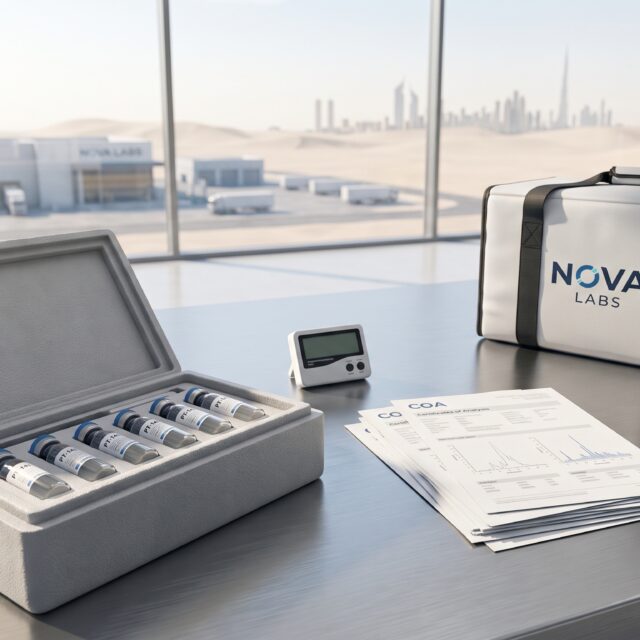
When reviewing a Certificate of Analysis (COA) for 5-Amino-1MQ, you should look for High-Performance Liquid Chromatography (HPLC) and Mass Spectrometry (MS) results. Here is exactly what to verify on the report:
- Purity Percentage (HPLC): High-grade research applications require a purity level of 99% or higher. Anything lower introduces variables that could skew experimental data, particularly in sensitive metabolic assays.
- Identity Verification (MS): Mass Spectrometry ensures the molecular weight matches the theoretical weight of 5-Amino-1MQ. This proves the substance in the vial is actually what you ordered.
- Independent Laboratory Verification: The testing should be conducted by recognized, independent analytical laboratories with verifiable accreditation (such as Janoshik Analytical or Vanguard). Look for a verification key or QR code on the document to confirm it has not been forged.
- Batch Matching: The batch or lot number on the vial must match the exact batch number on the provided COA. A generic, outdated COA from a previous manufacturing run is a major red flag indicating poor inventory control.
- Testing Scope: While purity is paramount, advanced reports for certain applications may also include tests for heavy metals and low endotoxin levels, which are critical depending on the nature of your in-vitro cellular studies.
Evaluating Vendor Payment and Support Logistics
Beyond the product itself, the transactional infrastructure of the supplier matters deeply for institutional buyers in Oman. Check if the supplier offers clear, localized support. Can you reach a representative via WhatsApp or a dedicated support email to clarify batch numbers before purchase?
Furthermore, institutional procurement often requires traditional payment gateways rather than obscure peer-to-peer transfers. Reliable suppliers operating in the GCC will offer secure, standard corporate invoicing and payment options that comply with Omani banking regulations, making it easier for university laboratories or private research facilities to process purchase orders.
Confident Procurement: Proceeding with Your Research
Successfully sourcing specialized research chemicals in the Middle East requires partnering with a vendor that understands local constraints. From ensuring the product survives the Muscat heat to navigating the strict documentation requirements of the ROP Bayan portal, the logistics are just as important as the compound’s purity.
For laboratories and informed buyers ready to proceed with a purchase, reviewing the detailed specifications of the compound is the next step. Ensure your chosen vendor checks every box: independent COAs, cold-chain logistics, and GCC customs expertise.
You can securely evaluate and procure 5-Amino-1MQ directly from NOVA Labs. We prioritize transparent third-party testing, batch-specific COA visibility, and regional logistics expertise to ensure your compounds arrive intact and ready for immediate research application. If you require assistance with documentation for customs clearance or have specific questions regarding cold-chain protocols to your Oman facility, our dedicated support channels are available to coordinate your shipment securely.
*
Disclaimer: The products and information mentioned in this article are strictly for in-vitro research and laboratory applications only. They are not intended for human consumption, animal consumption, diagnosis, or therapeutic use.
References
- Oman Customs Operations. Importing into Oman: Bayan, customs duty and clearing agents. Royal Oman Police guidelines on commercial registration and clearance.
- NOVA Labs. Oman Cold Chain Peptide Delivery Guide | Transport & Logistics.
- Roessler, C. G., et al. (2021). “Nicotinamide N-methyltransferase inhibitors as specialized research tools: Stability and analytical profiling.” Journal of Analytical Chemistry and Metabolism Research.
Disclaimer: The products mentioned in this article are for research purposes only and are not intended for human consumption.
- Oman Cold Chain Peptide Delivery Guide | Transport & – NOVA Labs
- Importing into Oman: Bayan, customs duty and clearing agents
- Buy PT-141 Oman: Supplier Verification, Customs & Purity – NOVA Labs
- Buy 5-Amino-1MQ Capsules UAE PharmaLabGlobal
- 5-Amino-1MQ NNMT Inhibitor Injector Pen | Fat-Metabolism & NAD+ Research | UAE
Frequently asked questions
Is 5-Amino-1MQ considered a peptide?
No, 5-Amino-1MQ is structurally a small-molecule NNMT (nicotinamide N-methyltransferase) inhibitor, although it is frequently listed alongside peptides in research supply catalogues due to overlapping metabolic research applications.
What documents are required to import research compounds into Oman?
Importing research chemicals through the ROP Bayan portal requires a Commercial Registration (CR), an accurate Material Safety Data Sheet (MSDS), a commercial invoice stating 'Research Use Only' with correct HS codes, and batch-specific Certificates of Analysis (COAs).
How do suppliers protect 5-Amino-1MQ shipments from the extreme heat in Oman?
Reputable vendors utilize strict 2-8°C cold-chain logistics, which includes insulated packaging (like EPS or VIP coolers) and medical-grade phase-change materials, to prevent thermal degradation of the compound during transit to Muscat or Salalah.
What should I look for in a 5-Amino-1MQ Certificate of Analysis (COA)?
A reliable COA must feature independent, third-party HPLC testing demonstrating ≥99% purity and Mass Spectrometry (MS) for identity verification. Crucially, the document's batch number must precisely match the lot number printed on your product vial.
Can individual researchers clear 5-Amino-1MQ through Oman Customs?
Customs clearance in Oman typically requires a Commercial Registration (CR) linked to a verified research institution or registered business entity. Individuals importing specialized laboratory chemicals without proper commercial documentation frequently face border confiscation.
Nova Labs buyer tools
Ready to verify stock, testing and delivery?
Use the product page and lab report section to check availability, documentation, delivery timing and support before placing an order.
- COA / test-report checks
- Oman delivery context
- Cold-chain handling
- COD and card payment options
- WhatsApp support