




Where to Buy CJC-1295 No DAC in Bahrain: The Sourcing Landscape
To buy CJC-1295 No DAC in Bahrain safely, researchers must source from regional GCC suppliers providing batch-specific Certificates of Analysis (COAs). Regional procurement ensures rapid cold-chain delivery, preventing extreme heat degradation while successfully navigating Bahrain’s NHRA and OFOQ customs systems.
For scientific professionals and informed procurement teams in the Gulf Cooperation Council (GCC), sourcing specialized biological compounds requires navigating a complex landscape. This includes strict regulatory oversight, extreme regional climate conditions, and highly variable supplier standards. The regional market is frequently saturated with general importers, overseas drop-shippers, and global marketplaces. While these platforms may list research materials imported from the US, UK, or China, they primarily act as logistical middlemen. They lack the specialized storage infrastructure, direct cold-chain oversight, and batch-specific scientific documentation required for delicate materials like lyophilized peptides.
This guide outlines exactly how to evaluate a CJC-1295 No DAC supplier in Bahrain, detailing the precise documentation to demand, the structural mechanics of the peptide, and how regional logistics directly impact the integrity of your research.
Quick Answer: Buyer Checklist for Bahrain
Before initiating procurement for your laboratory, ensure your supplier meets the following operational criteria:
- Batch-Specific COAs: The vendor must provide independent High-Performance Liquid Chromatography (HPLC) and Mass Spectrometry (MS) test results for the specific batch being purchased, proving >98% purity.
- Regional Dispatch: Orders should originate from within the GCC to bypass prolonged international transit and eliminate unexpected cross-border customs seizures.
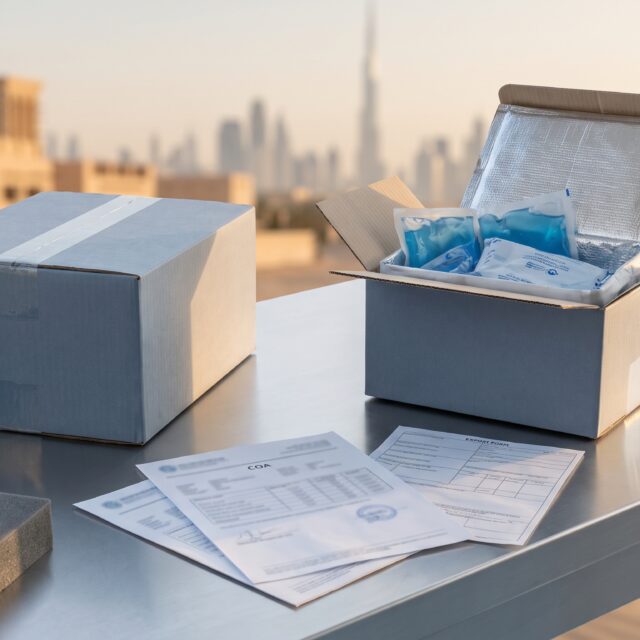
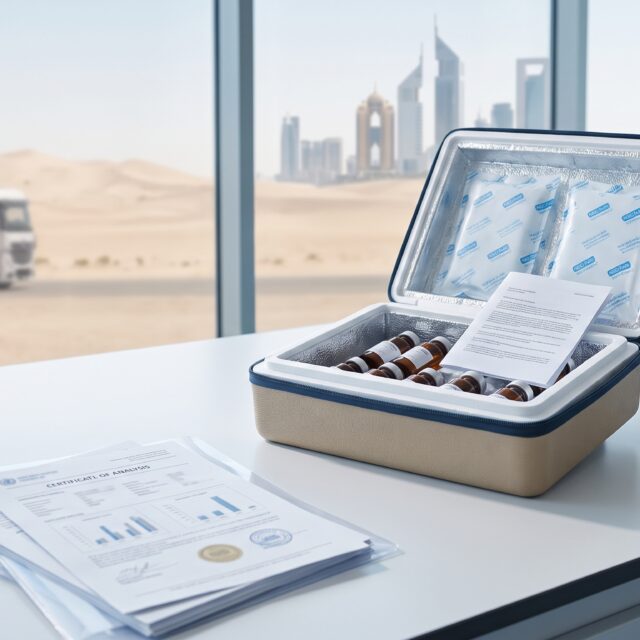
- Cold-Chain Logistics: Packaging must include thermal insulation and temperature stabilization protocols designed for Middle Eastern heat.
- Customs Compliance: Commercial invoices must correctly identify the compounds with the explicit designation “For In-Vitro Research Only.”
Navigating Bahrain’s NHRA and Customs Regulations
Importing research materials into the Kingdom of Bahrain involves stringent and highly structured oversight. The National Health Regulatory Authority (NHRA) supervises all pharmaceutical, clinical, biological, and medical-adjacent imports to ensure unauthorized or improperly documented materials do not enter the local market.
For researchers and laboratory buyers, this necessitates standardizing how shipments are declared on commercial invoices and manifests. Research peptides like CJC-1295 No DAC must be explicitly designated for ‘In-Vitro Research Only’. This specific terminology clarifies to customs officials that the product is intended strictly for laboratory study, isolated cell culture environments, or analytical assays. Without this designation, border agents may mistakenly classify the shipment as a medical product intended for human use, triggering immediate confiscation or demands for clinical import licenses.
Furthermore, all imported goods in Bahrain are processed through the OFOQ online customs clearance system. High-value research orders are subject to standard import duties and Value Added Tax (VAT). Working with a specialized GCC supplier who understands the OFOQ system and correctly labels manifests prevents lengthy customs holds. When a package is delayed in customs due to ambiguous labeling, it is often subjected to uncontrolled ambient temperatures in storage warehouses—a severe, often irreversible risk to the stability of delicate peptides.
The Cold-Chain Priority: GCC Heat and Peptide Integrity
Bahrain’s climate is one of the most demanding environments globally for shipping biological and chemical compounds. During the extended summer months, ambient temperatures regularly exceed 40°C, with tarmac temperatures at Bahrain International Airport and regional logistics hubs soaring much higher.
While lyophilized (freeze-dried) peptides are physically more robust than reconstituted liquid solutions, they are absolutely not immune to thermal stress. Prolonged exposure to extreme heat triggers undesirable molecular alterations. These degradation pathways include deamidation (the breakdown of specific amino acid residues, particularly asparagine and glutamine) or backbone hydrolysis (cleavage of the peptide chain). These pathways compromise the integrity of the compound, resulting in a degraded product that will yield inconsistent or completely invalid data in precise analytical or in-vitro studies.
This is the critical failure point of international drop-shippers. A package routed from overseas via standard postal services can spend days or weeks in transit, often sitting in non-climate-controlled sorting facilities or customs bays. To safeguard molecular integrity, buyers should prioritize regional fulfillment. Utilizing specialized regional GCC cold-chain delivery ensures that the time-in-transit is drastically reduced, bypassing the prolonged heat exposure associated with long-haul international freight and maintaining the peptide in optimal condition upon arrival.
Scientific Verification: Reading COAs and Purity Reports
A reputable supplier serving Bahrain must provide transparent, batch-specific testing documentation. A generic specification sheet or a test from three years ago is entirely insufficient. Researchers require a Certificate of Analysis (COA) corresponding to the exact batch number currently in stock.
When evaluating a COA for CJC-1295 No DAC, buyers should focus on two primary analytical methods:
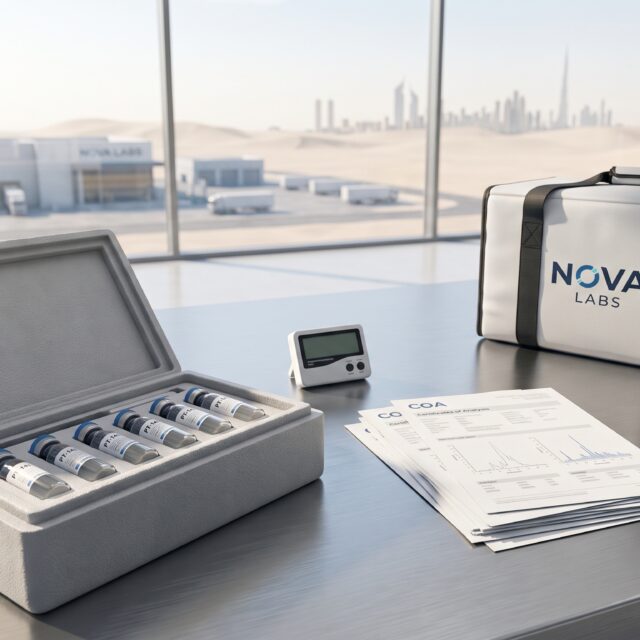
- High-Performance Liquid Chromatography (HPLC): This technique separates the components in a mixture. In peptide synthesis, it allows analysts to quantify the presence of the desired target sequence versus manufacturing impurities (like truncated sequences or residual solvents). For rigorous research applications, the HPLC chromatogram should show a sharp, single primary peak, indicating a purity level that meets or exceeds 98%.
- Mass Spectrometry (MS): While HPLC measures purity, Mass Spectrometry confirms identity. It measures the precise molecular weight (mass-to-charge ratio) of the compound. For CJC-1295 No DAC, the expected mass must align perfectly with its known 29-amino-acid sequence (typically around 3368 g/mol, depending on the salt form). This proves that the correct sequence was synthesized without missing, added, or substituted amino acid residues.
Generic marketplace vendors rarely invest in independent, third-party testing for their inventory, leaving the end-user to assume all purity risks. Specialized suppliers make these documents readily visible prior to purchase, establishing a foundation of trust and scientific validity.
Mechanistic Contrast: Understanding CJC-1295 No DAC
To ensure procurement accuracy, buyers must understand the precise nomenclature of the compound they are ordering. CJC-1295 No DAC—frequently referred to in scientific literature as Modified GRF 1-29—is a synthetic analog of endogenous Growth Hormone-Releasing Hormone (GHRH).
In in-vitro research, this compound is studied for its ability to stimulate pathways in a pulsatile manner, mimicking episodic cellular signaling. It contains 29 amino acids, which constitute the active core of GHRH, but incorporates specific amino acid substitutions (like D-Ala at position 2) to resist rapid enzymatic cleavage by dipeptidyl peptidase-4 (DPP-4).
A critical distinction lies in the “No DAC” designation. The addition of a Drug Affinity Complex (DAC) alters the pharmacokinetic profile dramatically. The DAC modification involves attaching a maleimidopropionic acid linker to the peptide, which binds covalently to serum albumin in vivo. This extends its biological presence significantly, resulting in a continuous, non-pulsatile elevation of target responses.
Conversely, the No DAC variant maintains a brief half-life in studied models (approximately 30 minutes). Researchers often prefer this variant when investigating specific episodic pathways, receptor sensitivity, or feedback loops without the sustained, unremitting baseline elevation caused by the DAC modification. Proper identification of this specific compound through MS testing is vital, as visually identical lyophilized powders cannot be differentiated without advanced analytical equipment.
Payment Security and Local Support Context
Procuring specialized chemicals from international vendors often introduces friction at the payment and support level. Cross-border transactions are frequently flagged by Middle Eastern banks, leading to frozen payments or delayed order processing. Furthermore, attempting to get support from a vendor operating in a North American or East Asian time zone can result in critical communication delays—especially if a shipment encounters an unexpected customs hurdle at the Bahrain border.
Working with a regional supplier mitigates these issues. Buyers benefit from localized, secure payment gateways designed for the GCC banking network. Additionally, access to same-day support channels (such as dedicated email or WhatsApp business support) during regular Arabian Standard Time (AST) working hours ensures that any logistical queries or documentation requests are handled swiftly, keeping your laboratory schedules on track.
Streamlining Procurement: Why Informed Buyers Choose NOVA Labs
For buyers evaluating a CJC-1295 No DAC supplier in Bahrain, NOVA Labs addresses the structural flaws of marketplace drop-shipping and overseas importing. Operating strictly within the GCC, NOVA Labs provides a streamlined, highly secure procurement channel tailored specifically to the precise needs of regional researchers.
Key operational advantages include:
- Uncompromising Purity Verification: Every batch is subjected to rigorous HPLC and MS testing. We provide transparent, batch-specific COAs demonstrating over 98% purity, ensuring your assay data is never compromised by manufacturing impurities.
- Optimized Regional Logistics: By dispatching directly from within the region, orders avoid the prolonged transit times of intercontinental shipping. The logistics network utilizes localized couriers and thermal packaging designed specifically to minimize heat exposure in the Middle East.
- Regulatory Compliance: All outbound shipments are accurately documented with commercial invoices clearly stating ‘In-Vitro Research Only’, along with correct HS codes. This streamlines customs clearance processes through OFOQ and avoids unnecessary NHRA administrative holds.
- Responsive Local Support: NOVA Labs offers dedicated regional support and reliable stock availability. Researchers benefit from aligned time zones and a localized understanding of GCC procurement challenges.
Researchers looking to secure high-quality materials without the logistical headache can confidently buy CJC-1295 No DAC directly through NOVA Labs’ specialized research portal.
Conclusion
Procuring specialized research materials in the GCC demands a critical, detail-oriented approach. When evaluating where to buy CJC-1295 No DAC in Bahrain, the decision should hinge entirely on verifiable batch purity, optimized cold-chain logistics, and compliant, accurate customs documentation. Generic drop-shippers and unverified overseas vendors expose your research to significant risks through unmitigated thermal degradation and a lack of batch-specific chemical analysis. By partnering with a dedicated regional supplier, procurement teams secure verifiable >98% purity, rapid regional dispatch, and the scientific confidence required for rigorous, reproducible investigation. Choose NOVA Labs for your research requirements and experience the standard in GCC peptide sourcing.
Disclaimer: The products mentioned in this article are strictly for in-vitro research and laboratory applications only. They are not intended for human consumption, clinical use, therapeutic treatment, or diagnostic purposes.
References
- International Trade Administration. (2023). Bahrain – Prohibited and Restricted Imports. U.S. Department of Commerce.
- Bahrain Customs Affairs. (n.d.). OFOQ System Overview and Import Regulations. Ministry of Interior, Kingdom of Bahrain.
- D’Hondt, M., et al. (2011). “Stability of Peptides.” Journal of Pharmaceutical and Biomedical Analysis, 55(4), 653-661.
- Jaffe, C. A., et al. (1993). “Continuous infusion of growth hormone (GH)-releasing hormone: GH pulsatility.” The Journal of Clinical Endocrinology & Metabolism, 77(1), 74-80.
- National Health Regulatory Authority (NHRA). (2022). Guidelines for the Importation of Medical and Research Products. Kingdom of Bahrain.
Disclaimer: The products mentioned in this article are for research purposes only and are not intended for human consumption.
- CJC-1295 No DAC Bahrain: Buying, Purity, COA and Delivery Guide – NOVA Labs
- Bahrain – Prohibited and Restricted Imports – International Trade Administration
- Import unapproved medicine into Bahrain – Everyone.org
- Peptide Stability in Transit: The Evidence-Based Guide to Shipping Risks and Storage Realities – HackedAlive
- Bahrain NHRA Pharmaceutical Import: 2026 UK Exporter Guide | Euro Biom
- Buy CJC-1295 no DAC 5mg | 99% Purity | Crystal Peptides
Frequently asked questions
Is CJC-1295 No DAC legal to import into Bahrain for research?
Yes, it can be imported into Bahrain provided it is strictly designated for 'In-Vitro Research Only'. Shipments must comply with National Health Regulatory Authority (NHRA) guidelines and be properly documented via the OFOQ customs system to avoid being classified as unauthorized human medication.
What is the difference between CJC-1295 No DAC and the DAC variant?
The 'No DAC' variant (often referred to as Modified GRF 1-29) lacks the Drug Affinity Complex, resulting in a short biological half-life of roughly 30 minutes, which induces a pulsatile signaling response. The DAC variant binds to serum albumin, extending the half-life to several days for a continuous, non-pulsatile effect.
How does GCC summer heat affect shipped research peptides?
Temperatures routinely exceeding 40°C in the GCC can cause physical degradation in lyophilized peptides, such as deamidation or backbone hydrolysis, irreversibly altering the molecular structure. Rapid, regional cold-chain delivery with thermal packaging is required to prevent this damage.
What purity standard should I look for when buying CJC-1295 No DAC?
For reliable and reproducible in-vitro research, CJC-1295 No DAC should possess a High-Performance Liquid Chromatography (HPLC) purity of 98% or higher, validated by a batch-specific Certificate of Analysis (COA) matching the current inventory.
Why should researchers avoid generic peptide dropshippers in the Middle East?
Generic overseas dropshippers typically lack batch-specific Certificates of Analysis (COAs) for purity verification. Additionally, they rely on standard long-haul logistics networks that expose sensitive chemical research materials to severe regional heat and extended customs delays at the border.
Nova Labs buyer tools
Ready to verify stock, testing and delivery?
Use the product page and lab report section to check availability, documentation, delivery timing and support before placing an order.
- COA / test-report checks
- Bahrain delivery context
- Cold-chain handling
- COD and card payment options
- WhatsApp support