
Sourcing CJC-1295 No DAC in Saudi Arabia: The Quick Answer
To successfully buy CJC-1295 No DAC in Saudi Arabia, researchers must procure lyophilised powder to withstand intense GCC heat, demand third-party HPLC testing verifying over 98% purity, and use suppliers with regional distribution hubs to ensure seamless KSA customs clearance via ZATCA protocols.
Sourcing high-quality research materials in the Kingdom of Saudi Arabia requires careful attention to regional logistics, stringent regulatory frameworks, and environmental realities. CJC-1295 No DAC, often referred to in scientific literature as Modified GRF 1-29, is a heavily researched synthetic analogue of growth hormone-releasing hormone (GHRH). For laboratory investigators, institutional procurement officers, and informed buyers, acquiring this compound requires navigating extreme environmental challenges, complex digital customs portals, and a high-risk grey market.
This comprehensive guide breaks down exactly how to evaluate suppliers, ensure molecular structural integrity upon arrival in the Middle East, and secure compliant procurement for your laboratory.
Understanding CJC-1295 No DAC (Modified GRF 1-29) in Research
Before initiating a procurement order, it is vital to understand the precise biochemical nature of the compound being requested. CJC-1295 No DAC is a 29-amino acid synthetic peptide. It is a tetrasubstituted analogue of endogenous GHRH, meaning four amino acids have been altered in its sequence to prevent rapid degradation by dipeptidyl peptidase-4 (DPP-4) enzymes.
The “No DAC” designation is critical. DAC stands for Drug Affinity Complex, an addition that binds to serum albumin to drastically extend the half-life of the peptide. CJC-1295 without DAC (Modified GRF 1-29) has a much shorter half-life (approximately 30 minutes in vitro) compared to the DAC version (which can last up to 8 days). Researchers must ensure their supplier is providing the exact molecular structure required for their specific assay, as confusing the two can entirely invalidate time-sensitive metabolic studies.
Thermal Stability and the GCC Climate: Why Lyophilisation is Non-Negotiable
The most significant threat to peptide integrity during Middle Eastern transit is thermal degradation. Saudi Arabia’s summer temperatures regularly exceed 45 degrees Celsius (113 degrees Fahrenheit), creating an incredibly hostile environment for biological research materials.
Many overseas suppliers and grey-market vendors attempt to sell pre-mixed peptide pens or nasal sprays. In the context of the GCC climate, these liquid formulations are highly susceptible to rapid peptide bond hydrolysis and complete degradation before they even reach the laboratory bench. Once a peptide is reconstituted into a liquid state, its structural stability becomes highly fragile, requiring constant and uninterrupted refrigeration.
For serious research procurement in KSA, the only viable option is lyophilised (freeze-dried) powder. The lyophilisation process removes water under a vacuum, stabilising the peptide structure and making it significantly more resilient to temperature fluctuations during international transit.
Even with lyophilised formats, proper handling and storage protocols must be strictly observed upon delivery to a Saudi facility:
- Long-term storage (unreconstituted): Vials must be kept at -20 degrees Celsius in a dedicated laboratory freezer to ensure longevity for up to 24 months.
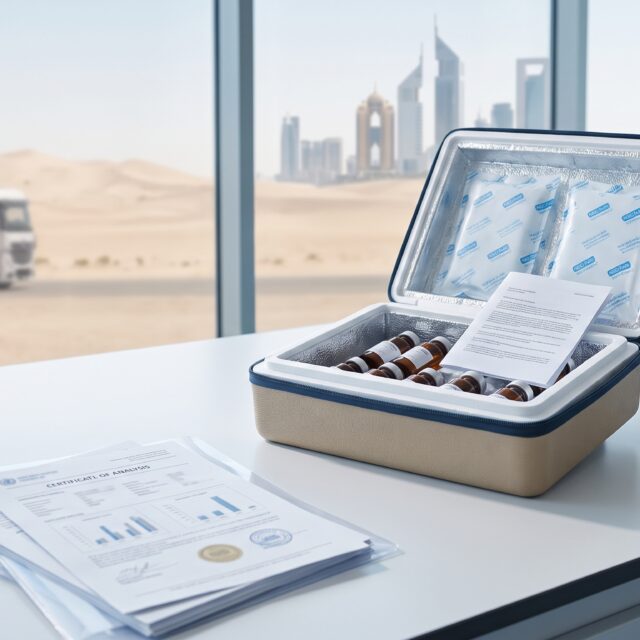
- Short-term transit: The lyophilised puck can withstand ambient temperatures temporarily, but should ideally be shipped with temperature-mitigating packaging, out of direct sunlight.
- Post-reconstitution: Once mixed with bacteriostatic water or sterile saline for in vitro application, the solution must be stored strictly at 2 to 8 degrees Celsius and utilised within a precise timeframe (typically 14 to 28 days).
ZATCA Customs and Institutional Procurement in KSA
Saudi Arabia operates one of the most highly digitalised, efficient, and strict customs environments in the world. Overseen by the Zakat, Tax and Customs Authority (ZATCA), the importation of scientific and biological materials is heavily monitored to prevent the influx of unregulated consumer health products.
CJC-1295 No DAC is treated as a regulated research substance. Any supplier attempting to market, label, or ship it as a dietary supplement, bodybuilding aid, or consumer therapeutic will face immediate seizure at Saudi borders, and the importing entity may face penalties.
The Saudi Ministry of Health (MoH) and the Saudi Food and Drug Authority (SFDA) actively coordinate to intercept non-compliant shipments. To successfully import these compounds, they must be correctly classified and transparently declared. Compliant suppliers ensure that shipments are strictly labelled as “in vitro research reagents” or “for laboratory research use only” and use the appropriate HS (Harmonized System) codes for chemical reagents.
Depending on the shipment size and the receiving entity (such as a university or private institutional laboratory), buyers may need to interact with the SABER platform or the FASAH logistics portal. This involves providing commercial invoices, certificates of origin, and explicit end-user declarations detailing the compound’s intended in vitro research application. Partnering with an experienced B2B supplier that understands these KSA documentation requirements is critical to avoiding permanent holds at Riyadh or Jeddah customs checkpoints.
Evaluating Supplier Purity: HPLC, MS, and COAs
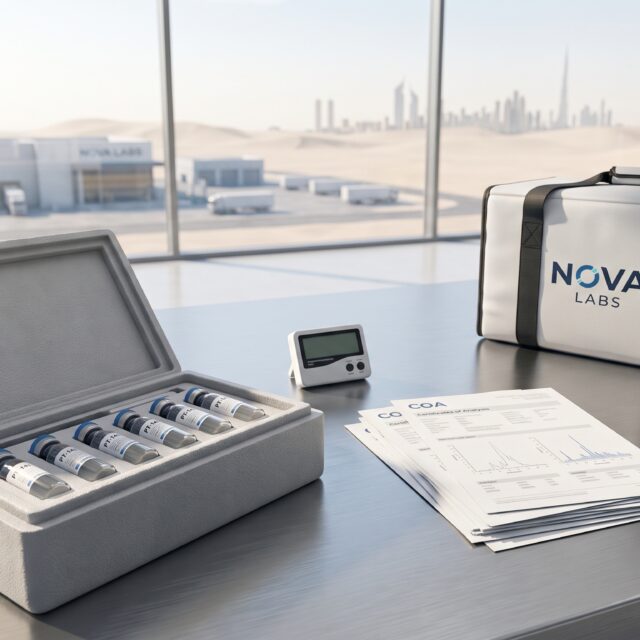
When you prepare to order CJC-1295 No DAC in Saudi Arabia, the most critical step in evaluating a supplier is reviewing their analytical documentation. A trustworthy supplier will provide a batch-specific Certificate of Analysis (COA).
However, a simple PDF document labelled “COA” is insufficient for rigorous institutional procurement. You must verify that the documentation includes the following analytical data:
- High-Performance Liquid Chromatography (HPLC): This analytical technique separates the components of the vial to measure the precise purity of the peptide. For high-intent research, the HPLC chromatogram should demonstrate a single sharp peak indicating a purity level of 98 percent or higher. Lower purities mean higher concentrations of truncated peptide sequences or synthetic impurities that can skew research data.
- Mass Spectrometry (MS): While HPLC shows purity, Mass Spectrometry verifies identity. It measures the mass-to-charge ratio of the molecules, confirming that the molecular weight of the powder in the vial exactly matches CJC-1295 No DAC (approx. 3367 g/mol) and not a cheaper, mislabelled substitute.
- Third-Party Verification: Testing should ideally be conducted by an independent, ISO/IEC 17025 accredited analytical laboratory, rather than relying solely on in-house supplier testing which can be subject to bias.
- Batch Matching: Ensure the batch or lot number on the published COA matches the physical label on the vial you receive at your facility.
Logistics, Payments, and GCC Regional Hubs
One of the most effective strategies for importing research peptides into Saudi Arabia is utilising suppliers with established logistics networks and hubs within the Gulf Cooperation Council (GCC), such as the UAE.
Shipping directly from primary manufacturers in Asia or distributors in North America often results in extended transit times (sometimes 10 to 14 days), increasing the risk of thermal degradation and prolonged customs inspections. By routing shipments through a regional distribution hub, the final transit leg into KSA is drastically shortened.
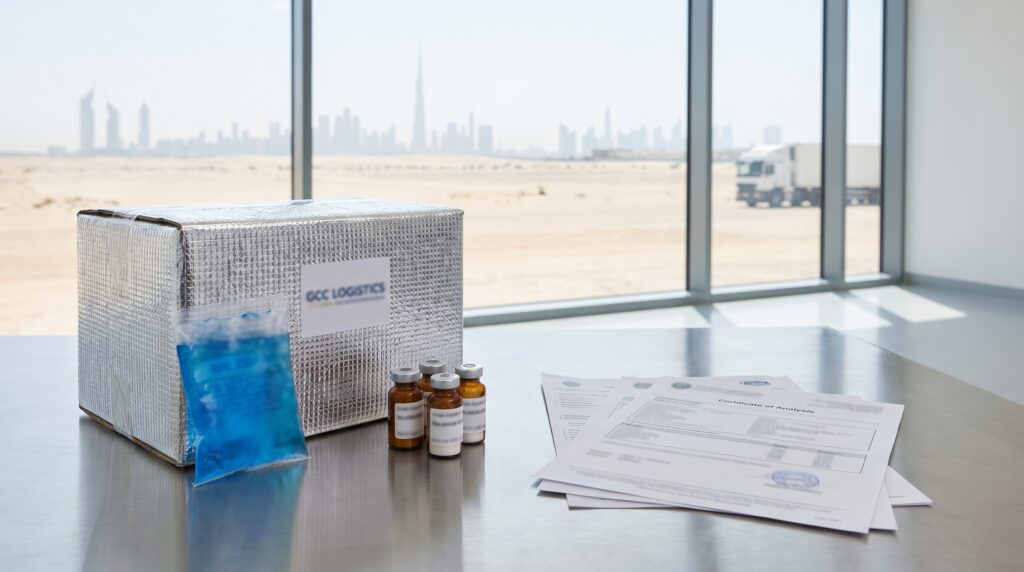
For example, while researchers in Dubai can directly utilise our peptides UAE next day delivery infrastructure, researchers in Saudi Arabia benefit immensely from this same regional proximity. Dispatches originating from or routed efficiently through GCC channels mean fewer international handoffs, better control over cold-chain or insulated packaging, and a much higher success rate when clearing ZATCA, as regional trade routes are highly streamlined.
Furthermore, professional suppliers offer secure payment gateways suitable for Middle Eastern buyers. This includes standard credit card processing, secure bank wires for large institutional Purchase Orders (POs), and sometimes cryptocurrency options for enhanced privacy. Reliable suppliers will also provide responsive customer support—often via WhatsApp or direct email—to assist with commercial invoice requests or tracking updates in real-time.
Avoiding the Grey Market in Saudi Arabia
The stringent nature of the SFDA has inadvertently created a black market of illicit local sellers, primarily operating through social media platforms (like Instagram or Telegram) and local fitness centres. The MoH regularly conducts crackdowns on warehouses and gym trainers selling unregistered peptides, applying severe legal and financial penalties.
Procurement officers and researchers should never source CJC-1295 No DAC from these local grey-market vendors. Not only is it legally risky, but these vendors operate with zero quality control. Products are often stored in car trunks or hot warehouses, virtually guaranteeing thermal degradation. Furthermore, they cannot provide verifiable, third-party HPLC testing data.
Scams are also prevalent. A common tactic involves Telegram-based sellers offering unfeasibly low prices. Once an order is placed, the buyer receives a fraudulent message claiming the package is “stuck at Saudi customs” and requires an immediate “clearance fee” paid via cryptocurrency. Legitimate suppliers never operate via untraceable messaging apps for order processing and will always provide transparent, upfront shipping costs with verifiable KSA tracking numbers from major couriers like DHL, FedEx, or Aramex.
Secure Your Lab’s Supply Today
Conducting rigorous scientific research requires uncompromising chemical purity, verifiable analytical data, and reliable supply chains. When evaluating a supplier in Saudi Arabia, prioritise those who offer transparent third-party HPLC/MS testing, supply exclusively in lyophilised formats to combat the GCC climate, and understand the nuances of institutional customs declarations.
At NOVA Labs, we support the Middle Eastern research community by providing extensively tested, high-purity compounds backed by responsive logistics and secure payment options.
Ready to source reliable, research-grade materials for your next in vitro project? Review the technical specifications, view the latest purity reports, and order CJC-1295 No DAC directly from our secure platform.
References
- Saudi Food and Drug Authority (SFDA) Guidelines on the Importation of Chemical Reagents and Laboratory Materials.
- Zakat, Tax and Customs Authority (ZATCA) FASAH and SABER clearance protocols for scientific and commercial imports.
- National Institutes of Health (NIH): Studies on the stability and half-life of Growth Hormone-Releasing Hormone analogues.
- Ministry of Health (MoH) Kingdom of Saudi Arabia: Public warnings on unregistered medicinal products and regulatory enforcement.
Disclaimer: The products mentioned in this article are strictly for in vitro laboratory research purposes only and are not intended for human consumption, therapeutic application, or clinical use.
- Wholesale Peptides Saudi Arabia: B2B Supplier & Procurement – NOVA Labs
- Buy MOTS-c in Saudi Arabia | Reliable Suppliers & COA Guide – NOVA Labs
- Buy Retatrutide Saudi Arabia: Delivery, COA & Customs Guide – NOVA Labs
- MoH Warns Against Using Unregistered Drugs and Seizes Violators
- Buy Eloralintide Saudi Arabia | Sourcing & Delivery Guide – NOVA Labs
- CJC-1295 NO DAC (5mg) – Peptide Centre
Frequently asked questions
Can I buy liquid CJC-1295 No DAC in Saudi Arabia?
It is highly discouraged for research integrity. Due to Saudi Arabia's extreme summer temperatures often exceeding 45 degrees Celsius, pre-mixed liquid peptides degrade rapidly in transit. Researchers should strictly procure lyophilised (freeze-dried) powder for maximum structural stability.
How do I clear research peptides through Saudi customs?
Shipments must be accurately declared as 'in vitro research reagents' using appropriate HS codes. Depending on the buyer's institution, clearance may require providing commercial invoices and end-user declarations through the ZATCA, SABER, or FASAH digital logistics portals.
What purity should I look for when buying CJC-1295 No DAC?
Researchers should demand a batch-specific Certificate of Analysis (COA) showing High-Performance Liquid Chromatography (HPLC) results with a purity of 98 percent or higher. This should be accompanied by Mass Spectrometry (MS) to verify the correct molecular weight.
Are local gym vendors safe for sourcing peptides in KSA?
No. The Saudi Ministry of Health (MoH) and SFDA actively penalise unregulated local sellers. Grey-market vendors lack verifiable COA testing, proper temperature-controlled storage, and operate outside of legal compliance frameworks.
Nova Labs buyer tools
Ready to verify stock, testing and delivery?
Use the product page and lab report section to check availability, documentation, delivery timing and support before placing an order.
- COA / test-report checks
- Saudi Arabia delivery context
- Cold-chain handling
- COD and card payment options
- WhatsApp support