




Acquiring high-purity research materials in the UAE requires navigating a unique regional landscape. For procurement staff and laboratory managers looking to buy cjc-1295 no dac abu dhabi, the primary challenges are not just finding stock, but verifying authenticity and ensuring structural integrity upon arrival. The GCC’s intense climate and strict import regulations mean that sourcing peptides requires a rigorous evaluation of supplier operations, from batch documentation to cold-chain logistics.
This guide outlines the critical operational signals buyers must check before placing an order. We will examine how the UAE market is structured, what specific data to look for on a Certificate of Analysis (COA), and why local delivery infrastructure is the most decisive factor in protecting your laboratory investment.
Quick Answer: How to Buy CJC-1295 No DAC in Abu Dhabi
To securely buy CJC-1295 No DAC in Abu Dhabi, researchers must select suppliers providing batch-specific COAs with HPLC testing showing at least 99% purity. Ensuring local cold-chain delivery is vital to prevent thermal degradation during transit in the harsh GCC climate, avoiding the severe delays common with international imports.
Understanding the UAE Landscape: Clinics vs. Analytical Suppliers
The local peptide market is distinctly divided into two sectors, and understanding this division is crucial for buyers.
On one side are clinical, prescription-only providers. These wellness centres require formal physician consultations, Emirates ID verification, and prescribe materials for direct therapeutic use. On the other side are specialised research-grade chemical suppliers—operating similarly to local hubs for international scientific distributors. These vendors sell strictly for in vitro laboratory analysis and testing, not for human consumption.
For those evaluating a CJC-1295 No DAC supplier in Abu Dhabi, analytical suppliers offer the highest purity standards tailored for scientific evaluation. However, the lack of clinical oversight means the burden of quality verification shifts entirely to the buyer. You must rely on objective data, verifiable documentation, and logistical guarantees rather than marketing claims.
The Science of Verification: Reading the COA
CJC-1295 No DAC (also known as Modified GRF 1-29) is valued in research for its short 30-minute half-life, which closely mirrors natural pulsatile signalling pathways. Because of this specific structural profile, verifying the exact compound formulation is essential. The “Without DAC” (Drug Affinity Complex) designation means the peptide lacks the specific molecular appendage that extends its stability in biological fluids.
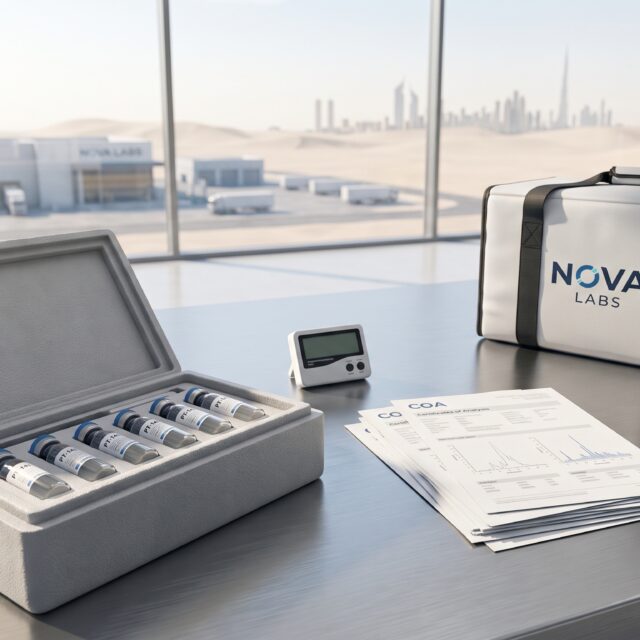
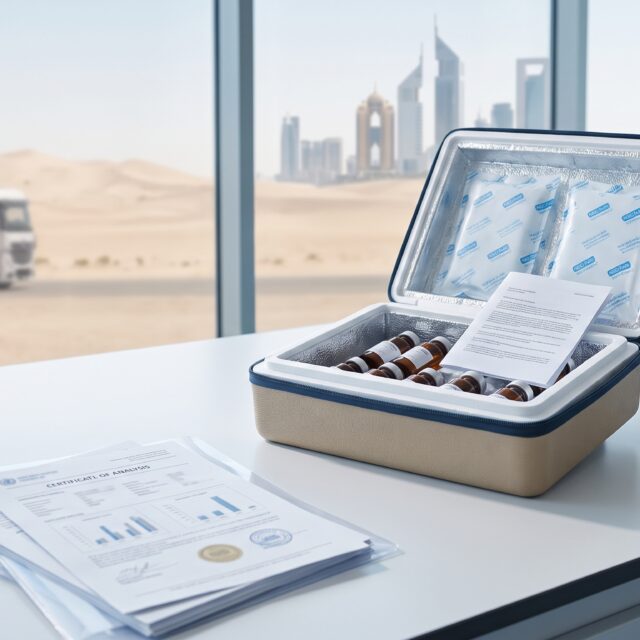
When you prepare to order CJC-1295 No DAC in Abu Dhabi, your first request should be the Certificate of Analysis (COA). A trustworthy supplier does not just claim “high quality”—they provide the data.
Here is what informed buyers look for:
- HPLC (High-Performance Liquid Chromatography): This report separates the components in the vial. You should look for a singular, distinct peak indicating a purity level of 99% or higher. Multiple peaks suggest impurities or degradation.
- Mass Spectrometry (MS): This confirms the molecular weight of the peptide. The tested mass must perfectly align with the theoretical mass of CJC-1295 No DAC.
- Batch-Specific Documentation: Generic, outdated COAs are a red flag. The documentation should match the specific batch or lot number you are purchasing.
- Bacterial Endotoxin Testing: Often conducted using the LAL (Limulus Amebocyte Lysate) assay, this confirms the sterility of the lyophilised powder—a critical factor for sensitive in vitro assays.
Locally, institutions like METS Lab in Musaffah, Abu Dhabi, are occasionally utilised by rigorous suppliers or independent researchers to conduct secondary validation on these exact parameters.
Why Cold-Chain Logistics Are Critical in the UAE
Even a verified, 99.9% pure peptide is useless if it degrades during transit. Lyophilised (freeze-dried) peptides possess a degree of temperature stability, but they are highly susceptible to thermal degradation when exposed to extreme heat. The GCC desert climate presents an immense challenge.
Many researchers initially attempt to source materials from overseas distributors. However, international shipments often face friction at UAE customs. A package held for clearance might sit in a non-temperature-controlled warehouse in Dubai or Abu Dhabi during the peak of summer, compromising the fragile peptide bonds before the package even clears customs.
This is why sourcing from a vendor with established local infrastructure is non-negotiable. Reputable regional suppliers bypass international import risks by holding stock locally. They utilise validated temperature-controlled packaging designed to maintain a stable environment of 2–8 degrees Celsius for 24 to 48 hours. When evaluating vendors, ask explicitly about their transit times and packaging materials. Opting for a supplier that offers rapid UAE next-day delivery is one of the easiest ways to mitigate environmental risks to your research materials.
Evaluating Support, Payment, and Stock Realities
Beyond documentation and shipping, the operational reliability of a CJC-1295 No DAC peptide supplier defines the buying experience. E-commerce in the UAE relies heavily on seamless, real-time communication and flexible payment structures.
Direct Support Channels
In the GCC, WhatsApp is not just a social tool; it is a primary business channel. High-intent buyers should look for suppliers offering direct WhatsApp support. This allows for real-time stock checks, immediate COA requests, and live order tracking. If a supplier only offers a slow-to-respond generic email form, they may lack the operational agility required for secure local dispatch.
Payment Confidence
Cash on Delivery (COD) remains a powerful trust signal in the UAE. While many researchers prefer secure credit card portals for institutional purchasing, a supplier’s willingness to offer COD demonstrates confidence in their local supply chain and delivery infrastructure. It guarantees that the buyer only parts with funds once the physical product is in hand.
Synergistic Research Pairings
In analytical settings, CJC-1295 No DAC is frequently evaluated in conjunction with other compounds. It is commonly paired with Ipamorelin in receptor binding assays to observe synergistic signalling pathways. A well-stocked supplier will carry these related compounds, allowing researchers to source comprehensive protocols from a single, verified origin point.
Ordering CJC-1295 No DAC from NOVA Labs
At NOVA Labs, we understand the specific friction points of sourcing research materials in the UAE. We bridge the gap between rigorous scientific standards and seamless local logistics.
When you order CJC-1295 No DAC through our portal, you are guaranteed full transparency. We provide clear access to batch-specific COAs, ensuring you have the HPLC and Mass Spectrometry data required to validate your purchase.
Furthermore, we have engineered our logistics for the UAE climate. Our local fulfilment hubs eliminate the risks of international customs delays. Every dispatch is handled via cold-chain protocols and backed by highly responsive WhatsApp support, ensuring your materials arrive promptly and structurally intact.
Conclusion
Securing high-quality research materials in the UAE does not have to be a gamble. By shifting focus away from marketing hype and toward operational realities, buyers can protect their investments. To successfully buy CJC-1295 No DAC in Abu Dhabi, prioritise suppliers that provide transparent, batch-specific COAs, operate with active local stock to avoid customs friction, and execute deliveries using strict cold-chain protocols.
Disclaimer: The products mentioned in this article are for research purposes only and are not intended for human consumption.
*
References
- Journal of Chromatography B. “Stability of lyophilized peptides under various environmental conditions.” (Analytical reference on peptide thermal degradation).
- METS Lab Abu Dhabi. “Analytical Services for Peptide Purity & Safety Testing in the UAE.”
- National Center for Biotechnology Information (NCBI). “Modified GRF (1-29) Structural Profiling and Receptor Affinity.”
- Emirates Authority for Standardization and Metrology (ESMA). “Cold Chain Logistics Requirements for Temperature-Sensitive Materials.”
- How to Choose a Reliable Peptide Supplier in UAE – CureCell Compounding Pharmacy
- CJC-1295 + Ipamorelin UAE – VaultLabs
- Track Your Peptide Order | AE Peptides UAE Dispatch
- Buy CJC-1295 Without DAC + Ipamorelin – Peptides Lab UAE
- CJC-1295 + Ipamorelin Protocol Dubai – UAE Peptide Clinic
- Peptide Testing Laboratory in UAE | Purity & Safety Testing – METS Lab Abu Dhabi
Frequently asked questions
Is a prescription required to buy CJC-1295 No DAC in Abu Dhabi?
For specialised in vitro laboratory research, a prescription is not required when purchasing from analytical suppliers. However, strictly therapeutic formulations sourced through clinical wellness centres for human application do require an active prescription and Emirates ID verification.
How can I verify the quality of a CJC-1295 No DAC peptide in Abu Dhabi?
Quality should be verified by requesting a batch-specific Certificate of Analysis (COA) from the supplier. This document must include High-Performance Liquid Chromatography (HPLC) data showing at least 99% purity and Mass Spectrometry (MS) confirming the compound's identity.
Why is cold-chain delivery important for peptides in the UAE?
Lyophilised peptides are susceptible to thermal degradation. Given the high temperatures in the GCC, cold-chain packaging (maintaining 2-8°C) prevents the fragile peptide bonds from breaking down during transit.
What is the difference between CJC-1295 with DAC and without DAC?
The primary difference lies in their molecular structure and half-life. CJC-1295 No DAC (Modified GRF 1-29) has a short half-life of approximately 30 minutes, whereas the addition of the Drug Affinity Complex (DAC) significantly extends its stability and action time in biological fluids.
Nova Labs buyer tools
Ready to verify stock, testing and delivery?
Use the product page and lab report section to check availability, documentation, delivery timing and support before placing an order.
- COA / test-report checks
- Abu Dhabi delivery context
- Cold-chain handling
- COD and card payment options
- WhatsApp support