



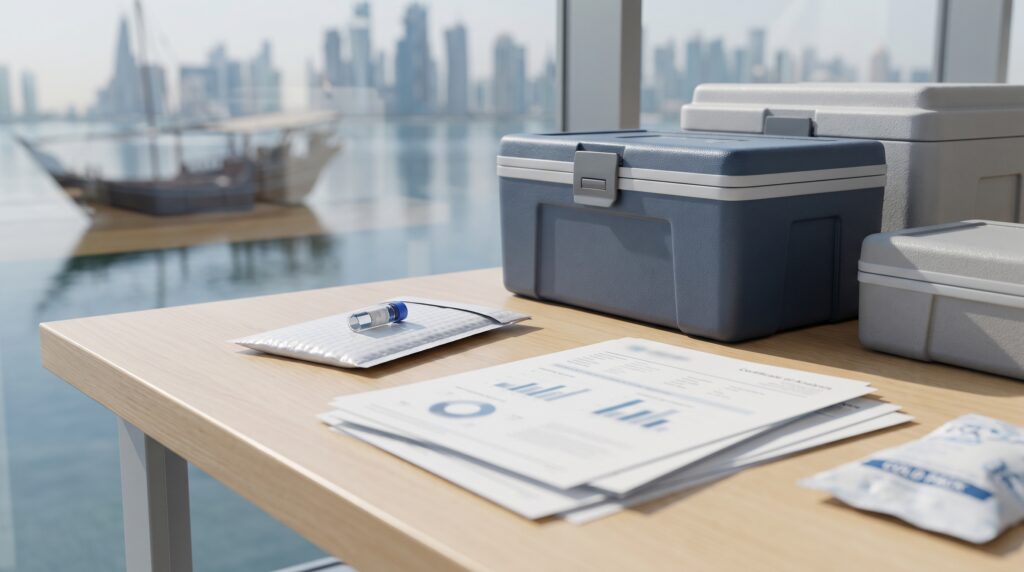
Navigating the Market to Buy DSIP in Bahrain
To buy DSIP in Bahrain for research, procurement staff must verify suppliers offering HPLC-tested purity over 99%, explicit Certificates of Analysis (COA), and robust cold-chain logistics. Ensure orders comply with NHRA import guidelines and GCC customs regulations to prevent costly delays at Manama ports.
Key Takeaways for Procuring DSIP in Bahrain
- Regulatory Compliance: All shipments must be clearly documented as “for laboratory research only” to align with Bahrain’s National Health Regulatory Authority (NHRA) guidelines.
- Mandatory Quality Proof: Never purchase without a batch-specific Certificate of Analysis (COA) detailing High-Performance Liquid Chromatography (HPLC) and Mass Spectrometry (MS) results.
- GCC Customs Impact: Expect standard GCC tariffs, including a 5% customs duty and Bahrain’s 10% VAT on shipments exceeding de minimis thresholds.
- Logistical Vulnerability: Peptides degrade rapidly in extreme Middle Eastern heat; sourcing from regional GCC hubs minimizes transit time and thermal exposure.
Sourcing high-quality laboratory materials in the GCC presents unique operational challenges. For research facilities, independent laboratories, and bio-investigators in Bahrain, procuring sensitive molecular compounds like Delta Sleep-Inducing Peptide (DSIP) requires a strict vetting process. Between the extreme regional heat that threatens peptide stability and the stringent import guidelines enforced by local health authorities, buyers cannot afford to rely on unverified international vendors who lack a regional presence.
This guide breaks down exactly what informed researchers need to evaluate before they order DSIP in Bahrain, from verifying chemical purity through third-party documentation to understanding the latest customs frameworks impacting inbound parcel deliveries.
Understanding DSIP in a Research Context
Delta Sleep-Inducing Peptide (DSIP) is a synthetic nonapeptide (a peptide consisting of nine distinct amino acids: Trp-Ala-Gly-Gly-Asp-Ala-Ser-Gly-Glu) that has garnered significant attention in laboratory research. Originally discovered in the 1970s, it is primarily studied in vitro and in controlled animal models for its potential role in sleep architecture—specifically its influence on slow-wave delta sleep—and its ability to modulate neuroendocrine stress responses.
It is critical to emphasize that inquiries related to DSIP peptide in Bahrain must be strictly commercial and investigational. In a laboratory setting, researchers evaluate its structural stability, receptor binding affinity, and behavior under various environmental stressors. To remain compliant with both local and international healthcare standards, trustworthy peptide distributors market these compounds exclusively for “laboratory research use only.” They do not make therapeutic claims, and responsible procurement teams must ensure that their handling and documentation reflect this non-medical, analytical intent. Any human use or in vivo administration outside of sanctioned clinical trials is strictly prohibited.
NHRA Regulations and GCC Customs Updates
When you buy DSIP in Bahrain, you are moving a specialized chemical across a highly regulated border. Bahrain’s National Health Regulatory Authority (NHRA) maintains rigorous oversight of all pharmaceutical and chemical imports. The objective is to prevent unapproved, misbranded, or mislabeled medical products from entering the public market.
To prevent shipments from being seized, delayed, or destroyed at customs, your selected DSIP supplier must provide accurate commercial invoices explicitly stating that the peptide is an investigational compound for research purposes only. Mislabeling a product or implying therapeutic human use can trigger immediate NHRA intervention and a permanent block on the receiver.
Furthermore, the logistics landscape has shifted with the implementation of updated GCC Common Customs laws. Customs authorities in Bahrain have enhanced their monitoring of valuation thresholds and import declarations on parcel shipments.
Key considerations for local buyers include:
- De Minimis Values: Parcels must be accurately valued. Undervaluing research materials to avoid taxes is a red flag that can result in heavy fines, confiscation, or laboratory audits.
- Taxes and Duties: For shipments exceeding personal or commercial threshold limits, expect standard GCC tariffs. This typically includes a 5% customs duty alongside Bahrain’s standard 10% VAT.
- Clear Documentation: Ensuring your supplier includes standard commercial invoices, packing lists, and Material Safety Data Sheets (MSDS) will drastically reduce customs friction at the King Fahd Causeway or Bahrain International Airport.
Essential Checks Before You Order DSIP in Bahrain
Not all peptides are synthesized equally. The synthesis process for nonapeptides can yield impurities, truncated amino acid chains, or heavy metal contamination if the manufacturing facility does not practice rigorous quality control. Before finalizing a purchase, laboratory buyers must demand verifiable proof of product integrity.
Verifying the Certificate of Analysis (COA)
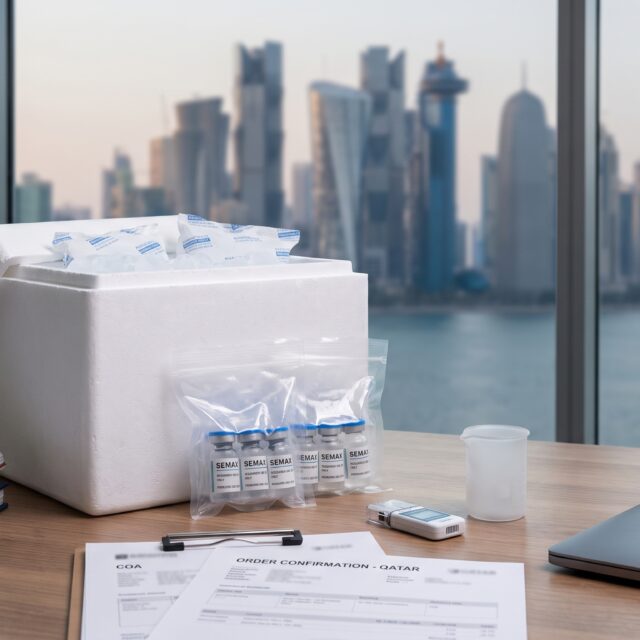
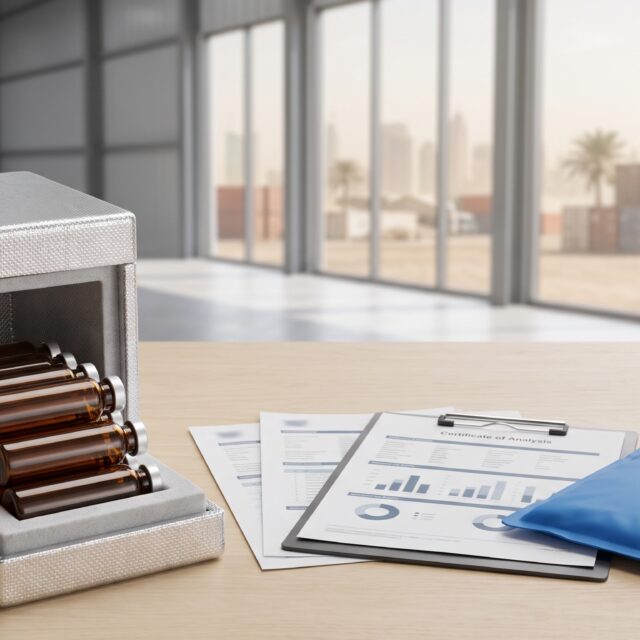
The cornerstone of peptide procurement is the Certificate of Analysis (COA). A legitimate supplier will proactively offer this document for every specific batch they sell, not just a generic, years-old document. When reviewing a COA for DSIP, look for two critical tests:
- High-Performance Liquid Chromatography (HPLC): This analytical technique separates the components of the synthesized batch to confirm the purity level. For research applications requiring precise data reproducibility, a purity threshold of 99% or higher is the industry standard. The HPLC chromatogram should show one sharp, distinct peak, indicating that impurities have been successfully filtered out.
- Mass Spectrometry (MS): This verifies the exact molecular weight of the peptide. DSIP has a molecular weight of approximately 848.8 g/mol. The MS report confirms that the amino acid sequence is correct and has not been truncated or incorrectly assembled during the synthesis process.
If a vendor obscures their testing data, relies on outdated reports, or refuses to provide batch-specific documentation, consider it a major operational red flag and move to a more transparent supplier.
Evaluating Formats: Lyophilized Vials vs. Alternatives
DSIP is generally supplied in distinct formats depending on the research application. The most common and stable format is the lyophilized (freeze-dried) powder vial, typically available in 2mg, 5mg, or 10mg quantities. Lyophilized powder offers the best long-term stability—often remaining stable for years when stored correctly at -20 degrees Celsius—and requires reconstitution with sterile bacteriostatic water immediately prior to lab utilization.
Some international markets also supply pre-mixed liquid solutions or intranasal sprays. While these bypass the need for physical reconstitution by the researcher, they degrade significantly faster in transit. Liquid peptides are highly susceptible to agitation and heat damage, making them a very risky import for GCC-based laboratories unless handled with exceptional logistical care and constant refrigeration.
Overcoming the GCC Heat: Cold-Chain Logistics
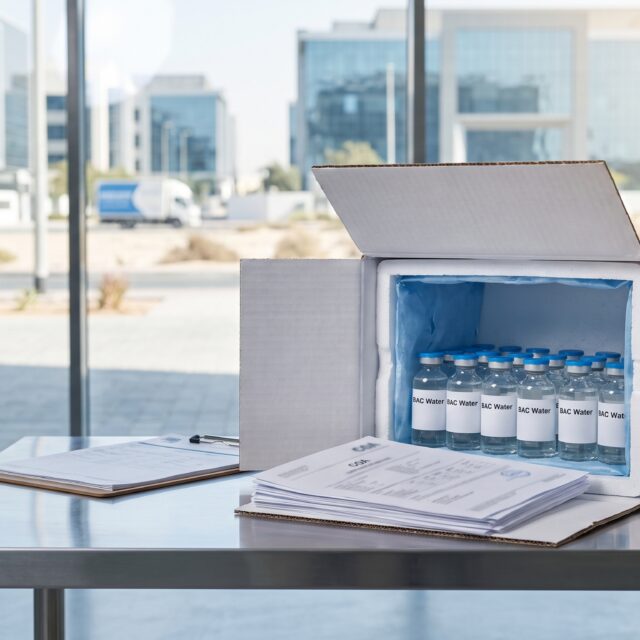
The climate in Bahrain poses a direct threat to peptide integrity. Peptides are highly temperature-sensitive molecular structures. While lyophilized powder is moderately stable at room temperature for short durations (typically 2-3 weeks without severe degradation), prolonged exposure to the intense heat of the Middle East—especially while sitting in uncontrolled customs warehouses or delivery vans—can cause rapid hydrolysis, oxidation, and loss of efficacy.
Ideally, un-reconstituted DSIP should be stored below -15 degrees Celsius. When it comes to shipping to Bahrain, time and temperature control are everything. Relying on slow international shipping from overseas that takes weeks to arrive drastically increases the risk of thermal damage.
For GCC researchers needing urgent supplies, sourcing from regional hubs that offer reliable GCC peptide dispatch can mitigate thermal degradation risks. By leveraging suppliers with inventory positioned within the GCC (such as in the UAE), Bahraini buyers can ensure transit times are cut down to a matter of days. This regional proximity drastically reduces the window of heat exposure, ensuring the compounds arrive in pristine condition for immediate freezing or analysis.
Streamlining Procurement: Payment and Local Support
International procurement often introduces operational friction via complex wire transfers, hidden exchange fees, or unresponsive customer service across completely different time zones. An ideal regional supplier understands the local GCC ecosystem and caters to the needs of Middle Eastern laboratories.
When evaluating where to place your order, look for suppliers that offer flexible payment methods. The ability to use standard credit cards through secure local gateways, rather than navigating risky offshore wire transfers, adds a layer of buyer protection.
Furthermore, having a direct line to a supplier’s support team—especially one operating in the GST (Gulf Standard Time) or AST (Arabia Standard Time) zones—is invaluable. If a package requires secondary customs clearance by the NHRA, or if a researcher requires a sudden clarification on a batch number, immediate communication is necessary.
Final Verification for Informed Buyers
Acquiring DSIP in Bahrain does not have to be a blind risk. By treating the purchase as a strict commercial procurement exercise, research teams can bypass subpar vendors and secure high-purity compounds. Always prioritize suppliers that offer absolute transparency through up-to-date COAs, understand the regulatory nuance of NHRA and GCC customs, and have the localized logistical power to bypass thermal degradation.
By focusing on scientific verification and regional delivery expertise, your laboratory can maintain consistent, reliable access to the materials necessary for advanced analytical study. When your facility is ready to evaluate a comprehensive catalogue of research compounds, browse the full peptide collection to review independent testing documentation and current regional stock availability.
References
- National Health Regulatory Authority (NHRA) Bahrain: Guidelines on Pharmaceutical, Chemical, and Investigational Imports.
- Unified Customs Law for GCC States: Regulations regarding commercial chemical imports, documentation, and tariffs.
- Coin, I., Beyermann, M., & Bienert, M. (2007). Solid-phase peptide synthesis: from standard procedures to the synthesis of difficult sequences. Nature Protocols, 2(12), 3247-3256. (Reference for HPLC/MS verification standards in synthesized peptides).
Disclaimer: The products and information mentioned in this article are strictly for laboratory and research purposes only. They are not intended for human consumption, diagnostic, or therapeutic use. Buyers must comply with all local laws and institutional protocols regarding the handling of investigational compounds.
- Is DSIP Legal? Status in 159 Countries (2026) | peptide.law
- Import unapproved medicine into Bahrain – Everyone.org
- Bahrain – Prohibited and Restricted Imports – International Trade Administration
- Pharmaceutical Serialization in the GCC: Spotlight on Bahrain – Cosmotrace
- What Bahrain’s Decree No. 23/2026 (GCC Customs Law Amendments) Means for Businesses, Compliance Checklist for Importers & Sellers
- Buy DSIP UAE from PharmaLabGlobal
- Buy DSIP Nasal Spray 10mg | Research Peptide – MyGLP1Store
- Buy DSIP Nasal Spray — Best Proven 2026 | PSPeptides
Frequently asked questions
Is it legal to buy DSIP in Bahrain?
Yes, purchasing DSIP in Bahrain is permitted strictly for laboratory research and investigational purposes. Buyers must comply with NHRA regulations and ensure imports are clearly documented as research chemicals, not intended for unapproved human medical use.
What should I look for in a DSIP supplier shipping to Bahrain?
A reputable DSIP supplier serving Bahrain should provide independent HPLC and Mass Spectrometry testing reports (COA) proving at least 99% purity. They should also operate within the GCC or use expedited regional shipping to protect the peptide from degradation caused by prolonged heat exposure.
How do GCC customs rules affect peptide orders to Bahrain?
Under standard GCC customs laws, research peptide imports are subject to careful valuation. Orders exceeding standard threshold limits will incur a 5% customs duty alongside Bahrain's 10% VAT, and shipments must be accompanied by proper commercial invoices and research-use documentation.
Does DSIP require refrigerated shipping to Bahrain?
While lyophilized peptides like DSIP can survive at room temperature for short periods, they are sensitive to prolonged extreme heat. Expedited shipping from regional hubs minimizes this exposure. Once received, un-reconstituted vials must be stored in a freezer (typically -20°C) to maintain their structural integrity.
Nova Labs buyer tools
Ready to verify stock, testing and delivery?
Use the product page and lab report section to check availability, documentation, delivery timing and support before placing an order.
- COA / test-report checks
- Bahrain delivery context
- Cold-chain handling
- COD and card payment options
- WhatsApp support