
How to Buy DSIP in Oman
To securely buy DSIP in Oman, researchers must prioritize suppliers utilizing GCC-based cold-chain logistics from UAE hubs to prevent thermal degradation. Procurement requires third-party HPLC analytical reports proving 99%+ purity and strict ‘Research Use Only’ documentation to ensure rapid, compliant clearance through the Bayan Customs Portal.
Key Takeaways for Oman Procurement
- Verify Purity via COA: Always demand third-party High-Performance Liquid Chromatography (HPLC) and Mass Spectrometry (MS) testing to ensure 99%+ compound purity.
- Leverage Regional Logistics: Utilize suppliers operating from UAE hubs to facilitate rapid cross-border transit, bypassing the delays of global shipping.
- Ensure Thermal Integrity: Confirm the use of insulated, cold-chain packaging designed to withstand Oman’s severe summer temperatures.
- Master Customs Compliance: Ensure all commercial invoices clearly declare the peptide as “Research Use Only” to avoid friction on the Bayan Customs Portal.
Procuring high-quality research peptides in the GCC requires overcoming several distinct regional hurdles. The decision to source Delta Sleep-Inducing Peptide (DSIP) is not as simple as placing a standard online order. DSIP is a highly specialized nonapeptide requiring stringent structural integrity to yield accurate in-vitro data. Procurement teams face a unique combination of extreme local climate conditions, rigorous pharmaceutical import regulations, and a marketplace flooded with opaque suppliers.
This comprehensive guide breaks down exactly how informed buyers evaluate suppliers, what to look for on a Certificate of Analysis (COA), and how regional GCC logistics successfully bypass the friction points commonly associated with importing research compounds into the Sultanate.
Essential Sourcing Checks: Purity and COA Verification
When evaluating a DSIP supplier that Omani researchers can rely on, the first and most critical gatekeeper is analytical transparency. Minor synthesis errors, heavy metal contamination, or peptide degradation can completely invalidate a costly research project. A compromised vial means compromised data.
Before you order DSIP, Oman-based laboratories must demand to see a valid, batch-specific Certificate of Analysis (COA). Independent testing by recognized analytical laboratories is the absolute gold standard in the peptide industry. In-house testing provided by the supplier themselves carries an inherent conflict of interest and should be heavily scrutinized.
What a Valid DSIP COA Should Display
- HPLC (High-Performance Liquid Chromatography): This analytical technique separates, identifies, and quantifies each component in the mixture. It measures the absolute purity of the peptide compound. A reputable DSIP supplier will provide documentation proving at least 99% purity. When reviewing the HPLC chromatogram, you should see one sharp, distinct peak. Any report showing lower purity, heavily blurred peaks, or multiple secondary peaks indicates a substandard synthesis process with leftover truncations or impurities.
- MS (Mass Spectrometry): Mass spectrometry verifies the molecular weight of the compound to guarantee identity. For DSIP (sequence: Trp-Ala-Gly-Gly-Asp-Ala-Ser-Gly-Glu), the analytical results (m/z ratio) must precisely match the theoretical molecular mass of the peptide (approximately 849.9 g/mol). This proves that the exact compound advertised is what resides in the vial, eliminating the risk of receiving mislabeled or substituted compounds.
- Batch Tracking: Generic, outdated, or heavily redacted COAs are a major red flag in the research chemical industry. The batch or lot number printed on your received physical vial must perfectly match the batch number listed on the digital or printed analytical report provided by the supplier.
Suppliers that hide their COAs, rely strictly on in-house testing without third-party validation, or refuse to answer technical questions about their synthesis and batch tracking protocols should be avoided entirely.
Beating the Omani Heat: Cold-Chain Logistics and UAE Hubs
One of the most profound challenges when attempting to import research peptides into Oman is the environment itself. Omani summer temperatures frequently exceed 45°C (113°F). Peptides are inherently fragile molecular structures; when exposed to intense heat for prolonged periods, the bonds between amino acids can degrade, rendering the compound useless for precise laboratory applications.
Most DSIP is shipped as a lyophilized (freeze-dried) powder. While the lyophilization process vastly improves stability compared to liquid solutions, exposing these vials to the extreme heat of a non-refrigerated Omani shipping warehouse or airport tarmac for days or weeks will still cause catastrophic degradation.
The Risk of International Transit Delays
When purchasing directly from Western suppliers, packages often sit in international routing hubs or un-airconditioned holding facilities while awaiting customs clearance. This period, known as demurrage, is the most dangerous phase of procurement. This is when the thermal destruction of delicate research compounds typically occurs, resulting in dead vials arriving at the laboratory.
The GCC Regional Advantage
To combat this, informed Omani procurement teams prioritize suppliers with established GCC-based regional fulfillment infrastructure, particularly in Dubai. Because international transit causes unpredictable customs holds, leveraging a supplier with localized inventory ensures rapid cross-border movement.
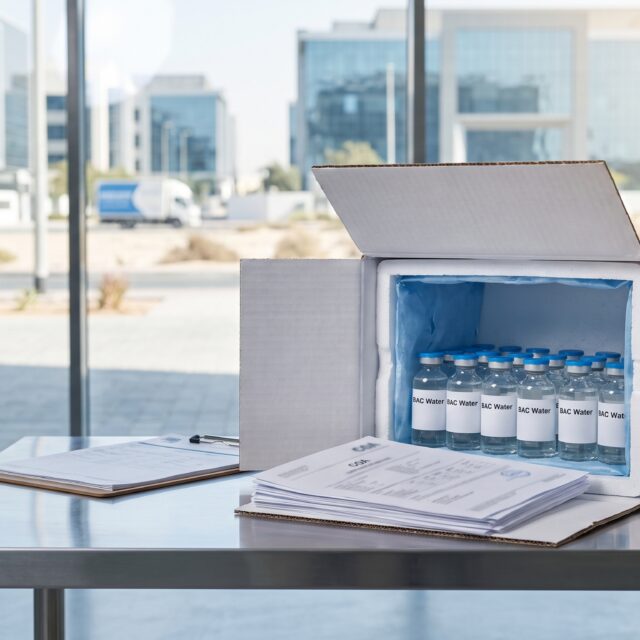
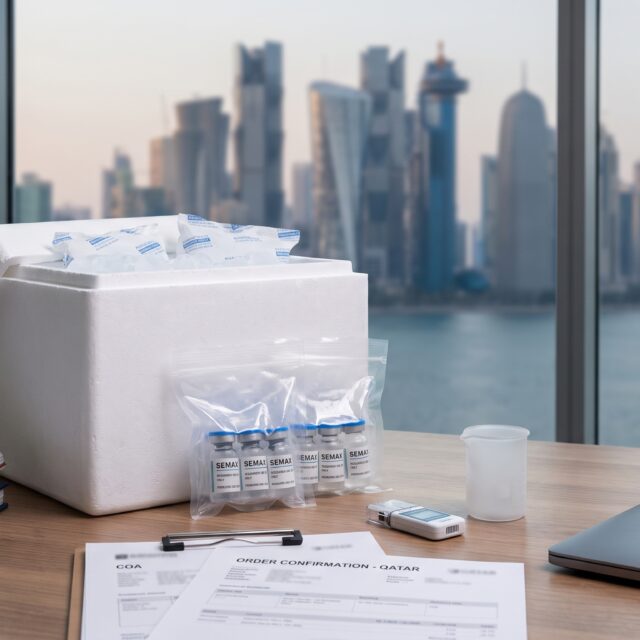
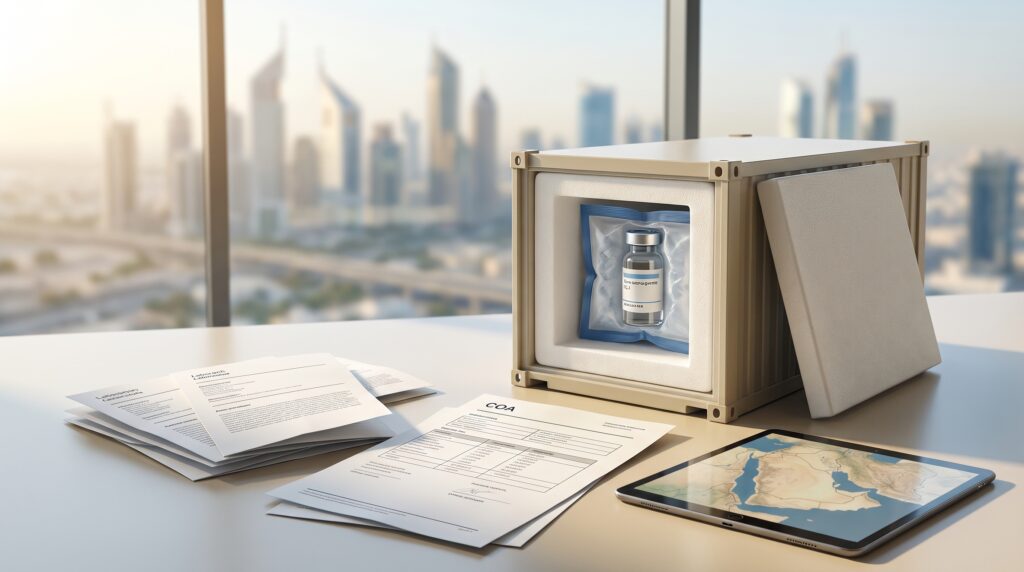
By taking advantage of UAE next-day delivery networks, suppliers can rapidly route shipments directly into Muscat, Salalah, and Sohar. This shortens the last-mile transit time from weeks to mere days. Furthermore, professional suppliers utilize insulated, temperature-controlled packaging with phase-change cooling materials. This strict adherence to cold-chain logistics ensures that the 2-8°C optimal environment is properly maintained, ensuring the DSIP arrives in perfect condition for long-term laboratory storage.
Customs Compliance: The Bayan Portal and ‘RUO’ Designation
Understanding the regulatory landscape is non-negotiable for Omani researchers. Oman’s Ministry of Health (MOH) and the Royal Oman Police (ROP) Customs strictly regulate the import of pharmaceutical, chemical, and biological products under Royal Decree 35/2015.
All international commercial shipments entering Oman are processed through the Bayan Customs Portal—an advanced electronic single-window system. If a package containing peptides is mislabeled, poorly documented, or mistakenly declared as a medical or therapeutic product, the system will trigger an immediate suspension. The ROP Customs will subsequently require the importer to produce a named-patient prescription, an MOH registration certificate, or a registered pharmacy agent license. Because research laboratories, academic institutions, and private analytical buyers typically do not possess these specialized pharmaceutical licenses, the shipment will ultimately be rejected or destroyed.
The Importance of ‘Research Use Only’ Documentation
To legally and smoothly import DSIP, Oman customs regulations require a strict demarcation separating the shipment from consumer medicine. The compounds must be clearly labeled and invoiced as “Research Use Only” (RUO) or “For In-Vitro Laboratory Use.”
Professional suppliers who understand Middle Eastern logistics ensure that the commercial invoice, the shipping manifest, the Harmonized System (HS) codes, and the actual vial labeling all consistently reflect this RUO status. This precise documentation helps customs officials correctly categorize the import as a laboratory reagent rather than a regulated pharmaceutical. By providing this clarity, researchers significantly reduce clearance times on the Bayan portal and entirely avoid the risk of confiscation.
Evaluating a Reliable DSIP Supplier for Oman
Beyond absolute purity and protective shipping protocols, the daily operational reliability of a supplier dictates the overall procurement experience.
Localized Support and Real-Time Communication
Does the supplier offer immediate support via channels popular in the GCC, such as WhatsApp or dedicated regional account managers? If a package encounters a routine inspection delay at an Omani sorting center, having a responsive supplier who can immediately interface with the local courier is invaluable. Furthermore, ensure your chosen supplier actually holds physical inventory in regional GCC hubs. Drop-shippers who claim regional presence but actually dispatch from overseas will expose your research materials to the very thermal risks you are trying to avoid.
Payment Flexibility and Security
International credit card processors frequently flag transactions involving research chemicals, often resulting in declined payments and delayed research timelines. Suppliers who offer localized, flexible payment methods—including secure digital payment links, cryptocurrency options for absolute privacy, or direct bank transfers within the GCC—demonstrate a mature commitment to the regional market.
If you are currently evaluating your procurement options and need to verify current local stock levels, review third-party analytical reports, or check shipping timelines for the Sultanate, you can explore the available verified research inventory in our shop.
The Bottom Line on Procuring DSIP
Successfully sourcing DSIP in Oman requires moving past marketing claims and focusing on hard operational data. The right supplier will readily provide third-party HPLC and MS testing from reputable analytical labs to prove absolute compound purity. They will understand the severe threat of the Omani summer heat and utilize GCC-based cold-chain logistics from UAE hubs to protect the peptide’s molecular integrity. Finally, they will ensure all shipping documentation clearly designates the manifest for “Research Use Only” to facilitate rapid, friction-free clearance through the Bayan Customs Portal.
Disclaimer: The products mentioned in this article are provided strictly for in-vitro laboratory research purposes only. They are not intended for human consumption, therapeutic use, self-administration, or diagnostic purposes. Always adhere to your institutional safety guidelines and local regulations when handling research chemicals.
References
- Ministry of Health (MOH) Oman. (2022). Guidelines for the Importation of Pharmaceutical and Chemical Products under Royal Decree 35/2015.
- Directorate General of Customs, Royal Oman Police. (2023). Bayan Customs Portal Procedures for Chemical and Laboratory Reagent Imports.
- World Customs Organization. (2022). Harmonized System (HS) Classification for Laboratory Reagents and Research Chemicals.
- International Journal of Peptide Research and Therapeutics. (2021). Thermal Stability and Degradation Kinetics of Lyophilized Nonapeptides in Extreme Climates.
- Oman Cold Chain Peptide Delivery Guide | Transport & – NOVA Labs
- Buy SS-31 in Oman: Purity, COA & GCC Delivery Guide – NOVA Labs
- Oman MOH Pharmaceutical Registration & Import Rules | 2026 Guide – Hamadco
- Directorate General of Customs – Permit to Import Chemical and Cosmetic Products
- DSIP-5 Peptide | Research Grade
Frequently asked questions
Is it legal to import DSIP to Oman?
Yes, provided the DSIP is strictly documented and labeled as 'Research Use Only' for in-vitro laboratory use. Shipments incorrectly declared as pharmaceuticals without an MOH license face rejection at Omani customs on the Bayan portal.
Can I get DSIP shipped from the UAE to Oman?
Yes, utilizing suppliers with fulfillment hubs in the UAE is the optimal way to procure peptides for Oman. It enables rapid cross-border transit, minimizing customs delays and avoiding the heat exposure common with international shipping.
How is DSIP shipped to Oman without degrading in the heat?
Reputable suppliers utilize GCC-based regional fulfillment and temperature-controlled, insulated packaging to maintain a strict cold chain. This significantly reduces transit time and protects the lyophilized compound from Omani summer temperatures.
What is a COA and why is it important for DSIP?
A Certificate of Analysis (COA) is a laboratory report proving the identity and purity of the peptide. Buyers should demand batch-specific, third-party HPLC (measuring purity) and Mass Spectrometry (measuring molecular weight) testing showing 99%+ purity before ordering.
Why do shipments get delayed at the Bayan Customs Portal?
Delays often occur if commercial invoices lack the proper 'Research Use Only' phrasing or use incorrect HS codes, causing customs officials to flag the package as an unregistered medical import requiring specialized MOH pharmacy licenses.
Does DSIP come as a liquid or a powder?
Research-grade DSIP is supplied as a lyophilized (freeze-dried) powder to maximize its molecular stability during transit. It requires careful reconstitution with bacteriostatic water in a sterile laboratory environment prior to conducting in-vitro research.
Nova Labs buyer tools
Ready to verify stock, testing and delivery?
Use the product page and lab report section to check availability, documentation, delivery timing and support before placing an order.
- COA / test-report checks
- Oman delivery context
- Cold-chain handling
- COD and card payment options
- WhatsApp support