

Acquiring delicate biochemicals in the Gulf region presents a unique set of logistical and regulatory challenges. For procurement officers and independent scientists seeking to buy PT-141 in Kuwait, the process goes far beyond simply finding a vendor with stock. It requires navigating extreme environmental conditions, managing complex customs protocols, and verifying the absolute molecular authenticity of the compound before it ever reaches the laboratory.
Whether evaluating a new vendor or transitioning away from slow international aggregators, understanding the mechanics of peptide procurement is vital. This guide details how informed GCC buyers evaluate a PT-141 supplier in Kuwait, focusing on the critical pillars of third-party testing, cold-chain logistics, and regional compliance.
Where to Buy PT-141 Kuwait: Sourcing Authentic Peptides
To safely buy PT-141 Kuwait, researchers must prioritise regional suppliers offering 48-to-72 hour GCC shipping, active cold-chain thermal packaging, and independent Certificate of Analysis (COA) verification. Sourcing locally from UAE hubs bypasses international transit delays, preventing heat degradation and minimising customs friction.
Historically, buyers relied on overseas suppliers or broad e-commerce aggregators. However, transcontinental shipping introduces high risks of product degradation due to extended transit times. Today, the most reliable route for securing this specific peptide is through specialised regional distributors, such as NOVA Labs, operating out of advanced logistics hubs in Dubai. This regional proximity ensures that sensitive compounds spend the minimum possible time in transit.
Buyer Checklist: What Matters Most When Ordering
Before ordering PT-141, you must be confident in what you are purchasing. Informed buyers rely on verifiable data, not marketing claims. Use this checklist to vet your supplier:
- Current, Batch-Specific COA: Ensure the supplier provides a Certificate of Analysis for the exact batch currently in stock.
- Independent Laboratory Testing: The COA must be issued by a reputable, independent analytical laboratory, such as Janoshik Analytical or MZ Biolabs.
- High-Resolution Mass Spectrometry (MS): The identity of the peptide must be confirmed by its precise molecular weight (1025.18 g/mol) to rule out structural substitutes.
- HPLC Purity Threshold: High-Performance Liquid Chromatography must confirm a purity level of 99% or greater.
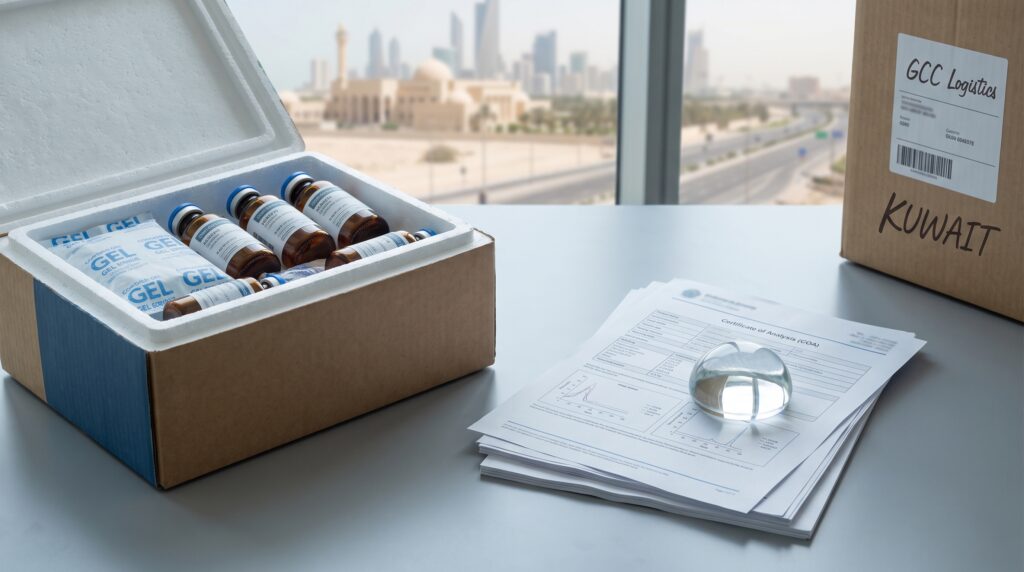
- Thermal Protection Logistics: The supplier must explicitly state their use of active cold-chain packaging (EPS insulated boxes and clinical gel packs) during transit.
- Regional Dispatch: Confirm the product ships from a GCC hub (like the UAE) rather than North America or China, to guarantee swift delivery windows.
Purity and Identity: Analysing the COA
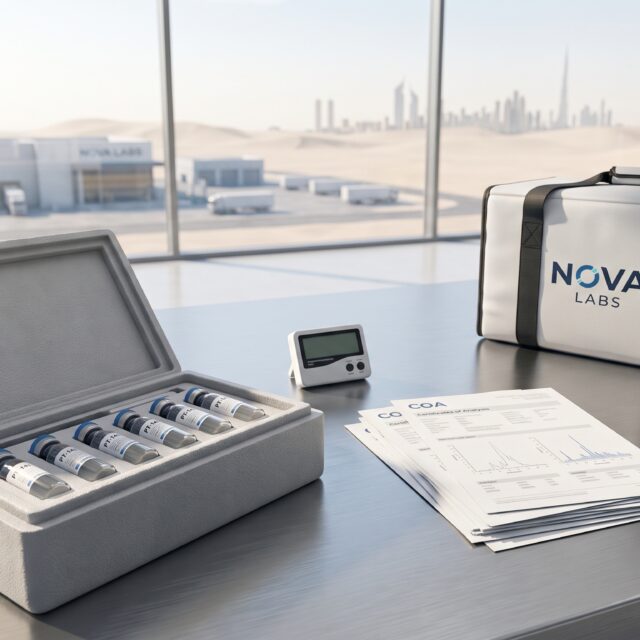
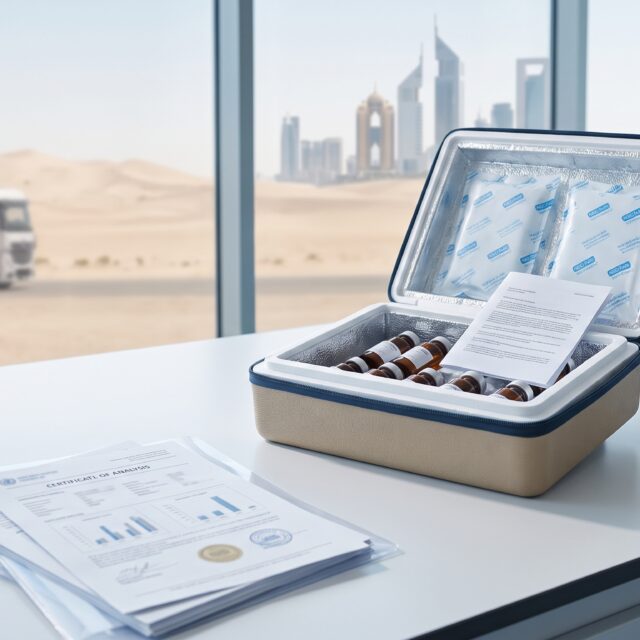
When evaluating a peptide supplier, the Certificate of Analysis is the single most important document you can request. It acts as the biochemical passport for the compound, proving both its identity and its purity.
PT-141 (often referred to in literature as Bremelanotide) is a synthetic cyclic heptapeptide. Crucially, it is structurally very similar to Melanotan II, differing by only a single Dalton at the C-terminus. Because of this minor structural variance, lesser-quality manufacturers occasionally confuse or mislabel the two compounds.
This is where High-Resolution Mass Spectrometry (MS) becomes non-negotiable. MS verifies the exact molecular weight. For PT-141, the molecular weight must read exactly 1025.18 g/mol. If the MS results show a different figure, the batch is compromised.
Alongside identity, purity must be established via High-Performance Liquid Chromatography (HPLC). A stringent supplier will discard any batch that falls below 99% purity. High purity ensures the lyophilised powder is free from synthesis byproducts, truncated peptide chains, and residual solvents, which is critical for maintaining consistency in rigorous research environments.
The Logistics Shield: Protecting Peptides from Kuwait’s Heat
Kuwait’s summer temperatures frequently exceed 50°C. For delicate lyophilised powders, extreme heat in airport cargo holds or un-air-conditioned delivery vans is a primary threat. Exposure to high temperatures accelerates hydrolysis and oxidation, degrading the peptide chains and rendering the compound useless for research.
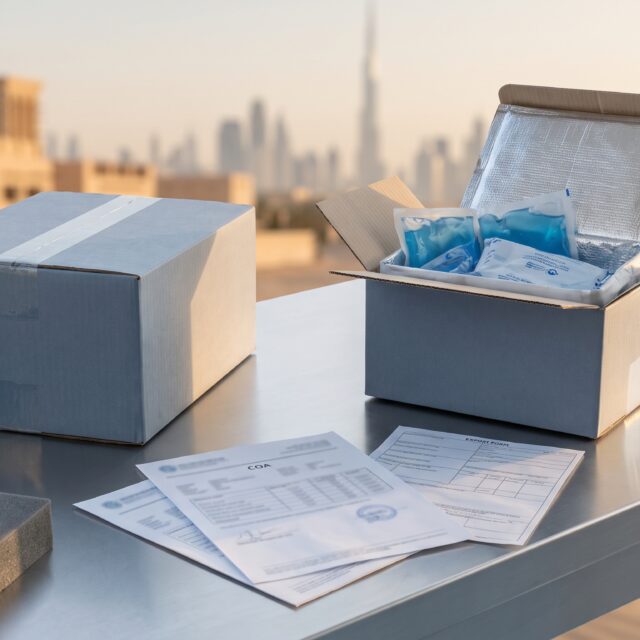
To mitigate these environmental risks, premium suppliers employ a strict logistics shield. This involves packing vials inside EPS (Expanded Polystyrene) insulated thermal boxes accompanied by clinical-grade gel ice packs. This active cold-chain packaging maintains a stable internal temperature during the critical transit window.
However, thermal packaging is only effective if the transit time is short. This is the primary advantage of sourcing from a UAE-based vendor. By utilising rapid GCC shipping networks, vendors can reduce the delivery window from a risky two weeks (common with US or UK suppliers) down to a highly secure 48-to-72 hour timeframe. This rapid transit ensures the cold-chain integrity holds until the package arrives at your facility.
Navigating KUCAS and Kuwait Customs for Lab-Grade Peptides
Another significant hurdle when purchasing biochemicals in Kuwait involves local regulatory frameworks. The importation of peptides is scrutinised by the Directorate General of Customs under the Kuwait Conformity Assessment Scheme (KUCAS), overseen by the Public Authority for Industry.
Shipments that lack precise HS codes or accurate commercial invoices are routinely delayed or seized. More importantly, if a compound is falsely declared for medical, therapeutic, or consumer use, it immediately flags the shipment for a Ministry of Health ‘Health Release’ (الافراج الصحي). For private researchers or corporate procurement teams, obtaining this release for an unregistered peptide is virtually impossible.
Therefore, a competent supplier will always structure commercial documentation to explicitly state that the contents are ‘for laboratory research use only.’ By maintaining strict compliance with research-use classifications and avoiding non-compliant therapeutic assertions, shipments pass through customs smoothly and efficiently.
Payment, Support, and Supplier Evaluation
Beyond scientific testing and logistics, the commercial experience matters. Localised financial convenience and responsive customer support are strong indicators of a reliable supplier.
International platforms often force buyers to deal with complex bank transfers or unreliable card processors, leaving them with little recourse if a shipment is lost. In contrast, regional vendors tuned to the GCC market understand the need for trust and flexibility. Look for suppliers offering secure 3D-Secure card processing, familiar local payment gateways, or Cash on Delivery (COD) options where applicable.
Furthermore, direct communication is invaluable. The ability to verify stock availability or track a time-sensitive delivery via a dedicated WhatsApp support channel provides immense peace of mind. Prioritise suppliers who pair their analytical transparency with accessible, locally aware operational support.
Advancing Your Procurement Strategy
For Kuwait-based researchers, mitigating the risks of product degradation, substitution, and customs delays requires a strategic approach to procurement. By demanding independent HPLC and MS testing, insisting on active cold-chain packaging, and leveraging fast UAE-to-Kuwait transit times, you can ensure the integrity of your research materials.
To secure a rigorously tested, high-purity compound backed by transparent documentation and GCC-optimised logistics, order PT-141 through NOVA Labs to support your laboratory’s ongoing requirements.
Disclaimer: The products mentioned in this article are strictly for laboratory research purposes only and are not intended for human consumption or therapeutic use.
*
References:
- NOVA Labs Internal Market Research: Navigating GCC Logistics and KUCAS Compliance (2024).
- Janoshik Analytical & MZ Biolabs: Standardised HPLC and MS Testing Protocols for Cyclic Peptides.
- Public Authority for Industry (Kuwait): KUCAS Import Guidelines for Biochemicals.
References
- Buy SS-31 Kuwait: Sourcing, Purity & Cold-Chain Delivery – NOVA Labs
- PT-141 | 99%+ Purity, Third-Party Tested | RegenMed
- PT-141 PT-CA-26A-01 COA — 99.9% Purity | Eppix Labs
- PT 141 300 MCG Spray 20MG in Kuwait | Whizz Aqueous Solutions
Frequently asked questions
Is PT-141 legal to buy in Kuwait?
Yes, PT-141 can be legally purchased and imported into Kuwait strictly for laboratory and research purposes. It must not be imported or marketed for human consumption or medical use to comply with Ministry of Health regulations.
How do you verify the purity of PT-141?
Purity should be verified by requesting a batch-specific Certificate of Analysis (COA) from an independent, third-party laboratory. This document should show High-Performance Liquid Chromatography (HPLC) results proving a purity of 99% or higher.
Why is Mass Spectrometry important for PT-141?
Mass Spectrometry (MS) confirms the exact molecular weight of the compound, which for PT-141 is 1025.18 g/mol. This is crucial to verify identity and ensure it has not been confused with structurally similar peptides like Melanotan II.
How long does shipping to Kuwait take from the UAE?
When sourcing from a regional hub like Dubai, shipping to Kuwait typically takes between 48 to 72 hours. This rapid transit is essential to maintain cold-chain integrity and prevent heat degradation.
How should lyophilised PT-141 be stored upon arrival?
Upon receiving the shipment, unmixed, lyophilised PT-141 powder should immediately be stored in a freezer at -20°C to ensure long-term stability and preserve the integrity of the peptide bonds.
Nova Labs buyer tools
Ready to verify stock, testing and delivery?
Use the product page and lab report section to check availability, documentation, delivery timing and support before placing an order.
- COA / test-report checks
- Kuwait delivery context
- Cold-chain handling
- COD and card payment options
- WhatsApp support