
How to Securely Buy Semax in Saudi Arabia
When looking to buy semax saudi arabia, researchers must prioritize regional suppliers offering lyophilized peptide powder to prevent heat degradation. Sourcing from a UAE-based hub ensures rapid 4-5 day delivery, bypassing prolonged international customs delays while maintaining stability and verifying purity through third-party HPLC analysis.
Procuring high-grade research materials in the Gulf Cooperation Council (GCC) presents a unique set of challenges. High ambient temperatures, strict customs regulations, and a marketplace flooded with opaque suppliers mean that researchers cannot simply place an order and hope for the best. For those investigating the cognitive and neurogenic properties of Semax in laboratory settings, securing a stable, verified product is the foundation of any valid research protocol.
Whether you are managing procurement for an institutional laboratory or sourcing materials for independent analysis, evaluating a Semax supplier in Saudi Arabia requires a thorough understanding of regional logistics. This guide outlines exactly how to navigate ZATCA customs, verify chemical purity, and ensure your peptides arrive with their molecular integrity intact.
Key Buyer Checklist for Saudi Arabian Researchers
Before you order Semax in Saudi Arabia, use this scannable checklist to evaluate potential suppliers. A failure on any of these points can result in degraded compounds, seized shipments, or compromised research data.
- Product Format: Ensure the Semax is sold as a lyophilized (freeze-dried) powder. Pre-mixed liquid solutions degrade rapidly during transit in warm climates.
- Testing Visibility: Look for verifiable, cryptographically secure third-party testing (such as Janoshik HPLC/MS) rather than self-published or static PDF certificates.
- Logistics Origin: Prioritize suppliers shipping from within the GCC (e.g., the UAE). International shipments from the US or EU often face 10- to 14-day customs delays.
- Regulatory Compliance: The supplier must properly declare the compound for “in-vitro laboratory research” to comply with Saudi Food and Drug Authority (SFDA) and ZATCA regulations.
- Payment Flexibility: Reputable regional suppliers should offer secure checkout options, local payment gateways, or stable financial avenues for streamlined B2B procurement.
The Thermal Integrity Challenge: Lyophilized vs. Pre-Mixed Liquid
The single most significant threat to peptide stability during transit to the Kingdom of Saudi Arabia is ambient heat. During the summer months, temperatures routinely exceed 45°C. When exposed to high temperatures, peptides suspended in liquid undergo rapid hydrolysis—a chemical process where water molecules break the peptide bonds, destroying the compound’s structure.
Many overseas vendors offer pre-mixed Semax nasal sprays or liquid vials, marketing them as convenient. However, unless these liquids are transported in a strict, continuous cold chain from the moment they leave the facility to the moment they arrive at your laboratory, they will degrade. A liquid peptide sitting in a Riyadh sorting facility for even 48 hours at room temperature will lose a significant percentage of its active compound.
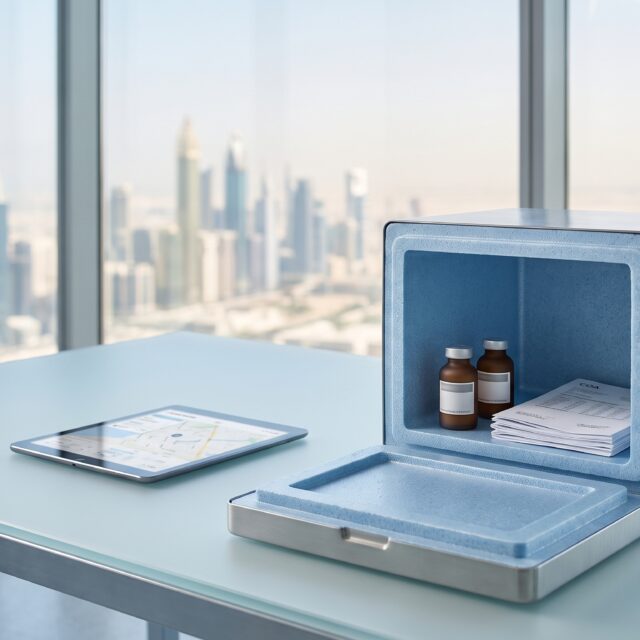
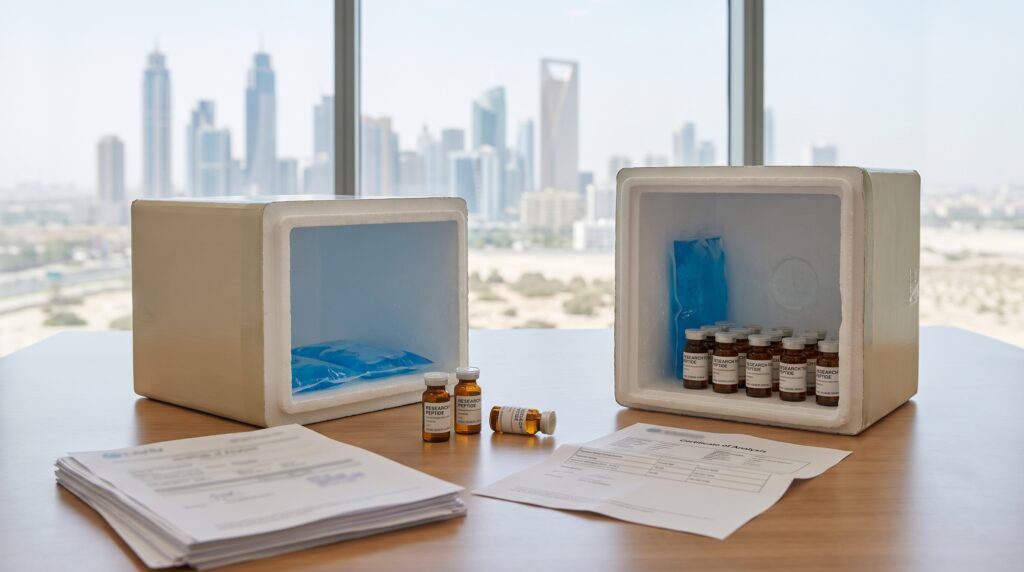
To ensure molecular integrity, always source lyophilized Semax peptide in Saudi Arabia. Lyophilization removes water from the compound, creating a stable solid matrix that is vastly more resilient to temperature fluctuations. While lyophilized powders should ideally be stored away from direct heat, they can easily survive standard transit windows without undergoing the rapid degradation seen in aqueous solutions.
Navigating ZATCA Logistics and Fast GCC Sourcing
Importing research chemicals into Saudi Arabia involves strict oversight by ZATCA (Zakat, Tax and Customs Authority) and the SFDA. Research peptides are not registered medicines; they must be declared exclusively for research and laboratory use. Mislabeling or ambiguous commercial invoices are the leading causes of international shipment seizures at Saudi borders.
When sourcing Semax from the United States, Europe, or Asia, transit times often stretch to 10-14 days. This prolonged window increases the risk of both thermal exposure and rigorous customs bottlenecks. Furthermore, importing into KSA incurs a standard 5% customs duty and a 15% VAT on the CIF (Cost, Insurance, and Freight) value, which must be factored into your total procurement budget.
Sourcing from a regional hub mitigates these risks dramatically. By utilizing a supplier based in the UAE, researchers benefit from established GCC logistics corridors. Transit times are typically reduced to 4-5 days via standard regional couriers. This operational efficiency is why NOVA Labs utilizes highly optimized regional logistics and next-day UAE dispatches to serve the broader Middle Eastern research community, ensuring compounds spend minimal time in transit.
The Cryptographic Purity Standard: Verifying the COA
In the research chemical industry, claims of “99% purity” are ubiquitous, but without proof, they are meaningless. High-intent buyers must prioritize analytical transparency. When you evaluate a vendor, the Certificate of Analysis (COA) is your primary metric of trust.
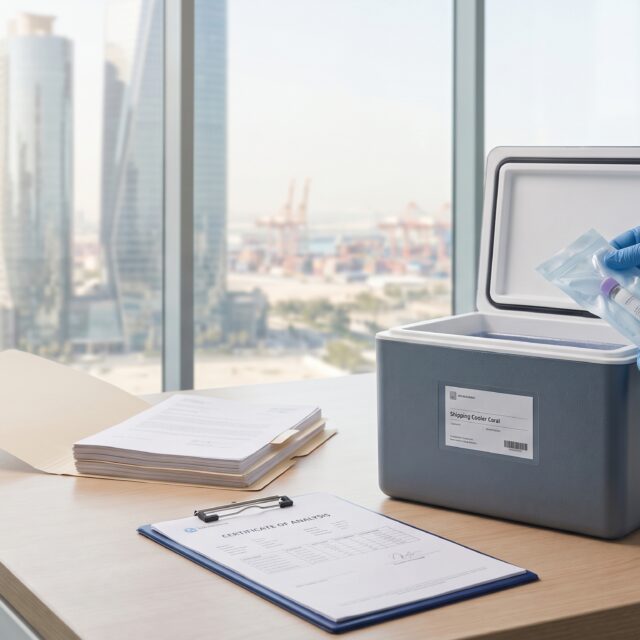
Not all COAs are created equal. A simple PDF document generated in-house can be easily altered or faked. The industry gold standard for peptide verification is third-party High-Performance Liquid Chromatography (HPLC) and Mass Spectrometry (MS) conducted by recognized analytical laboratories like Janoshik.
When reviewing a supplier’s documentation, look for:
- A Unique Verification Key: The COA should include a unique task number or cryptographic key that can be entered directly on the testing laboratory’s official website to verify the results independently.
- Recent Batch Dates: The testing date should reasonably align with the current inventory batch.
- Clear HPLC Chromatograms: The report should display a clear primary peak indicating the compound’s purity, ideally exceeding 99%.
- Mass Spectrometry Alignment: The measured molecular weight must match the theoretical molecular mass of Semax.
Laboratory Storage and Handling Best Practices
Once your Semax vial successfully navigates GCC logistics and arrives at your facility, proper handling is required to maintain the compound’s stability throughout your research project.
Lyophilized Semax should be stored in a freezer (typically -20°C) for long-term preservation, though it remains stable at standard refrigerator temperatures (4°C) or even controlled room temperature for shorter durations.
When it is time to prepare the compound for in-vitro application, reconstitution must be performed using sterile bacteriostatic water or sterile saline, depending on the specific protocol.
Crucially, once the lyophilized powder is reconstituted into a liquid solution, its thermal resilience vanishes. Reconstituted Semax must be kept refrigerated at 2°C to 8°C at all times and should be utilized within the timeline dictated by your laboratory’s standard operating procedures to avoid degradation.
Sourcing from NOVA Labs
For researchers and procurement staff operating in Saudi Arabia, finding a supplier that combines analytical rigor with regional logistics expertise is critical. NOVA Labs addresses these specific GCC market challenges by operating locally out of Dubai.
By prioritizing transparent, verifiable Janoshik HPLC testing and utilizing exclusively lyophilized formats, we ensure that researchers receive exactly what they paid for. Our regional fulfillment infrastructure allows for rapid delivery across the GCC, bypassing the lengthy customs delays associated with overseas vendors.
Researchers looking to procure stable, high-purity compounds can review our verifiable batch documentation and secure Semax peptide vials directly through our platform.
Conclusion
Sourcing Semax in Saudi Arabia requires exact attention to environmental and regulatory realities. By understanding the severe impact of ambient heat on liquid peptides, researchers can confidently mandate lyophilized formats. Recognizing the delays inherent in international shipping allows buyers to optimize their supply chain by utilizing UAE-based GCC fulfillment. Most importantly, refusing to accept static, unverified testing documents in favor of live, cryptographically secure COAs ensures the integrity of your research.
Disclaimer: The products mentioned in this article are strictly for in-vitro research purposes and are not intended for human consumption or therapeutic use.
References
- Saudi Food and Drug Authority (SFDA) Guidelines on Laboratory Reagent Importations.
- ZATCA Customs Duty and VAT Regulations on CIF Valuations for Chemical Imports.
- NOVA Labs GCC Logistics and Procurement Standards.
Disclaimer: The products mentioned in this article are for research purposes only and are not intended for human consumption.
- Nova Biolabs vs Peptides Lab UAE: 2026 KSA Sourcing Guide
- Semax – NOVA Labs
- Buy Semax Peptide Saudia Arabia 99% Pure Online
- Peptide Laws in Saudi Arabia — Can You Buy, Travel & Import? (2026)
Frequently asked questions
Is it better to buy liquid or lyophilized Semax in Saudi Arabia?
Researchers should always purchase lyophilized (freeze-dried) Semax. Liquid peptide solutions degrade rapidly when exposed to the high ambient temperatures common during transit in the GCC, whereas lyophilized powders remain highly stable.
How long does it take to ship Semax to Saudi Arabia?
When sourcing from a regional UAE-based supplier like NOVA Labs, transit to Saudi Arabia typically takes 4 to 5 days. International shipments from the US or EU can take 10 to 14 days due to prolonged customs processing.
Are there customs duties when importing research peptides into KSA?
Yes, importing items into Saudi Arabia generally incurs a 5% customs duty and a 15% Value Added Tax (VAT) calculated on the total Cost, Insurance, and Freight (CIF) value of the shipment.
How should Semax be stored once it arrives?
Unopened lyophilized Semax should be stored in a freezer or refrigerator for maximum shelf life. Once reconstituted with bacteriostatic water, the liquid solution must be strictly refrigerated at 4°C to prevent rapid degradation.
Nova Labs buyer tools
Ready to verify stock, testing and delivery?
Use the product page and lab report section to check availability, documentation, delivery timing and support before placing an order.
- COA / test-report checks
- Saudi Arabia delivery context
- Cold-chain handling
- COD and card payment options
- WhatsApp support