
Sourcing high-purity research peptides in the Gulf Cooperation Council (GCC) requires navigating unique environmental and regulatory challenges. For procurement staff, laboratory researchers, and informed buyers evaluating where to buy Sermorelin in Oman, the purchasing process goes far beyond simply finding an online supplier.
Sermorelin is a synthetic 29-amino acid peptide that acts as an analog to endogenous Growth Hormone-Releasing Hormone (GHRH). While the Omani market features clinical providers offering in-person, structured therapies in Muscat, many research buyers and independent investigators require raw, lyophilized peptide vials directly. However, importing fragile peptides into a region where summer temperatures routinely exceed 45°C—alongside strictly enforced local customs regulations—demands rigorous attention to logistics, documentation, and chemical purity.
This guide outlines exactly how to evaluate a Sermorelin supplier in Oman, verify third-party analytical testing, and ensure that cold-chain integrity is maintained from the laboratory to your facility.
What You Need to Know Before You Buy Sermorelin in Oman
For those looking to buy Sermorelin in Oman, sourcing from a reputable regional supplier is essential. Buyers must verify third-party Certificates of Analysis (COAs) confirming over 99% purity, ensure the supplier uses strict cold-chain logistics to survive GCC heat, and provide proper Research Use Only (RUO) documentation for customs clearance.
Failing to address these three pillars—purity, temperature control, and documentation—can result in degraded compounds, wasted budgets, or blocked shipments at the border.
The Oman Cold-Chain Protocol: Protecting Fragile Peptides
The most significant threat to peptide integrity in the Middle East is thermal degradation. GHRH analogs like Sermorelin are structurally fragile; prolonged exposure to excessive heat can cause peptide bonds to cleave, fundamentally altering the compound’s molecular structure and rendering it useless for precise scientific evaluation.
In Oman, where daytime temperatures frequently surpass 45°C (113°F) during the summer months, standard international mail services pose an unacceptable risk. A package sitting in an un-air-conditioned transit facility or on an airport tarmac in Muscat can rapidly reach internal temperatures that destroy peptide efficacy within hours.
Lyophilization vs. Reconstitution in Transit
To mitigate heat damage, reputable suppliers never ship peptides in a liquid (reconstituted) state. Instead, they utilize lyophilization—a freeze-drying process that extracts moisture while preserving the peptide’s structural integrity.
While lyophilized powder is significantly more stable than reconstituted solutions, it still requires active thermal management during last-mile transit. When evaluating a Sermorelin supplier, Omani buyers should look for:
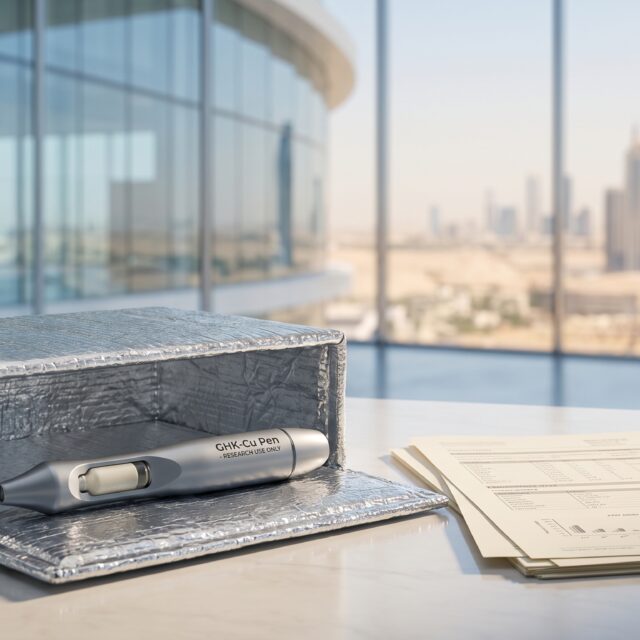
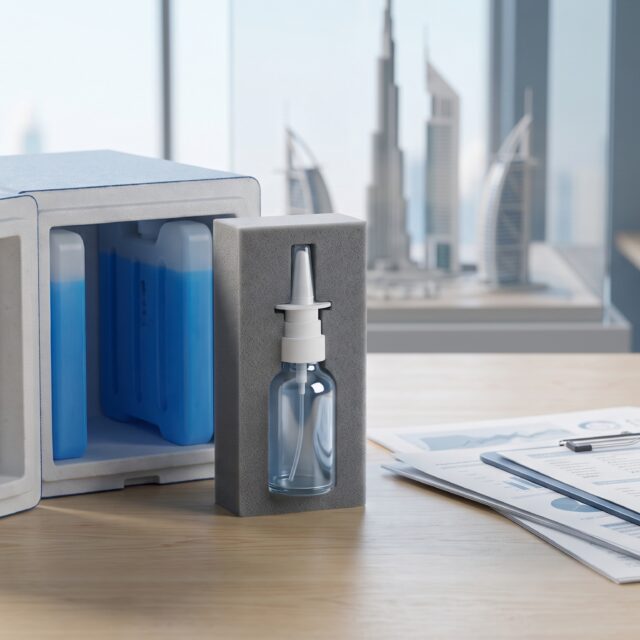
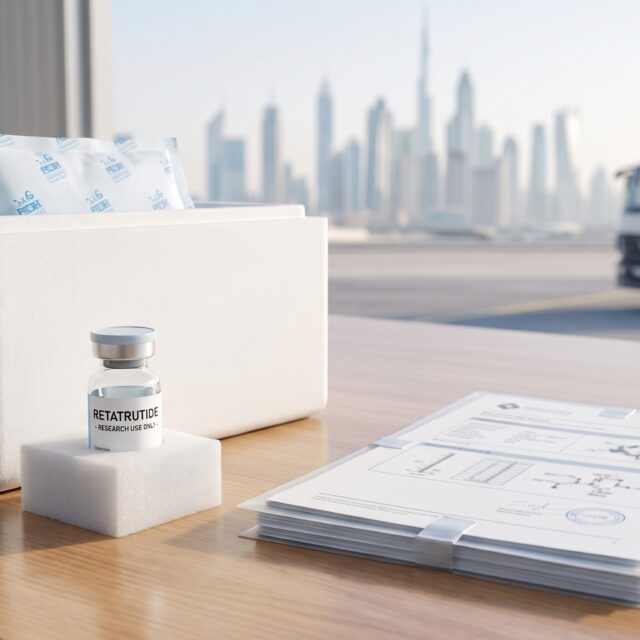
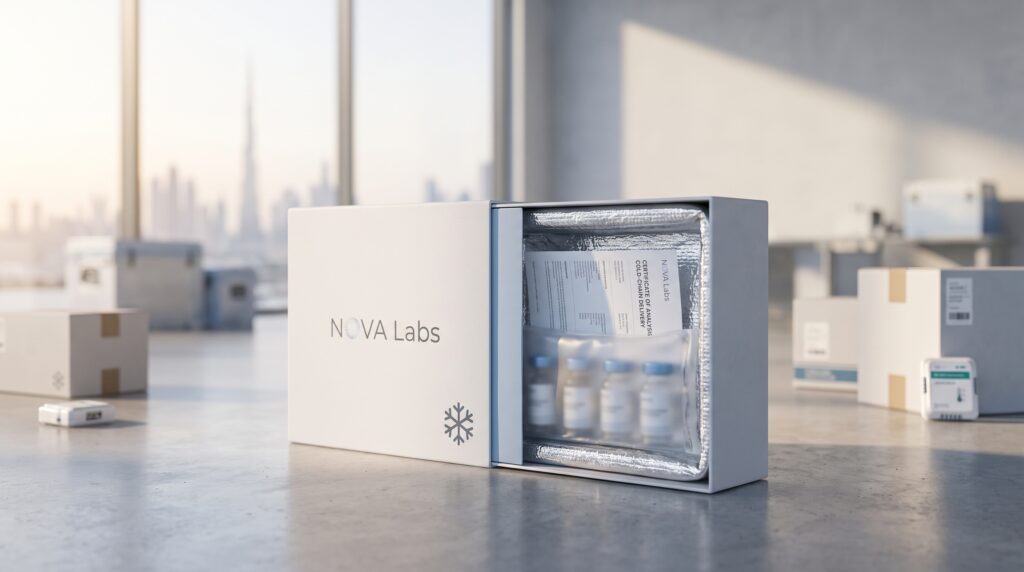
- Thermal Packaging: Insulated containers utilizing specialized ice packs or phase-change materials to buffer external heat.
- Regional Logistics Hubs: Shipping internationally from the US or Europe introduces lengthy customs delays. Utilizing a supplier with fast regional peptide shipping logistics out of the UAE drastically reduces transit time to Oman and limits temperature exposure.
- Storage Protocols: Upon arrival at your facility, lyophilized vials must be immediately transferred to a freezer (-20°C) for long-term storage, keeping them viable for up to 24 months.
Navigating Omani Customs and RUO Documentation
The Omani Ministry of Health (MOH) and Royal Oman Police Customs enforce stringent controls on the importation of pharmaceuticals, chemical compounds, and biological materials. Because the market is strictly divided between clinical therapy options (requiring medical authorization) and independent research procurement, clear documentation is vital for smooth importation.
The Importance of “Research Use Only” (RUO) Labels
Informed peptide researchers prioritize suppliers who correctly classify and label their products for “Research Use Only” (RUO). This labeling clearly separates the lyophilized peptide powder from clinical pharmaceuticals or finished medicinal products, aligning with Omani customs guidelines for laboratory chemicals.
When importing research materials, customs officers look for clear commercial invoices, product descriptions, and MSDS (Material Safety Data Sheets) if applicable. Choosing a regional GCC supplier that understands these specific border requirements minimizes the friction typically experienced when importing complex biochemicals from overseas markets.
How to Authenticate HPLC and MS Certificates of Analysis
The core of any peptide procurement decision rests on chemical purity. Whether conducting in-vitro assays or analyzing receptor binding affinities, impurities and manufacturing byproducts can easily skew research data.
An authentic, batch-specific Certificate of Analysis (COA) is the only reliable proof of a peptide’s quality. Buyers should reject any supplier offering outdated, generic, or unbranded COAs. When reviewing testing documentation for a Sermorelin peptide, buyers must check two critical analytical methods:
High-Performance Liquid Chromatography (HPLC)
HPLC measures the purity of the peptide by separating the chemical components in a sample. You should look for an HPLC graph that displays a single, sharp, dominant peak representing the primary compound (Sermorelin). The report should state a purity level of 99% or higher. Multiple smaller peaks indicate impurities, residual solvents, or cleaved peptide fragments that could compromise research integrity.
Mass Spectrometry (MS)
While HPLC tells you how pure a substance is, Mass Spectrometry confirms what the substance actually is by determining its exact molecular weight. For Sermorelin, the theoretical molecular weight is approximately 3357.9 g/mol. The MS report provided by your supplier should show a tested mass that perfectly aligns with this theoretical weight, confirming the chemical identity of the synthesized batch.
Evaluating a Sermorelin Supplier in the GCC Market
When evaluating vendors, surface-level marketing claims are insufficient. Operational transparency and regional expertise separate premium suppliers from generic drop-shippers. Consider the following checklist when selecting your partner:
- Verifiable Stock and Regional Presence: Can the supplier dispatch immediately from a regional hub (like Dubai) to Muscat, or are they drop-shipping from overseas, adding weeks of delay and customs risks?
- Accessible Testing Data: Does the supplier provide visible, recent, and batch-specific HPLC and MS reports directly on the product page?
- Secure Payment and Support Options: Sophisticated buyers expect secure payment gateways, clear invoicing for procurement departments, and responsive customer service to track urgent, temperature-sensitive shipments.
- Product Range Consistency: Reliable vendors offer consistent, precisely dosed research-grade Sermorelin vials, typically available in 2mg or 5mg formats to suit varying laboratory requirements.
Bottom Line and Next Steps
Successfully sourcing Sermorelin in Oman requires careful attention to the logistics of the GCC climate and the strict guidelines of Omani customs. By prioritizing “Research Use Only” labeling, demanding batch-specific HPLC and Mass Spectrometry testing, and ensuring your supplier utilizes robust thermal packaging, you can protect your research investments from degradation and border delays.
Choosing a supplier with a strong operational footprint in the UAE provides Omani buyers with the ideal balance of international manufacturing standards and fast, localized transit. For researchers looking to secure high-purity compounds without the wait, NOVA Labs offers transparent testing and reliable regional dispatch to Oman. Always review the COA for your specific batch, confirm shipping protocols before checkout, and ensure your facility is prepared for proper cold storage upon delivery.
Disclaimer: All products mentioned in this article are strictly for Research Use Only (RUO) and are not intended for human or animal use, diagnosis, or treatment.
—
References
- Oman Ministry of Health (MOH). Directorate General of Pharmaceutical Affairs and Drug Control (DGPADC). “Guidelines for the Importation of Laboratory Chemicals and Research Compounds.”
- D’Hondt, M., et al. (2014). “Related impurities in peptide medicines.” Journal of Pharmaceutical and Biomedical Analysis, 101, 2-30.
- NOVA Labs Internal Quality Assurance. “GCC Cold-Chain Logistics and Lyophilized Peptide Stability Transit Data.”
Disclaimer: The products mentioned in this article are for research purposes only and are not intended for human consumption.
References
- Buy Sermorelin UAE from PharmaLabGlobal
- Oman Cold Chain Peptide Delivery Guide | Transport & – NOVA Labs
- Bringing Medication Into Oman: Prescription & Documentation Checklist
- Oman: Strict prescription medication laws require prior approval for controlled substances
- Peptide Stability Shipping: 2026 Expert Guide
- Sermorelin – ComoPeptides.com
Frequently asked questions
Is it legal to buy Sermorelin in Oman?
Yes, for laboratory and analytical use, Sermorelin can be imported as a 'Research Use Only' (RUO) compound. Medical or clinical use requires explicit authorization from the Oman Ministry of Health.
How is Sermorelin protected from Oman's heat during shipping?
Reliable GCC suppliers ship Sermorelin as a lyophilized (freeze-dried) powder, which is highly thermally stable compared to liquids. Premium vendors combine this with insulated thermal packaging and expedited regional transit from UAE hubs.
What should I look for in a Sermorelin COA?
A valid Certificate of Analysis must include batch-specific High-Performance Liquid Chromatography (HPLC) showing at least 99% purity, and Mass Spectrometry (MS) confirming the molecular weight aligns with Sermorelin (approx. 3357.9 g/mol).
How should I store Sermorelin vials once they arrive in Oman?
Upon delivery, unmixed, lyophilized Sermorelin vials should be immediately transferred to a dedicated laboratory freezer set to -20°C. This prevents degradation and preserves the peptide for up to 24 months.
Why is buying from a UAE supplier better for Omani researchers?
Sourcing from a UAE-based supplier drastically reduces international shipping times and customs delays. This proximity limits the peptide's exposure to extreme summer temperatures and ensures faster, more secure cold-chain delivery to Muscat and beyond.
Nova Labs buyer tools
Ready to verify stock, testing and delivery?
Use the product page and lab report section to check availability, documentation, delivery timing and support before placing an order.
- COA / test-report checks
- Oman delivery context
- Cold-chain handling
- COD and card payment options
- WhatsApp support