
Procuring reliable research compounds in the GCC requires rigorous vetting. For laboratories, procurement staff, and independent researchers, knowing how to spot fake peptides qatar is a critical skill that saves time, budget, and research integrity. With the rise of domain spoofing, falsified documentation, and a complex regional regulatory landscape, buyers must rely on strict analytical evidence rather than marketing claims to verify their suppliers.
This guide details exactly what researchers must verify before placing an order—from interpreting high-performance liquid chromatography (HPLC) reports to navigating GCC climate logistics.
Quick Answer: How to Spot Fake Peptides in Qatar
To spot fake peptides in Qatar, buyers must verify third-party Certificates of Analysis (COAs) for both HPLC purity and mass spectrometry directly on the testing laboratory’s public portal. Additionally, researchers should avoid cryptocurrency-only vendors, watch out for sudden “customs insurance” fee demands, and ensure the supplier uses validated cold-chain logistics to prevent thermal degradation during transit.
Understanding Qatar’s MoPH Peptide Regulations
Before assessing individual vendors, buyers must understand the local regulatory framework governing these compounds. The regional market underwent significant changes recently, drastically affecting how compounds are imported and cleared through customs.
On August 27, 2024, the Pharmacy and Drug Control Department of Qatar’s Ministry of Public Health (MoPH) issued Circular No (PDC/2024/31). This directive strictly bans the import, manufacturing, distribution, use, and promotion of unlicensed peptides. The MoPH circular explicitly clarified a crucial point for the industry: labelling products as “for research use only” or “not for human consumption” does not bypass this regulation if the compounds are ultimately marketed, promoted, or used for human consumption.
For legitimate researchers, this means customs scrutiny is at an all-time high. A credible supplier will not rely on superficial disclaimers alone. Instead, they operate with absolute transparency regarding batch records, analytical testing, and compliance documentation, ensuring that institutional or independent research procurement adheres to the highest standards of verifiable data.
The Cold-Chain Reality: Why Qatar’s Climate Destroys Fragile Compounds
Identifying a fake or useless compound is not just about catching malicious scammers; it is also about recognising when a legitimate compound has been ruined by negligent shipping practices. Fragile amino acid chains are highly susceptible to thermal degradation.
Qatar’s extreme desert climate, where summer temperatures regularly exceed 45°C, poses a major risk. If a package sits on an airport tarmac or in an un-air-conditioned customs warehouse, the contents can degrade rapidly, rendering the compound analytically useless.
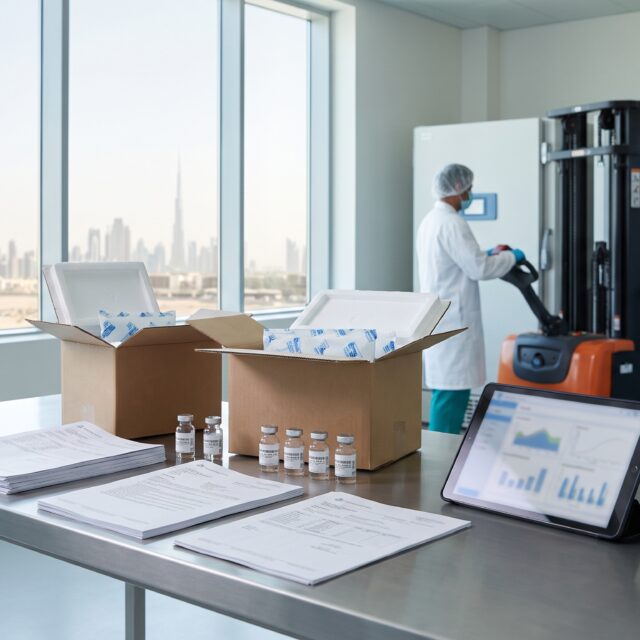
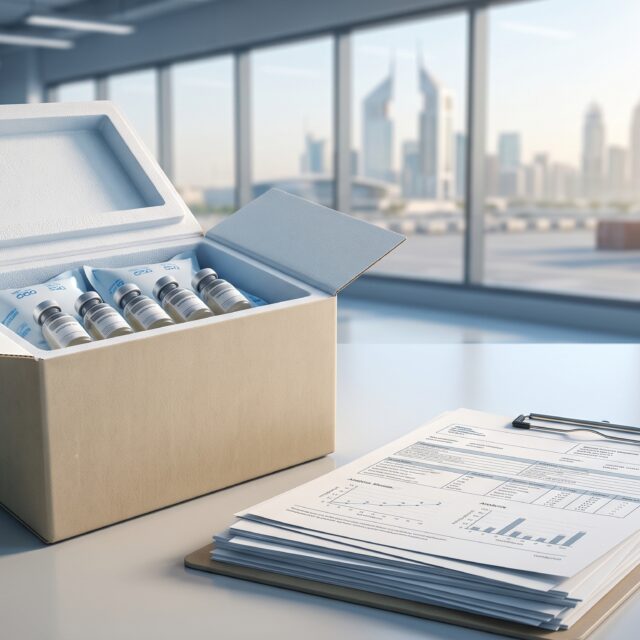
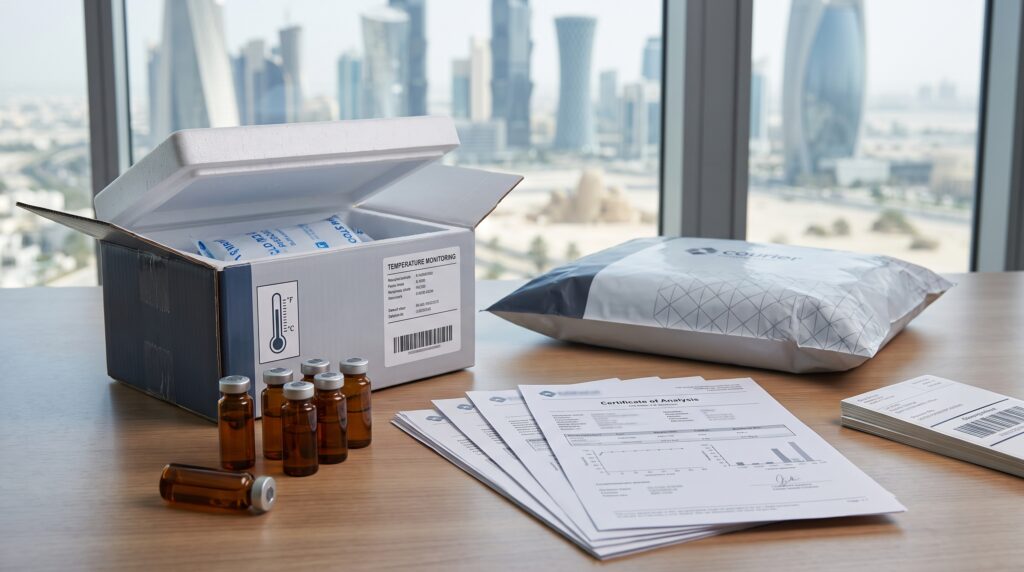
Proper logistics in the GCC region require active cold-chain solutions. Legitimate suppliers use Phase Change Materials (PCM) capable of maintaining internal parcel temperatures at 2°C to 8°C for at least 120 hours. When evaluating vendors, look closely at their shipping policies. If a supplier ships internationally to Doha in standard bubble mailers without thermal protection, the resulting product will likely be degraded before it even reaches your laboratory workbench.
For buyers seeking rapid, climate-controlled shipping in the region, relying on regional hubs rather than distant overseas suppliers can mitigate these risks. You can review trusted GCC logistics frameworks through our detailed breakdown of secure regional shipping and handling.
How to Read and Verify a Certificate of Analysis (COA)
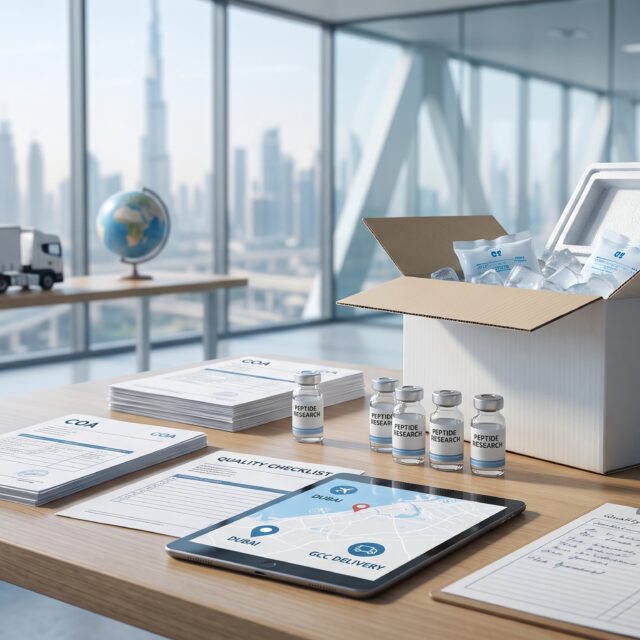
The cornerstone of identifying authentic research compounds relies heavily on the Certificate of Analysis (COA). A COA is a laboratory report that proves what is actually inside the vial. However, scammers frequently forge these documents using image editing software.
Here is the buyer’s checklist for auditing a COA:
- Batch Specificity: The COA must list a specific batch or lot number that exactly matches the label printed on the physical vial you receive. If a vendor uses a single, generic COA for years, it is a major red flag.
- HPLC Purity: High-Performance Liquid Chromatography (HPLC) measures the purity of the compound by separating its components. High-quality research peptides should demonstrate a purity level above 98%.
- Mass Spectrometry (MS): While HPLC shows purity, Mass Spectrometry confirms identity by measuring the molecular weight of the compound. Both tests are mandatory for complete verification.
- Independent Verification: A COA means nothing if the vendor wrote it themselves. The testing must be conducted by an independent, reputable third-party laboratory. Crucially, the testing lab should provide a secure online portal where you can input the report number and verify the document directly against their database.
Common Vendor Scams and Red Flags to Avoid
As demand for research materials has grown, so has the sophistication of fraudulent operations. Recognizing these common traps is essential to protect your procurement budget.
1. The “Insurance Fee” Customs Trick
This is one of the most prevalent scams in the current market. After you place an order and pay, the vendor contacts you claiming the package is held up at Qatar customs. They demand an immediate, additional “refundable insurance fee” or “clearance stamp fee” to release the goods. Legitimate suppliers factor all shipping costs upfront and do not hold packages hostage for impromptu fees.
2. Cryptocurrency-Only Payment Structures
While some legitimate businesses accept digital currencies, vendors that strictly refuse conventional payment methods (like credit cards or Cash on Delivery) are intentionally avoiding chargeback rights. If a vendor only takes untraceable payments, you have zero recourse if they ship fake goods or simply disappear.
3. Domain Spoofing of Defunct Brands
Scammers often buy the expired domain names of formerly reputable vendors and set up clone sites. The site looks familiar, but the quality control is nonexistent. Always verify the current operational status of a company and check for responsive, human customer support before ordering.
Safe Storage and Handling Upon Delivery
Even if you successfully navigate the supply chain and secure a pure, legitimate product, improper handling at the destination can destroy it. Unopened lyophilised (freeze-dried) compounds require long-term storage in a manual-defrost freezer at -20°C.
However, a common mistake researchers make in humid Gulf environments is opening a frozen vial immediately upon taking it out of the freezer. This causes instant moisture condensation on the cold powder inside, leading to hydrolytic degradation. Before opening, you must allow the vial to equilibrate to room temperature inside an airtight desiccator for at least 30 minutes.
Once reconstituted with bacteriostatic water, the solution must be stored in a refrigerator (2°C to 8°C) and should never be refrozen.
Choosing a Trusted GCC Supplier
Ultimately, securing authentic peptides comes down to demanding evidence. You must insist on verifiable third-party testing, transparent communication, and shipping methods designed specifically for the extreme local climate.
At NOVA Labs, we understand the complexities of GCC procurement. We prioritize analytical transparency, providing batch-specific COAs that can be independently verified. Our operations utilize cold-chain logistics optimized for the region, ensuring that delicate molecular structures remain intact from our facilities to your laboratory.
Whether you require detailed documentation for compliance audits or reliable logistical support, our team is equipped to assist. Researchers can explore our verifiable inventory by visiting our comprehensive product catalog for researchers.
Disclaimer: The products mentioned in this article are for research purposes only and are not intended for human consumption.
*
References
- Qatar Ministry of Public Health (MoPH). Circular No (PDC/2024/31): Prohibition of Unlicensed Peptide Products. August 2024.
- NorthPeptide. “Peptide Vendor Scams: 8 Red Flags + COA Checklist.”
- Dissolv Labs. “How to Spot a Low-Quality Peptide Supplier: 8 Red Flags.”
- Qatar’s Health Ministry bans trading, use or promotion of unlicensed peptide products
- Qatar: MOPH Prohibits Handling of Unlicensed Peptides (PDC/2026/31)
- Peptide Storage Temperature Qatar: Complete Handling & – NOVA Labs
- How to tell if a peptide vendor is legit: the checks I run on every new source
- Peptide Vendor Scams: 8 Red Flags + COA Checklist (2026) – NorthPeptide
- How to Avoid Peptide Scams: Best Guide 2026 – PSPeptides
- How to Spot a Low-Quality Peptide Supplier: 8 Red Flags – Dissolv Labs
- Fake Peptide Vendor Sites: 5 Checks Before You Buy
Frequently asked questions
How can I verify a peptide Certificate of Analysis (COA)?
To verify a COA, ensure the document includes both HPLC purity and Mass Spectrometry identity tests. Take the report or certificate number and enter it directly into the independent testing laboratory's public verification portal to ensure the vendor hasn't altered the results.
Does the label 'For Research Only' bypass Qatar's MoPH regulations?
No. The Qatar Ministry of Public Health issued a circular in August 2024 explicitly stating that 'for research use only' labels do not exempt unlicensed compounds from prohibition if they are being marketed, promoted, or ultimately used for human consumption.
What is the 'customs insurance fee' peptide scam?
The customs insurance fee is a common scam where a fraudulent vendor claims your package has been seized or held by customs and demands an immediate, extra payment to release it. Legitimate vendors calculate shipping upfront and do not demand surprise clearance fees post-purchase.
At what temperature should peptides be shipped in the GCC?
Due to the extreme desert heat, peptides shipped in the GCC must utilize active cold-chain logistics, employing Phase Change Materials (PCM) designed to maintain an internal temperature of 2°C to 8°C for at least 120 hours to prevent thermal degradation.
Why do frozen peptide vials need to sit in a desiccator before opening?
Opening a frozen vial in a humid room causes rapid moisture condensation on the lyophilised powder, leading to hydrolytic degradation. Vials should sit in a desiccator for 30 minutes to reach room temperature safely before unsealing.
Nova Labs buyer tools
Ready to verify stock, testing and delivery?
Use the product page and lab report section to check availability, documentation, delivery timing and support before placing an order.
- COA / test-report checks
- Qatar delivery context
- Cold-chain handling
- COD and card payment options
- WhatsApp support