




Investigational peptides continue to drive advanced metabolic research globally. For GCC-based laboratories, universities, and informed procurement specialists, sourcing these complex compounds requires a precise understanding of the local legal landscape and environmental challenges. If you are preparing to source research materials in Qatar, your procurement strategy must account for severe summer temperatures, strict customs oversight, and uncompromising documentation requirements.
Retatrutide (LY3437943) is an investigational synthetic 39-amino acid peptide acting as a triple agonist of the GIP, GLP-1, and glucagon receptors. Because of its multifaceted receptor binding profile, it is heavily studied in cellular assays exploring metabolic regulation and energy expenditure. However, acquiring high-purity research materials in the Middle East is no longer as simple as ordering from an overseas vendor. Recent shifts in Qatari public health policies mandate that institutional buyers fundamentally change how they evaluate and verify their suppliers.
Key Checklist to Buy Retatrutide in Qatar
To legally buy Retatrutide in Qatar, procurement teams must provide institutional credentials aligned with the August 2024 MoPH regulations. Researchers should source from regional GCC suppliers offering verified batch-specific HPLC and mass spectrometry testing, combined with strict cold-chain logistics to prevent thermal degradation during transit.
Quick Buyer Checklist:
- Institutional Validation: Ensure your laboratory or university has the proper clearance for in-vitro research materials via Qatar’s Al Nadeeb customs system.
- Third-Party Testing: Demand independent High-Performance Liquid Chromatography (HPLC) and Mass Spectrometry (MS) documentation tied to the exact batch number on your vials.
- Thermal Protection: Confirm the vendor uses passive cold-chain packaging tailored to Gulf climates to maintain 2-8°C.
- Regional Routing: Utilize UAE-based or regional hubs to shorten transit times and avoid prolonged tarmac exposure.
- TFA Salt Clearance: Check if the supplier provides documentation on Trifluoroacetic Acid (TFA) removal, which is crucial for cellular toxicity studies.
Understanding Qatar’s 2024 Peptide Regulations
The landscape for importing investigational compounds into Doha underwent a dramatic and strict shift in late 2024. On August 25, 2024, Qatar’s Ministry of Public Health (MoPH) Pharmacy and Drug Control Department issued Circular No. PDC/2024/31. This directive strictly prohibited the import, manufacture, distribution, use, and promotion of unlicensed peptides, expressly citing compounds like Retatrutide, BPC-157, and MOTS-c to combat unauthorized individual use.
For researchers and procurement staff, understanding the nuances of this circular is vital. The MoPH directive clarified a long-standing grey area: merely labeling a product as “for research purposes only” or “not for human use” does not automatically exempt it from local pharmaceutical laws if the intended end-user is an individual without verifiable institutional credentials.
Qatar’s General Authority of Customs (GAC) utilizes the advanced Al Nadeeb clearance system. All incoming shipments of chemical and biological materials are rigorously screened. Personal-name importation of unlicensed investigational compounds is highly susceptible to seizure at customs. Therefore, acquiring Retatrutide peptide in Qatar is now strictly an institutional endeavor. Vendors must work directly with verified research entities, universities, and biotechnology laboratories equipped to handle these compounds for in-vitro testing.
Retatrutide Synthesis and Why Purity Matters
When conducting cellular or molecular assays, introducing impurities into a study can skew baseline data, induce unintended cellular toxicity, and invalidate months of expensive research. The primary mechanism for verifying the structural integrity of a complex compound like Retatrutide is the Certificate of Analysis (COA).
Retatrutide is a large peptide comprising a 39-amino-acid chain, complete with a complex fatty acid moiety designed to extend its half-life in testing models. Synthesizing such a large molecule is technically demanding. Standard solid-phase peptide synthesis (SPPS) often yields truncation errors (incomplete peptide chains) or aggregation issues if not managed with absolute precision.
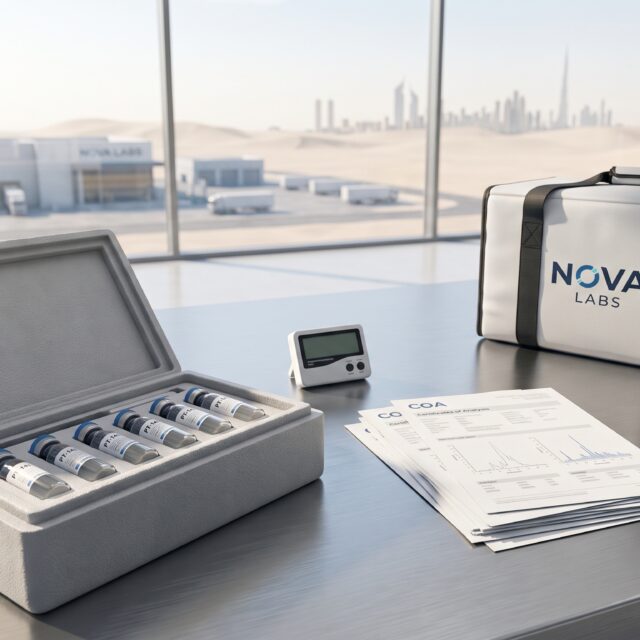
When evaluating a Retatrutide supplier serving Qatar, the COA must be more than a generic, undated document. It must be batch-specific. Here is exactly what procurement teams must verify on the report before placing an order:
1. High-Performance Liquid Chromatography (HPLC)
HPLC results measure the purity of the peptide by separating the components in a mixture. A reliable supplier will provide a high-resolution HPLC graph demonstrating a purity level of 99% or higher. Any significant secondary peaks on the graph indicate residual solvents, truncated peptide fragments, or synthesis byproducts that could interfere with receptor binding studies.
2. Mass Spectrometry (MS)
While HPLC confirms how pure the sample is, Mass Spectrometry confirms its identity. The MS report details the molecular weight of the compound based on its mass-to-charge ratio. The molecular weight shown on the mass spec readout must exactly match the theoretical molecular mass of Retatrutide. If these numbers differ, the vial simply does not contain the correct compound.
3. Lot Matching and Testing Dates
An authentic COA will feature a batch or lot number that matches the physical labeling on the vials you receive. Furthermore, the testing date should be recent. Lyophilized peptides degrade over time even under optimal conditions, so a COA from over twelve months ago does not reflect the current state of the material.
Cold-Chain Logistics: Surviving the GCC Climate
The physical chemistry of peptide stability presents a unique hurdle for the GCC region. Summer temperatures in Qatar regularly exceed 45 degrees Celsius (113 degrees Fahrenheit). Even during the milder winter months, standard parcel sorting facilities and un-airconditioned delivery vans expose packages to intense thermal stress.
Retatrutide is typically supplied as a lyophilized (freeze-dried) powder. While lyophilization vastly improves stability compared to reconstituted liquid solutions, the powder remains vulnerable to extreme heat. Prolonged exposure to temperatures above 40°C can accelerate degradation pathways, particularly deamidation, oxidation, and aggregation. This breaks down the molecular structure of the peptide before it ever reaches the laboratory bench.
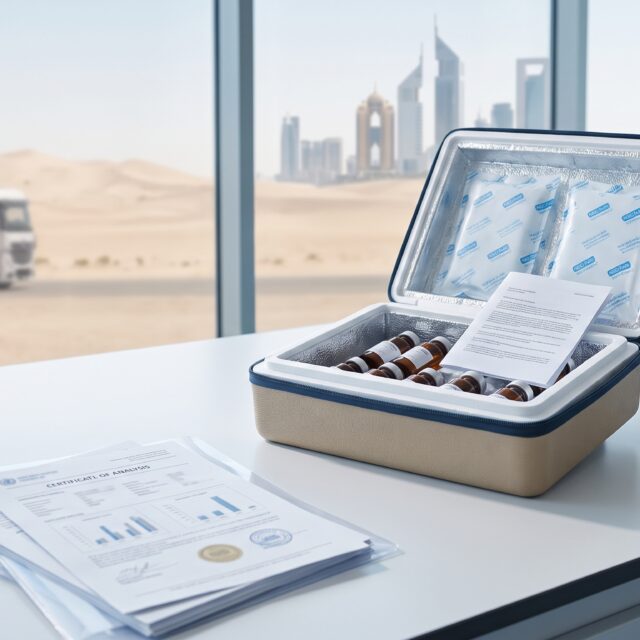
Therefore, standard international shipping—which can take weeks and pass through multiple uncontrolled environments—is often a liability. To maintain efficacy, shipments to Qatar demand specialized, end-to-end passive cold-chain systems. This typically involves thick insulated enclosures combined with phase-change materials (specialized ice packs) designed to maintain a stable environment throughout the transit period.
Evaluating Supplier Support and Payment Security
Beyond the physical product, a reliable supplier must offer a streamlined institutional procurement experience. Sourcing materials from overseas can often result in communication black holes, leaving researchers uncertain about delivery timelines or customs clearance statuses.
When selecting a vendor, look for teams that offer localized support, such as direct WhatsApp communication aligned with GCC time zones. Additionally, verify their payment infrastructure. Institutional buyers often require secure, traceable payment gateways, or occasionally cryptocurrency options for discrete laboratory procurement. A vendor with a robust, professional checkout system and responsive local support demonstrates the operational maturity required to handle complex institutional orders.
The Advantage of Sourcing Regionally with NOVA Labs
To mitigate the dual risks of regulatory customs friction and thermal degradation, many Qatari institutions have pivoted away from distant international vendors. Sourcing investigational materials from specialized hubs within the UAE offers distinct logistical advantages.
By leveraging localized GCC distribution networks, transit times are drastically reduced. This shorter delivery window ensures that thermal packaging functions exactly as intended, preventing the compound from overheating on a tarmac. Regional suppliers with dedicated compliance teams are generally better equipped to navigate the stringent documentation requirements of regional customs systems.
At NOVA Labs, we understand the exacting standards required for high-level metabolic receptor research. Our logistics framework is designed specifically for the unique challenges of the Middle East. When you choose to explore our complete research catalog, you gain access to comprehensive, batch-matched HPLC and MS testing documentation. We prioritize scientific transparency, offering dedicated GCC support to ensure that your institutional procurement meets local compliance standards seamlessly.
Furthermore, our commitment to rapid GCC transit and overnight delivery networks ensures that your materials are packaged with the utmost care, utilizing robust thermal barriers to protect delicate molecular structures against the punishing regional climate.
Securing Compliant Investigational Materials
The landscape for securing research peptides in the Gulf has evolved into a highly professional, tightly regulated ecosystem. The decision to source investigational materials in Qatar is no longer just about finding a competitive price; it is about establishing a reliable, legally compliant supply chain that protects the integrity of your data.
By prioritizing institutional compliance with MoPH regulations, rigorously checking batch-specific HPLC/MS data, and insisting on climate-controlled regional logistics, laboratories can eliminate major procurement risks. Evaluating your supplier’s transparency is the single most effective way to safeguard your research.
Disclaimer: The products mentioned in this article are strictly for in-vitro research and laboratory testing purposes only. They are explicitly not intended for human consumption, clinical application, or therapeutic use. Buyers must comply with all local laws and institutional protocols.
References
- Ministry of Public Health (MoPH) Qatar. Circular No. PDC/2024/31: Prohibition of the Use and Promotion of Unlicensed Peptides. August 25, 2024.
- Ministry prohibits use and promotion of unlicensed peptides in Qatar – ILoveQatar.net. Link
- MoPH bans sale and use of unlicensed peptide products – Qatar Living. Link
- Qatar bans unlicensed peptide products – Gulf Times. Link
- Import unapproved medicine into Qatar – Everyone.org. Link
- Ministry of Public Health Circulars – MOPH Qatar. Link
Frequently asked questions
Is it legal to buy Retatrutide in Qatar?
Following the August 2024 MoPH Circular No. PDC/2024/31, the importation of unlicensed peptides like Retatrutide is highly regulated. Procurement is strictly limited to verified institutional laboratories for in-vitro research purposes only, and personal importation for human use is strictly prohibited.
How do extreme summer temperatures affect peptide shipments to Doha?
Qatar's summer heat, which frequently exceeds 45 degrees Celsius, can rapidly degrade lyophilized peptides during standard parcel transport. Specialized 2-8 degree Celsius passive cold-chain logistics are required to preserve the structural integrity of the compounds.
What documentation should a reliable Retatrutide supplier provide?
A reputable supplier must provide a batch-specific Certificate of Analysis (COA). This document should feature independent, third-party High-Performance Liquid Chromatography (HPLC) and Mass Spectrometry (MS) test results demonstrating a compound purity level of 99% or higher.
Can I use 'research purposes only' products for personal application in Qatar?
No. The Qatari authorities and customs systems closely monitor shipments. Labeling a product 'for research only' does not bypass local pharmaceutical laws or customs seizure if the intent or purchaser profile implies individual human use rather than institutional research.
Why is regional sourcing preferred for peptides in the GCC?
Sourcing peptides from within the GCC, such as from the UAE, drastically reduces transit times. This prevents the compound from being exposed to prolonged heat on airport tarmacs and minimizes international customs delays, ensuring the materials arrive structurally intact.
Nova Labs buyer tools
Ready to verify stock, testing and delivery?
Use the product page and lab report section to check availability, documentation, delivery timing and support before placing an order.
- COA / test-report checks
- Qatar delivery context
- Cold-chain handling
- COD and card payment options
- WhatsApp support