


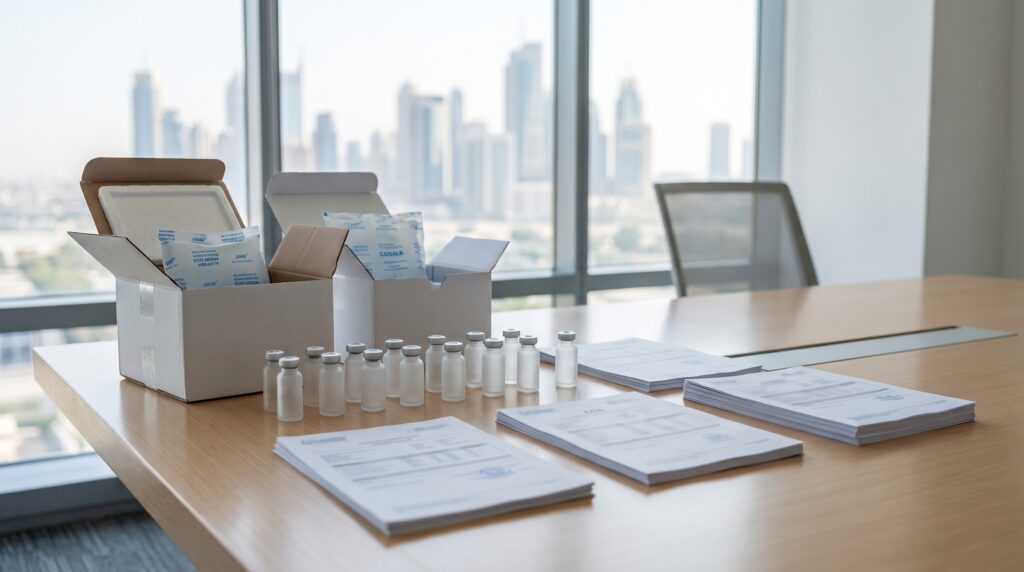
Sourcing high-purity research compounds in the Middle East is uniquely challenging. Between extreme summer temperatures that threaten molecular stability and a regional market flooded with unreliable international dropshippers, finding a supplier that researchers and informed buyers can trust requires strict vetting.
For buyers looking to procure compounds for laboratory research or independent study, the regional market is often divided. On one end, licensed compounding clinics charge premium markups for their oversight. On the other end, unregulated social media brokers sell untested, frequently degraded materials imported through gray-market channels.
Navigating this landscape safely means understanding precisely what separates a legitimate supplier from a dangerous one. Evaluating a supplier goes far beyond looking at the price per vial. The integrity of your research depends heavily on the purity of the compound and the conditions under which it was stored and transported. This comprehensive guide covers the critical trust signals every buyer must evaluate, including third-party testing transparency, cold-chain logistics, localized customer support, and secure payment processing.
Finding the Best Peptide Shop in GCC: What Actually Matters
The best peptide shop in the GCC must provide batch-specific, cryptographically verifiable third-party testing and utilize cold-chain logistics. To ensure molecular stability in Middle Eastern heat, reliable suppliers only dispatch lyophilized powders locally from UAE hubs, avoiding the thermal degradation common with international dropshipping.
Buyer Checklist: 5 Pillars of a Trusted Supplier
To ensure you are sourcing institutional-grade materials, run any potential supplier through this checklist before placing an order:
- Independent Testing: Do they provide batch-specific High-Performance Liquid Chromatography (HPLC) and Mass Spectrometry (MS) results?
- Cryptographic Verification: Can the Certificate of Analysis (COA) be verified via QR code on an independent testing facility’s website (e.g., Janoshik)?
- Lyophilized Format: Do they sell freeze-dried powders rather than pre-mixed, unstable liquid solutions?
- Cold-Chain Logistics: Are orders packed with thermal insulation and gel packs to combat GCC temperatures?
- Local Fulfillment: Do they dispatch from a local UAE facility to minimize customs delays and transit times?
If a supplier fails on documentation or logistics, the product is compromised before it even arrives at your laboratory.
Navigating the GCC Market: Clinics vs. Direct Suppliers
Buyers operating in the Gulf typically encounter a stark market dichotomy. On one side are fully regulated clinics located in medical hubs like Dubai and Abu Dhabi. While these institutions provide heavily monitored protocols and guaranteed cold-chain integrity, they command massive price markups—frequently 10x to 20x the baseline cost of the raw compounds.
For researchers, procurement staff, and informed buyers who only require the raw research materials for in-vitro study or analytical testing, these clinical markups are financially prohibitive. This drives demand toward direct-to-consumer online suppliers.
However, the direct online market carries its own significant risks. Regional peptide forums frequently issue warnings about Telegram and WhatsApp brokers offering unverified, heavily discounted compounds. These are often cheap, dropshipped vials from overseas laboratories with custom labels and absolutely no genuine quality control. To successfully navigate this space, buyers must know how to identify suppliers who operate with institutional-grade transparency while offering fair direct-to-market pricing.
Third-Party COAs: The Gold Standard of Purity
Purity claims are meaningless without independent verification. The single most important factor in choosing a supplier is their testing transparency.
Historically, buyers relied on a standard manufacturer’s Certificate of Analysis (COA). Today, these basic PDF documents are highly prone to counterfeiting. Unscrupulous sellers frequently photoshop batch numbers, dates, or purity percentages to move inferior or degraded stock.
A trusted supplier will completely bypass self-reported data and provide batch-specific, third-party HPLC/MS (High-Performance Liquid Chromatography and Mass Spectrometry) reports from recognized, independent laboratories. Janoshik Analytical is widely considered the gold standard for independent testing in this space, as their testing protocols are rigid and completely decoupled from the manufacturer’s financial interests.
How to Cryptographically Verify a COA
When evaluating a supplier’s documentation, you must actively verify the testing markers. Modern, legitimate COAs feature a unique task number and a QR code or verification key.
You should be able to scan the QR code or enter the key on the independent laboratory’s official website to view the original, unaltered report directly from the testing facility. Furthermore, ensure the batch number on the COA exactly matches the batch number of the product you are purchasing. High-quality research compounds should consistently demonstrate a purity level of 99% or higher. If a supplier refuses to provide verifiable COAs, obscures the testing laboratory’s name, or relies on outdated PDFs that cannot be authenticated online, they should be immediately disqualified.
The Temperature Test: Why Lyophilized Compounds Are Essential
The most significant environmental factor for any GCC buyer is the severe regional heat. High ambient temperatures, particularly during the Middle Eastern summer, can rapidly degrade fragile peptide bonds.
This is precisely why purchasing pre-mixed liquid solutions from an online supplier is a massive red flag. Peptides suspended in bacteriostatic water or other liquid solvents are highly susceptible to thermal degradation. Even a short transit delay in a warm delivery van or a hot customs warehouse can render a liquid compound completely inert, destroying its research value.
To ensure maximum stability, you must exclusively source lyophilized (freeze-dried) powder. The lyophilization process removes moisture from the compound under a vacuum, suspending it in a stable, solid state. Lyophilized peptides are highly resilient to temperature fluctuations during short-term transit. The researcher only reconstitutes the powder into a liquid solution immediately prior to use in the lab, ensuring the compound remains completely viable from the moment it leaves the supplier to the moment it enters the testing environment.
Cold-Chain Logistics and Regional Delivery Speeds
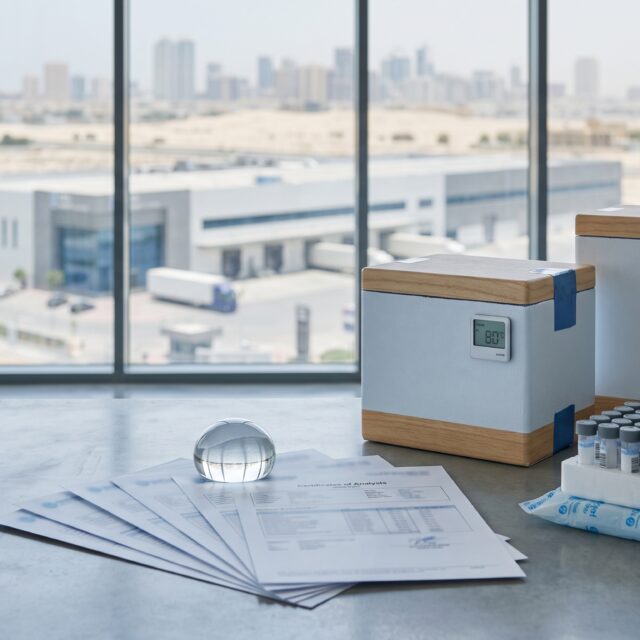
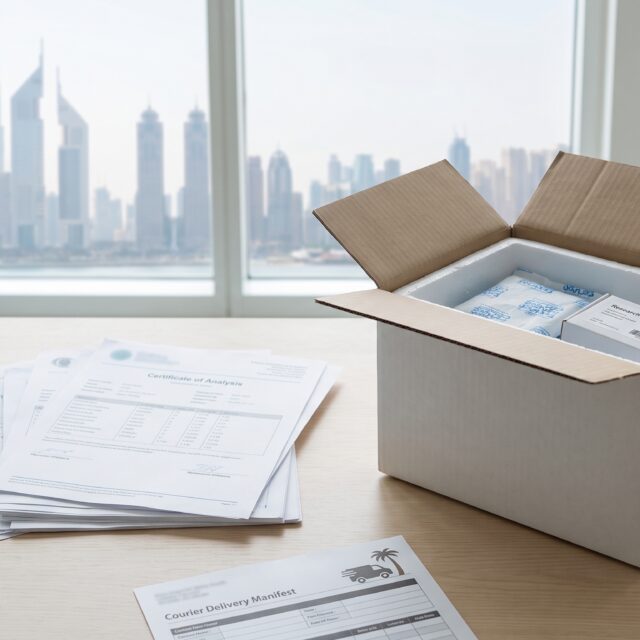
Even with lyophilized powders and verified purity, logistics make or break a supplier. A premium product handled poorly during transit is a wasted investment. Proper transit of sensitive compounds in the Gulf requires cold-chain-aware logistics. Suppliers should package orders using insulated thermal mailers and include frozen gel packs to regulate temperatures during the crucial last-mile delivery phase.
Suppliers dispatching directly from a centralized UAE distribution hub offer a massive logistical advantage over international dropshippers. Local fulfillment entirely avoids prolonged customs delays. When purchasing overseas, packages can sit in un-air-conditioned customs holding facilities for days or weeks. Local dispatch reduces regional transit times down to virtually nothing. For instance, top-tier suppliers offer reliable next-day delivery for peptides in the UAE, while broader GCC orders to Saudi Arabia, Oman, or Bahrain typically arrive via express overland or air courier in just 3 to 5 business days.
Payment Security and Local Support
The best suppliers in the GCC tailor their operations to local buyers. This extends to payment gateways and customer support.
Avoid suppliers that only accept unsecured cryptocurrency or wire transfers, as these offer zero buyer protection and are common hallmarks of scam operations. Reputable GCC peptide shops utilize secure, mainstream payment gateways for major credit cards, and many have integrated regional Buy Now, Pay Later (BNPL) platforms like Tabby and Tamara, allowing for flexible procurement budgets.
Furthermore, assess the supplier’s customer support. A reliable supplier should offer responsive, localized support channels, such as a dedicated business WhatsApp line operating during standard GST (Gulf Standard Time) business hours, ready to assist with batch inquiries, delivery tracking, or reconstitution questions.
Secure Your Research Materials with NOVA Labs
Procuring compounds in the Middle East does not have to be a guessing game. If you are seeking the best peptide shop the GCC has to offer, look for absolute transparency, rigorous testing, and localized cold-chain logistics.
At NOVA Labs, we prioritize verifiable quality and environmental stability above all else. Our lyophilized research compounds are independent-lab tested by Janoshik, featuring cryptographic QR verification for every single batch we carry. We dispatch locally from the UAE using insulated, cold-chain packaging to protect molecular integrity, ensuring your lab receives the highest purity compounds available in the region.
Ready to elevate your research standards? Shop for high-purity research compounds at NOVA Labs and experience institutional-grade reliability today.
Disclaimer: The information provided in this guide is for educational purposes only. NOVA Labs products are strictly for laboratory research and in-vitro testing. They are not intended for human consumption, diagnostic, therapeutic, or clinical use.
References
- Janoshik Analytical. (n.d.). Understanding Cryptographic Verification in Third-Party Analytical Testing. Janoshik.com.
- D’Hondt, M., et al. (2014). Related impurities in peptide medicines. Journal of Pharmaceutical and Biomedical Analysis, 101, 2-30.
- Vlasak, J., & Ionescu, R. (2011). Fragmentation of monoclonal antibodies. MAbs, 3(3), 253-263. (Discussing protein and peptide degradation pathways under thermal stress).
- United States Pharmacopeia (USP). (2021). Guidelines on Cold Chain Management for Pharmaceuticals and Research Compounds.
Disclaimer: The products mentioned in this article are for research purposes only and are not intended for human consumption.
- KSA Peptide Sourcing 2026: Nova Biolabs vs Peptide Tech UAE – NOVA Labs
- Nova Biolabs vs Peptides Lab UAE: 2026 KSA Sourcing Guide
- is UAE peptide research a legit and trust worthy source for petides? – Reddit
- Peptides Compounding Pharmacy Dubai – CureCell
- United Arab Emirates Peptide Laws & Regulations – PeptideLaws.com
- Research Peptide FAQ | UAE Core Peptides
Frequently asked questions
Why do peptide suppliers in the GCC only sell lyophilized powder?
Lyophilized (freeze-dried) powder is far more stable in high ambient temperatures compared to pre-mixed liquid solutions. This ensures the compounds do not degrade during transit in the harsh Middle Eastern climate before reaching your lab.
How can I verify a peptide COA in the UAE?
Reputable suppliers use independent third-party testing labs like Janoshik. You can verify the integrity of the Certificate of Analysis (COA) by scanning the QR code or entering the unique task number directly on the testing laboratory's official website.
How long does peptide delivery take in Saudi Arabia and the wider GCC?
When dispatched from a competent UAE distribution hub rather than an overseas facility, delivery to KSA and the wider GCC typically takes 3 to 5 business days via overland or air express courier transit, bypassing long customs delays.
What payment methods do reliable GCC peptide shops accept?
Top regional suppliers offer localized payment convenience, accepting major credit cards through secure gateways, Cash on Delivery (COD) within specific UAE zones, and regional Buy Now Pay Later (BNPL) platforms such as Tamara and Tabby.
Nova Labs buyer tools
Ready to verify stock, testing and delivery?
Use the product page and lab report section to check availability, documentation, delivery timing and support before placing an order.
- COA / test-report checks
- GCC delivery context
- Cold-chain handling
- COD and card payment options
- WhatsApp support