




Procuring investigational compounds in the GCC requires strict attention to logistics, analytical documentation, and regulatory compliance. When research institutions look to buy Retatrutide Kuwait, securing a reliable, research-grade supply involves more than simply finding an online vendor. With extreme environmental heat posing a severe risk to peptide stability and local customs actively scrutinizing imports, buyers must evaluate suppliers based on their operational competence.
From understanding passive cold-chain requirements to deciphering high-performance liquid chromatography (HPLC) reports, informed buyers must make essential checks before placing an order to source this compound securely without compromising its structural integrity.
Quick Answer: How to Buy Retatrutide Kuwait
When looking to buy Retatrutide in Kuwait, researchers must source from specialized laboratory suppliers, as local retail pharmacies do not stock investigational compounds. Verifiable third-party HPLC testing, strict Research Use Only (RUO) documentation, and passive cold-chain shipping are absolute necessities to ensure the peptide clears customs and survives GCC temperatures.
The Status of Retatrutide Peptide in Kuwait
Retatrutide is currently categorized as an investigational triple hormone receptor agonist (targeting GLP-1, GIP, and glucagon receptors). Because it remains in Phase 3 clinical trials globally, it lacks commercial healthcare approval. Consequently, legitimate retail pharmacies in Kuwait—such as Al Mutawa or Pharmazone—only dispense licensed, approved medications and do not carry Retatrutide.
For institutional researchers and independent laboratory professionals, the compound must be procured through specialized regional suppliers. Global regulatory bodies have escalated enforcement against black-market vendors that illegally market investigational peptides as therapeutic drugs. When you order Retatrutide in Kuwait, your supplier must maintain a firm “Research Use Only” (RUO) stance. Any vendor making therapeutic claims, providing dosage protocols, or promising clinical outcomes should be immediately flagged as a high-risk source that could invite customs confiscation or deliver compromised materials.
Defeating GCC Heat: Why Cold-Chain Delivery is Non-Negotiable
The most significant physical challenge when shipping delicate amino acid sequences into Kuwait is the extreme ambient heat. Peptides are highly susceptible to thermal degradation. Prolonged exposure to high temperatures can cause the peptide bonds to break down or the molecules to aggregate, rendering the compound useless for precise in-vitro studies.
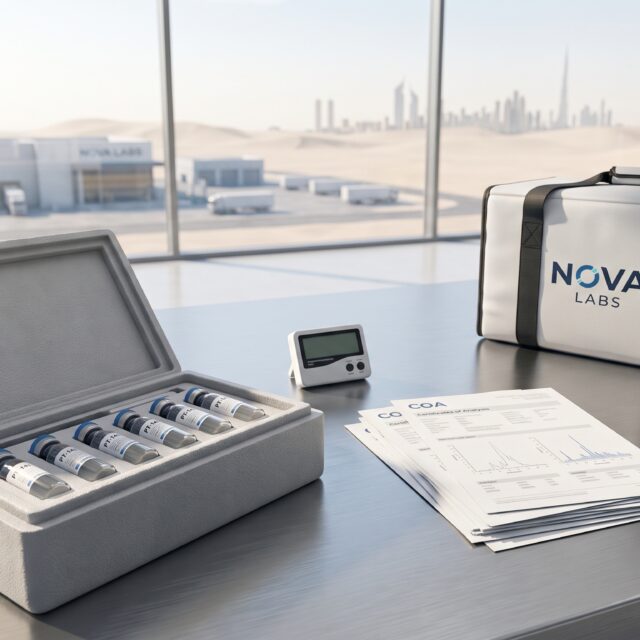
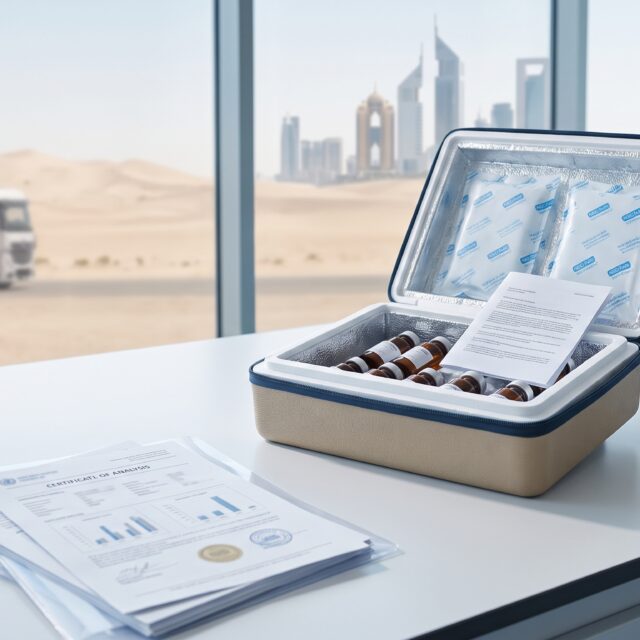
To preserve the integrity of the material, a reputable Retatrutide supplier for Kuwait will utilize passive cold-chain logistics. This involves the use of specialized thermal packaging, insulated mailers, and temperature-stabilizing packs that buffer the vials against temperature spikes during transit. Furthermore, minimizing the time in transit is critical. Sourcing from a regional hub allows for rapid 2-to-4 day shipping across the Gulf, significantly reducing the window of thermal exposure compared to international shipments arriving from North America or Asia.
The HPLC Verification Blueprint for Kuwaiti Buyers
Analytical documentation is the bedrock of verifiable peptide sourcing. You cannot assess the purity of a lyophilized powder by eye; you must rely on third-party analytical testing. Before you finalize any procurement decision, you must request and review the Certificate of Analysis (COA).
High-Performance Liquid Chromatography (HPLC)
HPLC testing determines the purity of the compound by separating the mixture into its individual components. The resulting chromatogram will show a primary peak representing the target peptide, alongside smaller peaks representing impurities or synthesis byproducts. For precision research, buyers should expect a purity level exceeding 99%.
Mass Spectrometry (MS)
While HPLC confirms purity, Mass Spectrometry confirms identity. MS measures the molecular weight of the sample, ensuring that the amino acid chain delivered exactly matches the theoretical molecular mass of Retatrutide. If the mass is off, the sequence is wrong.
Batch-Specific Matching
The most common tactic used by fraudulent vendors is posting a single, generic COA from years ago. Informed buyers must ensure that the batch number printed on the physical vial corresponds exactly to the batch number on the provided HPLC and MS reports. At NOVA Labs, we prioritize analytical transparency, ensuring that every batch is meticulously tested and documented before it enters our inventory.
Navigating Kuwait Customs and RUO Documentation
Importing scientific reagents into Kuwait is heavily regulated by local authorities, including Kuwait General Administration of Customs and the Environment Public Authority (EPA). When a package arrives at the border, customs officers assess whether the contents are intended for unapproved human use or legitimate scientific research.
To ensure smooth clearance, the shipment must be clearly documented. Reputable regional suppliers label these compounds explicitly as “Laboratory Samples” or “Research Reagents.” The commercial invoice and accompanying paperwork must reflect this strict RUO status. By keeping the transaction entirely free of medical or therapeutic claims, the buyer and the supplier remain compliant with regional import regulations, preventing delays, rejections, or confiscation at the border.
Sourcing from Regional Hubs: The NOVA Labs Advantage
When evaluating where to source analytical-grade compounds, proximity and operational infrastructure matter. Sourcing from outside the GCC often introduces prolonged shipping times, increasing the risk of thermal degradation and customs friction.
By operating within the region, NOVA Labs bypasses many of these hurdles. We maintain a secure, climate-controlled inventory of premium research compounds. When you explore our online shop, you will find that our logistics are designed specifically for the Gulf climate. We leverage fast regional peptide delivery protocols that utilize robust thermal packaging, ensuring that your research materials arrive rapidly and in optimal condition.
Beyond logistics, our commitment to analytical transparency means buyers have clear access to the batch-specific data necessary for rigorous scientific work. We combine secure payment gateways, responsive regional support, and stringent quality control to support researchers across Kuwait and the broader GCC.
Disclaimer: The products mentioned in this article are strictly for in-vitro research and laboratory use only. They are not intended for human consumption, diagnostic, or therapeutic purposes.
References
- Kuwait General Administration of Customs (KGAC). “Prohibited and Restricted Goods Guidelines.”
- U.S. Food and Drug Administration (FDA). “Regulatory Actions on Unapproved Investigational Peptides.”
- Journal of Peptide Science. “Thermal Stability and Degradation Pathways of Lyophilized Peptides.”
Disclaimer: The products mentioned in this article are for research purposes only and are not intended for human consumption.
- Buy Retatrutide Kuwait: Purity, Customs & Cold-Chain Guide – NOVA Labs
- FDA cracks down on online black market for weight loss peptides
- Peptides Lab GCC – High-Purity Research Peptides | GCC Supply for Laboratories
- Kuwait – Import Requirements and Documentation – International Trade Administration
- Peptide Import Laws: Customs & Personal Use | PeptideJournal
Frequently asked questions
Can I buy Retatrutide at local pharmacies in Kuwait?
No, local retail pharmacies in Kuwait do not stock Retatrutide. It is an unapproved investigational compound and is only available through specialized research suppliers for laboratory use.
How is Retatrutide protected from the heat during shipping to Kuwait?
Reputable regional suppliers use passive cold-chain logistics, utilizing insulated packaging and temperature-stabilizing packs to protect the peptide from thermal degradation during transit.
What documentation is needed to verify Retatrutide purity?
Buyers should request a batch-specific Certificate of Analysis (COA) that includes both High-Performance Liquid Chromatography (HPLC) for purity and Mass Spectrometry (MS) for exact molecular identity.
Will Kuwait Customs confiscate research peptides?
Shipments generally clear customs smoothly if they are correctly documented as "Research Use Only" laboratory samples and contain zero therapeutic, dosing, or human-use claims on the packaging or commercial invoice.
Nova Labs buyer tools
Ready to verify stock, testing and delivery?
Use the product page and lab report section to check availability, documentation, delivery timing and support before placing an order.
- COA / test-report checks
- Kuwait delivery context
- Cold-chain handling
- COD and card payment options
- WhatsApp support