



Procuring high-quality research compounds requires far more than just verifying a Certificate of Analysis (COA). In the Gulf Cooperation Council (GCC) region, the greatest threat to a peptide’s structural integrity happens between the supplier’s freezer and the researcher’s laboratory. For institutional buyers and independent researchers navigating the market, understanding the mechanics of delivery logistics is critical to ensuring your compounds arrive fully potent and viable for precise in-vitro laboratory use.
Navigating Cold Chain Peptide Delivery UAE
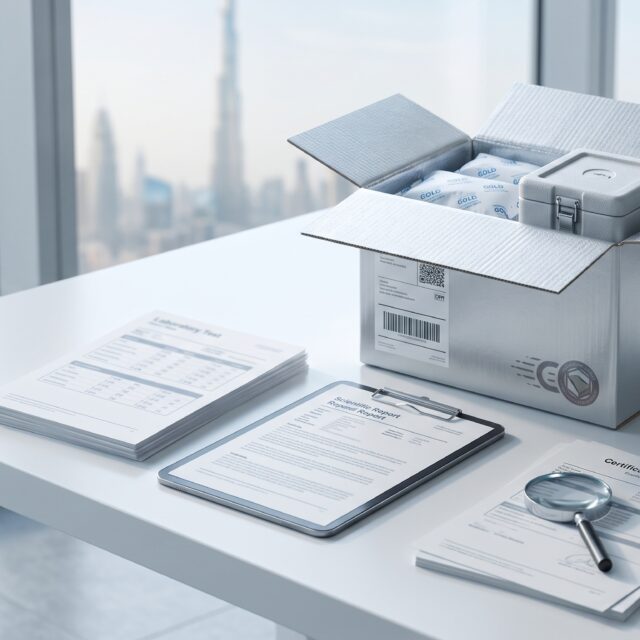
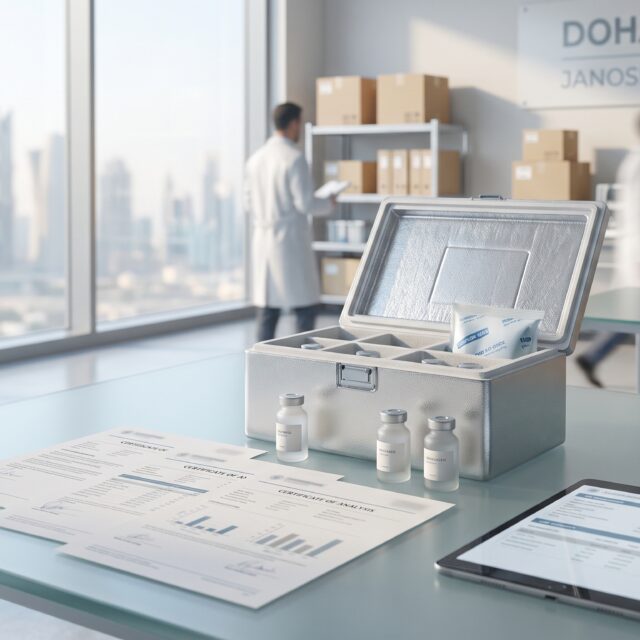
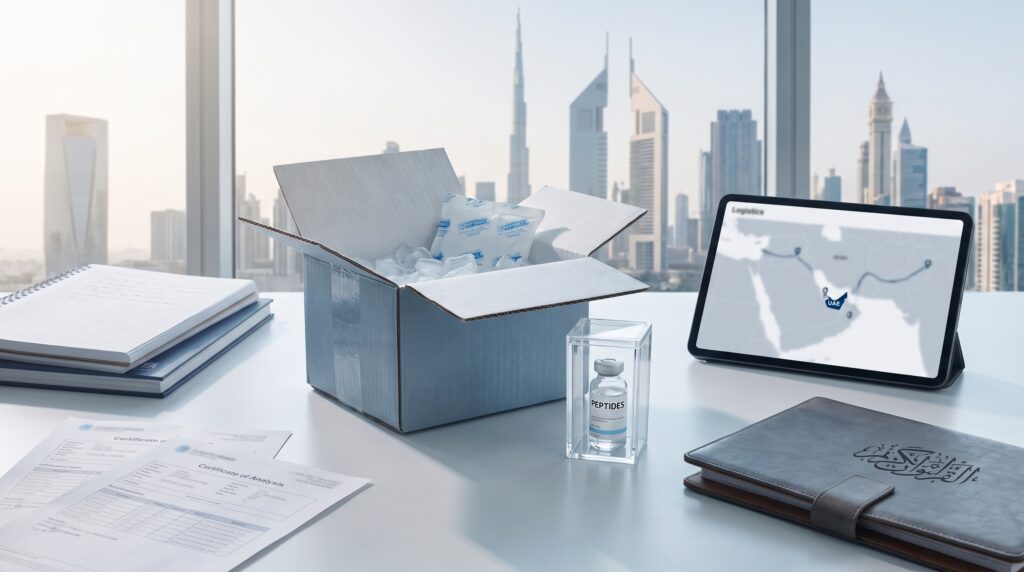
Cold chain peptide delivery UAE logistics ensure delicate research compounds survive extreme local temperatures. Reliable domestic suppliers bypass international customs delays and utilise thermal insulated packaging, cold packs, and expedited shipping to prevent irreversible hydrolytic cleavage and degradation during transit.
Whether you are acquiring complex amino acid chains or standard metabolic research peptides, evaluating a supplier’s shipping protocols is a non-negotiable part of the procurement process. Standard postal services and unconditioned courier vans are simply not equipped to manage the profound temperature sensitivities of these compounds.
Quick Answer: Buyer Logistics Checklist
Before placing an order for research materials in the UAE, verify the following operational standards with your supplier:
- Fulfilment Location: Does the vendor ship domestically from within the UAE, or internationally from overseas warehouses?
- Temperature Control: Do they guarantee thermal packaging with pharmaceutical-grade cold gel packs?
- Transit Time: Is the delivery window restricted to 24–48 hours to minimise ambient exposure?
- Customs Risk: Does local fulfilment eliminate the risk of international port holds and improper HS code classification?
- Payment & Support: Do they offer UAE-friendly options such as Cash on Delivery (COD), encrypted gateways, and responsive local support (e.g., WhatsApp dispatch updates)?
The 45°C Threat: How Ambient Heat Destroys Potency
The most pressing challenge for cold chain peptide delivery in UAE markets is the extreme summer climate. During peak months, ambient temperatures can routinely exceed 40°C to 45°C. When sensitive research compounds sit in unconditioned delivery vehicles or warm cargo facilities, they are subjected to rapid, irreversible thermal degradation.
Deamidation, Oxidation, and Covalent Aggregation
Peptides are precisely sequenced chains of amino acids held together by fragile peptide bonds. When exposed to high heat, several primary mechanisms destroy their structural integrity:
- Hydrolytic Cleavage: High temperatures accelerate the breaking of peptide bonds, fragmenting the molecule into smaller, distinct sequences and rendering the original compound useless for precise scientific testing.
- Deamidation and Oxidation: Heat stress expedites chemical reactions where certain amino acid residues (like asparagine and glutamine) degrade, completely altering the biological profile of the peptide.
- Covalent Aggregation: Severe thermal stress causes peptide molecules to clump together, permanently altering their physical properties. Poorly shipped lyophilised powders may appear discoloured, melted into a solid unyielding block, or stubbornly refuse to dissolve during reconstitution with bacteriostatic water.
Research compounds require a meticulously controlled environment. Even a single afternoon of exposure to direct sunlight or high ambient temperatures can result in a significant loss of purity, directly compromising experimental data and wasting valuable laboratory budgets.
Domestic vs. International Shipping: Navigating UAE Customs
Many researchers initially attempt to source compounds from massive international aggregators based in North America or Asia. However, importing peptides directly presents severe logistical and legal friction points that often result in ruined compounds.
The Risk of Port Delays
International shipments passing through Dubai or Abu Dhabi customs must be inspected and cleared. During this process, packages can sit in holding facilities for days or even weeks. If the shipment lacks professional cold chain peptide delivery for research peptides UAE, the thermal packaging will inevitably fail long before the package clears local customs. Ice packs melt within 48 to 72 hours, leaving the vials vulnerable to the unconditioned warehouse climate.
HS Code Classification
Compliant imports rely on highly specific Harmonised System (HS) codes. Research peptides are generally classified as general-trade chemical compounds under codes such as:
- HS 2106.10.00: Research-grade amino acid concentrates.
- HS 3504.00.10: Lyophilised protein powders.
- HS 3824.99.99: Miscellaneous laboratory chemicals.
When international suppliers improperly label these compounds to bypass scrutiny, shipments face outright seizure, costly fines, or indefinite delays. By choosing a domestic supplier that handles bulk importation legally and maintains on-the-ground inventory, local buyers completely bypass this last-mile customs bottleneck. The inventory is already in the country, cleared, and resting safely in a climate-controlled facility.
What to Expect from Reliable Packaging and Logistics
Proper cold chain peptide delivery in UAE is defined by specific packaging materials and aggressive shipping timelines. A trustworthy local provider will never simply place a glass vial in a standard padded envelope.
Thermal Insulation and Cold Packs
Reputable suppliers utilise specialised Expanded Polystyrene (EPS) thermal insulated boxes or thick, reflective temperature-shielding pouches. Inside, pharmaceutical-grade gel packs maintain a stable internal climate. While the gel packs may not arrive frozen solid after 24 hours of transit in July, they ensure the internal temperature of the package never spikes into the danger zone that causes peptide degradation.
Expedited Last-Mile Fulfilment
Time is the most crucial variable in preserving peptide integrity. At NOVA Labs, we understand that transit time is critical to research accuracy. For researchers relying on uncompromised shipments, evaluating options like peptides UAE next-day delivery is a vital step in supply chain management. Ensuring your compounds are exposed to the ambient environment for the shortest possible duration is paramount to success.
Evaluating Suppliers: Payments, Testing, and Fulfilment
Because the peptide market serves both institutional buyers and private scientific researchers, separating reliable suppliers from subpar operators requires looking closely at their business operations, testing protocols, and local infrastructure.
Verifiable Third-Party Lab Testing
A robust delivery network is irrelevant if the compound itself is impure before it even enters the box. Serious buyers must insist on viewing up-to-date Certificates of Analysis (COAs) verified by third-party High-Performance Liquid Chromatography (HPLC) and Mass Spectrometry (MS).
HPLC verifies the purity percentage (typically demanding >99% for accurate research), while MS confirms the exact molecular weight, ensuring no heavy metals or unwanted residual solvents are present. If a supplier cannot produce a recent, batch-specific COA, their shipping logistics are a moot point.
Payment Compliance and Support Hurdles
Due to stringent global payment regulations, research materials are often classified as high-risk goods. This means legitimate suppliers frequently face limitations with standard credit card processors. A reliable UAE-based supplier will adapt by offering secure, localised solutions, such as Cash on Delivery (COD) or encrypted payment links. The presence of a COD option is a strong indicator of local inventory and legitimate on-the-ground logistics. Furthermore, a vendor offering direct local support—such as dispatch tracking updates via WhatsApp—provides a layer of accountability that overseas suppliers cannot match.
Post-Delivery Storage and Laboratory Handling Essentials
The responsibility for cold chain management transitions to the buyer the moment the package is signed for. Proper laboratory handling is vital to maintaining the compound’s viability over time.
Managing Lyophilised Powders
Upon receiving your delivery, immediately inspect the vial. The lyophilised (freeze-dried) powder should appear as a stable, uniform ‘puck’ or a fine, dry powder, entirely free from moisture. The vials should be securely vacuum-sealed with an intact stopper.
Unreconstituted lyophilised peptides are relatively stable, but to maximise their shelf life, they should immediately be placed in a laboratory freezer at -20°C. In this state, and protected from UV light, they can remain viable for several years without noticeable degradation.
Reconstitution and Liquid Storage
Once reconstituted with sterile bacteriostatic water for in-vitro application, the peptide’s fragility increases dramatically. Liquid peptides must never be frozen, as the formation of ice crystals will physically shear and destroy the delicate amino acid sequences.
Instead, reconstituted solutions must be stored consistently in a laboratory refrigerator between 2°C and 8°C. Always minimise the time the vial spends outside the refrigerator during laboratory work, and ensure all handling is conducted using sterile, single-use equipment to prevent bacterial contamination.
References
- Vlieghe, P., Lisowski, V., Martinez, J., & Khrestchatisky, M. (2010). Synthetic therapeutic peptides: science and market. Drug Discovery Today, 15(1-2), 40-56.
- D’Hondt, M., Bracke, N., Taevernier, L., Gevaert, B., Vandercruyssen, K., Wynendaele, E., & De Spiegeleer, B. (2014). Related impurities in peptide medicines. Journal of Pharmaceutical and Biomedical Analysis, 101, 2-30.
- International Journal of Pharmaceutics (2018). Thermal stability of lyophilized peptide formulations: Mechanisms of degradation and formulation strategies.
- Buying Research Peptides UAE — the 2026 buyer-evaluation guide
- Shipping & Returns – Peptides DXB
- UAE Peptide Lab: BPC-157, TB-500, GHK-Cu & More — Research Peptides UAE
- Expert Buying Tips,UAE Peptides supplies peptides – pccab.com
- Cold Chain Integrity for Peptide Injectables – USA MedPremium
- Do Peptides Need to Be Shipped Cold? Temperature & Legal Rules (2026) | 3PLGuys
Final Thoughts on Sourcing Research Compounds
Acquiring research materials in a challenging climate requires a vendor that intimately understands local logistics. Relying on slow international shipping or inadequate packaging almost guarantees thermal damage, degraded compounds, and compromised research data.
By prioritising robust cold chain logistics, you ensure your compounds arrive with their molecular structure perfectly intact. Focus your procurement on domestic suppliers that offer transparent third-party HPLC testing, secure local payment options, and rapid thermal-protected transit.
Ready to source high-purity, structurally sound compounds backed by rigorous testing and domestic UAE fulfilment? Explore our product collection to view our full catalogue of research peptides, complete with verifiable COAs and reliable next-day delivery protocols.
Disclaimer: The products and information mentioned in this article are exclusively for in-vitro research purposes only and are not intended for human consumption, clinical application, diagnostic, or therapeutic procedures.
Frequently asked questions
How does extreme heat affect research peptides during shipping?
High temperatures above 40°C can cause hydrolytic cleavage, deamidation, and covalent aggregation. This thermal stress breaks down peptide bonds and alters the molecular structure, severely degrading the compound's purity and rendering it ineffective for precise scientific research.
What is the best way to store peptides after delivery in the UAE?
Unreconstituted lyophilised peptide powder should be immediately stored in a laboratory freezer at -20°C for maximum long-term stability. Once reconstituted with bacteriostatic water, the liquid solution must never be frozen and should be kept in a refrigerator between 2°C and 8°C.
Why is domestic UAE peptide delivery safer than international shipping?
Domestic delivery completely bypasses international customs holds, which often leave packages stranded in unconditioned holding facilities for weeks. Local fulfilment ensures rapid 24 to 48-hour transit times using insulated thermal packaging to preserve molecular integrity.
How can I verify a peptide supplier's quality before ordering?
Always check for an up-to-date Certificate of Analysis (COA) that utilises third-party High-Performance Liquid Chromatography (HPLC) and Mass Spectrometry (MS) testing to prove a purity level above 99%. Additionally, verify they use dedicated cold chain logistics for local dispatch.
Why do some UAE peptide suppliers only offer Cash on Delivery (COD)?
Research peptides are often categorised as high-risk by major credit card networks due to complex global regulations. Legitimate local UAE suppliers frequently offer COD as a secure, convenient alternative that proves local inventory availability without risking compliance payment holds.
Nova Labs buyer tools
Ready to verify stock, testing and delivery?
Use the product page and lab report section to check availability, documentation, delivery timing and support before placing an order.
- COA / test-report checks
- UAE delivery context
- Cold-chain handling
- COD and card payment options
- WhatsApp support