
What to Know Before You Buy BPC-157 in Qatar
To safely buy BPC-157 in Qatar, researchers must navigate strict MoPH regulations and extreme local temperatures. Success requires sourcing from trusted regional suppliers that provide independent HPLC-verified purity, verifiable Certificates of Analysis, and expedited premium shipping with robust thermal-insulated packaging.
Sourcing high-quality research compounds in the Middle East is inherently complex. For research institutes and procurement staff operating in Doha—such as those within Education City or specialized medical research facilities—locating reliable chemical reagents is often hindered by cross-border aggregators, opaque shipping times, and heightened regulatory scrutiny. Because there are no domestic retail stockists or licensed pharmacies carrying BPC-157 in Qatar, online searches typically yield international intermediaries. Platforms like Desertcart or Ubuy may list overseas brands, but they frequently suffer from out-of-stock statuses, heavy import markups, and—most critically—inadequate temperature controls for delicate amino acid sequences.
This guide unpacks the current realities of ordering BPC-157 to Qatar. By understanding local customs directives, the absolute necessity of cold-chain logistics in 45°C ambient heat, and the specific documentation required to verify purity, buyers can make informed decisions that protect both their research integrity and their procurement budgets.
Navigating Qatar MoPH Regulations and Customs
The regulatory landscape in Qatar requires strict compliance. Recent directives from Qatar’s Ministry of Public Health (MoPH) have tightened the import, trade, and distribution of unlicensed health and therapeutic products, which impacts how chemical reagents like BPC-157 are processed at the border.
For researchers, this fundamentally changes the procurement process. Historically, many international suppliers relied on standard “For research purposes only” disclaimers to bypass customs restrictions. Today, authorities at Hamad International Airport and local sea terminals actively inspect bulk chemical shipments and undocumented imports.
If you are importing BPC-157 as a chemical reagent for laboratory or in-vitro study, your supplier must provide exact, verifiable documentation. Unlabeled vials, vague customs declarations, or shipments from low-tier aggregators run a high risk of confiscation. Buyers must ensure their procurement aligns with local import laws and that they possess the necessary institutional clearances before initiating orders.
Beating the GCC Heat: Why Cold-Chain Delivery is Non-Negotiable
Even if a shipment clears customs smoothly, the severe climate of the Arabian Peninsula poses a constant threat to peptide integrity. BPC-157, like many delicate amino acid chains, is highly vulnerable to thermal degradation. During the Qatari summer, ambient temperatures routinely exceed 45°C (113°F).
If a parcel sits in a standard, non-air-conditioned postal depot or delivery van, the compound can rapidly degrade, rendering the research material entirely useless. Standard postal options lack the infrastructure to protect these shipments.
Informed buyers must demand specific logistical guarantees from their suppliers:
- Premium Carrier Routing: Shipments must be handled by expedited carriers like DHL Express, which prioritize swift customs clearance and utilize better climate-controlled warehousing facilities.
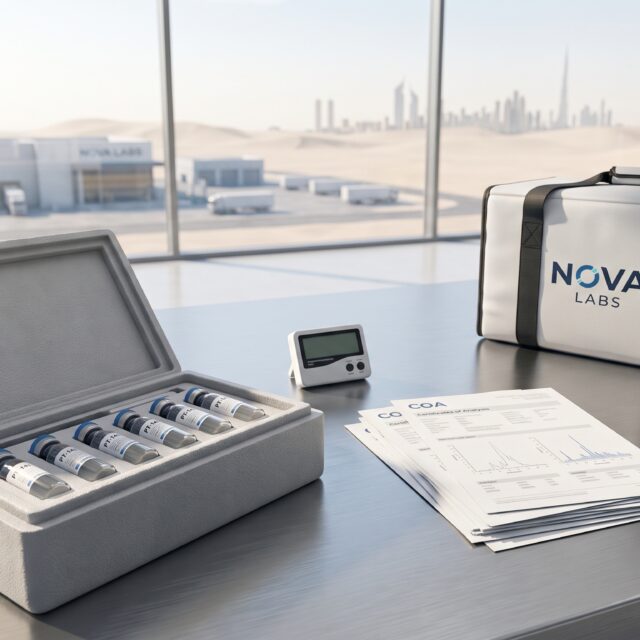
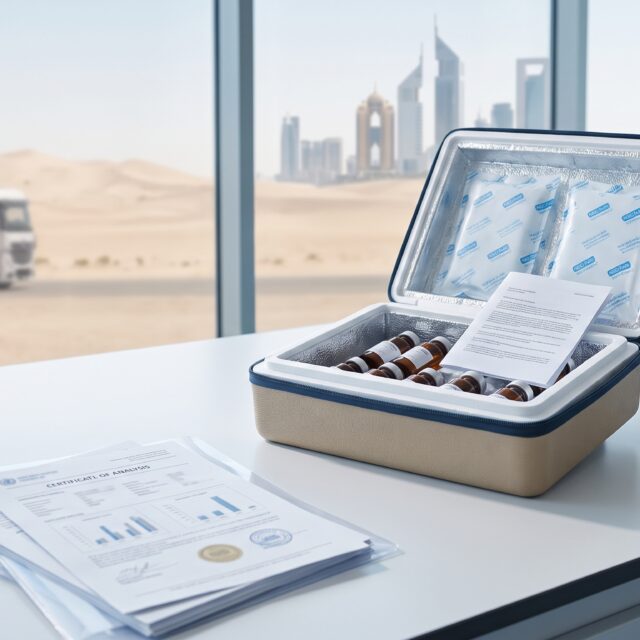
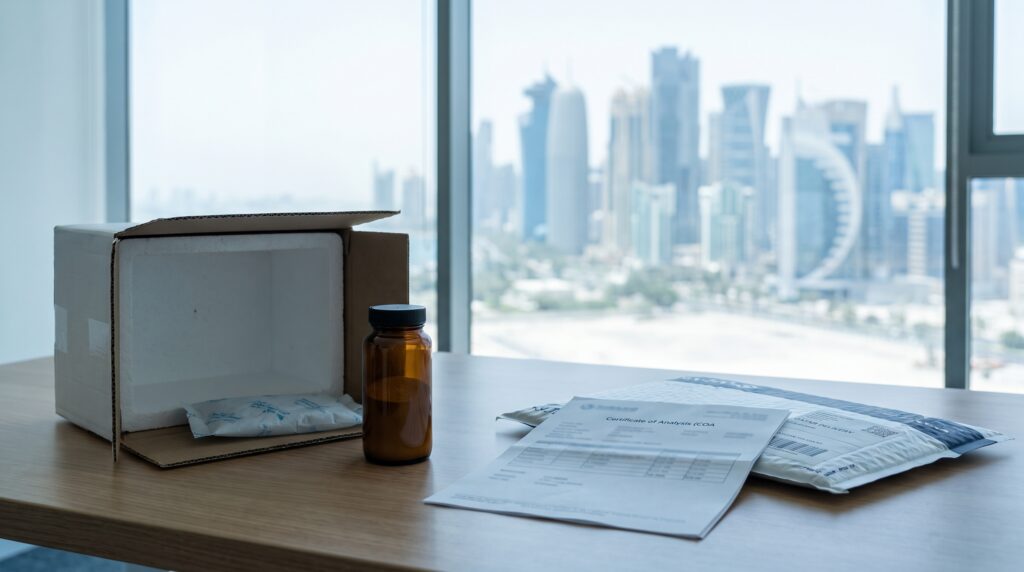
- Thermal-Insulated Packaging: Vials should never be shipped in basic cardboard or unlined envelopes. Vacuum-insulated packaging and strategic cold-packs are essential to buffer the product against ambient temperature spikes during transit.
- Lyophilized Stability: Ensure the BPC-157 is provided in a lyophilized (freeze-dried) format, which is significantly more stable during transit than pre-reconstituted liquid solutions.
Understanding how regional suppliers handle these extreme temperatures is critical. For context on localized shipping infrastructure, reviewing regional logistics and next-day delivery standards within the UAE highlights the level of care required to move delicate compounds across the GCC without compromising their chemical structure.
Verifying Purity: How to Audit a Supplier’s COA
When evaluating a BPC-157 supplier in Qatar, marketing claims are irrelevant without hard data. Authentic research procurement requires strict verification through independent, third-party laboratory testing. The standard document for this is the Certificate of Analysis (COA).
However, not all COAs are created equal. Counterfeit documentation is rampant among low-tier resellers. To audit a COA effectively, researchers should look for the following markers:
- Independent Laboratory Letterhead: The testing facility must be a recognized, independent analytical laboratory, not an in-house review by the vendor themselves.
- HPLC-MS Methodology: High-Performance Liquid Chromatography (HPLC) verifies the purity percentage (which should be 99% or higher), while Mass Spectrometry (MS) confirms the exact molecular weight and sequence identity of the BPC-157 compound.
- Matching Batch Numbers: The batch or lot number on the COA must directly match the number printed on the vial you receive. A generic, year-old COA used across multiple batches is a massive red flag.
- Visible Date of Testing: The report should be recent, reflecting the current inventory being sold, rather than historical data from previous production runs.
Local Resellers vs. Direct Regional Suppliers
Because there are no domestic stockists for BPC-157 in Qatar, buyers typically choose between global consumer aggregators and dedicated regional peptide suppliers.
Global aggregators often rely on dropshipping. They do not house the inventory themselves, meaning they have zero control over how the product is stored prior to shipping or how it is packaged for the Qatari climate. Furthermore, they rarely provide access to batch-specific COAs before purchase.
Conversely, a dedicated regional supplier specializing in chemical reagents understands the operational friction of the GCC. NOVA Labs, operating from the UAE, serves research buyers with a direct focus on transparency, rigorous third-party analytical testing, and climate-aware logistics. By sourcing BPC-157 from a specialized supplier, researchers gain direct access to verifiable HPLC reports and benefit from supply chains designed specifically to withstand Middle Eastern heat and customs requirements.
Buyer Checklist Before Ordering BPC-157 to Qatar
Before finalizing any procurement order for delivery to Doha or wider Qatar, run through this commercial checklist to ensure product viability and compliance:
- Check Customs Risk: Are you prepared to handle potential MoPH clearance queries with institutional documentation for research reagents?
- Verify the Carrier: Does the supplier use a premium express courier (e.g., DHL Express) to minimize transit time?
- Confirm Packaging: Does the supplier explicitly state they use thermal insulation and cold-chain protection for GCC orders?
- Audit the COA: Is the third-party HPLC-MS test visible on the product page, and does it show >99% purity for the current batch?
- Assess Support Mechanisms: Does the supplier offer responsive support to handle tracking updates or customs documentation requests if a package is held at Hamad International?
Conclusion and Next Steps
Procuring specialized research compounds in a highly regulated, high-heat environment requires more than just finding the lowest price. When you choose to buy BPC-157 in Qatar, your decision must be anchored in verifiable purity, aggressive thermal protection, and a clear understanding of the MoPH regulations governing chemical imports.
By demanding independent HPLC-MS documentation, utilizing expedited DHL routing, and working with specialized regional suppliers rather than generic global dropshippers, informed buyers can secure the high-quality reagents necessary for rigorous, uncontaminated research.
For researchers and procurement specialists ready to evaluate top-tier compounds backed by independent documentation, explore our complete inventory and reach out to our support team for region-specific shipping guidance.
Disclaimer: The products mentioned in this article are for laboratory and research purposes only and are not intended for human consumption or therapeutic use.
References
- Qatar Ministry of Public Health (MoPH) Directives on Unlicensed Pharmaceutical and Health Products.
- Analytical methods in peptide synthesis: the role of HPLC and Mass Spectrometry in verifying amino acid sequence identity.
- Customs and Logistics standards for importing chemical reagents into the GCC region via Hamad International Airport.
- MoPH bans sale and use of unlicensed peptide products | Qatar Living
- Qatar: Health Ministry bans unlicensed peptide products – Lexis Middle East
- Cold-Chain Peptide Delivery and Stability in the UAE
- International Shipping — Countries, Customs, and What to Expect – Everychem
- Shipping Details – Chempeptides
Frequently asked questions
Is it legal to buy BPC-157 in Qatar?
Recent Qatar MoPH directives have strictly regulated the import of unlicensed peptide products. Buyers must ensure they are importing BPC-157 solely as a documented chemical reagent for institutional research and are prepared to navigate strict customs clearance with proper documentation.
How is BPC-157 shipped to Qatar without degrading in the heat?
Reliable suppliers ship lyophilized BPC-157 using vacuum-insulated packaging, cold packs, and expedited carriers like DHL Express to prevent thermal degradation in the extreme 45°C+ GCC climate.
What is the best way to verify BPC-157 purity?
Buyers should demand a Certificate of Analysis (COA) from an independent laboratory showing High-Performance Liquid Chromatography (HPLC) and Mass Spectrometry (MS) results, confirming a purity level of 99% or higher for the specific batch being purchased.
Can I buy BPC-157 from local pharmacies in Doha?
No. There are no licensed domestic retail pharmacies or local stockists carrying BPC-157 in Qatar. Procurement for laboratory use must be done through specialized regional or international suppliers.
Does standard mail work for peptide delivery to Qatar?
Standard postal services are highly discouraged for peptide delivery to Qatar. Prolonged transit times and a lack of climate-controlled warehousing can easily destroy the compound's delicate amino acid chains before delivery.
Nova Labs buyer tools
Ready to verify stock, testing and delivery?
Use the product page and lab report section to check availability, documentation, delivery timing and support before placing an order.
- COA / test-report checks
- Qatar delivery context
- Cold-chain handling
- COD and card payment options
- WhatsApp support