
The Essentials: How to Buy BPC-157 in Abu Dhabi
Quick Answer: If you want to buy BPC-157 in Abu Dhabi for research, you must select a strictly compliant domestic supplier. Ensure the vendor provides batch-specific HPLC certificates, guarantees a minimum of 99% purity, and uses specialized cold-chain logistics to prevent thermal degradation during local transit.
Key Takeaways for UAE Procurement
- Regulatory Compliance: Ensure the supplier strictly operates within the UAE’s “Research Use Only” framework, avoiding off-label therapeutic claims.
- Analytical Verification: Never purchase without reviewing a batch-specific Certificate of Analysis (COA) that includes both High-Performance Liquid Chromatography (HPLC) and Mass Spectrometry (MS).
- Thermal Protection: Require specialized cold-chain packaging (insulated mailers and frozen gel packs) to protect lyophilized peptides from extreme GCC temperatures.
- Domestic Sourcing: Choose vendors holding physical stock within the UAE to avoid lengthy customs holds and border degradation.
- Secure Logistics: Prioritize suppliers offering expedited next-day delivery to Abu Dhabi to minimize transit time.
The UAE peptide market has evolved rapidly, leading to a distinct separation between clinical therapy providers and independent research laboratories. For laboratory managers, procurement teams, and informed buyers evaluating compounds for in vitro studies, sourcing high-quality reference materials requires navigating regulatory updates, regional temperatures, and complex logistics. This guide breaks down exactly what you need to evaluate before placing an order, ensuring you receive stable, high-purity peptides without compromising on operational reliability.
Understanding the UAE Regulatory Landscape: Research vs. Clinical Sourcing
When evaluating a BPC-157 supplier in Abu Dhabi, the first and most critical step is understanding the local regulatory environment. The UAE market is strictly bifurcated into two sectors: regulated medical clinics offering medically supervised treatments, and e-commerce vendors supplying laboratory-grade research compounds.
In mid-2024, the Emirates Drug Establishment (EDE) executed a comprehensive regulatory sweep against online sources and social media influencers for marketing unapproved peptide products with off-label clinical claims. Follow-up updates from the Dubai Health Authority (DHA) and the Ministry of Health and Prevention (MOHAP) further reinforced these critical boundaries.
For the end consumer and research buyer, this crackdown is a positive development. It forced low-quality, non-compliant vendors out of the market. Today, reputable e-commerce suppliers operate strictly within a ‘Research Use Only’ framework. They sell the BPC-157 Abu Dhabi researchers need exclusively as an in vitro reference material, entirely avoiding therapeutic, anti-ageing, or human consumption instructions. By aligning with vendors who respect these boundaries, buyers protect their institutions and ensure their sourcing channels remain open, legally compliant, and reliable.
The Science of Sourcing: Acetate vs. Arginine Salt Forms
When you buy BPC-157 in Abu Dhabi, you are typically purchasing a lyophilized (freeze-dried) powder. However, it is essential for researchers to understand the chemical salt form they are procuring, as it directly impacts the compound’s stability during laboratory storage and reconstitution.
BPC-157 is primarily synthesized in two forms:
- Acetate Salt: This is the most common form of BPC-157 found in research environments. It is highly effective for immediate in vitro assays and standard laboratory protocols. However, it is more susceptible to degradation if exposed to high temperatures or acidic environments, making cold-chain delivery even more critical.
- Arginate Salt (Arginine): A more advanced synthesis creates BPC-157 arginate, which offers enhanced stability, particularly against temperature fluctuations and extreme pH levels. While often more expensive, some researchers prefer the arginate form for long-term studies or assays simulating harsh physiological environments.
A reputable supplier will clearly state which salt form is contained within the vial, allowing researchers to calibrate their protocols and storage parameters accordingly.
Purity and Verification: Decoding the Certificate of Analysis
Not all lyophilized powders are created equal. Verifying the molecular purity of the compound is the single most critical factor in your purchasing decision. Relying on marketing claims is insufficient; rigorous analytical data is required.
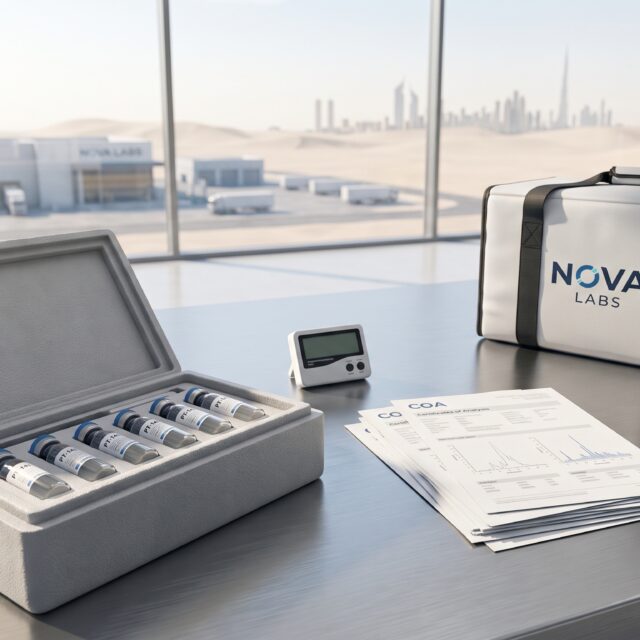
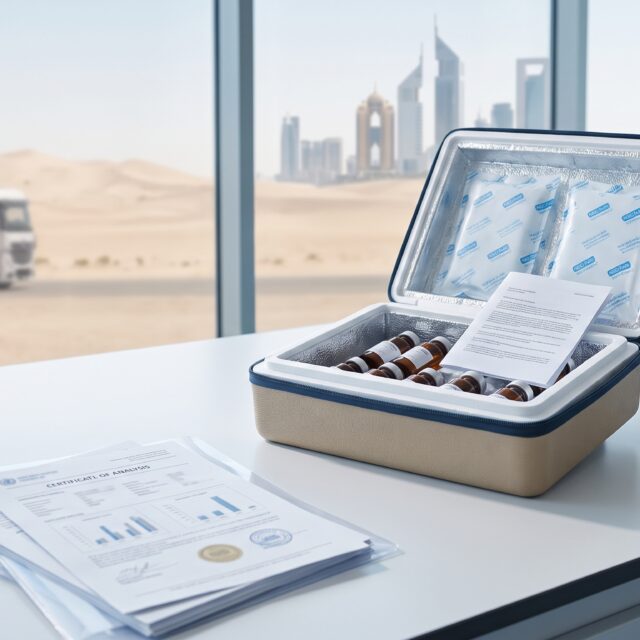
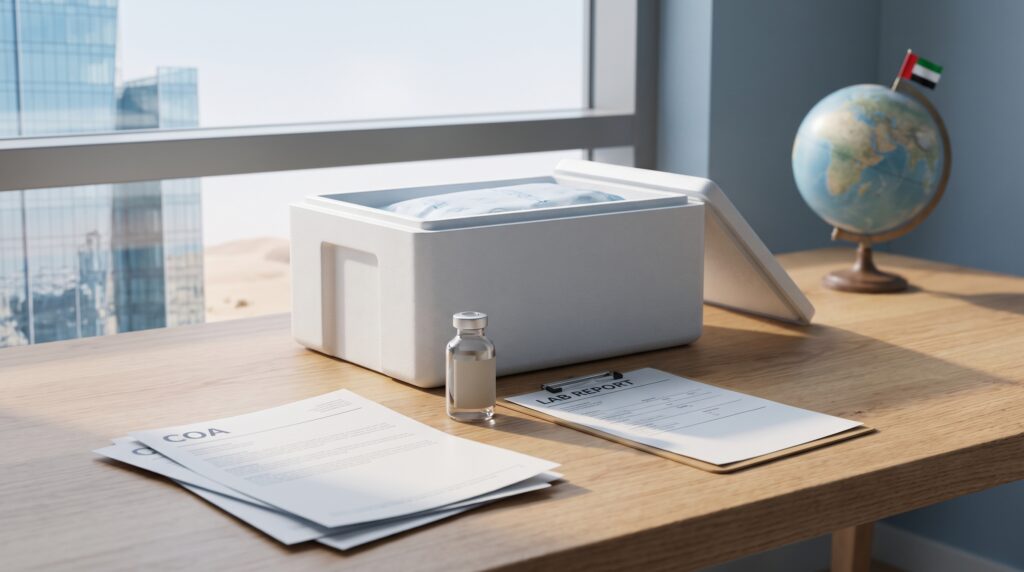
High-quality UAE suppliers validate their products through third-party analytical testing, resulting in a Certificate of Analysis (COA). For BPC-157, you should expect to see two primary testing methodologies on the documentation:
- High-Performance Liquid Chromatography (HPLC): This technique separates the components in a mixture to verify the purity of the target peptide. A premium research peptide should demonstrate an HPLC purity of 99% or higher, indicating that synthesis by-products, truncated sequences, and impurities have been effectively removed.
- Mass Spectrometry (MS): This verifies the molecular weight of the peptide. By matching the observed mass against the theoretical mass of BPC-157 (approximately 1419.5 Da), MS confirms that the compound in the vial is structurally correct and authentic.
When evaluating a vendor, check if their COAs are batch-specific and readily available. Generic, outdated, or heavily redacted testing documents are immediate red flags. Transparent suppliers understand that informed buyers require visibility into the exact batch they are purchasing before committing laboratory budgets.
Surviving the GCC Heat: Why Cold-Chain Logistics Are Non-Negotiable
Procuring sensitive biological compounds in the Middle East presents a unique logistical challenge. Peptides, even in their stable lyophilized state, are susceptible to thermal degradation. Exposure to the extreme ambient temperatures of an Abu Dhabi summer—where midday heat can easily exceed 45°C (113°F)—can compromise the structural integrity of the amino acid chain before it ever reaches your facility.
For this reason, standard courier services that leave parcels in unairconditioned vans for hours will degrade the material. Cold-chain delivery is an absolute operational necessity.
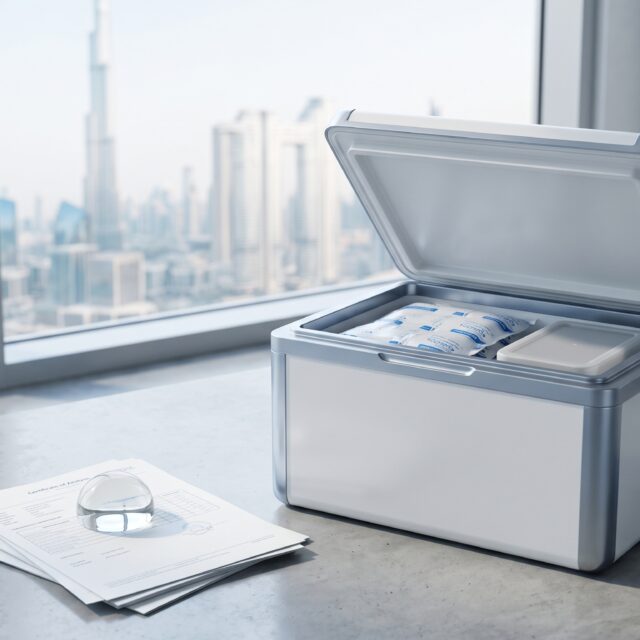
Top-tier vendors counteract the climate by deploying specialized thermal packaging. This typically includes:
- Insulated thermal mailers that deflect ambient heat and trap internal cold air.
- Frozen gel packs designed to maintain a stable, cool microclimate inside the parcel during the critical transit window.
- Expedited regional shipping to minimize the total transit time from warehouse to laboratory.
Because prolonged exposure to heat is the primary enemy of peptide stability, speed is just as vital as insulation. Opting for a supplier that manages robust UAE next-day delivery ensures that your reference materials spend the absolute minimum amount of time outside a climate-controlled environment, preserving the 99%+ purity validated on the COA.
Customs, Classification, and Payment Reliability
Importing biological materials internationally can result in lengthy customs holds, friction at the border, and ultimately, temperature degradation while a parcel sits in a customs warehouse awaiting clearance. This is why many procurement teams strongly prefer domestic suppliers holding physical stock within the UAE.
Within the local framework, research-grade peptides are classified as general-trade chemicals. They typically fall under specific Harmonised System (HS) codes, such as HS 3504.00.10 (lyophilized research-grade powder) or HS 3824.99.99 (chemical research compounds). Suppliers operating domestically have already navigated this import framework, shielding the end-buyer from paperwork and customs delays.
Another key indicator of a reliable vendor involves their payment infrastructure. Due to strict Visa and Mastercard BRAM (Business Risk Assessment and Mitigation) rules, payment networks often flag unapproved therapeutic peptides as high-risk. Non-compliant vendors frequently try to bypass this using deceptive, offshore payment gateways that randomly fail or compromise data security.
In contrast, compliance-first vendors are transparent about payment limitations. They frequently offer secure, alternative regional options, including Cash on Delivery (COD), encrypted payment links, or direct bank transfers. These methods indicate a vendor prioritizing operational longevity and customer security over fragile, temporary merchant accounts.
The Buyer’s Checklist: 6 Steps to Evaluate Your BPC-157 Supplier
Before you finalize an order for BPC-157 in Abu Dhabi, run through this commercial evaluation checklist to ensure you are engaging with a top-tier supplier:
- Batch-Specific COAs: Does the vendor provide visible, up-to-date HPLC and Mass Spectrometry reports guaranteeing 99% purity?
- Domestic UAE Stock: Is the product shipped locally from within the Emirates to avoid customs delays, or is it being drop-shipped internationally?
- Specialized Packaging: Does the vendor explicitly outline their cold-chain logistics, including thermal mailers and gel packs?
- Expedited Delivery Windows: Do they offer guaranteed next-day delivery to Abu Dhabi to minimize thermal exposure?
- Transparent Support: Can you reach a human via WhatsApp or local support channels to verify stock availability and batch numbers before ordering?
- Regulatory Compliance: Is the language on their platform strictly focused on research and laboratory use, adhering to MOHAP and EDE guidelines?
Sourcing with Confidence at NOVA Labs
For laboratories, researchers, and procurement specialists operating in Abu Dhabi, securing a reliable supply chain for reference compounds removes the friction from your work. By demanding transparent analytical testing, insisting on rigorous cold-chain logistics, and understanding the local regulatory environment, buyers can source their materials with absolute confidence.
At NOVA Labs, we focus on removing the guesswork from peptide procurement in the GCC. We supply domestically stocked, HPLC-verified research compounds handled under strict thermal controls to ensure maximum molecular stability. If you are ready to evaluate our inventory, access our latest batch testing documentation, and secure premium reference materials, you can order BPC-157 directly from our catalogue. Every order is backed by robust cold-chain logistics, transparent support, and reliable UAE next-day delivery.
Disclaimer: The products mentioned in this article are for in vitro research and laboratory purposes only. They are strictly not intended for human consumption, therapeutic use, or medical treatment.
*
References
- Gulf News. (2024). UAE Cracks Down on Unapproved Peptide Weight-Loss Drugs: 71 Sources and 14 Influencers Face Action.
- Ministry of Health and Prevention (MOHAP). Guidelines on the Importation and Distribution of General Trade Chemicals and Research Compounds.
- National Institutes of Health (NIH). Thermal Stability and Degradation Kinetics of Peptides in Aqueous and Solid States.
- Journal of Chromatography B. Analytical Methodologies for Peptide Purity Verification utilizing High-Performance Liquid Chromatography (HPLC).
Disclaimer: The products mentioned in this article are for research purposes only and are not intended for human consumption.
- Peptide Therapy in Dubai & Abu Dhabi – Skin111
- Peptide Therapy in Dubai & Abu Dhabi | DNA Health and Wellness
- UAE Cracks Down on Unapproved Peptide Weight-Loss Drugs: 71 Sources and 14 Influencers Face Action – Gulf News
- Buying Research Peptides UAE — the 2026 buyer-evaluation guide – Wellness Labs
- Shipping & Returns – Peptides DXB
- BPC-157 – NOVA Labs
Frequently asked questions
Is it legal to buy BPC-157 in Abu Dhabi?
Yes, provided it is purchased from a compliant vendor as a research chemical (classified under specific chemical HS codes) strictly for in vitro and laboratory use, not for human consumption.
How do I verify the purity of a BPC-157 peptide in Abu Dhabi?
Look for batch-specific High-Performance Liquid Chromatography (HPLC) and Mass Spectrometry (MS) certificates of analysis (COAs) ensuring a minimum purity of 99%.
Does BPC-157 degrade in the UAE heat?
Yes, lyophilised peptides are susceptible to thermal degradation. Reliable UAE suppliers use specialised cold-chain logistics, including insulated mailers and frozen gel packs, to protect molecular stability during transit.
Can I pay with standard credit cards for BPC-157 in the UAE?
Due to stringent credit card network regulations (BRAM rules), transparent vendors often use alternative secure payment methods such as Cash on Delivery (COD) or encrypted regional gateways to ensure reliable, secure processing.
Nova Labs buyer tools
Ready to verify stock, testing and delivery?
Use the product page and lab report section to check availability, documentation, delivery timing and support before placing an order.
- COA / test-report checks
- Abu Dhabi delivery context
- Cold-chain handling
- COD and card payment options
- WhatsApp support