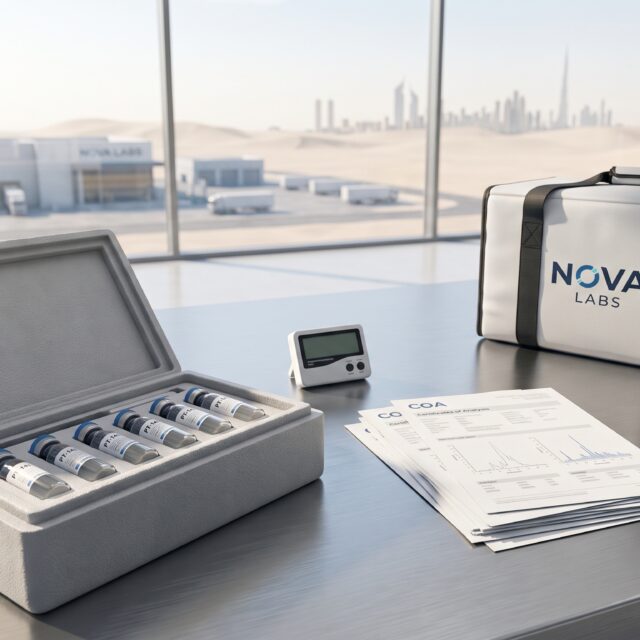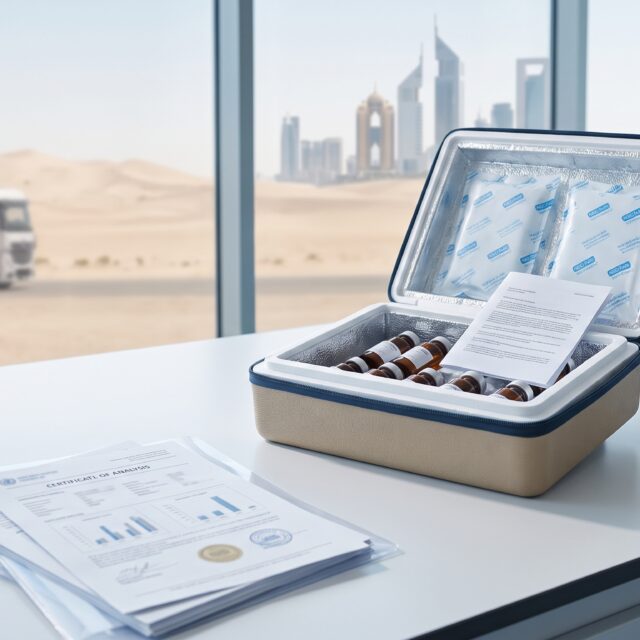

Navigating the procurement landscape to buy TB-500 in Qatar requires a precise understanding of regional logistics, strict regulatory updates, and rigorous laboratory documentation. For institutional researchers, procurement staff, and informed buyers, sourcing research peptides in the GCC is no longer a matter of simply placing an international order. With evolving import regulations and the intense climate of the region, buyers must critically evaluate their supply chain.
Recent regulatory updates in Qatar, particularly concerning the oversight of biological and pharmaceutical compounds, mean that buyers must differentiate legitimate research procurement from unauthorized grey-market sellers. This guide provides a factual, non-medical framework for evaluating a TB-500 supplier, ensuring batch purity, surviving thermal transit, and meeting institutional compliance standards.
Quick Answer: What to Check When You Buy TB-500 in Qatar
When you buy TB-500 in Qatar, strictly source freeze-dried lyophilized powder backed by third-party HPLC and MS testing demonstrating a minimum of 98% purity. Following recent Ministry of Public Health restrictions, institutional buyers must ensure proper documentation for the Al Nadeeb customs system and utilize secure GCC-based fulfillment to prevent thermal degradation.
Navigating Qatar’s MoPH Peptide Regulations and Customs
The landscape for importing research materials into Doha has tightened significantly. In August 2023, the Qatar Ministry of Public Health (MoPH) issued strict regulatory circulars prohibiting the unauthorized import, trade, prescription, and promotion of unlicensed peptides. A critical takeaway from this update is that merely labeling a product “for research purposes only” does not grant an exemption for human consumption or unauthorized retail distribution.
For legitimate B2B, scientific, and institutional buyers, securing TB-500 imports into Qatar requires strict adherence to customs protocols.
Qatar’s General Authority of Customs enforces rigorous biological material checks through the Al Nadeeb single-window electronic clearance system. When an international shipment arrives at Hamad International Airport, it is scrutinized for correct Harmonized System (HS) codes and verifiable commercial invoices. Orders placed with overseas suppliers lacking GCC logistical expertise frequently face severe delays, extensive questioning, or outright confiscation if the documentation is ambiguous or incomplete.
Because the local market is polarized—split between unauthorized grey-market sellers dealing in unverified brands, and heavily regulated commercial pharmaceutical importers—research buyers must seek dedicated peptide suppliers who operate transparently within regulatory bounds, providing the exact documentation required for clear passage.
Evaluating a TB-500 Supplier in Qatar: The Documentation Checklist
Identifying a reliable TB-500 supplier in Qatar goes far beyond comparing prices. It requires verifying the biochemical integrity of the compound. Because peptides are synthesized in laboratory settings, byproducts and impurities are inevitable unless the manufacturer uses precise purification processes.
Before you order TB-500 in Qatar, demand visibility into the following analytical documents:
1. High-Performance Liquid Chromatography (HPLC) Reports
HPLC is the standard method for separating, identifying, and quantifying the components of a peptide mixture. A reputable supplier will publish batch-specific HPLC reports. Buyers should look for a singular, distinct peak on the chromatogram, which indicates that the peptide is highly purified. The industry standard for research-grade TB-500 is a minimum purity threshold of 98%. Anything lower introduces unknown variables into research models.
2. Mass Spectrometry (MS) Validation
While HPLC confirms how pure the sample is, Mass Spectrometry confirms that the sample is actually the correct molecule. By measuring the mass-to-charge ratio of the ions, MS verifies that the molecular weight matches the theoretical weight of the TB-500 (Thymosin Beta-4) fragment. A missing MS report is a significant red flag.
3. Batch-Specific Certificates of Analysis (COA)
Generic or outdated COAs are useless. The COA provided by the supplier must match the batch number of the vial you receive. Independent, third-party testing from an accredited analytical laboratory carries far more weight than an in-house document produced by the manufacturer.
At NOVA Labs, we prioritize scientific transparency by ensuring researchers have access to batch-verified testing data before they make a procurement decision.
Thermal Integrity in the GCC: The Lyophilization Mandate
One of the most overlooked aspects of sourcing any TB-500 peptide in Qatar is the physical format of the compound and the logistics of regional delivery. Peptides are fragile chains of amino acids. When suspended in a liquid solution, their molecular bonds become highly susceptible to degradation from UV light, mechanical agitation, and—most importantly in the GCC—heat.
Shipping reconstituted liquid peptides into Qatar during the summer months is practically guaranteed to result in a degraded, denatured product by the time it clears customs.
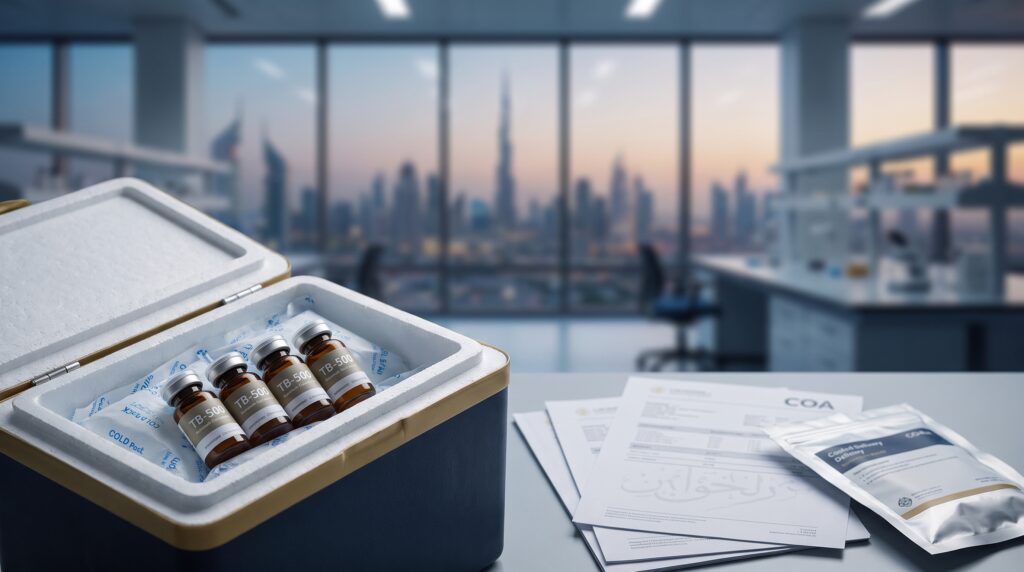
To maintain molecular stability, TB-500 must be shipped as a freeze-dried, lyophilized powder. The lyophilization process extracts the moisture from the peptide in a vacuum, halting degradation and rendering the compound stable at ambient temperatures during transit. It should only be reconstituted with bacteriostatic water immediately prior to laboratory application.
Furthermore, sourcing from a supplier with established GCC fulfillment networks bypasses the drawn-out international transit times that expose packages to prolonged tarmac heat at transit hubs. Fast, regional dispatch ensures the vials remain intact and viable for your research protocols.
TB-500 Peptide Context: Research Applications
TB-500 is a synthetic derivative of Thymosin Beta-4, a naturally occurring peptide present in high concentrations in blood platelets and wound fluid. In scientific models, its primary mechanism of action involves the upregulation of actin, a vital cellular protein essential for cell structure and motility.
In in-vitro and animal research settings, TB-500 is heavily studied for its potential in tissue repair, cellular migration, and localized inflammation modulation. Researchers frequently observe its behavior in models of soft tissue damage, evaluating how it influences the repair of muscle, tendon, and ligament structures.
It is common in experimental design to pair TB-500 with BPC-157. This “recovery duo” is investigated for synergistic effects, where BPC-157 is observed for its angiogenic properties (the formation of new blood vessels) and TB-500 for actin-binding and cellular migration.
Note: These mechanisms are strictly observed in controlled research environments. Buyers evaluating these compounds must understand that they are for laboratory investigation and not intended for human administration or medical treatment.
Final Procurement Checklist
When it comes time to finalize procurement, informed buyers prioritize operational reliability just as highly as product purity. A trusted supplier should offer a seamless purchasing experience tailored to the realities of the GCC market.
Key operational factors to verify:
- Accessible Support: Can you reach a human to verify batch numbers or discuss shipping timelines? Dedicated WhatsApp support is a strong indicator of regional commitment.
- Payment Flexibility: Secure online gateways and local payment options build immediate trust.
- Stock Visibility: Grey-market sellers often take orders for products they do not physically hold, leading to weeks of delay. Ensure your supplier maintains active, verifiable stock in their regional hub.
By prioritizing transparent testing, secure packaging, and efficient local logistics, buyers can insulate their research from the inconsistencies of unverified vendors. For researchers requiring immediate, verified stock, you can securely order TB-500 through NOVA Labs, ensuring your materials arrive with intact thermal stability and comprehensive analytical documentation.
Disclaimer: The products mentioned in this article are strictly for in-vitro and laboratory research purposes only and are not intended for human consumption, diagnostic, or therapeutic use.
References
- Qatar Ministry of Public Health (MoPH). “Circular on the Prohibition of Unlicensed Peptide Products.” August 2023.
- General Authority of Customs, State of Qatar. “Al Nadeeb Single-Window Electronic Customs Clearance System Overview.”
- MoPH bans sale and use of unlicensed peptide products | Qatar Living
- Buy TB-500 Qatar: Purity, COA & GCC Delivery Guide – NOVA Labs
- Best Peptide Shop Qatar: Supplier & Buyer’s Guide (2024) – NOVA Labs
- TB-500 Peptide for Recovery & Muscle Repair | Valeo Health
- TB-500 – 10 mg | PHARMAQO – Doha Performance
- Know all about Al-Nadeeb: the single-window customs clearance operation in Qatar
Frequently asked questions
Is it legal to buy TB-500 in Qatar?
Yes, it is permissible to import TB-500 into Qatar strictly for institutional and laboratory research purposes. Following August 2023 MoPH regulations, imports must be properly declared through the Al Nadeeb customs system and are strictly prohibited for human consumption or unauthorized retail promotion.
What is the best format for shipping TB-500 to the GCC?
To prevent molecular degradation from extreme GCC heat, TB-500 must always be shipped as a freeze-dried, lyophilized powder. Liquid or pre-mixed peptides are highly susceptible to thermal damage during transit.
How do I verify the purity of a TB-500 peptide?
Purity should be verified by requesting a batch-specific Certificate of Analysis (COA) from an independent, third-party laboratory. This document should include an HPLC report showing a single distinct peak and a minimum purity of 98%, alongside Mass Spectrometry (MS) validation.
What is the Al Nadeeb system in Qatar?
Al Nadeeb is Qatar's single-window electronic customs clearance platform. It is used by the General Authority of Customs to strictly monitor and clear the import of biological and scientific materials, requiring accurate Harmonized System (HS) codes and verifiable commercial invoices.
Nova Labs buyer tools
Ready to verify stock, testing and delivery?
Use the product page and lab report section to check availability, documentation, delivery timing and support before placing an order.
- COA / test-report checks
- Qatar delivery context
- Cold-chain handling
- COD and card payment options
- WhatsApp support