
Where to Buy TB-500 in Saudi Arabia: The Complete Researcher’s Guide
Quick Answer: To securely buy TB-500 in Saudi Arabia, researchers must source lyophilized powder testing at ≥99% purity via third-party HPLC. Ensure the supplier provides accurate ZATCA/SFDA documentation classifying the shipment for research use only (RUO) to prevent customs seizure and thermal degradation during transit delays.
To successfully procure TB-500 for scientific study in the Kingdom of Saudi Arabia (KSA), researchers must source from suppliers offering stable lyophilized powder rather than fragile pre-mixed liquids. Buyers must require batch-specific High-Performance Liquid Chromatography (HPLC) purity testing, transparent compliance with Saudi Food and Drug Authority (SFDA) research-use regulations, and localized GCC shipping to prevent thermal degradation during ZATCA customs clearance.
While the global market is saturated with grey-market vendors promising fast international shipping, the Gulf Cooperation Council (GCC) presents unique logistical challenges. Sourcing high-purity research compounds here demands more than just a functional payment gateway; it requires a supplier with localized logistical expertise, strict temperature controls, verifiable laboratory documentation, and an understanding of regional import laws.
This comprehensive guide breaks down exactly how to evaluate a TB-500 supplier in Saudi Arabia, the critical differences in product formulations, how to accurately decode a Certificate of Analysis (COA), and what to expect from customs clearance when importing research peptides.
The Regulatory Landscape: Navigating SFDA and ZATCA Clearances
The Saudi Ministry of Health (MoH) and the Saudi Food and Drug Authority (SFDA) maintain strict, modernized oversight over the importation of chemical and biological compounds. Recent regulatory enforcement utilizing the Law of Practicing Healthcare Professions has actively targeted the unauthorized distribution of unregistered health products, particularly via physical fitness centers and unregulated social media channels.
For academic and independent researchers looking for a legitimate TB-500 supplier Saudi Arabia can trust, compliance is an absolute necessity. To avoid costly customs seizures and regulatory red flags, all incoming peptide shipments must be explicitly designated for “Research Use Only” (RUO) or for in-vitro/laboratory study on the commercial invoice.
Suppliers who recklessly market their products with unapproved medical claims, human dosing protocols, or clinical-use instructions drastically increase the risk that the shipment will be confiscated at the border by the Zakat, Tax and Customs Authority (ZATCA). Institutional buyers may also be required to process shipments through the FASAH clearance platform, which demands clear, accurate harmonized system (HS) codes and RUO declarations.
The Rise of Escalation Scams and Payment Fraud
A notable risk when attempting to order TB-500 in Saudi Arabia is the prevalence of “escalation scams” operating on Telegram, Instagram, and unverified forums. In these scenarios, unauthorized, often anonymous sellers demand payment upfront via untraceable cryptocurrency. Days later, they falsely claim the package has been held up by local Saudi customs, demanding further “clearance fees” or “bribes” to release the goods.
To protect your laboratory procurement budget, exclusively work with established, legally registered suppliers who offer secure, regional payment gateways (such as Visa/Mastercard processing). Furthermore, look for suppliers that provide transparent shipping terms, clear B2B invoicing, and timezone-aligned support channels—such as WhatsApp—that provide verifiable, real-time courier tracking information.
Evaluating Product Stability: Lyophilized Powder vs. Pre-Mixed Pens
One of the most critical decisions when evaluating any TB-500 peptide Saudi Arabia listing is the physical format of the compound. Many international competitors and grey-market vendors heavily market pre-mixed liquid peptide pens or nasal sprays, citing user convenience. However, in the context of the Saudi Arabian climate and international air freight, these formats are chemically unviable for rigorous research.
The Threat of GCC Heat and Peptide Hydrolysis
Summer temperatures in the Kingdom frequently exceed 45°C (113°F), and even winter logistics can expose parcels to significant ambient heat on airport tarmacs. Peptides are essentially short chains of amino acids held together by fragile peptide bonds. When exposed to heat and mechanical agitation in a liquid state during international transit, these bonds undergo rapid hydrolysis and thermal degradation.
Research compounds degrade rapidly in a liquid matrix. A pre-mixed liquid pen shipped from overseas without strict, continuous, digitally monitored cold-chain management will almost certainly arrive severely degraded, rendering the TB-500 useless for accurate scientific study.
Why Lyophilization is a Non-Negotiable Requirement
To ensure absolute molecular integrity, researchers should exclusively procure TB-500 in a lyophilized (freeze-dried) powder format. The lyophilization process removes the water content under a strict vacuum, putting the peptide into a highly stable, dormant solid state.
While lyophilized powder still requires appropriate temperature management during transit to maximize shelf life, it is significantly more resilient to ambient temperature fluctuations than pre-mixed liquids. You should look for a solid, intact “puck” of powder at the base of the vial. Once the vial safely arrives at your laboratory facility, it can be securely stored in a freezer (-20°C is ideal) and later reconstituted with sterile bacteriostatic water precisely when your experiment is ready to commence.
Decoding the COA: How to Verify True Purity
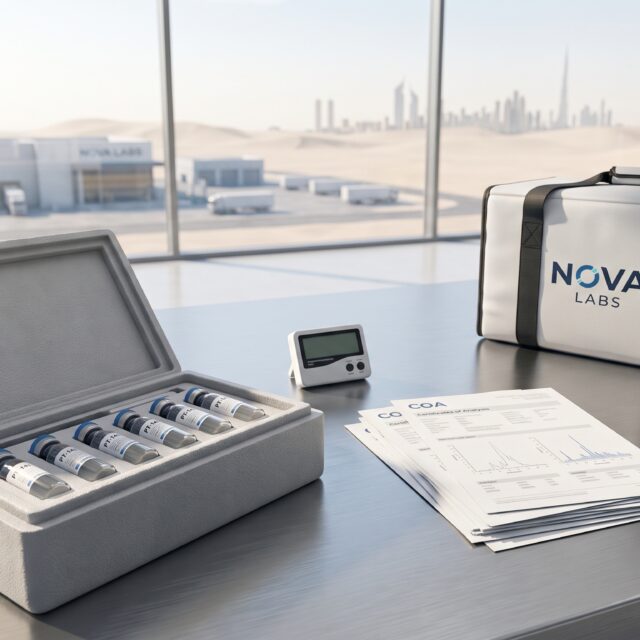
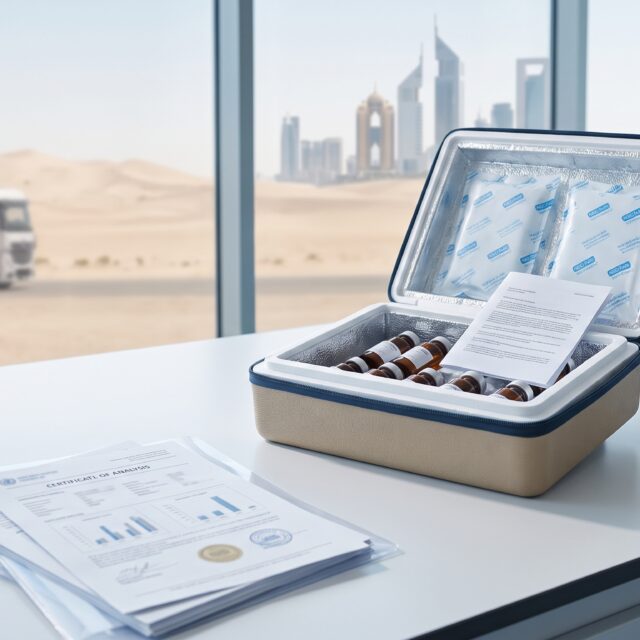
A professional peptide supplier will never ask you to simply take their word on product quality; they will proactively provide a detailed Certificate of Analysis (COA). However, not all COAs are created equal. When preparing to buy TB-500 in Saudi Arabia, informed buyers must know how to spot a genuine, verifiable document versus a generic, outdated PDF downloaded from a competitor’s website.
High-Performance Liquid Chromatography (HPLC)
HPLC is the analytical gold standard for testing peptide purity. The provided laboratory report should feature a clear, legible chromatogram—a graph showing distinct peaks over time. The primary, largest peak represents the target compound (TB-500), and the integrated area under this peak indicates the purity percentage. For reliable scientific baselines, a top-tier supplier should provide a product testing at ≥99% purity.
Mass Spectrometry (MS)
While HPLC confirms how pure the powder is, Mass Spectrometry (often ESI-MS or MALDI-TOF) confirms the identity of the molecule itself. The MS report measures the exact molecular weight of the compound to ensure that the powder in the vial is definitively TB-500, and not a cheaper substitute, degraded fragment, or byproduct of the synthesis process.
Key Verification Steps for Discerning Buyers:
- Batch Specificity: Ensure the unique batch or lot number on the COA directly matches the batch number printed on the physical vial you receive.
- Recent Dates: A COA from three years ago does not reflect the current stock being sold today. Look for recently dated analytical test reports.
- Independent Third-Party Testing: The most trustworthy COAs are conducted by independent, ISO-accredited analytical laboratories. In-house testing can present a severe conflict of interest.
At NOVA Labs, we prioritize absolute analytical transparency. We ensure that our procurement clients have direct access to verified, batch-specific HPLC and MS purity documentation prior to making any purchasing decision.
Customs, ZATCA Logistics, and Active Cold-Chain Shipping
Sourcing high-purity TB-500 is only half the equation; the other half is ensuring it arrives at your Saudi laboratory facility intact, undegraded, and fully compliant with Saudi tax and import laws.
Navigating Import Duties and Taxes
All commercial and private shipments entering the Kingdom of Saudi Arabia are subject to a 15% Value Added Tax (VAT), alongside potential customs service and processing fees administered by ZATCA. A highly competent supplier understands these specific regional requirements and will provide the correct, itemized commercial invoices, accurately declaring the goods as RUO research chemicals with the correct HS codes. Look for suppliers who can facilitate smooth regional clearance, preventing your shipment from languishing in a hot customs warehouse.
Active Cold-Chain Management and Regional Dispatch
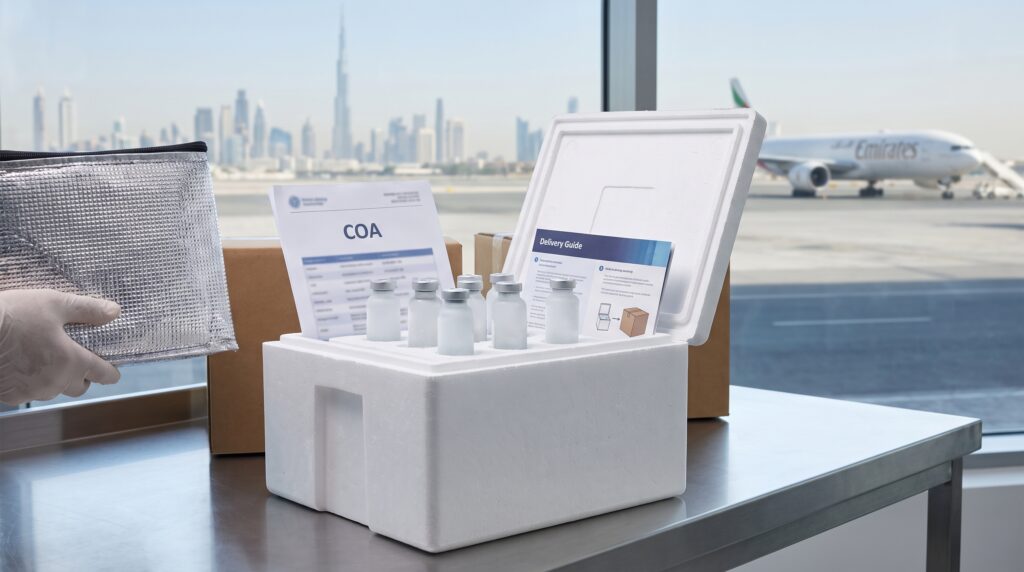
Even stable lyophilized peptides should not be subjected to prolonged heat or direct sunlight. A premium supplier will dispatch shipments utilizing insulated packaging to protect against the GCC climate and route the package via the fastest possible air-freight and last-mile courier networks.
For more information on our localized logistics, you can review our procedures for GCC shipping and next-day UAE dispatch. Working with a specialized regional supplier who dispatches from within the GCC (such as the UAE) drastically mitigates the extended transit times, thermal exposure, and severe customs friction often associated with ordering from suppliers based in North America or East Asia.
Ordering TB-500 for Your Laboratory
For researchers and procurement managers evaluating where to direct their laboratory budgets, NOVA Labs provides a secure, highly transparent, and regionally optimized purchasing experience. We bypass the marketing hype and focus strictly on the fundamental requirements of successful laboratory research: verifiable high purity, stable stock availability, and reliable, fast regional logistics.
When you procure research compounds from NOVA Labs, you benefit from:
- Lyophilized Stability: We supply TB-500 exclusively in freeze-dried powder format to ensure total molecular integrity upon arrival in Saudi Arabia.
- Documented Purity: Direct access to third-party HPLC and Mass Spectrometry analytical testing to guarantee a ≥99% purity baseline.
- Regional Logistics Expertise: Secure credit card payment processing, timezone-appropriate WhatsApp support, and a deep, practical understanding of ZATCA and GCC shipping requirements to minimize frustrating customs delays.
To view our current inventory, check regional stock availability, or initiate a secure procurement order for your facility, you can order TB-500 directly through our encrypted platform.
Conclusion
To successfully buy TB-500 in Saudi Arabia, researchers must adopt a diligent, evidence-based approach to laboratory procurement. By rejecting unstable, pre-mixed liquid formulations, demanding batch-specific third-party HPLC COAs, and working exclusively with suppliers who understand the rigorous demands of SFDA compliance and KSA logistics, you can protect your research budget and ensure the integrity of your scientific studies.
Focus on verifiable analytical data, prioritize secure GCC regional supply chains, and insist on responsive, transparent communication from your vendor before placing an order.
Disclaimer: The products mentioned in this article are strictly for laboratory research and in-vitro purposes only. They are not intended for human consumption, therapeutic use, or medical treatment.
References
- Saudi Food and Drug Authority (SFDA). “Importation Guidelines for Chemicals and Reagents for Research Purposes.”
- Ministry of Health (MoH), Kingdom of Saudi Arabia. “Law of Practicing Healthcare Professions and Regulations on Unregistered Product Distribution.”
- Zakat, Tax and Customs Authority (ZATCA). “Customs Clearance Procedures, HS Codes, and 15% VAT Regulations.”
- D’Hondt, M., et al. (2014). “Related impurities in peptide medicines.” Journal of Pharmaceutical and Biomedical Analysis.
- NOVA Labs Internal Quality Control. “Peptide Stability and Cold-Chain Logistics in the GCC.”
Disclaimer: The products mentioned in this article are for research purposes only and are not intended for human consumption.
- Wholesale Peptides Saudi Arabia: B2B Supplier & Procurement – NOVA Labs
- MOTS-c Saudi Arabia: Buying, Purity, COA and Delivery Guide – NOVA Labs
- MoH Warns Against Using Unregistered Drugs and Seizes Violators
- TB-500 – Emirates Peptides
Frequently asked questions
Is it legal to import TB-500 into Saudi Arabia?
Yes, provided the compound is strictly designated, invoiced, and documented for Research Use Only (RUO) or in-vitro laboratory study, in full compliance with SFDA guidelines. It must never be imported or marketed for human consumption.
Why should researchers in the GCC avoid pre-mixed TB-500 liquid pens?
Extreme ambient temperatures in the Middle East rapidly degrade the fragile peptide bonds in liquid formulations via hydrolysis during transit. Lyophilized (freeze-dried) powder is significantly more stable against thermal degradation.
Do I have to pay ZATCA customs duties on research peptide shipments?
Yes. All incoming commercial and private shipments to Saudi Arabia are subject to a standard 15% VAT and applicable ZATCA processing fees, which are typically collected by the courier during final delivery clearance.
What critical details should I verify on a TB-500 COA?
Buyers should meticulously verify that the COA is batch-specific to the physical vial received, recently dated, conducted by an independent third-party analytical laboratory, and displays HPLC testing confirming a purity of 99% or higher.
How does regional shipping compare to international peptide sourcing?
Sourcing from a regional supplier within the GCC (such as from the UAE) drastically reduces transit times, minimizes the risk of thermal degradation, and often results in smoother, faster customs clearance compared to importing from North America or Asia.
Nova Labs buyer tools
Ready to verify stock, testing and delivery?
Use the product page and lab report section to check availability, documentation, delivery timing and support before placing an order.
- COA / test-report checks
- Saudi Arabia delivery context
- Cold-chain handling
- COD and card payment options
- WhatsApp support