



Sourcing Authentic HPLC Tested Peptides in Saudi Arabia
For clinical researchers, biotech procurement teams, and quality-conscious buyers in the GCC, sourcing reliable research compounds is an ongoing challenge. The global market is heavily saturated with low-trust suppliers offering forged documentation, under-dosed vials, and unstable liquid formulations. To secure high-grade materials, buyers searching for hplc tested peptides saudi arabia must look beyond marketing claims and focus entirely on independent, verifiable proof of purity.
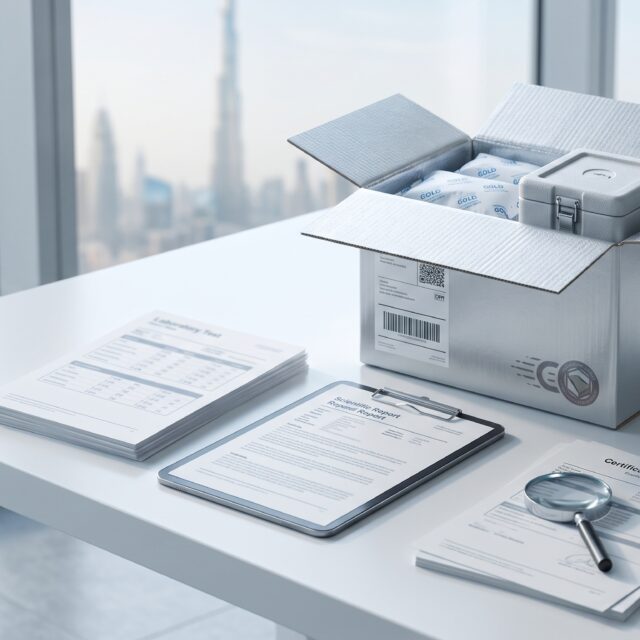
Quick answer: When sourcing hplc tested peptides saudi arabia, buyers must verify third-party Certificates of Analysis (COA) containing both HPLC for purity and MS for identity. Ensure reports are verifiable via a unique Janoshik Task ID online. Because many shipments transit through UAE logistics hubs, exclusively order lyophilised (freeze-dried) powders to withstand extreme GCC transit temperatures.
Whether you are operating a university laboratory in Riyadh, managing independent in-vitro research in Jeddah, or coordinating procurement through Dubai transit channels, verifying your supplier’s documentation is non-negotiable. This comprehensive guide breaks down exactly how to decode lab reports, spot fraudulent testing, and successfully navigate the logistical hurdles of shipping sensitive compounds into the Kingdom of Saudi Arabia.
The Cryptographic Proof Checklist: Reading a Peptide COA
A Certificate of Analysis (COA) is only as valuable as the independent laboratory that issued it. Unfortunately, static PDF reports are easily manipulated using basic photo editing software. To evaluate an hplc tested peptides supplier saudi arabia, researchers must understand the fundamental metrics of a legitimate COA and how to mathematically verify its authenticity.
Purity (HPLC) vs. Identity (MS)
A standard COA must present two distinct analytical methods to be considered valid for laboratory use:
- High-Performance Liquid Chromatography (HPLC): This process measures the quantitative purity of the compound. A liquid sample is pumped through a column filled with a solid adsorbent material. Different components in the sample interact differently with the adsorbent, causing them to flow at different speeds and separate. The resulting chromatogram displays peaks representing the target peptide and any residual impurities (such as truncated sequences from the synthesis process). The purity is calculated as a relative area percentage. For example, a 99% purity means the target compound accounts for 99% of the UV-absorbing area on the chart.
- Mass Spectrometry (MS): While HPLC shows how pure a substance is, it does not prove what the substance is. A high purity score on a fake compound is useless. Mass Spectrometry provides qualitative identity verification by ionizing the sample and sorting the ions based on their mass-to-charge ratio. By determining the exact molecular weight of the compound, researchers can compare the measured molecular mass against the theoretical mass of the intended peptide sequence. If they match, the identity is confirmed.
It is crucial to note that HPLC purity measures the relative area percentage of the target peptide peak against other impurities. It does not measure the absolute mass or concentration inside the vial (which requires separate quantitative testing).
Spotting Forged Janoshik Reports
In the global research compound industry, Janoshik Analytical has emerged as the definitive third-party testing standard. Disreputable vendors often post fake, heavily edited, or outdated Janoshik reports to artificially inflate trust.
To verify a report, buyers must locate the unique alphanumeric Task ID printed at the top of the COA. Simply visit the official Janoshik verification database, enter the Task ID, and match the live digital record against the PDF provided by the supplier.
If a supplier redacts the Task ID, refuses to share it, or provides a static image that cannot be queried online, the report should be considered invalid. At NOVA Labs, we believe in total transparency; researchers can actively view our independent test reports to see exactly how verifiable batch data should be presented.
Surviving the 45°C GCC Summer: UAE Transit & Saudi Logistics
Beyond chemical purity, the physical stability of research compounds is the largest variable for buyers in the Middle East. Saudi Arabia’s extreme summer climate, frequently exceeding 40-45°C in cities like Riyadh, Jeddah, and Dammam, dictates how peptides must be manufactured and shipped.
Furthermore, UAE-specific context is critical here. The vast majority of premium research compounds imported into Saudi Arabia first transit through major logistics hubs in Dubai (such as DXB or Jebel Ali). This means shipments must survive multiple loading zones, tarmac transfers, and customs holds across two different GCC nations before reaching your laboratory.
The Danger of Liquid Peptides
Some international suppliers offer pre-mixed liquid peptides for perceived convenience. However, once a peptide is reconstituted into a liquid state, its molecular bonds become highly susceptible to degradation from heat, light, and physical agitation. Shipping a liquid compound via international freight through a Dubai transit hub in the middle of a GCC summer guarantees rapid degradation. By the time it clears ZATCA customs in KSA, the research material is often rendered completely useless.
The Lyophilised Solution
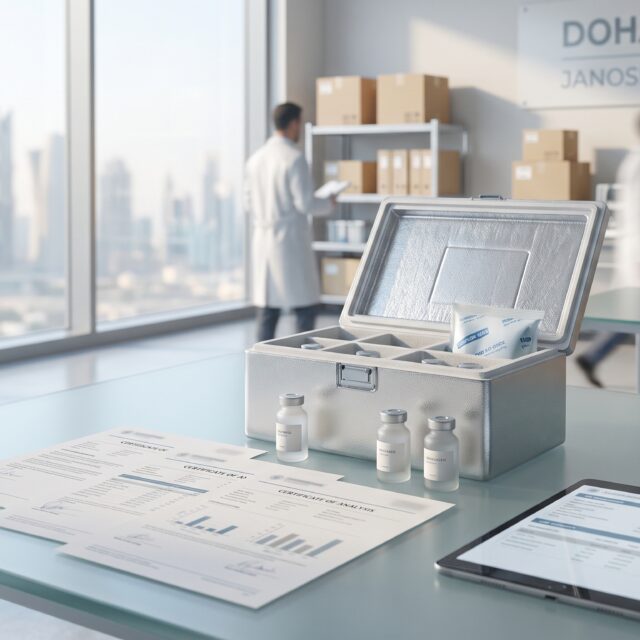
To survive extreme GCC transit temperatures, legitimate suppliers exclusively provide peptides as a lyophilised (freeze-dried) powder. Lyophilisation removes the water content under a vacuum, locking the peptide into a highly stable, temperature-resistant state. While these vials must eventually be stored in a freezer for long-term preservation, lyophilised powder can easily withstand standard shipping durations and temperature fluctuations without breaking down. Always ensure your chosen hplc tested peptides shop saudi arabia ships lyophilised vials exclusively.
Navigating ZATCA, UAE Customs, and SFDA Oversight
Procurement friction at the border is a common headache for Saudi buyers. Because shipments often pass through UAE customs before entering Saudi Arabia, your supplier must master multi-jurisdictional compliance. The Zakat, Tax and Customs Authority (ZATCA) and the Saudi Food and Drug Authority (SFDA) maintain stringent oversight on imported chemical compounds.
Research Use Only (RUO) Compliance
Frictionless customs clearance requires absolute accuracy in commercial invoicing, HS code classification, and packaging. Legitimate suppliers strictly declare these compounds as ‘Research Use Only’ (RUO). This classification signals to both UAE transit authorities and ZATCA that the materials are intended for in-vitro laboratory evaluation rather than commercial resale, human consumption, or unregulated distribution. Discreet packaging, devoid of external marketing claims, further reduces the likelihood of unnecessary customs holds.
Synthetic vs. Animal-Derived Origins
The SFDA strictly monitors the importation of animal-derived stabilisers, gelatins, and biological byproducts due to rigorous halal and safety certifications. High-tier research peptides are synthetically derived or produced via advanced microbial fermentation, meaning they contain zero animal byproducts. This synthetic origin not only increases the purity profile of the compound but also eliminates a major red flag during the Saudi customs clearance process.
Evaluating a Regional Supplier: Payments & GCC Support
Verifying laboratory documentation and logistics is only part of the procurement process. When evaluating suppliers, the operational infrastructure supporting the transaction is equally important. A reliable supplier should offer regional conveniences that cater specifically to the GCC market.
- Local Payment Gateways: International wire transfers can be slow, heavily feed, and subject to banking delays. Look for suppliers that accommodate modern GCC payment ecosystems. This includes Saudi Riyal (SAR) and UAE Dirham (AED) processing, Apple Pay, and local split-payment gateways like Tamara or Tabby. Cross-border payment flexibility significantly lowers buyer risk.
- Tracked Express Delivery: Given the environmental constraints of the region, long transit times are unacceptable. Premium suppliers partner with robust regional courier networks to offer 7-14 working days tracked delivery directly to Saudi Arabia (often expedited via Dubai hubs), ensuring the lyophilised materials spend minimal time in transit facilities.
- Direct Support: Navigating batch numbers, customs documentation, and delivery windows requires responsive, localized communication. Suppliers offering direct WhatsApp support demonstrate a commitment to customer service and regional accessibility that generic overseas vendors simply cannot match.
For procurement teams and independent researchers ready to evaluate properly documented and climate-stable compounds, you can browse our research compound catalog to see exactly how these rigorous standards are applied to every batch we dispatch to the GCC.
Conclusion: Securing Lab-Grade Materials for Your Next Project
Finding verified hplc tested peptides in saudi arabia requires precision, skepticism, and a thorough understanding of regional logistics. By demanding cryptographic proof through Janoshik Task IDs, insisting on both HPLC and MS verification, and completely rejecting unstable liquid formulations, researchers can effectively shield their projects from low-quality materials.
Always partner with a supplier that understands the unique regulatory and environmental landscape of the Middle East. From navigating UAE transit hubs and ensuring ZATCA-compliant RUO declarations, to securing robust local delivery networks, the right supplier ensures your research materials arrive securely, legally, and in optimal condition.
*
References
- Janoshik Analytical: Standardized methodologies for High-Performance Liquid Chromatography (HPLC) and Mass Spectrometry (MS) in synthetic peptide verification.
- Zakat, Tax and Customs Authority (ZATCA): Import classification and documentation guidelines for non-commercial laboratory research compounds in the Kingdom of Saudi Arabia.
- Saudi Food and Drug Authority (SFDA): Clearance requirements regarding synthetic versus animal-derived biological materials.
- Dubai Customs: Guidelines for the transit and transshipment of scientific and laboratory goods within the GCC.
Disclaimer: The products mentioned in this article are strictly for in-vitro research and laboratory use only. They are not intended for human consumption, diagnostic, therapeutic, or clinical purposes. Always handle research compounds in accordance with local GCC regulations and institutional safety guidelines.
Disclaimer: The products mentioned in this article are for research purposes only and are not intended for human consumption.
- Nova Biolabs vs Barq Peptides Saudi Arabia: 2026 Buyer – NOVA Labs
- Buy Peptides Saudi Arabia — Research Peptides Online | Perfect Peps Laboratory
- Buy Retatrutide Saudi Arabia: Purity, COA & Delivery Guide – NOVA Labs
- Janoshik Tested Peptides Qatar: COA and Purity Verification – NOVA Labs
- How to Read a Peptide Purity Test: HPLC, Mass Spectrometry and COA Interpretation for UK Researchers (2026)
- Peptide Purity: Proven Guide to Reading a COA 2026 – PSPeptides
- Wholesale Peptides Saudi Arabia: B2B Supplier & Procurement – NOVA Labs
- Halal-Certified Peptide APIs in MENA – PengtingPeptide
Frequently asked questions
How do I verify a peptide Certificate of Analysis (COA)?
You can verify a COA by checking the unique Task ID provided by the testing facility, such as Janoshik, directly on their official online verification database. This ensures the PDF report matches the live digital record and has not been altered or forged.
What is the difference between HPLC and MS in peptide testing?
HPLC measures the quantitative purity of a peptide by identifying impurity peaks as a relative area percentage on a chromatogram. Mass Spectrometry (MS) confirms the qualitative identity by verifying the exact molecular weight of the compound against its intended synthetic sequence.
Are liquid peptides safe to ship to Saudi Arabia or the UAE?
No. Due to extreme summer temperatures in the GCC, pre-mixed liquid peptides degrade rapidly during international transit. Buyers should exclusively order lyophilised (freeze-dried) peptide powder, which remains highly stable under heat stress.
How do research compounds clear Saudi customs (ZATCA)?
Suppliers must accurately invoice compounds as 'Research Use Only' (RUO) with correct HS codes, ensuring all packaging is devoid of commercial or human-use marketing. Sourcing synthetic peptides free of animal byproducts also ensures compliance with SFDA standards.
What payment methods do reliable peptide suppliers offer in the GCC?
Quality suppliers catering to Saudi Arabia and the broader GCC offer localized, secure payment options. This typically includes Apple Pay, direct Saudi Riyal (SAR) and UAE Dirham (AED) processing, and regional split-payment gateways like Tamara or Tabby.
Nova Labs buyer tools
Ready to verify stock, testing and delivery?
Use the product page and lab report section to check availability, documentation, delivery timing and support before placing an order.
- COA / test-report checks
- Saudi Arabia delivery context
- Cold-chain handling
- COD and card payment options
- WhatsApp support