
What to Know When You Buy GHK-Cu in Dubai
Quick Answer: To safely buy GHK-Cu in Dubai, researchers must verify independent third-party HPLC reports showing ≥99% purity. Given extreme UAE temperatures, strict cold-chain logistics (2°C to 8°C) are required to prevent degradation. Always confirm domestic stock availability to avoid international dropshipping delays and customs friction.
Procurement teams and independent researchers in the GCC face specific logistical hurdles when sourcing research chemicals. Extreme regional temperatures threaten peptide stability, varying grades of product purity complicate sourcing, and the local market is heavily segmented. Navigating this landscape requires a firm understanding of laboratory documentation, thermal shipping protocols, and local supplier verification. When acquiring Glycyl-L-Histidyl-L-Lysine copper (GHK-Cu), ensuring that the reference material arrives intact and structurally sound is paramount for reliable in-vitro testing.
Understanding GHK-Cu Formats: Research vs. Clinical vs. Cosmetic
The GHK-Cu market in the UAE is broadly divided into three distinct categories, each serving entirely different intents, regulatory frameworks, and buyer expectations. Understanding these distinctions is critical for laboratory procurement teams to avoid purchasing incompatible materials.
Clinical Compounding
Licensed medical compounding pharmacies and aesthetic clinics in the UAE offer clinical therapies. These are professionally prepared protocols where the compound is mixed specifically for individual patients under clinical oversight by medical professionals. Pricing for these services typically ranges from AED 1,800 to AED 2,500, reflecting the medical consultation, diagnostic overhead, and licensed administration involved. These formats are regulated by the DHA or MOHAP and are not available for independent laboratory procurement.
Cosmetic Serums and Over-the-Counter Blends
Retail spaces, pharmacies, and online beauty stores frequently sell over-the-counter cosmetic serums containing trace amounts of copper peptides. Formulated for general consumer applications, these concentrations are extremely low (often fractions of a percent) and heavily mixed with stabilisers, thickeners, preservatives, and inactive carrier lotions. While they may share a name, these blends are entirely unsuitable for controlled laboratory research where molecular purity and precise dosing are absolute requirements.
Research-Grade Lyophilised Vials
For laboratory buyers and informed researchers, pure lyophilised powder is the only viable format. These are sold strictly as research-grade reference materials. Lyophilisation (freeze-drying) removes moisture under a vacuum, preserving the peptide’s structural integrity until it is reconstituted with bacteriostatic water or a sterile saline solution for in-vitro study. A standard standalone vial of high-purity research material (such as a 50mg presentation) typically retails around AED 249 from domestic UAE suppliers. This format provides the exact molecular compound without any binding agents or commercial fillers.
The Cold-Chain Priority: Preserving Stability in the GCC Heat
The extreme desert climate of Dubai poses a major risk of peptide degradation. Peptides are short chains of amino acids held together by fragile covalent bonds. When exposed to high ambient temperatures—commonly exceeding 40°C in the UAE summer, with un-air-conditioned courier vans reaching up to 55°C—these bonds can rapidly denature, leading to compromised molecular structures and invalid research data.
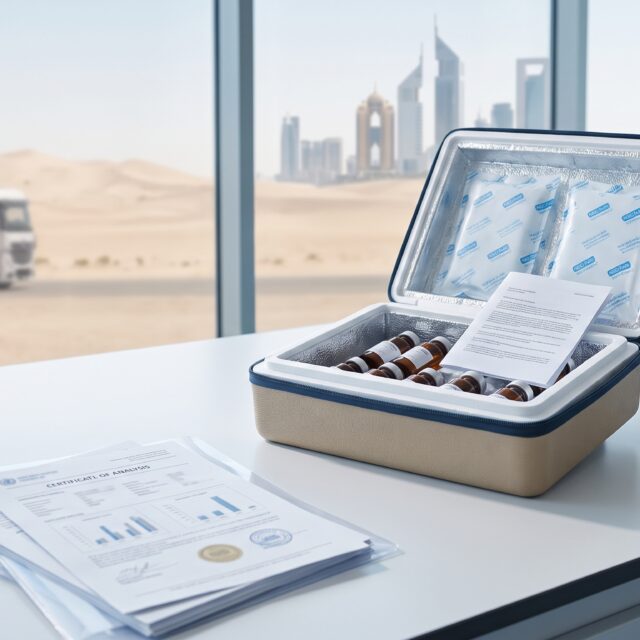
Standard courier services that leave parcels in unconditioned sorting facilities or hot delivery vehicles are unacceptable for peptide logistics. Strict temperature-controlled cold-chain delivery is an absolute necessity. During transit, reconstituted liquid-state materials should ideally be maintained between 2°C and 8°C. Even lyophilised powders, which are generally much more resilient to temperature fluctuations, benefit immensely from thermal protection during regional transport to prevent any minor degradation of the fragile copper bond.
When you order GHK-Cu, Dubai suppliers should offer clear guarantees regarding their shipping environment and handling timelines. At NOVA Labs, thermal stability is non-negotiable. We implement robust local delivery protocols that prioritize rapid, temperature-aware transit. Utilizing express delivery services in Dubai and Abu Dhabi ensures that reference materials spend minimal time in transit, arriving at your laboratory exactly as intended, completely bypassing the risks of international dropshipping delays.
How to Verify a GHK-Cu Supplier in the UAE
A professional facade or a well-designed website is not enough to guarantee the quality of research materials. When evaluating a supplier, the primary focus must be on verifiable, batch-specific documentation. Counterfeit, heavily diluted, or improperly synthesized products remain a known issue in the global chemical market, making independent verification crucial.
Scrutinising the Certificate of Analysis (COA)
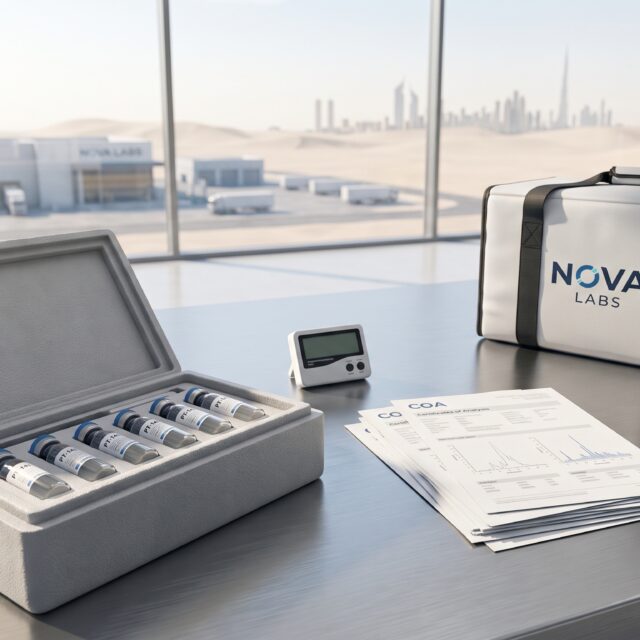
Reputable peptide suppliers in the UAE provide batch-specific, independent third-party testing for their inventory, presented as a downloadable Certificate of Analysis (COA). When reviewing a COA for GHK-Cu, procurement teams must look for two critical pieces of analytical data:
- HPLC (High-Performance Liquid Chromatography): This test confirms the purity of the peptide. It works by separating the components in a mixture and measuring their relative quantities. For high-calibre research, the HPLC report should demonstrate a purity level of ≥99%. Anything less indicates the presence of truncation sequences or residual solvents, introducing variables that can skew sensitive experimental outcomes.
- MS (Mass Spectrometry): This test confirms the precise chemical identity and molecular weight of the compound. The molecular weight of GHK-Cu must align perfectly with standard reference data. This ensures the vial actually contains GHK-Cu and not a cheaper blue-tinted substitute or a different peptide sequence altogether.
Ensure documentation is clear, clearly dated, and explicitly matched to the specific batch you are purchasing. Avoid suppliers who obscure testing facilities, refuse to share raw chromatograms, or provide generic, outdated COAs that look duplicated across multiple products.
Evaluating Local Stock vs. Dropshipping Risks
A critical factor when sourcing peptides locally is determining whether the supplier actually holds physical inventory within the UAE. Many online storefronts operate merely as dropshippers, routing your local order to massive overseas facilities in Asia or Eastern Europe.
Dropshipping introduces severe, often fatal risks to peptide procurement. International transit times can stretch from days to weeks, completely breaking the cold-chain and exposing the delicate compounds to unregulated temperatures in global shipping hubs. Furthermore, international shipments are frequently subject to customs friction, regulatory holds, and unpredictable handling environments that can destroy the utility of the material before it even arrives.
A domestic supplier with verified local stock bypasses these issues entirely. Local inventory guarantees the product has been safely stored in a temperature-controlled facility within the UAE and can be dispatched immediately to your laboratory via local couriers.
Pricing Expectations and Procurement Logistics
Transparent pricing and flexible procurement logistics are strong indicators of a supplier’s operational health and market legitimacy. While clinical setups command premium pricing due to medical services and cosmetic brands mark up heavily for marketing, purchasing standalone research-grade GHK-Cu vials for laboratory use should follow a predictable pricing structure.
For a high-purity, 50mg presentation of GHK-Cu, UAE researchers should expect a standard retail price of approximately AED 249. Prices significantly lower than this often indicate diluted product or non-verified overseas sourcing, while prices significantly higher are usually unnecessary markups. Beyond base price, evaluate the entire purchasing ecosystem:
- Payment Confidence: In the UAE, Cash on Delivery (COD) remains a highly trusted payment method. Offering COD indicates that a supplier holds local inventory and assumes the transit risk themselves. Secure credit card processing and cryptocurrency options also provide necessary flexibility for institutional procurement teams managing research budgets.
- Real-Time Support: Fast, responsive customer service is a hallmark of a reliable operation. Leading local suppliers maintain real-time support channels (often via WhatsApp) with reply times under five minutes, allowing buyers to quickly verify stock levels, confirm COA details before purchase, or track time-sensitive deliveries instantly.
Bottom Line for Local Researchers
Sourcing high-purity peptides in the UAE requires careful navigation of analytical documentation, specialized shipping logistics, and supplier credibility. When researchers order GHK-Cu, they are investing directly in the integrity and reproducibility of their data. This demands rigorous verification of independent HPLC and MS testing, an absolute insistence on cold-chain delivery protocols to mitigate the GCC heat, and the assurance of real-time operational support from a supplier holding physical stock in Dubai.
Ready to source pure reference materials? Explore our fully verified inventory and access batch-specific documentation on the NOVA Labs GHK-Cu product page to ensure your laboratory is equipped for success.
*
Disclaimer: The products mentioned in this article are strictly for in-vitro research and laboratory use only. They are not intended for human consumption, diagnostic, or therapeutic purposes. Proper laboratory safety protocols must be followed when handling research chemicals.
References
- Journal of Peptide Science (2022). “Stability of Lyophilised Peptides Under High Ambient Temperatures: Implications for Transport and Storage.”
- International Journal of Pharmaceutics (2023). “High-Performance Liquid Chromatography (HPLC) Standards: General laboratory guidelines for sequence purity verification.”
- Clinical Biochemistry Reviews (2021). “Understanding Mass Spectrometry in Peptide Identification and Quality Assurance.”
- Biochemical Assays Handbook (2024). “Copper-binding peptides: Structural integrity and handling requirements for in-vitro cellular assays.”
Disclaimer: The products mentioned in this article are for research purposes only and are not intended for human consumption.
- GHK-Cu Copper Peptide UAE | Cosmetic Research
- Buy GHK-Cu UAE — Copper Peptide Serum for Skin Research in Dubai
- Peptides Compounding Pharmacy Dubai – CureCell
- GHK-Cu: The Skin Peptide Dubai Residents Actually Need (And Why Serums Aren’t Enough)
- GHK-Cu 50mg UAE – VaultLabs
- Peptide Therapy In Dubai | Peptide Injection – Enfield Royal Clinic Dubai
Frequently asked questions
Where to buy authentic GHK-Cu in Dubai?
Authentic research-grade GHK-Cu can be purchased from dedicated local peptide suppliers in Dubai that provide independent third-party HPLC and Mass Spectrometry testing to verify purity. Always ensure the supplier holds local stock to minimize transit times.
What is an acceptable purity level for research GHK-Cu?
For reliable laboratory research, GHK-Cu should have a verified purity level of 99% or higher. This must be backed by a batch-specific Certificate of Analysis (COA) from an independent analytical testing facility.
How should GHK-Cu be delivered and stored in the UAE?
Due to extreme UAE temperatures, lyophilised GHK-Cu should be shipped via expedited local transit to minimize heat exposure. Upon arrival at your facility, it should be stored away from direct sunlight, ideally under refrigeration (2°C to 8°C) or freezing for long-term molecular stability.
How much does research-grade GHK-Cu cost in Dubai?
A standalone high-purity, research-grade 50mg vial of GHK-Cu typically retails for approximately AED 249 from domestic UAE suppliers. Clinical compounding services involving medical consultations will cost significantly more.
Why is international dropshipping a risk for peptides in the GCC?
International dropshipping extends transit times from days to weeks, exposing delicate peptide bonds to unregulated temperatures in global shipping hubs and risking irreversible degradation before the material reaches the laboratory.
Nova Labs buyer tools
Ready to verify stock, testing and delivery?
Use the product page and lab report section to check availability, documentation, delivery timing and support before placing an order.
- COA / test-report checks
- Dubai delivery context
- Cold-chain handling
- COD and card payment options
- WhatsApp support