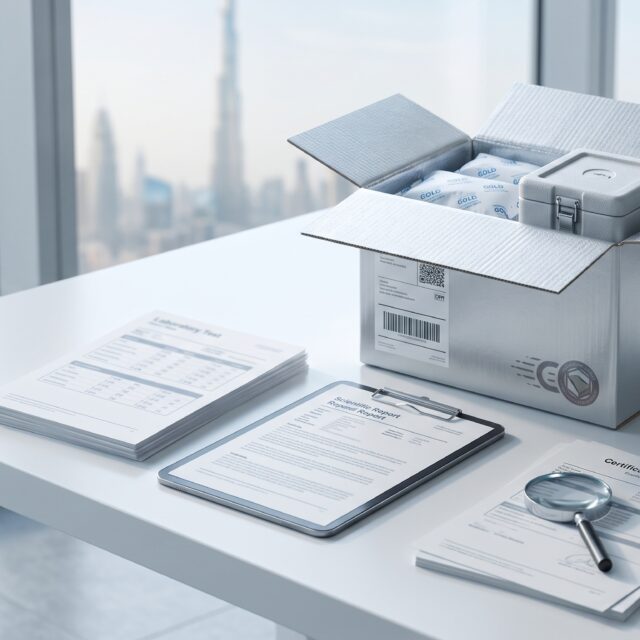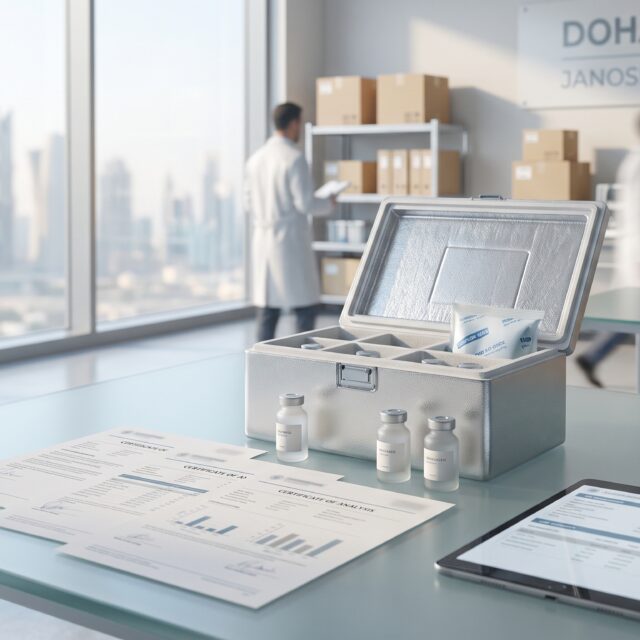


Procuring high-quality research materials in the Middle East presents unique logistical and verification challenges. From navigating strict import restrictions to combating extreme summer temperatures, buyers must be exceptionally diligent. However, the biggest hurdle remains distinguishing legitimate, laboratory-grade compounds from under-dosed or impure alternatives. If you are sourcing hplc tested peptides gcc, relying solely on a vendor’s promise of “99% purity” is no longer sufficient. You need verifiable proof.
This guide breaks down exactly how to verify peptide quality claims, read Certificate of Analysis (COA) documents, interpret HPLC and MS data, and select a supplier capable of preserving compound integrity during transit.
Why HPLC Tested Peptides in GCC Are Essential for Researchers
Finding verifiable hplc tested peptides in gcc requires checking for batch-specific Certificates of Analysis (COA) from independent laboratories. Researchers must validate that High-Performance Liquid Chromatography (HPLC) reports prove 99% purity, while Mass Spectrometry (MS) confirms the exact molecular structure, ensuring testing matches the physical vial.
For research laboratories and procurement staff in the Gulf, verifying peptide purity goes far beyond a simple box-ticking exercise. Experimental validity relies entirely on the consistency and structural integrity of the compounds used. Synthetic impurities, deletion sequences, or truncated fragments can drastically alter research outcomes, rendering months of data useless.
Furthermore, the GCC regulatory landscape introduces significant friction for direct international imports. Attempting to ship research compounds from overseas directly into the UAE, Saudi Arabia, or neighboring Gulf countries carries a high risk of customs delays or seizures due to strict local classifications. This makes domestic dispatch from a local vendor highly attractive, provided that vendor can supply rigorous, independent testing data. By focusing on verifiable, locally warehoused stock, researchers avoid the unpredictable nature of international transit and maintain complete control over their supply chain.
Quick Buyer Checklist: Spotting Fake vs. Real COAs
The research peptide market frequently suffers from low-trust suppliers who offer generic, static, or “representative” documentation. Before evaluating the scientific data within a report, you must first verify that the report itself is authentic.
Use this key checklist when evaluating documentation from any vendor:
- Batch Number Matching: The most critical check. The lot or batch number printed on the physical vial must perfectly match the batch number listed on the COA. If a vendor uses a single, years-old COA for all their inventory, they are not testing their current stock.
- Third-Party Verification Codes: Authentic testing from reputable independent laboratories (such as Janoshik) will include a unique verification key or QR code on the document. You should be able to enter this key on the testing facility’s official website to view the original, unaltered report.
- Date of Analysis: Peptide structures degrade over time if not stored correctly. Ensure the lab report is recent and corresponds to the current manufacturing run.
- Complete Data Sets: A legitimate COA is not just a text document stating “99% Pure.” It must include the actual graphical outputs from both the HPLC and MS machinery.
- Laboratory Contact Information: The testing laboratory’s letterhead, contact details, and accreditation should be clearly visible and easily searchable online.
Understanding HPLC and MS Analysis Data
When you source from a reputable hplc tested peptides supplier gcc, the documentation provided will contain highly technical data. Understanding what these acronyms mean and how to read the output is vital for any researcher.
High-Performance Liquid Chromatography (HPLC)
HPLC is the gold standard for determining a compound’s purity percentage. The process involves dissolving the peptide in a solvent and forcing it through a column under high pressure. Different molecules travel through the column at different speeds, separating the primary peptide from any synthetic impurities or manufacturing byproducts.
When reading an HPLC chromatogram, look for the following:
- The Primary Peak: You will see a graph with spikes (peaks). The largest, dominant peak represents your target peptide.
- Area Percentage (Purity): Below the graph, a data table will list the “Area %”. The area of the primary peak should correlate to the vendor’s purity claim. Reputable suppliers mandate a minimum HPLC purity threshold of 98% to 99%+.
- Minor Peaks: Any smaller peaks represent impurities. In a highly pure sample, these should be practically non-existent or statistically insignificant.
Mass Spectrometry (MS)
While HPLC proves that a powder is pure, it does not prove what the powder actually is. This is where Mass Spectrometry comes in. MS validates the compound’s specific molecular weight and identity.
Every peptide has a distinct molecular mass based on its unique sequence of amino acids. The MS report will display a prominent reading matching the theoretical weight of the target peptide. If the expected mass is 2180.5 g/mol, the primary reading on the MS graph should reflect this number perfectly. If it does not, the vial contains the wrong compound entirely.
The Blind Spot: Net Peptide Content vs. Fill Weight
A critical blind spot for many buyers is confusing chemical purity with “net peptide content.” A vial can be 99% pure chemically but contain significantly less active compound than the labeled fill weight.
During the lyophilization (freeze-drying) process, binding agents like mannitol are frequently added to stabilize the peptide “puck.” Additionally, moisture and counter-ions (like TFA or acetate) make up a portion of the total mass. Therefore, a vial labeled as “10mg” might only contain 6mg of the active peptide, with the rest being structural excipients. High-end independent testing will often measure exact net content to ensure the vial is accurately dosed according to its label, preventing under-filled research subjects.
The GCC Heat Factor: Cold-Chain Logistics
Sourcing hplc tested peptides in gcc requires more than just rigorous documentation; it requires surviving the local environment. As of 2024, summer temperatures across Dubai, Abu Dhabi, and Riyadh routinely exceed 45 degrees Celsius. Extreme heat is the natural enemy of lyophilized peptide stability.
If a highly pure, verified peptide sits in an unconditioned warehouse or a standard delivery van for three days during a UAE summer, it will rapidly degrade, breaking down the amino acid bonds and ruining the compound before it ever reaches your laboratory.
This necessitates validated, temperature-conscious cold-chain logistics. Reputable local vendors store their lyophilized inventory in strictly monitored medical-grade freezers. During local transit, they utilize insulated packaging and rapid GCC-express dispatch (often with overnight delivery windows) to ensure the internal temperature remains stable and isolated from the external desert heat. This local infrastructure is why domestic GCC dispatch heavily outcompetes international shipping, where parcels frequently sit in hot customs sorting facilities for unpredictable lengths of time.
Evaluating a Reliable HPLC Tested Peptides Shop GCC
When evaluating an hplc tested peptides shop gcc, transparency and operational infrastructure are your primary signals of trust. You should not have to email a vendor and beg for a COA; it should be publicly available and mapped directly to the product you are purchasing.
At NOVA Labs, we prioritize scientific transparency. We maintain a searchable public batch database that maps unique lot IDs directly to their corresponding independent HPLC, MS, and purity metrics. This allows our research clients to trace their exact vial back to the third-party laboratory that verified it.
Additionally, because we operate locally within the UAE, our supply chain is tailored to the GCC market. We offer domestic dispatch that bypasses international customs friction, ensuring your verified compounds arrive rapidly without being subjected to prolonged heat exposure or import seizures. For researchers who require peace of mind alongside top-tier purity, we also support flexible payment options, including Cash on Delivery (COD) and responsive WhatsApp support for urgent stock checks.
To view our extensive documentation and verify our current batch purity metrics, explore our verified lab results.
Conclusion & Next Steps
Acquiring hplc tested peptides gcc is no longer a matter of guessing or trusting unverified marketing claims. By demanding batch-specific, independently verifiable HPLC and MS data, researchers can ensure the structural integrity and purity of their compounds. Coupled with the logistical advantages of domestic cold-chain dispatch, GCC buyers can circumvent the traditional hurdles of customs delays and heat degradation.
Always verify the batch number, check the laboratory’s independent lookup tool, and confirm that the net peptide content aligns with your research requirements.
If you are ready to source compounds backed by transparent, searchable testing data and reliable local delivery, visit our shop to review our current inventory and corresponding analysis reports.
Disclaimer: The products mentioned in this article are for in-vitro research purposes only and are not intended for human or animal consumption, diagnostic, or therapeutic use.
*
References:
- How to Read a Peptide COA (Real vs Fake) – Independent Laboratory Standards
- Peptide Certificates of Analysis: How to Read and Verify a COA – Analytical Testing Guidelines
- Navigating GCC Customs and Pharmaceutical Classifications – UAE Regulatory Overview
- Peptides Lab UK Research Quality Standards SOP
References
- How to Read a Peptide COA (Real vs Fake)
- Peptides Lab UK Research Quality Standards SOP
- NOVA Labs UAE Review (2026) – PeptideStat
- How to Register Peptides in the UAE: A Regulatory Guide
- Peptide Certificates of Analysis: How to Read and Verify a COA
- COA Verifier — Certificate of Analysis Checklist & Guide
- Supply chain & testing – emitide
- Peptide Drug Conjugates Market in the Middle East
Frequently asked questions
What does HPLC testing for peptides show?
High-Performance Liquid Chromatography (HPLC) is used to determine the exact purity percentage of a peptide. It separates the target compound from any synthetic impurities or manufacturing byproducts, with reputable research peptides typically confirming a minimum of 98% to 99% purity.
How can I verify a peptide COA in the GCC?
To verify a Certificate of Analysis (COA), ensure the batch number on the document exactly matches the physical vial you received. Look for a third-party verification code from an independent laboratory, which allows you to look up the original, unaltered report directly on the testing facility's website.
Why is domestic peptide delivery better than international shipping in the UAE?
Direct international imports into the GCC face a high risk of customs seizures and prolonged exposure to extreme desert heat at sorting facilities. Domestic dispatch ensures rapid delivery via insulated packaging and cold-chain logistics, avoiding import delays and preserving peptide structural stability.
What is the difference between peptide purity and net peptide content?
Purity refers to the absence of chemical impurities within the active compound, verified by HPLC. Net peptide content measures the actual weight of the active compound in the vial, which is often lower than the total lyophilized fill weight due to added binding agents like mannitol.
Nova Labs buyer tools
Ready to verify stock, testing and delivery?
Use the product page and lab report section to check availability, documentation, delivery timing and support before placing an order.
- COA / test-report checks
- GCC delivery context
- Cold-chain handling
- COD and card payment options
- WhatsApp support