



Procuring high-purity research materials in the Middle East involves navigating severe climate challenges. For laboratory professionals and procurement staff evaluating regional suppliers, understanding the logistics of temperature-sensitive compounds is just as critical as reviewing a Certificate of Analysis (COA). Implementing a rigorous cold chain peptide delivery GCC protocol is the primary defense against irreversible chemical degradation.
During the peak of the Gulf summer, ambient temperatures routinely exceed 45°C. Inside an uncooled standard courier van, temperatures can rapidly surge past 60°C. For delicate molecular structures, this environment acts as an immediate catalyst for breakdown. Securing a reliable supplier requires a rigorous assessment of their local warehousing, packaging protocols, and last-mile delivery mechanisms.
Key Takeaways: Buyer Checklist
- Lyophilization is Mandatory: Never purchase pre-mixed liquid peptides; only procure lyophilized (freeze-dried) powders capable of surviving transit fluctuations.
- Avoid Border Holds: Cross-border customs delays routinely exhaust packaging coolants. Sourcing from local GCC inventory is the safest route.
- Demand Documentation: A robust cold chain is useless if the compound is impure. Always verify batch-specific COAs and HPLC testing prior to purchase.
- Verify the Packaging: Ensure the supplier uses professional thermal packaging (EPS coolers and phase-change coolants), rather than standard cardboard envelopes.
The Short Answer: Cold Chain Peptide Delivery in GCC
Cold chain peptide delivery in GCC ensures fragile research compounds remain protected from extreme local temperatures during transit. Excessive heat rapidly degrades peptides through irreversible hydrolysis and oxidation. Reliable regional suppliers prevent this by utilizing lyophilized powders, insulated thermal packaging, and local fulfillment hubs to bypass customs delays.
The Chemistry of Thermal Degradation in Last-Mile Delivery
To understand why standard logistics fail, it is essential to look at the chemistry of heat degradation. Peptides are highly sensitive chains of amino acids. Unlike durable small-molecule chemicals, their structural integrity is dependent on specific environmental conditions—most notably, strict temperature parameters and an absolute absence of moisture during transit.
When a package sits in a courier vehicle baking in the Dubai or Riyadh sun, the internal temperature can breach 60°C in under an hour. At these temperatures, several destructive chemical pathways aggressively accelerate:
- Hydrolysis: Thermal energy forces the cleavage of chemical bonds within the peptide backbone, physically breaking the amino acid chain into fragmented, useless components. This is the most common form of degradation when moisture and heat combine.
- Oxidation: Sensitive amino acid residues—such as cysteine, methionine, and tryptophan—are highly prone to oxidation when exposed to environmental stress and fluctuating temperatures, altering the compound’s chemical properties and binding affinity.
- Deamidation: Reactions occurring at asparagine and glutamine residues can lead to the formation of isoaspartate, altering the molecular sequence and nullifying the compound’s intended laboratory application.
- Aggregation: Heat stress can cause peptides to improperly fold and clump together, creating inactive molecular aggregates that are difficult or impossible to fully dissolve during reconstitution.
For researchers, a degraded peptide means compromised assay data and wasted laboratory budgets. Verifying a supplier’s transit temperature controls safeguards against these invisible thermal damages.
The Hidden Trap of Cross-Border Customs Holds
Many buyers naturally look to major Western suppliers for their research materials, assuming international courier networks will manage the cold chain perfectly. However, this approach ignores a significant logistical bottleneck: regional customs clearance at GCC entry points.
A package might fly from Europe or North America to a UAE entry point in under eight hours, but the primary failure point occurs at the border. Customs holds at major regional hubs can routinely introduce unmonitored delays ranging from 24 to 72 hours. Customs officials prioritize security and compliance over the maintenance of commercial cold chains.
Standard insulated packaging utilized by international vendors—typically relying on commercial gel packs—is engineered with a strict 36-hour to 48-hour thermal safety window. If a package is detained over a weekend or held for secondary inspection, the coolants are entirely exhausted. The lyophilized powder is then subjected to catastrophic ambient temperatures in a non-climate-controlled holding facility before it ever reaches the local delivery courier. By the time it arrives at your facility, the structural integrity of the peptide is severely compromised.
Lyophilization: The Non-Negotiable Transit Standard
The physical state of the compound at the time of shipping plays a critical role in its survival. Among top-tier suppliers managing cold chain peptide delivery for research peptides in the GCC, shipping compounds in a lyophilized (freeze-dried) state is the non-negotiable industry standard.
Lyophilization involves freezing the peptide solution and then removing the ice by sublimation under a high vacuum. This meticulous process yields a dry, stable powder cake or “puck.” Because moisture acts as the primary medium for chemical reactions like hydrolysis, removing the water drastically increases the thermal resilience of the compound.
While lyophilized peptides are robust enough to withstand brief temperature fluctuations—such as a few hours in an insulated package during the final delivery leg—they still require strict protection from prolonged heat exposure. Conversely, purchasing pre-mixed, reconstituted liquid peptides via mail is highly discouraged in the GCC. Liquids lack the stability of dry powders; they are highly volatile and will rapidly degrade if the cold chain is broken even momentarily.
Anatomy of Secure Regional Thermal Packaging
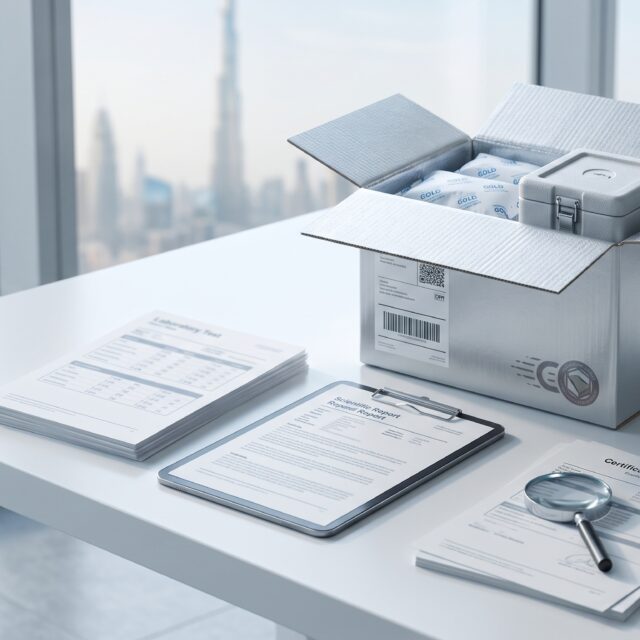
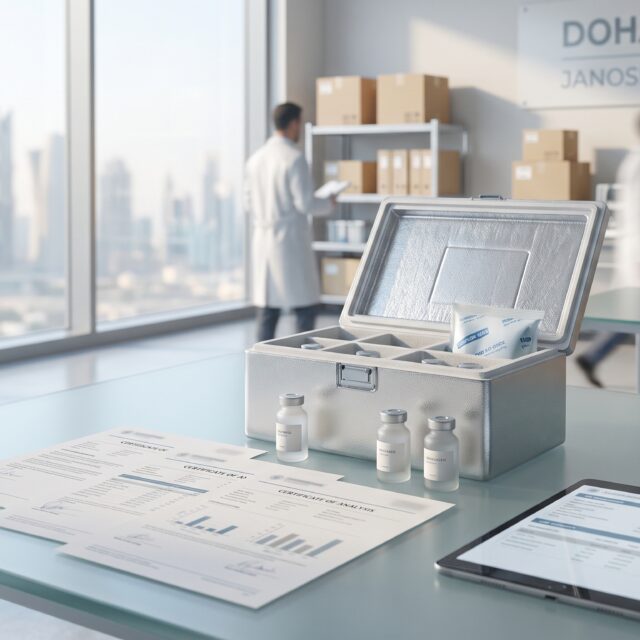
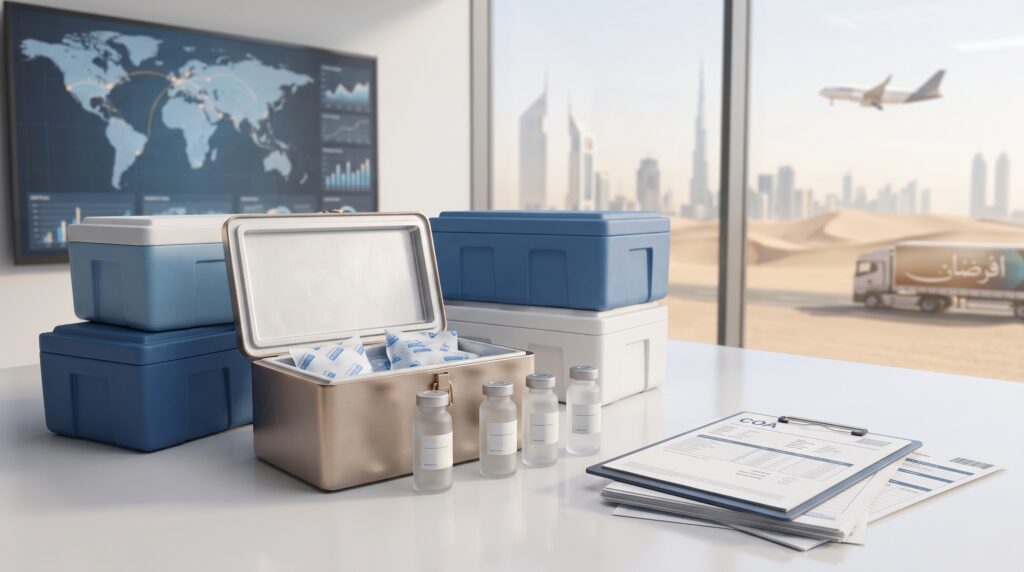
When ordering sensitive materials, standard bubble mailers are unacceptable. Proper local suppliers utilize a specialized packaging matrix designed explicitly to combat GCC heat. A professional thermal shipment generally includes:
- Insulated Shippers: High-density Expanded Polystyrene (EPS) or Polyurethane (PUR) coolers that block external ambient heat transfer.
- Phase Change Materials (PCMs): Rather than standard wet ice, PCMs (like specialized gel packs or dry ice variants) are calibrated to maintain specific internal temperatures (e.g., 2°C to 8°C) for the duration of the transit window.
- Protective Vials: Amber or sterile clear glass vials sealed with specialized stoppers and crimped caps to prevent moisture ingress or contamination.
The GCC Buyer’s Quality and Logistics Checklist
To bypass these logistical traps, informed procurement teams must audit a supplier’s operational footprint before placing an order. Secure logistics rely on several verifiable factors beyond just shipping speed.
1. Dedicated Local Fulfillment Infrastructure
To entirely avoid the unpredictable nature of cross-border customs holds, researchers must source from suppliers that maintain inventory locally. Brands holding local UAE/GCC stock bypass border delays entirely. Local warehousing ensures the package moves directly from a climate-controlled facility to a regional courier, keeping the product within its thermal safety window. For those in the Emirates, utilizing services specifically optimized for https://www.nova-biolabs.com/peptides-uae-next-day-delivery minimizes transit times to less than 24 hours.
2. Transparent Analytical Testing (COA/HPLC)
A protected shipment is only valuable if the source material is pure. Third-Party Certificates of Analysis (COA), High-Performance Liquid Chromatography (HPLC), and Mass Spectrometry (MS) testing reports prove the baseline purity of the product before it leaves the warehouse. Only procure from suppliers who make these batch-specific documents visible prior to purchase, ensuring you are receiving compounds with over 99% purity.
3. Accessible Support and Clear Payment Pathways
Given the precise nature of laboratory research, buyers need open lines of communication. Suppliers should offer responsive customer support (such as active WhatsApp channels or local phone numbers) to confirm stock availability and clarify shipping protocols. Furthermore, reputable regional suppliers utilize secure, recognized payment gateways rather than relying exclusively on unregulated offshore cryptocurrency transfers.
Streamlined Procurement and Thermal Security
Supplying high-purity research materials to the GCC requires specialized logistics infrastructure. Operations must be engineered to eliminate the risks associated with international freight and extreme regional temperatures. By maintaining local stock within the region, customs delays that routinely compromise sensitive shipments from overseas are completely bypassed.
When ordering, ensure your vials are strictly supplied in highly stable, lyophilized formats, protected by robust thermal packaging designed explicitly for the Middle Eastern climate. For researchers and procurement managers requiring rapid, secure fulfillment without gambling on courier temperatures, evaluating a supplier’s total logistics chain is paramount.
To view a complete inventory of batch-tested, COA-backed compounds managed with strict thermal protocols, visit the https://www.nova-biolabs.com/shop. By prioritizing local fulfillment and rigorous cold chain verification, buyers ensure their critical materials arrive stable, pure, and ready for accurate laboratory study.
References
- International Council for Harmonisation (ICH). (2003). ICH Q1A(R2) Stability Testing of New Drug Substances and Products.
- United States Pharmacopeia (USP). USP General Chapter <1079> Good Storage and Distribution Practices for Drug Products.
- Manning, M. C., et al. (1989). Stability of Protein Pharmaceuticals. Pharmaceutical Research.
- D’Hondt, M., et al. (2014). Related impurities in peptide medicines. Journal of Pharmaceutical and Biomedical Analysis.
Disclaimer: The products mentioned in this article are intended for laboratory research and analytical purposes only. They are not approved for human consumption, animal consumption, therapeutic treatment, or diagnostic use. Proper laboratory safety protocols should always be followed.
Disclaimer: The products mentioned in this article are for research purposes only and are not intended for human consumption.
- Cold-Chain Peptide Delivery and Stability in the UAE
- Why Cold-Chain Delivery Is Non-Negotiable for Peptide Therapy
- From Manufacturer to End Customer: How AlGenome International Guarantees a Reliable Cold Chain for Your Critical Supplies
- Peptide Storage Temperature Kuwait | Stability & Delivery – NOVA Labs
- Research Peptides UAE — HPLC-Verified – Wellness Labs
- Peptide Storage & Stability Reference Guide
- Peptide Shipment Delayed? Cold-Chain Solutions
Frequently asked questions
Why is cold chain delivery necessary for peptides in the GCC?
Cold chain delivery protects sensitive peptide structures from extreme regional temperatures. Heat exposure exceeding 45°C can rapidly cause irreversible hydrolysis and oxidation, degrading the compound before it arrives at your laboratory.
Is it safe to buy liquid peptides for regional delivery?
No. Pre-mixed liquid peptides are highly unstable in transit and degrade quickly if exposed to heat. Lyophilized (freeze-dried) powder is the strict industry standard for stable local and cross-border delivery.
How do customs delays affect international peptide shipments?
International customs holds can delay packages for 24 to 72 hours, completely exhausting the package's thermal coolants like phase-change gel packs. This exposes the shipment to high ambient temperatures, ruining the research materials before local delivery begins.
How can I verify if my lyophilized peptide was exposed to severe heat?
If a lyophilized cake appears melted, severely shrunken, discolored, or gummy rather than a solid uniform puck or a loose dry powder, it may have suffered catastrophic heat degradation or moisture ingress during transit.
Why is local UAE warehousing better for GCC researchers?
Local warehousing bypasses international customs clearance delays entirely. This allows for rapid fulfillment, ensuring the package remains within its safe thermal window from the local climate-controlled warehouse directly to your facility.
Nova Labs buyer tools
Ready to verify stock, testing and delivery?
Use the product page and lab report section to check availability, documentation, delivery timing and support before placing an order.
- COA / test-report checks
- GCC delivery context
- Cold-chain handling
- COD and card payment options
- WhatsApp support