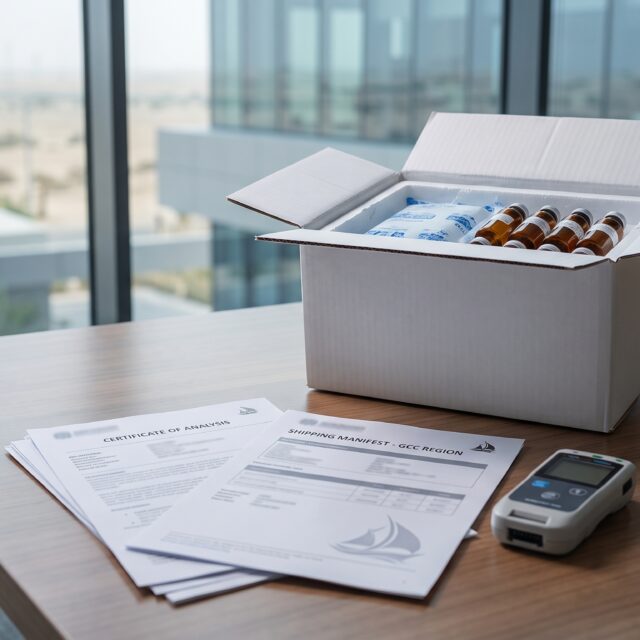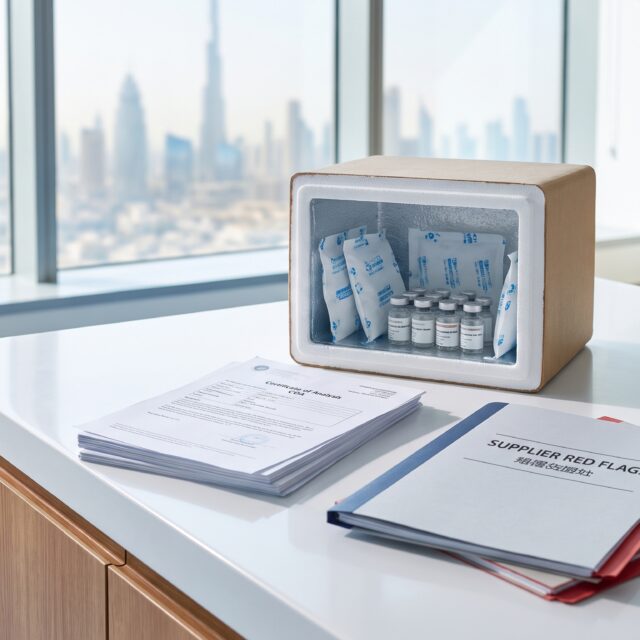




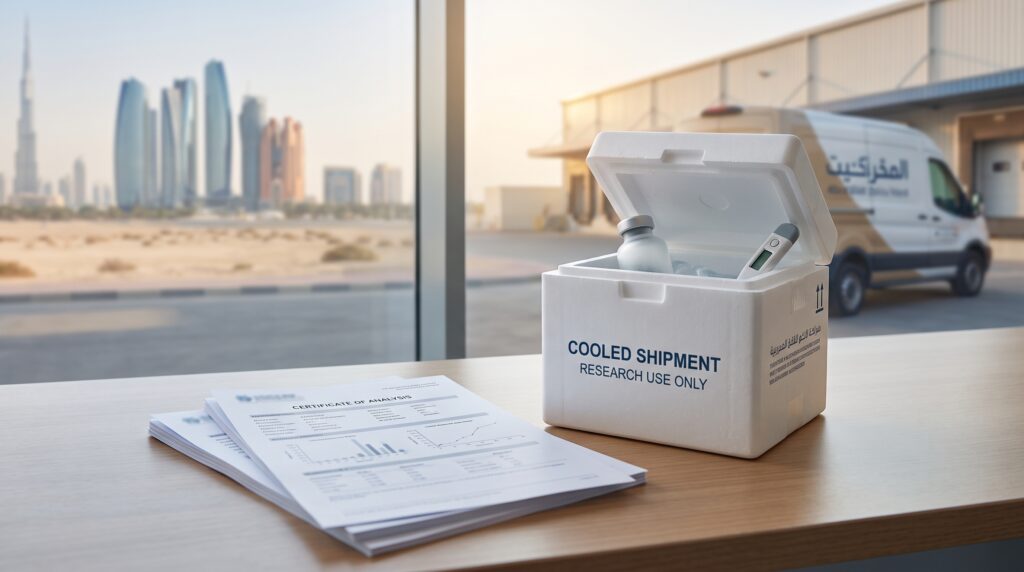
Sourcing high-quality research compounds in the United Arab Emirates demands strict attention to documentation. For laboratory technicians, principal investigators, and procurement managers navigating local regulations and extreme Gulf climates, verifying analytical testing is an essential skill. A supplier’s marketing claims are never enough; batch-specific documentation is the only definitive way to ensure the integrity of your in-vitro laboratory work.
How To Read Peptide COA Abu Dhabi Documents
Quick Answer: To effectively evaluate a peptide Certificate of Analysis (COA), check for two critical components: the HPLC chromatogram showing a single dominant purity peak (ideally >98% Area), and Mass Spectrometry (MS) results confirming the correct theoretical molecular weight. Always ensure the batch number on the testing document precisely matches the physical vial you receive.
Whether you are a seasoned lab director or an informed procurement officer comparing local suppliers, mastering how to read peptide coa abu dhabi documentation requires understanding the anatomy of a legitimate lab report. A credible COA is not just a basic text document; it publishes actual analytical raw data graphs from a specialized testing laboratory.
High-Performance Liquid Chromatography (HPLC) for Purity
HPLC is the gold standard analytical method for determining the quantitative purity of a synthesized peptide sample. The HPLC process separates the compound into its individual components and measures their relative abundance using UV detection.
- The Chromatogram Graph: You should look for a graph where the X-axis represents Retention Time (RT) in minutes, and the Y-axis represents absorbance (usually in mAU). A high-purity compound will display one massive, sharp primary peak. This primary peak represents your target peptide.
- Analyzing Area Percentage: Below the graph, there will be an integration table. Look at the “Area %” column. For high-quality research applications, the Area % for the main peak should be 98% or higher.
- Satellite Peaks (Impurities): Any smaller peaks surrounding the main peak represent impurities. These are typically truncated sequences (peptides missing an amino acid), deletion peptides, or leftover reagents from the solid-phase peptide synthesis (SPPS) process.
- UV Wavelengths: Peptides are typically analyzed at 214 nm (which detects the peptide bond) and sometimes 254 nm (which detects aromatic amino acids). Ensure the COA specifies the wavelength used.
Mass Spectrometry (MS) for Identity Verification
Many researchers make the critical mistake of stopping at the HPLC report. However, HPLC alone only shows the percentage of target molecules in the sample—it cannot confirm if those molecules actually possess the correct amino acid sequence.
For example, a synthesized peptide missing a single, non-critical amino acid could register as 99% pure on an HPLC scan, but it would be 100% the wrong compound for your research. Mass Spectrometry (MS) solves this by confirming the exact molecular weight of the substance.
- Molecular Weight Check: The COA must state the theoretical (calculated) molecular weight of the peptide alongside the actual observed weight found during testing.
- Understanding Charge States (ESI-MS): Peptides are often ionized using Electrospray Ionization (ESI). Because peptides can carry multiple positive charges, you will rarely see just the base mass. Instead, you will see peaks like [M+H]+ (Mass + 1 proton) or [M+2H]2+ (Mass + 2 protons, divided by 2).
- Matching Values: If the theoretical weight of your compound is 2182.4 g/mol, the MS result must mathematically align with this figure based on its charge state. If the mass does not match, the sequence is incorrect, rendering the HPLC purity irrelevant.
Additional Testing: TFA Content and Endotoxins
For advanced in-vitro cellular assays, standard HPLC and MS might not be enough. Depending on the sensitivity of your research, you may need to look for additional testing parameters on the COA:
- TFA (Trifluoroacetic Acid) Salt Content: During standard synthesis, peptides are typically produced as TFA salts. While acceptable for many basic research applications, high TFA content can be toxic to living cells in specific tissue culture assays. Premium suppliers can provide acetate or HCl salt conversions upon request.
- Endotoxin Testing: If your research involves sensitive cell lines, endotoxins (lipopolysaccharides from bacterial cell walls) can trigger unwanted immune responses, skewing your data. Look for endotoxin testing measured in EU/mg (Endotoxin Units per milligram) if your protocol demands it.
Red Flags: Identifying Fake or Outdated COAs in the UAE
The global and local peptide market is increasingly crowded, and unfortunately, falsified or “borrowed” documents are common. When conducting your due diligence in Abu Dhabi, look out for these procurement red flags:
- Missing Batch/Lot Numbers: A valid COA must reference a specific lot or batch number that flawlessly matches the label on your physical vial. If the COA lacks a batch number, it is a generic document copied from another supplier or a previous synthesis run.
- No Raw Data (Graphs): Beware of suppliers who only provide a typed PDF stating “Purity: 99.5%” without the accompanying HPLC chromatogram and MS spectral graphs. Without raw data, a COA is meaningless.
- Outdated Testing Dates: Peptides degrade over time, especially if stored improperly. A COA dated three years ago does not represent the chemical reality of the batch you are purchasing today.
- Redacted Lab Details: Legitimate third-party testing facilities stand by their work. If the name, logo, or contact information of the testing laboratory is blurred, cropped, or missing, the COA cannot be trusted.
Why Purity Means Nothing Without Cold-Chain Handling
Understanding your documentation is only half the battle. Abu Dhabi’s extreme climate—where summer temperatures routinely exceed 45°C—introduces a massive logistical challenge. Heat, UV light, and humidity rapidly accelerate peptide degradation through chemical processes like hydrolysis, deamidation, and oxidation.
Even if your COA proves 99.9% purity at the time of synthesis, poor shipping and customs handling practices can destroy the compound before it ever reaches your laboratory bench.
Lyophilized vs. Reconstituted Stability
Research peptides are shipped as lyophilized (freeze-dried) powders. In this state, they are relatively stable and can survive brief periods at room temperature during transit. However, prolonged exposure to Gulf summer heat—such as sitting in an unconditioned customs warehouse for weeks—will degrade even freeze-dried compounds.
Once reconstituted in the lab with bacteriostatic water, the peptide becomes highly fragile. Liquid peptides must remain refrigerated (2°C to 8°C) at all times and typically degrade within a matter of weeks.
The Importance of Local UAE Logistics
For UAE researchers, relying on international shipments from overseas grey-market suppliers is a significant risk. This is where localized, temperature-controlled logistics become vital.
Sourcing from suppliers who maintain local, climate-controlled stock and utilize thermal packaging ensures your compounds arrive intact. To safeguard your research investments, prioritize partners offering reliable UAE next-day peptide delivery. Fast, cold-chain-aware local logistics preserve the integrity of the 99% purity shown on your COA, eliminating the variable of heat degradation from your experiments.
Navigating Procurement and Supplier Transparency
In the UAE, the Emirates Drug Establishment (EDE), operating under Federal Decree-Law No. 38 of 2024, strictly regulates the pharmaceutical and therapeutic landscape. There is a continuous crackdown on unapproved sources, unregulated supplements, and unauthorized distribution channels.
Because of this strict regulatory environment, procurement staff and researchers must ensure their research chemical suppliers operate with total transparency. A reliable supplier should offer:
- Upfront COA Visibility: You should be able to easily view or request the HPLC and MS documents before you ever place an order.
- Accessible Customer Support: Local WhatsApp support and direct communication channels are crucial for verifying batch numbers, discussing delivery logistics, and handling technical inquiries.
- Secure Local Procurement: Options like Cash on Delivery (COD) and secure local UAE payment gateways provide buying confidence in a market where trust and accountability are paramount.
Verifying NOVA Labs Documentation for Your Research
At NOVA Labs, we understand that our research buyers require absolute certainty. We cater specifically to the GCC market, bridging the gap between rigorous analytical testing and localized, heat-aware logistics.
When you browse our catalog of premium research peptides, you are selecting compounds backed by batch-specific, verifiable documentation. We prioritize transparency, ensuring that the HPLC and MS data align perfectly with the vials delivered to your facility. Combined with our localized Abu Dhabi and wider UAE delivery infrastructure, we ensure that the quality verified in the lab is exactly what arrives at your door, ready for your most sensitive assays.
Conclusion: Your Abu Dhabi Procurement Checklist
Mastering how to read peptide COA documents comes down to a few critical, repeatable checks. Before finalizing any purchase for your laboratory, run through this final checklist:
- Verify the HPLC: Look for a clear, sharp, single primary peak on the chromatogram and a documented Area % above 98%.
- Check the Mass Spectrometry: Ensure the observed molecular weight (accounting for ESI charge states) matches the theoretical weight of the target sequence.
- Confirm the Batch Number: The lot number on the testing documents must match the lot number on your physical vials exactly.
- Evaluate the Logistics: Ensure the supplier utilizes rapid, temperature-aware local delivery to protect the compound from extreme UAE heat.
- Assess Support and Transparency: Choose suppliers who provide open communication (like WhatsApp support), verifiable test dates, and robust local payment infrastructure.
By treating the Certificate of Analysis as a strict scientific requirement rather than a mere formality, you protect the accuracy, reproducibility, and integrity of your research.
Disclaimer: The products and compounds mentioned in this article are strictly for in-vitro research and laboratory purposes only. They are not intended for human consumption, therapeutic use, or clinical treatment.
References
- United States Pharmacopeia (USP). “High-Performance Liquid Chromatography (HPLC) in Analytical Testing.”
- National Center for Biotechnology Information (NCBI). “Mass Spectrometry in Peptide Analysis and Identity Verification.”
- UAE Ministry of Health and Prevention (MOHAP). Federal Decree-Law No. 38 of 2024 on Pharmaceutical and Medical Products.
- Gulf News. “UAE Health Authorities Crack Down on Unregulated Supplements and Ensure Supply Chain Security.”
Disclaimer: The products mentioned in this article are for research purposes only and are not intended for human consumption.
- How to Read a Peptide Certificate of Analysis (COA): A Researcher’s 2026 Guide
- Cold-Chain Peptide Delivery and Stability in the UAE
- UAE Cracks Down on Unapproved Peptide Weight-Loss Drugs: 71 Sources and 14 Influencers Face Action – Gulf News
- Peptide Storage & Stability Reference Guide
Frequently asked questions
What does an HPLC test show on a peptide COA?
HPLC (High-Performance Liquid Chromatography) separates the components of a sample to determine its purity. On a COA, it provides a chromatogram graph indicating the quantitative purity percentage (Area %) of the target peptide, which should ideally be above 98% for research applications.
Why is Mass Spectrometry (MS) necessary for testing peptides?
Mass Spectrometry confirms the exact molecular weight of the compound. This ensures the peptide has the correct amino acid sequence, a critical identity factor that an HPLC purity test alone cannot verify.
Can lyophilized peptides survive the heat in Abu Dhabi?
While lyophilized (freeze-dried) peptides are stable for short transits at room temperature, prolonged exposure to extreme Abu Dhabi summer heat can rapidly degrade them. Temperature-controlled, localized next-day delivery is strongly recommended to maintain compound integrity.
How do I spot a fake or falsified peptide COA?
Red flags include missing or generic batch numbers, a lack of raw analytical graphs (such as the HPLC chromatogram or MS peaks), outdated testing dates, and obscured or completely missing third-party laboratory information.
What does a satellite peak mean on an HPLC chromatogram?
Satellite peaks are the smaller spikes surrounding the main dominant peak on an HPLC graph. They represent impurities in the sample, such as truncated peptide sequences, deletion peptides, or leftover synthesis reagents.
Does NOVA Labs provide verifiable COAs for UAE buyers?
Yes, NOVA Labs provides transparent, batch-specific documentation, including detailed HPLC and MS analytical raw data, for all research compounds. We also utilize local temperature-controlled logistics for secure delivery across Abu Dhabi and the wider UAE.
Nova Labs buyer tools
Ready to verify stock, testing and delivery?
Use the product page and lab report section to check availability, documentation, delivery timing and support before placing an order.
- COA / test-report checks
- Abu Dhabi delivery context
- Cold-chain handling
- COD and card payment options
- WhatsApp support