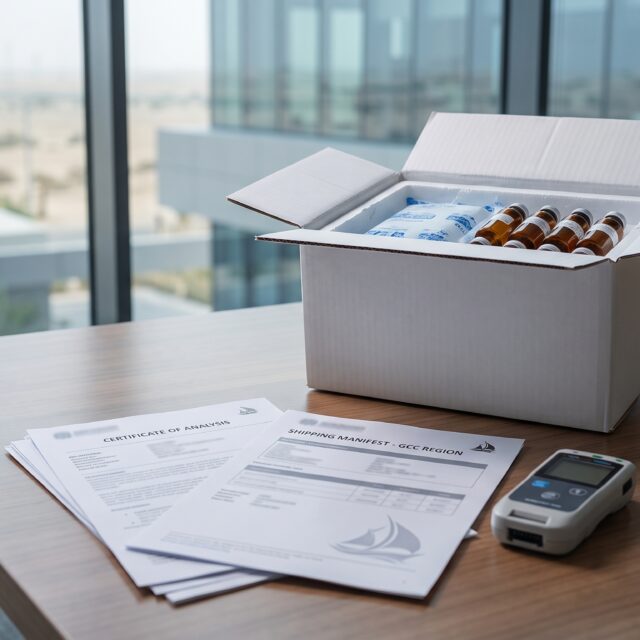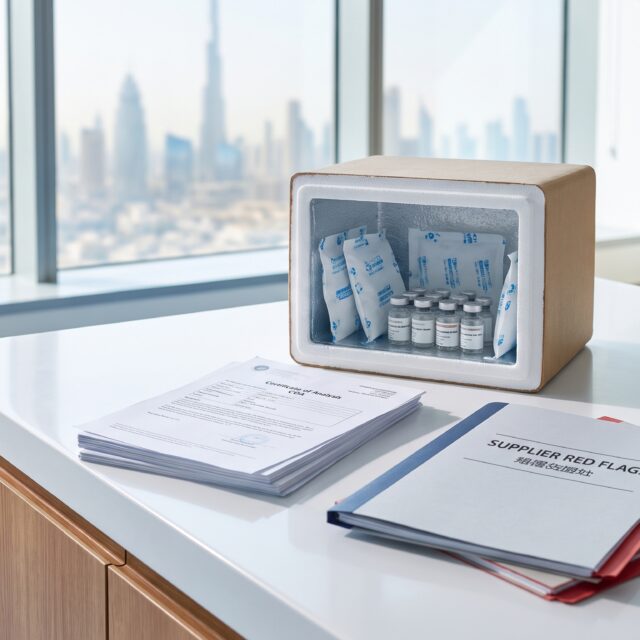




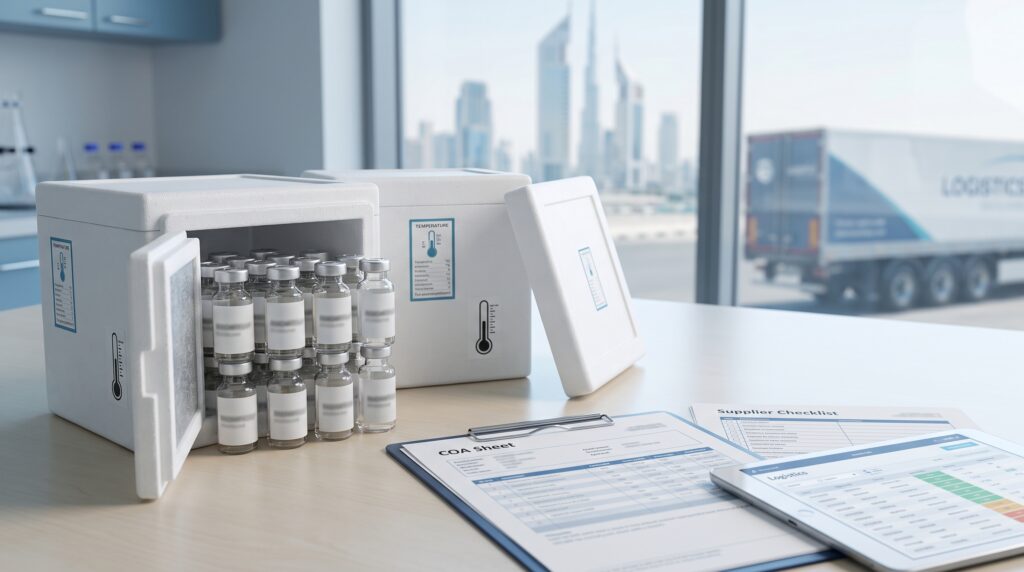
Securing high-purity laboratory compounds in the Middle East requires rigorous vetting. For laboratories, procurement managers, and independent researchers operating in the Gulf, evaluating vendors goes beyond simply comparing prices or looking for aesthetic packaging. The extreme desert climate, evolving regulatory environment, and an influx of international grey-market sellers necessitate a methodical approach to procurement. Utilising a strict peptide supplier checklist uae ensures that every compound acquired for analytical study meets exact purity standards and arrives fully intact, without getting stalled in international customs or degrading in transit.
The Essential Peptide Supplier Checklist UAE
A comprehensive peptide supplier checklist in UAE must prioritize three critical factors: verifiable High-Performance Liquid Chromatography (HPLC) testing for purity above 99%, explicit mass spectrometry documentation to confirm sequence identity, and robust local cold-chain logistics to prevent thermal degradation during domestic transit.
Evaluating a research supplier means looking past marketing claims like “pharmaceutical grade” and focusing entirely on verifiable data, local operational presence, and strict compliance with local regulatory frameworks. Buyers who rely exclusively on international vendors often face extended delays, missing documentation, and thermal degradation of fragile compounds during the shipping process.
Quick Buyer Checklist: What Matters Most
When comparing sources for laboratory research compounds, buyers should verify the following operational and analytical markers before processing an order:
- Batch-Specific Analytics: Does the supplier provide a Certificate of Analysis (COA) containing both HPLC and Mass Spectrometry (MS) data for the specific batch being sold?
- Local Cold-Chain Logistics: Is the stock held domestically within the UAE, and is it shipped in temperature-controlled packaging to mitigate extreme ambient heat?
- Regulatory Posture: Does the vendor operate strictly under a “Research Use Only” (RUO) framework, distinguishing their operations from unapproved medical providers?
- Operational Accessibility: Can you easily verify stock levels, utilise secure local payment methods (such as Cash on Delivery), and reach support teams directly via WhatsApp for procurement queries?
Navigating UAE Regulations and “Research Use Only” Compliance
The regulatory landscape for biochemical and pharmaceutical products in the UAE has undergone significant modernisation, raising the barrier to entry for legitimate suppliers and tightening restrictions on grey-market operators. Federal Decree-Law No. 68 of 2023 established the Emirates Drug Establishment (EDE) as the centralised pharmaceutical authority, replacing previous regulatory frameworks for medical approvals.
This shift in regulatory oversight has culminated in major compliance enforcement operations. Recently, health authorities took action against numerous unauthorised sources and referred social media influencers to the National Media Office for illegally promoting unapproved peptide weight-loss treatments. The government has clearly delineated between approved therapeutic medications and compounds intended strictly for in-vitro study.
For procurement staff and researchers, this highlights why evaluating a supplier’s compliance posture is a non-negotiable step. Legitimate domestic sources operate strictly under a Research Use Only (RUO) classification. They require buyers to acknowledge that the compounds are not for human consumption, they do not provide dosing protocols or medical advice, and they do not make therapeutic claims regarding body composition. A supplier that freely offers medical advice or markets research compounds as clinical treatments is operating outside of EDE regulations, posing a major compliance and continuity risk to the buyer.
Analysing the Certificate of Analysis (COA)
A primary function of any rigorous procurement protocol is the verification of chemical purity and identity. Lyophilised (freeze-dried) peptides must be manufactured with extreme precision; even minor synthesis errors can result in truncated sequences or impurities that completely invalidate experimental data.
To mitigate this risk, buyers must examine the Certificate of Analysis (COA). A trustworthy COA is not simply a piece of paper stating “99% pure.” It must include two distinct analytical methods:
- High-Performance Liquid Chromatography (HPLC): This analytical technique separates, identifies, and quantifies each component in the mixture. A high-quality supplier will provide an HPLC chromatogram demonstrating a primary peak that constitutes >99% of the total area, indicating high purity.
- Mass Spectrometry (MS): While HPLC shows purity, MS confirms the molecular weight of the compound. This proves that the substance in the vial matches the exact amino acid sequence of the intended peptide.
Buyers should always check that the date and batch number on the COA align with the inventory currently being distributed. International vendors often recycle old, generic COA documents for years, rendering them useless for verifying current stock quality.
Overcoming UAE Climate Logistics: The Cold-Chain Imperative
Perhaps the most overlooked element of sourcing biochemicals in the Middle East is the impact of ambient temperature. During the peak summer months, daytime temperatures in Dubai and Abu Dhabi routinely exceed 45 degrees Celsius, while the interiors of non-refrigerated delivery vehicles can reach far higher.
While lyophilised peptides are inherently more stable than reconstituted liquid solutions, prolonged exposure to extreme heat can still induce degradation, cleavage, or aggregation of the amino acid chains. This thermal stress compromises the compound’s structural integrity before it even reaches the laboratory.
Ordering from overseas vendors exacerbates this risk. An international shipment might sit in an uncontrolled customs warehouse for days before clearing inspection. To prevent this, informed buyers prioritise suppliers who manage local inventory. Working with a domestic supplier that offers next-day local UAE delivery ensures that compounds spend minimal time in transit. Legitimate local operators use insulated packaging and cold-chain protocols (such as gel packs) to maintain a stable environment from the dispatch facility directly to the buyer’s laboratory door.
Evaluating Operational Support and Supply Continuity
For ongoing research projects, supply chain continuity is just as important as initial product quality. B2B distributors, laboratories, and dedicated researchers cannot afford disruptions caused by out-of-stock items, payment gateway failures, or unresponsive vendors.
When evaluating a supplier’s operational stability, check for transparent communication channels. Can you reach a local representative via WhatsApp to confirm batch numbers or delivery windows? Do they offer flexible, locally trusted payment methods such as Cash on Delivery (COD) to minimise financial friction?
A strong operational footprint indicates a supplier committed to the local market rather than a temporary storefront dropshipping from overseas. Domestic operations, such as those maintained by NOVA Labs, focus on streamlining this procurement process by ensuring high-demand research compounds remain consistently stocked and readily dispatchable within the Emirates.
Conclusion and Final Checklist Review
Sourcing high-quality research compounds in the GCC demands rigorous attention to detail. By implementing a strict peptide supplier checklist uae, buyers can successfully navigate the complexities of local EDE regulations, avoid the pitfalls of international customs delays, and ensure the structural integrity of their materials through verified cold-chain logistics.
Prioritise vendors that provide batch-matched HPLC and MS data, operate with strict RUO compliance, and possess the local infrastructure necessary to bypass the extreme summer heat. When you are ready to secure verifiable, locally stocked compounds for your next project, you can explore our current research peptide stock to find high-purity materials supported by domestic GCC logistics.
Disclaimer: The products mentioned in this article are for research purposes only and are not intended for human consumption.
References
- UAE Government Portal. Federal Decree-Law No. 68 of 2023 concerning the Emirates Drug Establishment (EDE).
- Gulf News. “UAE authorities crack down on unapproved weight-loss drugs and unauthorized promoters.”
- Chambers Legal Guides. “Understanding the Latest Pharmaceutical Laws and Regulations in the UAE.”
- UAE Cracks Down on Unapproved Peptide Weight-Loss Drugs: 71 Sources and 14 Influencers Face Action – Gulf News
- How to Register Peptides in the UAE: A Regulatory Guide for Brands and Manufacturers
- Emirates Drug Establishment approves oral obesity treatment, marking shift away from injections
- Understanding the Latest Pharmaceutical Laws and Regulations in the UAE – Chambers
- Peptide Supplier UAE | B2B Research Peptide Supply, COA & OEM – BT BioLabs
- uae peptides lab | Understanding the Peptide Landscape
- Peptide Research Resources | UAE Core Peptides
Frequently asked questions
What documents should a UAE peptide supplier provide?
A reputable supplier must provide a batch-specific Certificate of Analysis (COA). This should include High-Performance Liquid Chromatography (HPLC) results to verify purity and Mass Spectrometry (MS) data to confirm the compound's identity.
Why is cold-chain shipping important for research peptides in Dubai?
Summer temperatures in the UAE frequently exceed 45 degrees Celsius. Without cold-chain logistics, such as insulated packaging and gel packs, lyophilised peptides can degrade and lose structural integrity during transit.
Are research peptides regulated in the UAE?
Yes, pharmaceutical and biochemical products are strictly regulated by the Emirates Drug Establishment (EDE). Legitimate laboratory peptide suppliers must classify and distribute their products strictly for Research Use Only (RUO).
What does RUO mean when buying peptides?
RUO stands for Research Use Only. It indicates that the compound is sold strictly for in-vitro laboratory testing and scientific research, and is not approved or intended for human consumption or medical treatment.
Is local UAE stock better than ordering from international peptide suppliers?
Yes. Sourcing locally avoids lengthy international shipping times, eliminates the risk of compounds being held in hot customs warehouses, and ensures next-day delivery via local cold-chain networks.
Nova Labs buyer tools
Ready to verify stock, testing and delivery?
Use the product page and lab report section to check availability, documentation, delivery timing and support before placing an order.
- COA / test-report checks
- UAE delivery context
- Cold-chain handling
- COD and card payment options
- WhatsApp support