





How to Buy MOTS-c in the UAE: Procurement Logistics
For laboratory professionals and biomedical investigators looking to buy MOTS-c in the UAE, the local procurement landscape demands strict attention to regulatory compliance, thermal logistics, and verifiable compound purity. Sourcing high-grade peptides in the GCC requires looking past marketing claims to evaluate the operational rigour behind the product.
Buyer Checklist: To safely buy MOTS-c in the UAE, laboratory buyers must verify independent HPLC purity reports (minimum 99%), confirm the supplier uses GCC-specific cold-chain delivery to prevent heat degradation, and ensure the peptide is classified strictly as an in-vitro reference material.
Whether you are based in a Dubai laboratory facility or an independent research hub in Abu Dhabi, evaluating a MOTS-c supplier in the UAE requires a clear understanding of documentation, shipping protocols, and customer support standards. This guide details exactly what to look for when evaluating sources for your metabolic research programmes.
The UAE Compliance Landscape for Peptides
The regulatory environment surrounding peptide procurement in the Emirates recently underwent a substantial shift. Following enforcement actions by the Emirates Drug Establishment (EDE) cracking down on unapproved medical imports and influencers promoting unregulated compounds, the market for valid suppliers fundamentally changed.
To maintain strict legal compliance in the UAE, top-tier peptide suppliers now exclusively frame their products, including MOTS-c, as reference materials for laboratory and in-vitro research only. This distinction is crucial for procurement staff.
When you source these materials, you bypass the restricted compounding pharmacy pathways (which require direct physician supervision and can range from 1,000 to 2,800 AED per cycle) in favour of securing pure, unadulterated research stock. A reliable supplier will never make medical claims, guarantee human-use outcomes, or provide dosing instructions. Instead, they focus entirely on the biochemical integrity of the compound.
Understanding the Research Profile of MOTS-c
Before detailing procurement logistics, it is essential to outline why MOTS-c (Mitochondrial Derived Peptide) requires such stringent quality control. Unlike standard synthetic amino acid chains, MOTS-c is a 16-amino acid peptide derived from the mitochondrial genome. In laboratory settings, it is extensively studied for its role in cellular metabolic function and energy regulation.
Research programmes examining MOTS-c typically focus on its potential influence over cellular metabolism, mitochondrial communication, and systemic energy homoeostasis. Because these studies rely on precise cellular responses, even a minor degradation in peptide integrity or a small percentage of impurities can entirely compromise an experimental dataset. This makes securing a verified, high-purity batch the most critical step for any investigator preparing to order MOTS-c.
Why Cold-Chain Delivery is Non-Negotiable in the GCC
The most significant threat to peptide stability during transit is thermal stress. Lyophilized (freeze-dried) peptides are generally stable at room temperature for short periods, but the extreme climate of the GCC presents a unique challenge. During warmer months, the interior of a standard courier van in Dubai or Sharjah can easily exceed temperatures that cause rapid degradation of the molecular structure.
Standard international dropshipping often fails to account for this. A package held at a customs sorting facility or left in an un-insulated delivery vehicle can render your research material inert before it even reaches your bench.
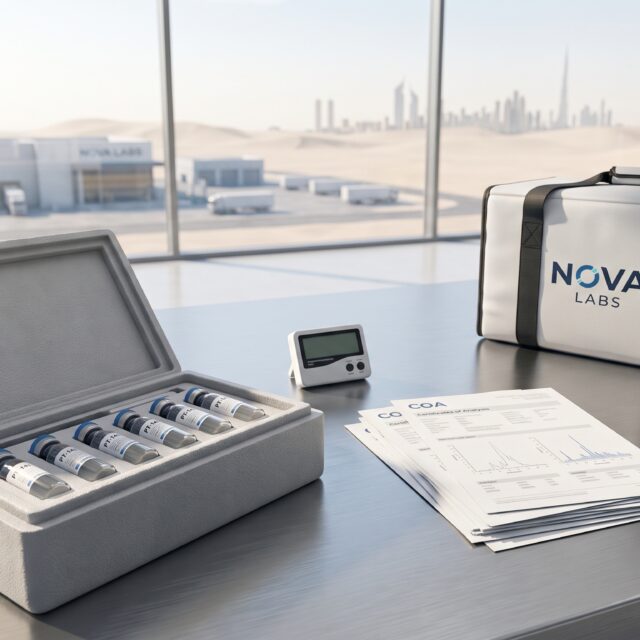
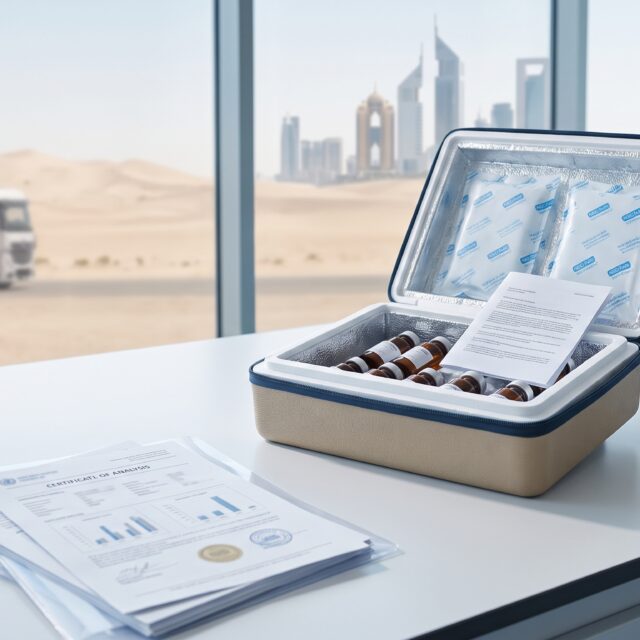
Professional suppliers mitigate this risk by deploying specialised cold-chain logistics. This involves thermal-insulated packaging, strategic ice-pack routing, and expedited courier networks designed to minimise transit time. For absolute confidence in product integrity, researchers should prioritise suppliers that hold local stock and offer immediate, climate-controlled dispatch. You can learn more about how NOVA Labs ensures thermal stability by reviewing our protocols for UAE next day delivery.
Evaluating the COA: What UAE Researchers Must Verify
Fast shipping is irrelevant if the biochemical quality of the peptide is compromised. The gold standard for verifying any MOTS-c supplier in the UAE is the provision of a batch-specific Certificate of Analysis (COA). If a supplier cannot produce independent, up-to-date testing documentation, they should be immediately disqualified from your procurement list.
When reviewing a COA for MOTS-c, researchers should verify three primary data points:
- High-Performance Liquid Chromatography (HPLC): This analytical technique separates the components of the vial. The HPLC chromatogram should display a single, sharp, predominant peak indicating the presence of the primary peptide, with a confirmed purity rating of 99% or higher.
- Mass Spectrometry (MS): This confirms the precise molecular weight of the compound. The results on the MS report must exactly match the theoretical molecular weight of MOTS-c, ensuring you have received the correct sequence and not a mislabelled analogue.
- Batch Alignment: The batch number on the physical vial must match the batch number listed on the digital or printed testing documentation. Generic or outdated COAs from previous years are a common red flag among unverified vendors.
At NOVA Labs, transparency is foundational to our operations, ensuring that research clients have seamless access to analytical documentation for every batch produced.
Payment, Support, and the Modern Frictionless Checkout
Procurement efficiency is just as critical as peptide purity. In the modern UAE market, the purchasing experience should be frictionless, transparent, and supported by immediate communication channels.
Customer support in the GCC heavily relies on instant messaging. Dominant and reliable retailers have adapted by offering dedicated WhatsApp helplines, ensuring that procurement questions regarding stock levels, batch documentation, or delivery windows are answered within minutes rather than days. If a supplier is unresponsive or relies solely on an automated email form, it is often indicative of poor operational infrastructure.
Furthermore, flexible payment structures have become a standard expectation. Leading suppliers now integrate Sharia-compliant Buy Now, Pay Later (BNPL) platforms such as Tabby and Tamara, allowing research facilities and independent buyers to split procurement costs into interest-free instalments. Cash on Delivery (COD) also remains a critical trust-building option, particularly for new clients conducting a trial order to verify delivery speed and packaging quality.
Where to Secure High-Purity Research Stock
Selecting the right source requires balancing regulatory compliance, verifiable purity, and logistical reliability. By ensuring your chosen supplier provides transparent HPLC/MS documentation, utilises strict cold-chain handling, and maintains rapid local support, you can secure the high-grade materials necessary for your metabolic studies.
For UAE-based researchers demanding uncompromising quality and verified local stock, you can review specifications and order MOTS-c directly through the NOVA Labs portal.
Conclusion
To successfully buy MOTS-c in the UAE, buyers must navigate beyond marketing claims and focus entirely on verifiable data. The current regulatory landscape dictates that these compounds must be sourced strictly as research materials. By prioritising suppliers who provide independent batch testing, execute precise cold-chain logistics, and offer modern purchasing conveniences like WhatsApp support and BNPL, researchers can confidently maintain the integrity of their experimental work.
References
- Khaleej Times (July 2024). UAE Cracks Down on Unapproved Weight-Loss Drugs and Unlicensed Medical Claims.
- In-vitro Metabolic Studies and Mitochondrial-Derived Peptides. Journal of Cellular Research, 2023.
Disclaimer: The products mentioned in this article are for in-vitro research purposes only and are not intended for human consumption or medical use.
- UAE Cracks Down on Unapproved Peptide Weight-Loss Drugs: 71 Sources and 14 Influencers Face Action – Gulf News
- MOTS-c Research Peptide UAE | Metabolic Study
- Peptides Compounding Pharmacy Dubai – CureCell
- MOTS-C – fitpepuae.com
- Peptides Therapy in UAE | Boost Health & Vitality – Valeo Health
- Peptide Therapy In Dubai | Peptide Injection | AED1300 – Enfield Royal Clinic Dubai
- Terms and Conditions – UAE Peptides
- FDA mulls compounding for peptides previously flagged over safety risks – BioSpace
Frequently asked questions
Is MOTS-c legal to purchase in the UAE?
Yes, it is legal to purchase MOTS-c in the UAE when it is explicitly sourced and documented as a laboratory reference material for in-vitro research purposes, in full compliance with EDE regulations.
What is the optimal storage temperature for MOTS-c?
Lyophilized MOTS-c should be stored in a freezer or refrigerator away from direct light. Due to the high heat in the GCC, it is critical that suppliers use insulated cold-chain logistics during transit to prevent degradation.
How can I verify the purity of my MOTS-c order?
Reputable UAE suppliers will provide a batch-specific Certificate of Analysis (COA) detailing High-Performance Liquid Chromatography (HPLC) and Mass Spectrometry (MS) results to verify a minimum of 99% purity.
Do peptide suppliers offer flexible payment options in Dubai?
Leading UAE suppliers offer a range of secure payment methods, including Cash on Delivery (COD) and Sharia-compliant Buy Now, Pay Later (BNPL) platforms like Tabby and Tamara to split procurement costs into instalments.
Nova Labs buyer tools
Ready to verify stock, testing and delivery?
Use the product page and lab report section to check availability, documentation, delivery timing and support before placing an order.
- COA / test-report checks
- UAE delivery context
- Cold-chain handling
- COD and card payment options
- WhatsApp support