




How to Buy MOTS-c GCC: The Short Version
When looking to buy MOTS-c GCC, researchers must prioritize suppliers offering domestic stock to bypass customs delays. Ensure the vendor provides independent third-party HPLC testing, such as Janoshik analytical reports, and utilizes climate-aware packaging to protect the lyophilized peptide from extreme regional heat.
Procuring high-quality research compounds in the Middle East involves unique logistical challenges that international buyers rarely face. From navigating complex import regulations to ensuring that delicate peptides survive transit in temperatures that often exceed 40°C, the GCC market demands a highly strategic approach to sourcing. For laboratory professionals and informed procurement staff, finding a reliable MOTS-c supplier GCC requires moving past marketing claims and focusing strictly on verifiable data: analytical testing, physical stock location, and cold-chain shipping protocols.
This guide breaks down exactly what you should check before ordering MOTS-c, how to evaluate supplier documentation, and why purchasing from local inventory is critical for project continuity.
Understanding the UAE and GCC Market Landscape
The local peptide market is highly fragmented, which can cause confusion for buyers comparing prices. In the UAE, the sourcing landscape is generally divided between two distinct environments: clinical facilities and research-grade suppliers.
At premium wellness clinics and compounding pharmacies, MOTS-c is administered as a therapeutic treatment under direct clinical and prescription guidance. As of late 2024, a single session or prescribed protocol in these settings can easily cost between 650 to 1,000 AED. These environments are strictly governed by the Emirates Drug Establishment (EDE) under UAE Federal Decree-Law No. 38 of 2024, which requires specific marketing authorization for human use.
Research-grade peptide vendors, however, cater specifically to laboratory professionals, academic institutions, and independent researchers. In this sector, a 10mg lyophilized vial typically costs around 220 AED. These products are sold strictly for in-vitro testing and laboratory analysis. Reputable research suppliers explicitly label their compounds as ‘Research Use Only’ (RUO) or ‘Not for Human Consumption’ to maintain strict regulatory compliance. When you order MOTS-c GCC from these suppliers, you are paying for the pure, unformulated compound intended for controlled study, not a clinical service.
Evaluating a MOTS-c Supplier GCC: COAs and Purity
The single most critical factor when evaluating a MOTS-c peptide GCC vendor is the transparency and validity of their analytical testing. Because the compound is synthesized for laboratory use, the purity directly dictates the reliability of your research outcomes.
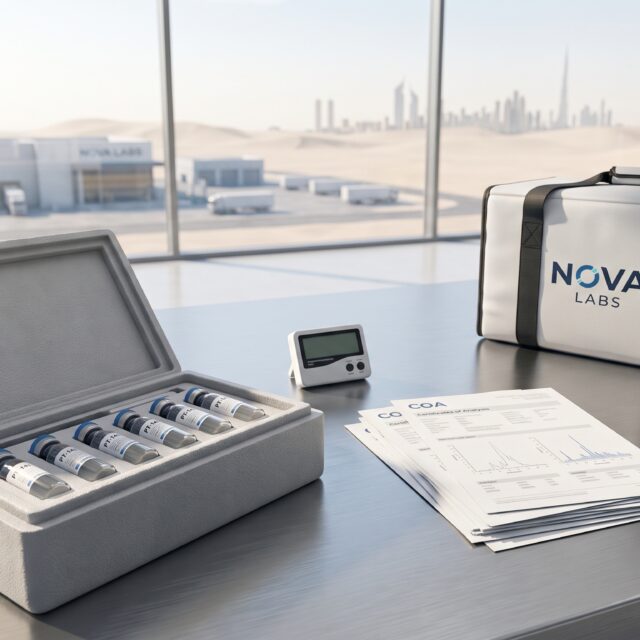
Serious suppliers establish trust by providing independent, third-party Certificates of Analysis (COAs). In the global peptide industry, Janoshik Analytical is widely regarded as the gold standard for unbiased High-Performance Liquid Chromatography (HPLC) and Mass Spectrometry (MS) testing.
When reviewing a vendor’s COA, informed buyers should check the following details:
- Testing Date: The report should be recent and correspond to the currently available inventory.
- Batch Numbers: Ensure the batch number on the COA matches the lot number on the physical vial you receive.
- Purity Percentage: High-grade MOTS-c should demonstrate a minimum HPLC purity of 98% to 99%.
- Verification Keys: Legitimate Janoshik reports feature a unique verification key that you can cross-reference directly on the testing facility’s official website. This prevents vendors from forging or altering PDF documents.
If a vendor refuses to provide recent, verifiable third-party testing, or relies solely on internal, self-generated reports, it is a significant red flag that warrants looking elsewhere.
Surviving the Desert Heat: Packaging and Cold-Chain Logistics
MOTS-c is a mitochondrial-derived peptide. Like many complex amino acid sequences, it is inherently susceptible to physical instability when exposed to harsh environments. In the GCC, high ambient temperatures pose a severe threat of thermal degradation to delicate compounds.
When peptides are synthesized, they undergo a process called lyophilization (freeze-drying), which removes moisture and dramatically stabilizes the compound in a powder form. While lyophilized MOTS-c is significantly more resilient than a reconstituted liquid solution, prolonged exposure to the intense desert heat inside a delivery truck can still compromise the structural integrity and efficacy of the peptide.
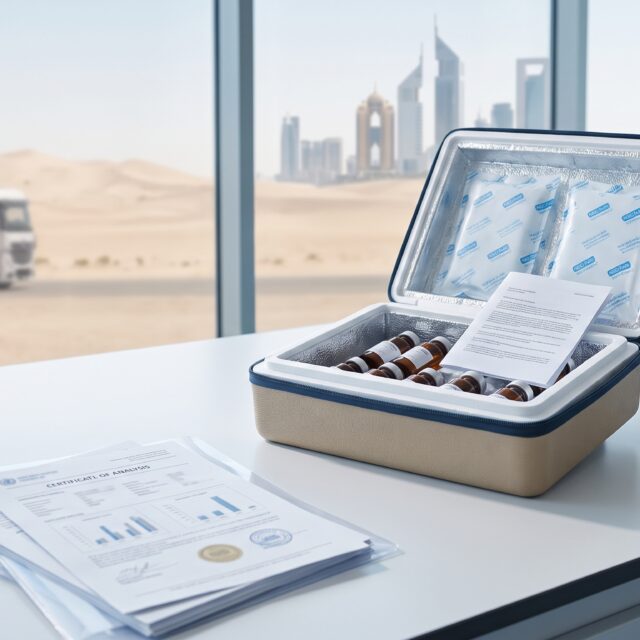
To mitigate this, specialized shipping logistics are essential. Before you buy MOTS-c GCC, verify the supplier’s packaging protocols. Ensure they use climate-aware shipping methods—either active cold-chain logistics or passive thermal protection (such as insulated mailers and gel packs) to shield the product during transit.
Furthermore, once the peptide is reconstituted in the laboratory with bacteriostatic water, it must be immediately transferred to a refrigerated environment (typically 2°C to 8°C) to prevent rapid degradation.
Customs Friction: Why Domestic UAE Stock Matters
One of the most common mistakes made by researchers in the region is attempting to import peptides directly from international suppliers in China, the US, or the UK to save on upfront costs. While the base price of the vial might appear lower, international orders frequently face severe logistical bottlenecks.
Strict UAE and GCC customs regulations mean that laboratory chemicals and peptides imported from abroad are routinely flagged for inspection. This can lead to weeks of detention at border control, excessive clearance fees, or outright seizure and destruction of the package if the documentation does not perfectly align with local import mandates. Furthermore, while the package sits in a non-climate-controlled customs warehouse for weeks, the thermal degradation of the peptide is almost guaranteed.
Because of these risks, the strongest ranking procurement strategy is to rely on domestic inventory. Suppliers that hold stock locally in the UAE have already absorbed the import risk, customs clearance, and long-haul temperature control challenges. Purchasing from local stock ensures that your laboratory receives its materials quickly and in pristine condition.
Research Applications of the MOTS-c Peptide
For those preparing to order MOTS-c GCC, it is important to contextualize the compound’s place in modern research. MOTS-c (Mitochondrial Open Reading Frame of the 12S rRNA-c) is a peptide consisting of 16 amino acids. Unlike many peptides encoded by nuclear DNA, MOTS-c is unique because it is encoded by the mitochondrial genome.
In laboratory settings, researchers study MOTS-c to observe its interaction with metabolic pathways, specifically its role in cellular stress responses, insulin sensitivity, and AMPK activation. Studies focus on how the peptide regulates metabolic homeostasis and energy production at the cellular level.
It is crucial to reiterate that these observations are derived from controlled in-vitro and animal studies. While the metabolic profile of the compound makes it a subject of intense scientific interest, it must be handled by qualified personnel strictly for experimental and analytical purposes.
How to Order MOTS-c GCC with Confidence
For researchers and procurement specialists who require verifiable quality and reliable logistics, NOVA Labs provides a seamless procurement experience tailored to the region’s specific challenges.
We prioritize transparency by making our independent third-party COAs readily available, ensuring you can verify the purity and batch authenticity before you place an order. Because we hold our inventory domestically, we eliminate the friction of international customs, allowing for rapid, climate-aware dispatch. For buyers in the Emirates, we offer specialized next-day delivery within the UAE to ensure your compounds arrive quickly and securely.
When you are ready to secure high-purity materials for your next project, you can seamlessly order MOTS-c for your laboratory directly through our secure platform. We offer flexible local payment options, including Cash on Delivery (COD), and provide direct WhatsApp support to assist with any stock inquiries or documentation requests.
Disclaimer: The products mentioned in this article are for laboratory and research purposes only and are not intended for human consumption or therapeutic use.
References
- UAE Federal Decree-Law No. 38 of 2024 regarding the regulation of medical products and pharmacy professions by the Emirates Drug Establishment (EDE).
- Janoshik Analytical: Independent analytical testing and verification protocols for laboratory-grade compounds.
- General principles of peptide lyophilization and thermal stability profiling in extreme climates.
- MOTS-c Price Dubai: 2026 Cost Guide, Purity & Value – NOVA Labs
- How to Register Peptides in the UAE: A Regulatory Guide for Brands and Manufacturers
- Peptide Customs UAE 2026: Buy Local in Dubai, Skip Detention
- Shipping Policy – UAEPeptide.ai
- Peptides Compounding Pharmacy Dubai – CureCell
- What is MOTS-c Peptide? Benefits, Uses & What to Expect – Hortman Clinics
- Buy Mots-c Peptide Vial UAE PharmaLabGlobal
- MOTS-c Dosage Guide: 5–25 mg Protocols & Side Effects (2026)
Frequently asked questions
Is it legal to buy MOTS-c in the GCC?
Yes, it is legal to purchase MOTS-c in the GCC when it is strictly sourced and labeled for in-vitro laboratory research purposes only. Human therapeutic use requires specific clinical authorization and falls under strict local medical regulations.
Why should I buy MOTS-c from a UAE-based supplier instead of importing it?
Purchasing from a supplier with local UAE stock prevents your package from being delayed, flagged, or seized by regional customs. It also drastically minimizes the time the peptide spends in transit, reducing the risk of heat degradation in the GCC climate.
How can I verify the purity of MOTS-c before buying?
You should request a Certificate of Analysis (COA) from the supplier, ideally conducted by a reputable independent third-party laboratory like Janoshik. Check that the HPLC purity is above 98% and that the document's verification key matches the lab's online database.
How should MOTS-c be stored after delivery?
Unopened, lyophilized MOTS-c should be stored away from direct heat and light; long-term storage is best in a freezer. Once reconstituted with bacteriostatic water for laboratory use, it must be refrigerated immediately at 2°C to 8°C to maintain stability.
Nova Labs buyer tools
Ready to verify stock, testing and delivery?
Use the product page and lab report section to check availability, documentation, delivery timing and support before placing an order.
- COA / test-report checks
- GCC delivery context
- Cold-chain handling
- COD and card payment options
- WhatsApp support