

How to Read a Peptide COA UAE: The Critical Role of Verification
Wondering how to read a peptide COA in the UAE? You must verify two core metrics: the HPLC report confirming at least 98% purity, and the Mass Spectrometry (MS) report proving molecular identity. Always match the COA batch number to your physical vial and validate it through the testing laboratory’s official portal.
Key Takeaways: Quick Buyer Checklist
- HPLC Purity: Ensure the primary peak represents 98%+ of the total compound.
- Mass Spectrometry (MS): Verify that the theoretical mass matches the observed mass to confirm molecular identity.
- Batch Matching: The lot number on the report must perfectly match the physical vial you receive.
- Independent Verification: Always use the laboratory’s online portal (e.g., Janoshik) to verify the unique document key.
- Local Logistics: Ensure the supplier uses temperature-controlled delivery to protect the verified purity from extreme UAE heat.
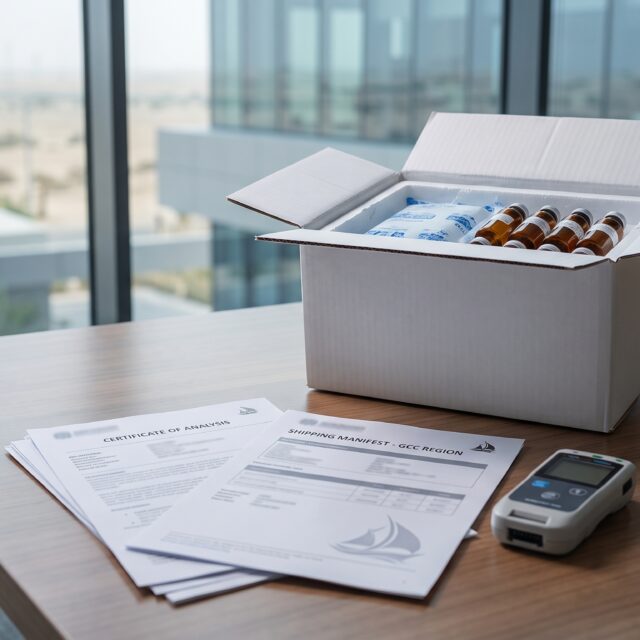
For procurement staff and analytical researchers in the Middle East, authenticating research compounds is the most critical step before testing. Navigating supplier documentation can be complex, but understanding these reports is your primary defense against degraded, under-dosed, or counterfeit materials. A Certificate of Analysis (COA) is the definitive analytical document that proves what is inside the vial. However, this document is only valuable if the buyer can correctly interpret its data, verify the independent laboratory, and connect the report to the physical batch delivered.
In a market where extreme ambient temperatures and customs friction can delay shipments, ensuring that the initial product meets strict 98% or 99% purity thresholds is non-negotiable. This guide will break down the essential components of HPLC and Mass Spectrometry data, outline how to spot fabricated test reports, and explain why local handling and rapid delivery are just as important as the testing itself.
The Anatomy of a Legitimate Certificate of Analysis
A complete and valid Certificate of Analysis is not a simple summary page with a “pass” or “fail” grade. It is a detailed data packet generated by highly sensitive analytical instruments. Authentic reports will always include raw data visualizations alongside numerical summaries.
High-Performance Liquid Chromatography (HPLC) for Purity
HPLC is the standard method used to determine quantitative purity. The HPLC report displays a graph known as a chromatogram. On this graph, the X-axis represents the retention time (how long it took the substance to pass through the instrument’s column), and the Y-axis represents the absorbance (measured in mAU or milli-Absorbance Units).
When evaluating the HPLC data, look for a single, sharp, distinct peak. This primary peak represents the target peptide. If the compound is highly pure, this peak will dominate the graph, and any secondary, smaller peaks—representing impurities, synthesis byproducts, or degraded fragments—will be minimal. Below the graph, an integration table lists the area percentage of each peak. For research-grade applications, the primary peak should account for a minimum of 98% of the total area, with premium suppliers targeting 99% or higher. Anything below 98% introduces an unacceptable level of variance into laboratory experiments and signifies poor manufacturing refinement.
Common Red Flags in HPLC Integration Tables
Even if the visual graph looks acceptable, the integration table beneath it can reveal manipulation. The integration table quantifies the area under each peak. A common tactic used by dishonest vendors is to adjust the integration parameters so that smaller impurity peaks are ignored by the software, artificially inflating the purity percentage of the primary peak.
When reading the table, ensure that the baseline is drawn correctly and that no peaks are excluded from the total area calculation. The area percent should total 100%. If you notice a significant “hump” or broad peak that the table does not account for, the purity data has likely been manipulated. Furthermore, check the solvent blanks. A professional laboratory will run a “blank” sample (just the solvent without the peptide) to ensure no residual contamination exists in the HPLC column before running the actual test batch.
Mass Spectrometry (MS) for Identity
While HPLC tells you how pure a substance is, it does not confirm its identity. You could theoretically have 99% pure table salt, and the HPLC would show a perfect single peak. This is where Mass Spectrometry (MS) becomes vital.
Mass Spectrometry confirms the molecular identity of the compound by measuring its mass-to-charge ratio (m/z). The COA will list the theoretical molecular weight of the target peptide and compare it against the observed molecular weight detected by the instrument. A legitimate report will show an observed mass that matches the theoretical mass almost perfectly, usually within a fraction of a Dalton.
In mass spectrometry, you might also see multiple peaks corresponding to different charge states of the same peptide. Because MS measures the mass-to-charge ratio (m/z), a peptide that has picked up two protons during ionization will show a peak at half its actual mass. A skilled analyst understands how to calculate these multicharged states to confirm they all correspond to the same target molecule. If the MS data is missing entirely, the COA is incomplete, as the identity of the compound remains unverified.
How to Spot Fake or Recycled COAs in the GCC
As the demand for research compounds grows across Dubai, Abu Dhabi, and the wider GCC, so does the prevalence of fraudulent documentation. Fabricated or recycled COAs leave distinct red flags that informed buyers can easily identify.
First, scrutinize the batch number. The lot or batch number printed on the COA must perfectly match the batch number printed on the physical vial you receive. Unreliable suppliers often test one high-quality batch, receive a passing COA, and then use that same document for years across dozens of subsequent, untested batches.
Second, verify the third-party laboratory. Legitimate suppliers use independent, reputable testing facilities. These laboratories provide unique verification keys, barcodes, or QR codes printed directly on the COA. A buyer should be able to type this key into the laboratory’s official website and pull up the exact same report directly from the lab’s secure server (such as the verification portals provided by Janoshik or similar independent labs). If a supplier provides an in-house COA with no independent verification mechanism, the risk of data manipulation is exceptionally high.
Third, check the date and time of injection on the raw data. The chromatogram automatically stamps the exact date and time the sample was run through the HPLC machine. If a vendor claims to have freshly synthesized stock but the injection date is two years old, the documentation has been recycled.
Why Purity Validation Matters in the UAE Climate
Understanding how to read a peptide COA goes beyond just authenticating the molecular structure; it directly ties into regional logistics. The extreme ambient heat of the Middle East frequently exceeds 40°C, which can accelerate peptide degradation. A compound that leaves a manufacturing facility at 99.5% purity can rapidly degrade into fragmented, less effective amino acid chains if exposed to harsh thermal stress during international shipping or prolonged customs holds.
Lyophilization (freeze-drying) removes water from the compound, slowing down hydrolysis and enzymatic degradation. However, it does not make the peptide invincible. In this stable state, peptides can survive ambient transit for short periods, but prolonged exposure to heat—such as sitting in a non-air-conditioned delivery van in Dubai for three days—can cause deamidation or oxidation, degrading a 99% pure batch down to 90% or lower before it even reaches the lab.
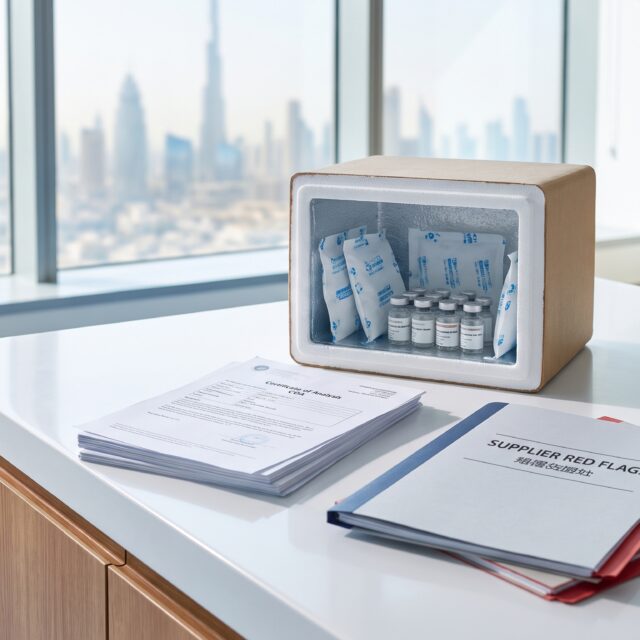
To mitigate these risks, researchers prioritize local suppliers who utilize active cold-chain logistics or rapid regional fulfillment. By sourcing through services that guarantee next-day domestic delivery in the UAE, buyers ensure that the 99% purity verified on the COA is exactly what arrives at the laboratory bench. Minimizing transit time is just as important as initial synthesis quality.
Evaluating the Supplier Beyond the Test Report
A verified Certificate of Analysis is the foundation of trust, but it should not be the only metric used to evaluate a supplier. Operational reliability, customer support, and local market adaptations are equally important to ensure a smooth procurement process.
Look for suppliers who provide clear, transparent access to their testing documentation before a purchase is required. The test results shouldn’t be hidden behind a paywall or only provided upon request after delivery. Furthermore, consider the payment and support infrastructure. In the UAE market, flexible payment options like Cash on Delivery (COD) provide an added layer of security, ensuring you only pay when the physical vial is in your hands. Accessible customer support, particularly via local WhatsApp channels, ensures that researchers can quickly query stock availability, request specific batch COAs, or confirm delivery windows in real-time.
Conclusion
Mastering COA verification is an indispensable skill for anyone procuring research compounds in the Middle East. By focusing on the exact retention peaks of the HPLC data, confirming molecular identity through Mass Spectrometry, checking integration tables for manipulation, and verifying the third-party laboratory’s secure portal, buyers can confidently reject fabricated documents. Always prioritize transparency, independent verification, and temperature-conscious handling when selecting your supply partner.
For researchers ready to explore verified, locally stocked compounds backed by rigorous analytical data, you can browse the full catalog at the NOVA Labs shop.
Disclaimer: The products mentioned in this article are for research purposes only and are not intended for human consumption, veterinary use, or therapeutic application.
References
- “High-Performance Liquid Chromatography (HPLC) in Peptide Purification.” Journal of Chromatography A, 2019.
- “Quality Control and Mass Spectrometry for Synthetic Peptides.” Analytical Chemistry Guidelines, 2021.
- “Effects of Temperature on Lyophilized Peptide Stability.” International Journal of Pharmaceutics, 2020.
- How to Read a Peptide COA (Real vs Fake)
- Peptide Certificates of Analysis: How to Read and Verify a COA (2026 Guide) | Peptidepedia
- How to read a peptide Certificate of Analysis (COA) | BioHack London
- Quality & Testing — HPLC Purity, COA & Legitimacy | UAEPeptide.ai
- COA Process – Pure Health Peptides
- Peptide Storage Guide – UAE Core Peptides
- Peptide Storage, Handling & Stability Guide 2026 – Luxara Research Company
- pipdxb.ae
Frequently asked questions
What is a peptide COA?
A Certificate of Analysis (COA) is a quality control document issued by a laboratory that verifies the purity, identity, and molecular weight of a specific batch of peptides using analytical testing.
How can I verify if a peptide COA is fake?
You can spot a fake COA by checking if the batch number matches your physical vial, ensuring the injection date aligns with recent manufacturing, and using the independent laboratory's online portal to verify the unique report key.
What purity percentage should I look for on an HPLC report?
For rigorous laboratory research, the HPLC report should show a primary target peak representing a minimum of 98% purity, with premium compounds often achieving 99% or higher.
Why is Mass Spectrometry (MS) required alongside HPLC?
HPLC only measures how pure a substance is, not what it actually is. Mass Spectrometry measures the molecular weight to confirm the absolute identity of the target peptide.
Does UAE heat affect the purity listed on the COA?
Yes, extreme ambient heat can accelerate peptide degradation. A product that tested at 99% purity can degrade if subjected to prolonged thermal stress, making local rapid delivery and proper temperature-controlled logistics essential.
Nova Labs buyer tools
Ready to verify stock, testing and delivery?
Use the product page and lab report section to check availability, documentation, delivery timing and support before placing an order.
- COA / test-report checks
- UAE delivery context
- Cold-chain handling
- COD and card payment options
- WhatsApp support