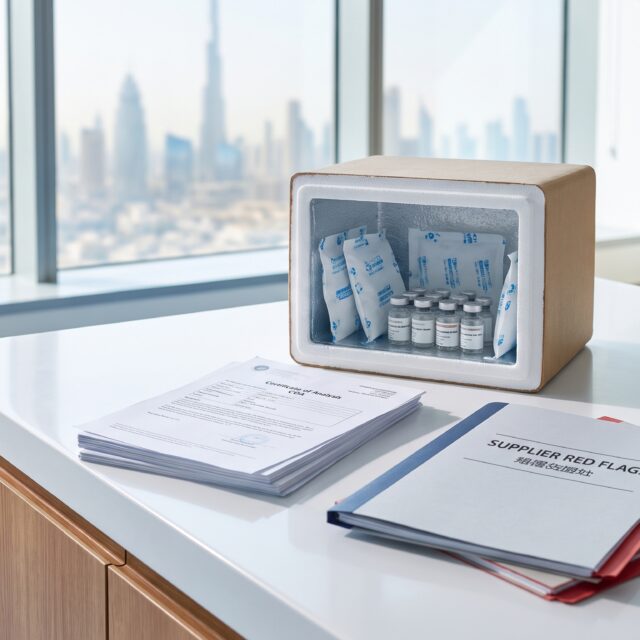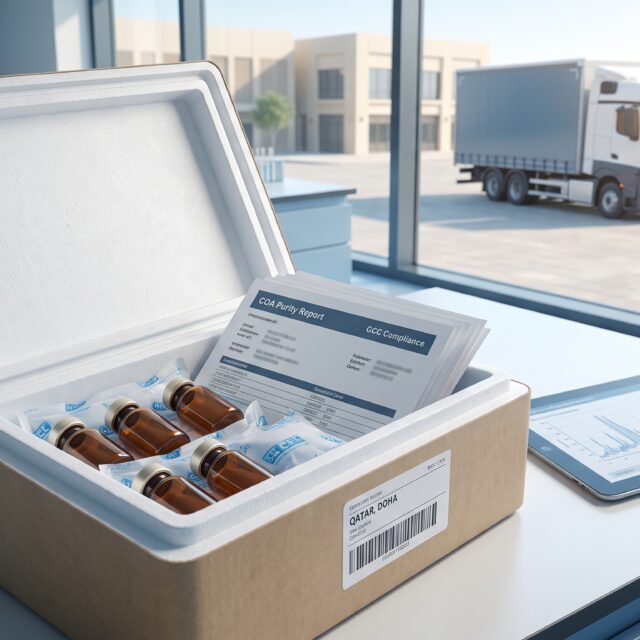

How to Spot Fake Peptides in Abu Dhabi: The Quick Answer
To spot fake peptides in Abu Dhabi, buyers must verify third-party Certificates of Analysis (COAs) for both HPLC purity and mass spectrometry identity. Always avoid sellers lacking batch-specific lab results, demanding offshore crypto payments, or operating anonymously through social media platforms.
Buyer Checklist & Key Takeaways
- Demand Independent COAs: Suppliers must provide verifiable, third-party lab results (like Janoshik) rather than self-published documents.
- Verify Batch Numbers: Ensure the batch number printed on the physical vial exactly matches the corresponding lab report.
- Check Both HPLC and MS: HPLC proves the compound is pure; Mass Spectrometry (MS) proves it is the correct compound.
- Prioritize Local Logistics: Avoid international dropshippers; UAE summer heat degrades fragile molecular chains during prolonged transit.
- Reject Crypto-Only Sellers: Legitimate UAE vendors offer verifiable local banking channels or Cash on Delivery (COD).
The Changing UAE Regulatory Landscape
For research laboratories, academic institutions, and independent biotech buyers in Abu Dhabi, procuring reliable research compounds has become an increasingly complex endeavor. Securing authentic materials is no longer merely a matter of ensuring analytical accuracy—it is a critical necessity in a regional market that has seen an influx of counterfeit products and unregulated gray-market operators.
The urgency for rigorous supplier vetting is underscored by recent legislative shifts in the UAE. Following the implementation of Federal Decree-Law No. 38 of 2024, the Emirates Drug Establishment (EDE) assumed full regulatory oversight over pharmaceutical and biochemical products, consolidating authority previously held by MOHAP.
This shift precipitated a sweeping nationwide crackdown on unauthorized compound sales. Authorities have aggressively targeted illicit sources, referring social media influencers and gray-market clinics to the National Media Office for illegal marketing. In the UAE, strict regulations dictate that no biological compound can be legally prescribed, dispensed, or administered outside of certified healthcare facilities by licensed professionals.
For procurement officers and researchers buying compounds strictly for laboratory research and in vitro analysis, distinguishing between a legitimate biochemical supplier and a counterfeit scammer requires a deep understanding of analytical documentation and local supply chain logistics.
The Ultimate Shield: Decoding the COA
The most robust defense against counterfeit peptides is the Certificate of Analysis (COA). However, as buyers become more discerning, illicit suppliers have evolved their tactics. Scammers frequently falsify documentation by using stolen COA templates from legitimate labs, uploading generic non-batch-specific forms, or utilizing AI software to generate fake chromatograms.
To verify authenticity, researchers in Abu Dhabi must analyze two primary metrics on a legitimate COA:
High-Performance Liquid Chromatography (HPLC)
HPLC is an analytical technique used to separate, identify, and quantify each component in a mixture, effectively measuring a substance’s purity. In a high-quality research peptide, HPLC purity should ideally read at 98% or higher.
When reviewing an HPLC chromatogram, buyers should look for a single, dominant, sharply defined peak. This indicates that the vast majority of the vial contains the target compound. Conversely, multiple smaller, jagged peaks indicate the presence of manufacturing byproducts, truncated peptide chains, or filler amino acids. However, purity alone is an insufficient metric; a vial could theoretically be 99% pure baking soda.
Mass Spectrometry (MS)
This is why Mass Spectrometry is the definitive complementary test. MS confirms the molecular identity of the substance by measuring its exact mass-to-charge ratio. It verifies that the compound inside the vial is precisely what you ordered by ensuring the molecular weight matches the theoretical weight of the peptide. If a supplier provides an HPLC report but refuses to provide Mass Spectrometry data, it is a glaring red flag.
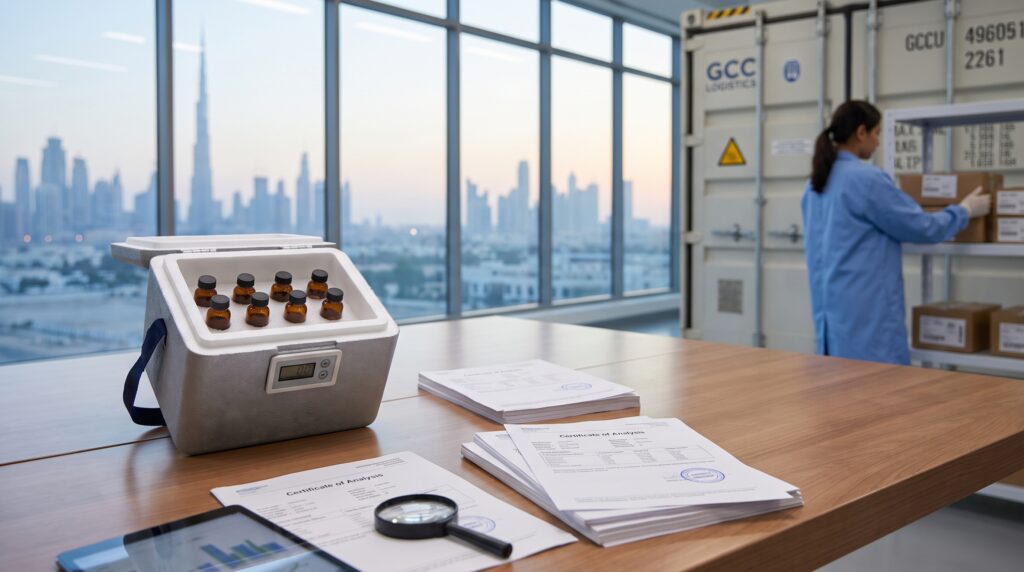
Crucially, researchers must ensure the testing documentation is independently verifiable. Authentic reports from gold-standard analytical facilities—such as Janoshik Analytical—typically include a unique verification key or QR code. This allows the buyer to cross-reference the document directly on the testing laboratory’s official website. If a supplier’s COA is a blurry PDF lacking a digital verification mechanism, it should be treated as falsified.
Purity vs. Sterility: The Hidden Risks of Gray-Market Vials
A pervasive misconception among biotech buyers is that a “99% pure” label equates to a safe, high-quality product. In the realm of biochemical research, purity does not equal sterility.
Even when independent testing labs verify the chemical identity and purity of a compound, standard HPLC and MS assays do not test for sterility, the absence of endotoxins, or heavy metal contamination. Unregulated, gray-market compounds manufactured in unsanitary conditions carry profound biological risks.
In an in vitro laboratory setting, the presence of endotoxins—toxic substances bound to the bacterial cell wall that are released when the bacterium ruptures—will immediately compromise cellular assays. Endotoxins trigger false-positive inflammatory responses in cell cultures, entirely invalidating research data. Evaluating a supplier means looking beyond basic chemical purity and assessing their commitment to lyophilization (freeze-drying) standards and cleanroom manufacturing protocols.
The Abu Dhabi Buyer’s Red Flag Checklist
When evaluating a supplier operating in Abu Dhabi or the wider GCC region, researchers should be vigilant for several specific red flags that indicate a high probability of counterfeit or degraded products.
1. Missing or Mismatched Batch Numbers
A legitimate research supplier meticulously tracks every manufactured lot. If a vial arrives with a generic label missing a specific lot or batch number, or if the batch number on the physical vial does not match the published COA on the supplier’s website, you are likely dealing with generic, repackaged goods.
2. The Telegram and Crypto Trap
Counterfeiters frequently target GCC buyers via anonymous messaging apps like Telegram, WhatsApp, or Instagram DMs, demanding payment exclusively in cryptocurrency or through offshore wire transfers. These payment methods intentionally offer zero buyer protection or recourse. Legitimate businesses operating transparently within the UAE ecosystem will facilitate transactions through secure, verifiable local channels, such as standard banking gateways or Cash on Delivery (COD).
3. The Dropshipping Illusion
Many online suppliers claim to be based in the UAE but operate as international dropshippers. Peptides are fragile molecular chains. Prolonged exposure to the extreme heat of a UAE summer (frequently exceeding 45°C) can cause rapid degradation, rendering the compound completely useless for research purposes. If a supplier takes weeks to clear customs because they are shipping internationally without cold-chain protocols, the product’s structural integrity is compromised before it even arrives.
4. The “RUO” Contradiction
A glaring regulatory and professional contradiction occurs when a supplier explicitly labels their products as “Research Use Only” (RUO) to bypass local EDE pharmaceutical regulations, yet simultaneously publishes human dosing instructions, injection protocols, or therapeutic advice on their platform. This behavior signals a legally risky, unprofessional vendor that is highly likely to face imminent regulatory shutdown.
Secure Procurement and Delivery with NOVA Labs
To mitigate these pervasive risks, UAE-based procurement teams must prioritize suppliers that offer analytical transparency, localized logistics, and professional support. Acquiring highly sensitive compounds requires a supply chain that completely bypasses international customs delays and eliminates the severe thermal degradation risks associated with global freight forwarding.
At NOVA Labs, we anchor our operations in research integrity through rigorous documentation and optimized local logistics. We invite researchers to explore our complete research catalog, where every listed compound is backed by verifiable, batch-specific analytical testing.
Furthermore, we understand that maintaining the structural integrity of your research materials is absolute. By utilizing our UAE next-day peptide delivery services, researchers in Abu Dhabi and across the emirates can ensure their materials arrive swiftly and securely. This local infrastructure bypasses the lengthy transit times and extreme heat exposure that plague the international gray market. We also provide secure, localized payment options, including Cash on Delivery, guaranteeing financial security and operational peace of mind.
Conclusion
Navigating the modern biochemical supply chain requires unprecedented diligence, especially in light of the Emirates Drug Establishment’s strict regulatory enforcement. Understanding exactly how to spot fake peptides in Abu Dhabi empowers researchers, lab managers, and procurement staff to make informed, secure decisions.
Always demand verifiable, batch-specific COAs that comprehensively detail both HPLC purity and Mass Spectrometry identity. Scrutinize the physical vial for matching lot numbers, categorically avoid anonymous offshore payment demands, and prioritize suppliers that offer transparent, localized UAE logistics. By adhering to these strict vetting protocols, you can safeguard the integrity of your research data and entirely avoid the hazards of the counterfeit market.
Disclaimer: The products and compounds mentioned in this article are explicitly for laboratory research and in vitro analysis only. They are not intended for human consumption, clinical application, or therapeutic use.
—
References
- Al Tamimi & Company. (2025). The New Era of Pharmaceutical Regulation in the UAE: Key Changes Under Federal Law No. 38 of 2024.
- Gulf News. (2026). UAE Cracks Down on Unapproved Peptide Weight-Loss Drugs: 71 Sources and 14 Influencers Face Action.
- NorthPeptide. (2026). Peptide Vendor Scams: 8 Red Flags + COA Checklist.
- NorthPeptide. (2026). What Janoshik Testing Actually Tells You (And What It Doesn’t).
Disclaimer: The products mentioned in this article are for research purposes only and are not intended for human consumption.
- UAE Cracks Down on Unapproved Peptide Weight-Loss Drugs: 71 Sources and 14 Influencers Face Action – Gulf News
- Finding the Best Peptide Shop UAE: Purity, Logistics, and Trust Signals – NOVA Labs
- Peptide Vendor Scams: 8 Red Flags + COA Checklist (2026) – NorthPeptide
- The New Era of Pharmaceutical Regulation in the UAE: Key Changes Under Federal Law No. 38 of 2024 – Al Tamimi & Company
- What Janoshik Testing Actually Tells You (And What It Doesn’t) – NorthPeptide
- How to Verify a Peptide: COAs, Lab Testing & Spotting Fakes (2026)
- How to Verify Peptide Therapy Safety | Red Flags & COA – Meto Health
- Identify counterfeit peptides: 12 clear warning signs – 24Peptides
Frequently asked questions
Why do fake peptide suppliers in the UAE use Telegram or crypto?
Counterfeit suppliers use anonymous apps like Telegram and demand cryptocurrency to avoid local financial oversight and eliminate buyer protection. Legitimate UAE suppliers offer secure local payment methods, including Cash on Delivery (COD) or verifiable local bank gateways.
What is the difference between HPLC and Mass Spectrometry in peptide testing?
HPLC measures the purity percentage of a substance by separating its components. Mass Spectrometry (MS) verifies the specific molecular identity of the compound. A reliable Certificate of Analysis (COA) must include both to ensure the product is both pure and authentic.
Can I trust a supplier if their peptides are labeled 99% pure?
Not solely based on purity. While 99% HPLC purity is excellent for research, it does not guarantee sterility or the absence of endotoxins. Furthermore, a high purity percentage is meaningless if the compound's actual chemical identity hasn't been verified via Mass Spectrometry.
How do I verify a peptide COA in Abu Dhabi?
Check that the batch or lot number on the physical vial exactly matches the batch number on the COA. Additionally, look for a digital verification key or QR code on the document that links directly to the independent testing laboratory's official website, allowing you to authenticate the report.
Nova Labs buyer tools
Ready to verify stock, testing and delivery?
Use the product page and lab report section to check availability, documentation, delivery timing and support before placing an order.
- COA / test-report checks
- Abu Dhabi delivery context
- Cold-chain handling
- COD and card payment options
- WhatsApp support