



Procuring high-quality research compounds in the Gulf region requires navigating a unique set of challenges. Between extreme summer temperatures, complex customs regulations, and the proliferation of low-quality international vendors, laboratory procurement officers need a reliable system for verifying supplier claims. This comprehensive peptide purity guide Saudi Arabia researchers rely on is designed to bridge the gap between rigorous academic requirements and practical, localized logistics.
Whether you are evaluating independent laboratory reports for a university study or trying to ensure your biochemical compounds do not degrade during transit through Riyadh or Jeddah customs, understanding the technical and operational benchmarks of top-tier suppliers is critical. Below, we break down exactly how to verify third-party testing, evaluate structural integrity, and ensure smooth, regulation-compliant procurement within the Kingdom.
What Is the Core Peptide Purity Guide Saudi Arabia Standard?
Quick Answer: The ultimate peptide purity guide Saudi Arabia researchers rely on mandates third-party HPLC and Mass Spectrometry testing, strict adherence to lyophilized powders for thermal stability, and leveraging UAE-based logistics to mitigate ZATCA customs delays. Always verify independent Janoshik COAs before procurement.
Following a stringent purity standard is not just about checking a compliance box; it is about ensuring that the biochemical compounds used in your laboratory yield reproducible, accurate in-vitro results. When sequence impurities, heavy metals, or residual solvents contaminate a synthesized batch, the integrity of an entire research project is compromised, leading to wasted funding and flawed analytical data.
Because the GCC market for scientific supplies is rapidly expanding, many overseas suppliers attempt to service the region via long-haul dropshipping from Asia or North America. However, operating without localized knowledge often leads to prolonged border delays and irreversible thermal degradation. A true standard of excellence requires both biochemical purity transparency and logistical competence.
HPLC, MS, and Janoshik: Decoding the Certificate of Analysis
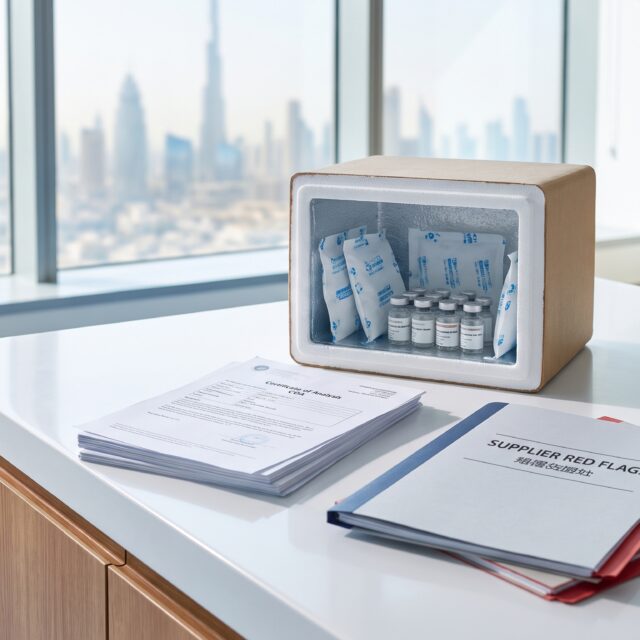
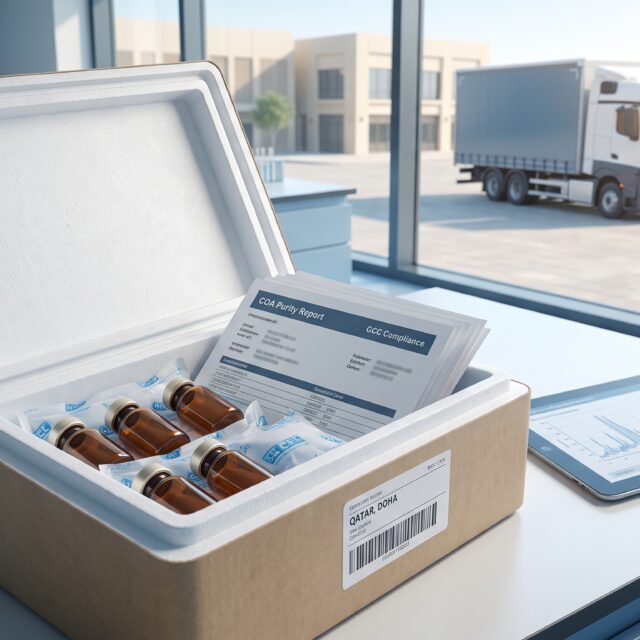
When evaluating any research compound, the Certificate of Analysis (COA) is your primary diagnostic tool. However, not all COAs carry the same scientific weight. Unfortunately, the research chemical industry has seen repeated instances of unverified vendors manipulating PDF documents to falsely claim higher purity percentages.
To confidently verify a compound, procurement officers should demand High-Performance Liquid Chromatography (HPLC) coupled with Mass Spectrometry (MS).
- HPLC (High-Performance Liquid Chromatography): This method measures the proportion of the intended peptide sequence compared to synthesis-related impurities, such as truncated sequences or deletion peptides. A quality supplier should consistently produce batches exceeding 98% or 99% purity on the chromatogram.
- Mass Spectrometry (MS): This technique confirms the exact molecular weight of the isolated compound, ensuring its structural identity perfectly matches the intended amino acid sequence.
The gold standard for establishing trust in the modern supply chain is relying on independent, ISO-accredited laboratories. Facilities like Janoshik Analytical provide cryptographically verifiable COAs. When a supplier uses a reputable independent third party, researchers can directly verify the batch data via a unique cryptographic key or QR code on the testing facility’s official website. This entirely bypasses the risk of relying on a potentially manipulated internal vendor document.
Purity vs. Net Peptide Content: A Crucial Distinction
A common misunderstanding among laboratory buyers is the difference between peptide purity and net peptide content. While purity indicates the sequence integrity of the compound (as measured by HPLC), net peptide content measures the actual weight of the target peptide inside the vial.
Even with a confirmed sequence purity of 99%, a 10mg vial will not contain exactly 10mg of the active peptide base. During the manufacturing and lyophilization (freeze-drying) process, residual water and necessary counterions (most commonly trifluoroacetate or acetate) bind to the peptide to stabilize it. This means the total mass in the vial is a combination of the peptide sequence, stabilizing salts, and trace moisture. Typically, the actual peptide base accounts for 70% to 85% of the total lyophilized weight.
For researchers conducting highly sensitive quantitative studies, understanding this distinction is vital. When calibrating equipment and measuring out exact molar concentrations for laboratory application, accounting for net peptide content ensures that calculations remain precise. Reputable suppliers provide clarity on both purity percentages and the synthesis methodology used to stabilize the compound.
GCC Logistics: Why Lyophilized Powder Beats Liquid in KSA Transit
One of the most critical elements of this peptide purity guide Saudi Arabia buyers must understand is the severe impact of thermal stability during transit. Ambient temperatures in the Kingdom regularly exceed 40 degrees Celsius during the extended summer months, turning unconditioned transit warehouses into hostile environments for biological compounds.
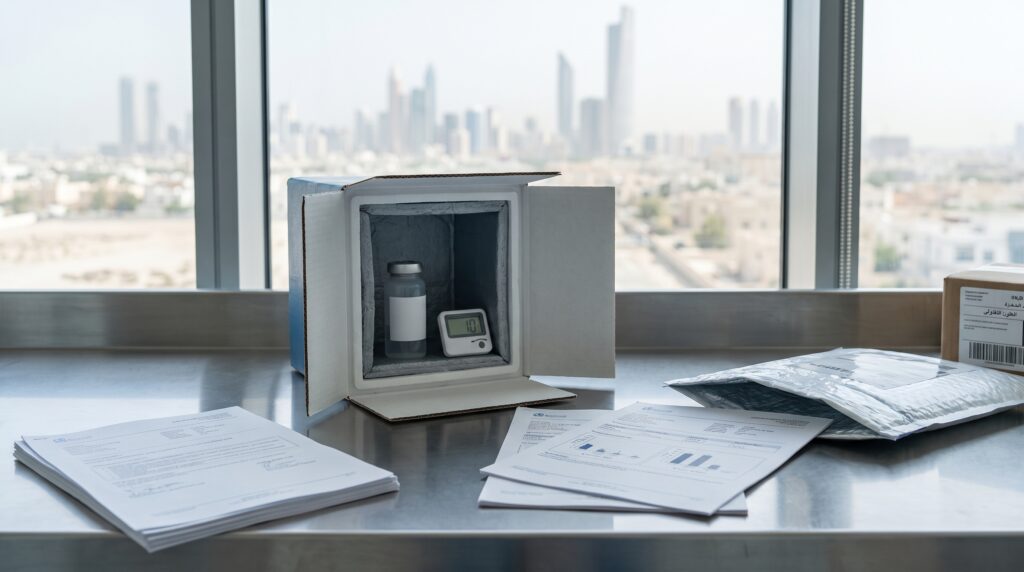
Research peptides are inherently fragile. While lyophilized (freeze-dried) powder is highly stable and can easily withstand standard shipping temperatures for weeks without degrading, pre-reconstituted liquid solutions are notoriously unstable. When exposed to high heat and physical agitation during transit, liquid peptides degrade rapidly, breaking down molecular bonds and rendering the compound useless for research.
Despite this reality, some overseas suppliers still attempt to sell liquid peptide solutions to GCC buyers. These should be strictly avoided. Ensuring that compounds remain stable from the supplier’s freezer to your laboratory bench requires sourcing exclusively in lyophilized form. While researchers based in Dubai often benefit from UAE next-day peptide delivery through local courier networks, procurement officers in Saudi Arabia must account for multi-day cross-border transit times. Sourcing exclusively lyophilized powder from a regional cold-chain hub ensures compound viability even if customs processes take several days.
Navigating Saudi Customs: The UAE Sourcing Advantage
Importing biochemicals directly from overseas manufacturers in Asia or North America almost always leads to significant friction at the border. Saudi Arabia’s Zakat, Tax and Customs Authority (ZATCA) and the Saudi Food and Drug Authority (SFDA) maintain strict, highly scrutinized regulations regarding imported laboratory chemicals and research reagents.
Shipments must be accurately designated as ‘Research Use Only’ (RUO) and properly declared through clearance platforms like FASAH and SABER. When international suppliers fail to provide the correct harmonized tariff codes or supporting documentation, packages can sit in unconditioned customs warehouses for weeks, leading to inevitable compound degradation.
This is where utilizing a GCC-based logistics hub becomes a massive strategic asset. By operating out of the UAE, premium suppliers provide a localized logistical bridge that significantly reduces customs detention times. Ensuring that all commercial invoices, RUO declarations, and independent batch documents are perfectly formatted for regional borders vastly reduces the friction of international procurement for KSA researchers.
How to Evaluate Your Peptide Supplier Before Ordering
When you are ready to restock your laboratory, use this operational checklist to evaluate potential suppliers in the GCC market. A supplier that ticks these boxes demonstrates both deep biochemical expertise and operational reliability tailored to the Middle East.
- Verifiable Documentation: Do they offer HPLC/MS reports from independent labs like Janoshik? Can these reports be verified independently online using a batch-specific key?
- Format Stability: Do they sell exclusively lyophilized powder to protect against regional heat, or do they risk selling unstable liquid solutions?
- Regional Logistics: Do they ship from a regional GCC hub to minimize ZATCA/SFDA customs delays, or are they dropshipping blindly from overseas?
- Frictionless Checkout: Do they offer localized, secure payment solutions such as SAR/AED pricing, credit cards, or institutional invoicing?
- Responsive Local Support: Do they provide timezone-aligned support via WhatsApp or email to assist with technical queries, COA requests, and delivery tracking?
By demanding these standards, you protect your institution’s research investment and ensure consistent, reliable analytical results.
Final Thoughts for KSA Researchers
Executing high-level academic or institutional research requires biochemical materials that meet rigorous, verifiable standards. Utilizing the core principles in this buyer’s guide helps safeguard your work against subpar manufacturing, manipulated documentation, and logistical failures common in the region. By insisting on independent HPLC testing, prioritizing lyophilized stability, and leveraging regional logistical hubs, laboratory procurement becomes a seamless, secure process.
If you are ready to source premium, independently verified research compounds backed by local GCC expertise, explore the NOVA Labs shop today to view our available inventory and verify our rigorous testing documentation firsthand.
*
Disclaimer: The products and compounds mentioned in this article are strictly for in-vitro research and laboratory use only. They are not intended for human consumption, animal testing, diagnostic, or therapeutic use. All buyers must comply with local KSA laws and institutional regulations regarding the handling of research chemicals.
References
- Journal of Liquid Chromatography & Related Technologies: High-Performance Methods for Peptide Purity Verification and Impurity Profiling.
- ZATCA (Zakat, Tax and Customs Authority): Official Import Guidelines and Tariff Classifications for Laboratory and Research Chemicals in Saudi Arabia.
- Janoshik Analytical: Independent HPLC and Mass Spectrometry Testing Protocols and Cryptographic Verification Systems.
- International Journal of Pharmaceutics: Thermal Stability and Degradation Pathways of Lyophilized Peptides in Extreme Climates.
Disclaimer: The products mentioned in this article are for research purposes only and are not intended for human consumption.
- Peptide Purity Testing: How to Verify Quality and Safety (2026 Guide) | Peptidepedia
- Nova Labs Review 2026: UAE Peptide Supplier COA and Cold-Chain Audit
- KSA Peptide Sourcing 2026: Nova Biolabs vs Peptide Tech UAE – NOVA Labs
- Understanding Peptide Purity: HPLC, COAs & Quality Testing Explained – Health Tech
- Inside the $100M Gray Market Peptide Crypto Boom – Chainalysis
Frequently asked questions
Why is lyophilized peptide powder required for Saudi Arabia transit?
Lyophilized (freeze-dried) powder is highly stable at room temperatures and can withstand the extreme ambient heat of the GCC during shipping. Pre-reconstituted liquid peptides are fragile and degrade rapidly when exposed to high temperatures and physical agitation during transit.
What is the difference between peptide purity and net peptide content?
Peptide purity refers to the percentage of the correct amino acid sequence compared to synthesis impurities, as verified by HPLC. Net peptide content refers to the actual mass of the active peptide in the vial, which is always slightly lower than the total mass due to residual moisture and necessary chemical counterions like TFA.
How do researchers in KSA verify a peptide Certificate of Analysis (COA)?
Researchers should rely exclusively on COAs produced by independent, accredited laboratories like Janoshik Analytical. These reports feature cryptographic keys or QR codes that allow buyers to verify the results directly on the testing facility's official website, preventing vendors from manipulating PDF documents.
Can UAE-based suppliers ship research peptides to Saudi Arabia efficiently?
Yes. Utilizing a UAE-based logistics hub drastically reduces the transit time and customs friction associated with international dropshipping. Proper 'Research Use Only' (RUO) documentation and regional commercial invoices help clear ZATCA regulations smoothly, preventing heat degradation at the border.
Nova Labs buyer tools
Ready to verify stock, testing and delivery?
Use the product page and lab report section to check availability, documentation, delivery timing and support before placing an order.
- COA / test-report checks
- Saudi Arabia delivery context
- Cold-chain handling
- COD and card payment options
- WhatsApp support